For each of the 12 days of Christmas, I’m revisiting a month’s worth of lenses that we covered on DCW. Today it's April 2025… check out the other 12 lenses of Christmas!
Think you know trinity zoom lenses? Sony popped up to make you think again. The big thing about trinity zooms is their relatively fast and constant f/2.8 aperture rating, which Sony blew out of the water with its FE 28‑70mm f/2 G Master lens.
Okay, that one’s relatively old news (since Canon already did it in 2018 with the Canon RF 28-70mm f/2L) but it’s still a whole f/stop faster than an f/2.8 lens. Even more remarkably, the company followed up in April 2025 with the announcement of the Sony FE 50‑150mm f/2 G Master. Amazingly, it stretches all the way from a standard 50mm focal length to a sizeably strong telephoto with the same fast f/2 aperture throughout.
We were so impressed with the FE 50-150mm that we almost didn’t notice Sony also filing patents for new 800mm f/5.6 and 400mm f/4 super-telephoto primes! One thing that all these lenses will have in common is hefty price tags, the 50-150mm coming in at $3,900 / £3,800 / AU$6,799.
For a little light relief (weight-wise and for your wallet), the Sony E-mount edition of the Viltrox AF 35mm f/1.2 Lab FE launched at the official price of $999 / £959.

From the sublime to the (some might say) ridiculous, Canon announced a "new" RF 75-300mm f/4-5.6, describing it as a flexible entry-level telephoto lens for nature and sports photography.
I’d personally describe it as a shameless rehash of a very old line of uninspiring and unassuming EF telephoto zooms that go back to 1991 and were designed for 35mm film cameras.
I guess the main thing about the RF version is that it’s cheap to buy, which kinda makes up for full-frame autofocus RF lenses still being off the menu from third-party manufacturers.
In a very much more high-tech mood, Canon also filed patents for a pair of insanely fast 24mm f/0.7 and 32mm f/0.75 lenses. That’s more like it!

Genuinely exciting news of an ‘old’ lens being revamped came from Tamron – even though the original is relatively new, having been launched for Sony E and Fujifilm X cameras in 2021.
Either way, the APS-C format Tamron 18-300mm f/3.5-6.3 Di III-A VC VXD spread the love of an all-in-one, travel-friendly ‘superzoom’ lens to Canon RF and Nikon Z mount options.
That’s a whole lot of zoom range, equating to 27-450mm in full-frame terms (28.8-480mm for Canon cameras), for the princely sum of $699 / £529 / AU$1,099.

In the news again was 7Artisans with a new lens for Fujifilm X-mount cameras, in the compact shape of the 7Artisans AF 35mm f/1.4. Despite its fast aperture rating, the lens weighs a mere 184g / 6.5oz and was announced with a similarly lightweight $169 price tag.
Although inexpensive to buy, the lens features autofocus – as does the full-frame 7Artisans 50mm f/1.8, which also made the news by adding an L-mount option to the existing choices of Sony E and Nikon Z versions.
And if you’d rather see the bigger picture, the AstrHori 6.5mm f/2 launched as a fully manual, APS-C format circular fisheye lens in Sony E, Fuji X, Nikon Z and Canon RF mount options, as well as for Micro Four Thirds cameras.

Fancy a bit of retro loveliness? Cosina announced the forthcoming release of three new Voigtländer VM-mount lenses with super-fast f/1.2 apertures. The new hit parade comprised the Nokton 35mm f/1.2 Aspherical IV VM, Nokton 40mm f/1.2 Aspherical II VM, and Nokton 50mm f/1.2 Aspherical II VM.
Other retro launches to blend vintage styling with cutting-edge optics included updated versions of the Thypoch Simera 28mm and 35mm f/1.4. They became available in a new Type II configuration with enhanced ergonomics.

Breaking cine news came from NiSi, which announced it was following up on its 2023 range of Athena cine lenses with a new series of fast NiSi Aureus T1.4 primes.
And if you’d rather have something a little different, there was also news of a TTArtisan 35mm T2.1 cine lens that delivers bubble bokeh, courtesy of an adjustable bokeh control slider.
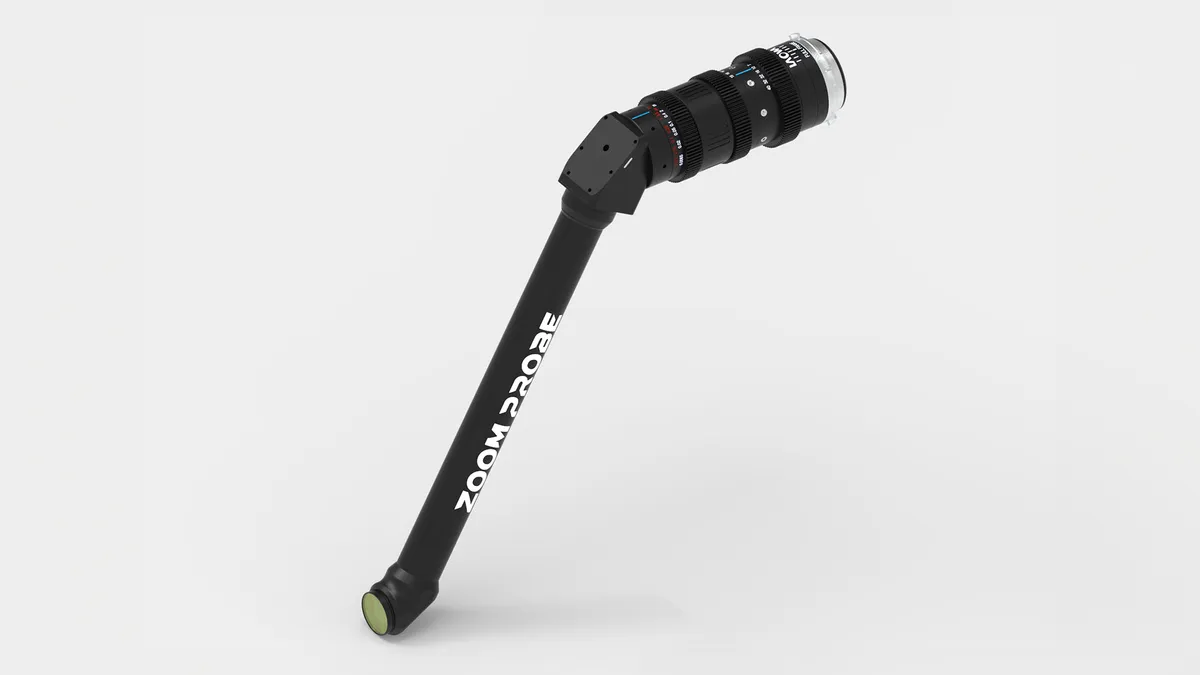
Another lens to push the boundaries was the oddball-looking Laowa Probe Zoom Macro Lens that, among other things, can see around corners with a 90° module.
On the reviews front, how could we possibly resist testing the new Sony FE 50-150mm f/2 G Master? Well, we couldn’t – and we promptly proclaimed it a world-first speed thriller of telephoto zoom.
Our Sony cameras earned their keep, as we went on to test and run full reviews on the Viltrox AF 35mm f/1.2 Lab FE and the Viltrox AF 50mm f/2 Air, two very different lenses with a very different target audience and at very different price points, but from the same rapidly expanding manufacturer.
From China to Japan, we also reviewed the lightweight Sigma 24mm f/2 DG DN | C and travel-friendly Sigma 16-300mm f/3.5-6.7 DC OS | C, as well as the Zeiss Otus ML 50mm f/1.4, reborn for mirrorless cameras. Then back to China for the Laowa Proteus 2x 26-45mm & 45-85mm T2.9 Anamorphic Cine Lenses.

You might also like...
Looking for more best-in-class glass? Take a look at the best Canon RF lenses, the best Nikon Z lenses, the best Sony lenses all for full-frame and APS-C bodies. For crop sensor cameras, check out the best Fujifilm lenses and the best Micro Four Thirds lenses. And for medium format, these are the best Fujifilm GF lenses and the best Hasselblad lenses.