For each of the 12 days of Christmas, I’m revisiting a month’s worth of lenses that we covered on DCW. Today it's March 2025… check out the other 12 lenses of Christmas!
I’m turning the clock back to March 2025, but there’s a German lens manufacturer that goes all the way back to 1913. And that company is the legendary Schneider-Kreuznach, with more than a century of cutting-edge optical design under its belt.
More recently, ‘Schneider’ has specialized in large-format and cine lenses, but it came back to the consumer market with a bang, teaming up with South Korean company LK Samyang, whose lenses are often badged ‘Rokinon’ in the USA.
First off the blocks from the new design partnership was the alluring LK Samyang X Schneider-Kreuznach AF 14-24mm f/2.8 FE, which previewed at the CP+ International Camera and Photo Imaging Show in Japan, and the Photography & Video Show in the UK.

While LK Samyang lenses are generally inexpensive, Canon lenses cover pretty much every conceivable price point.
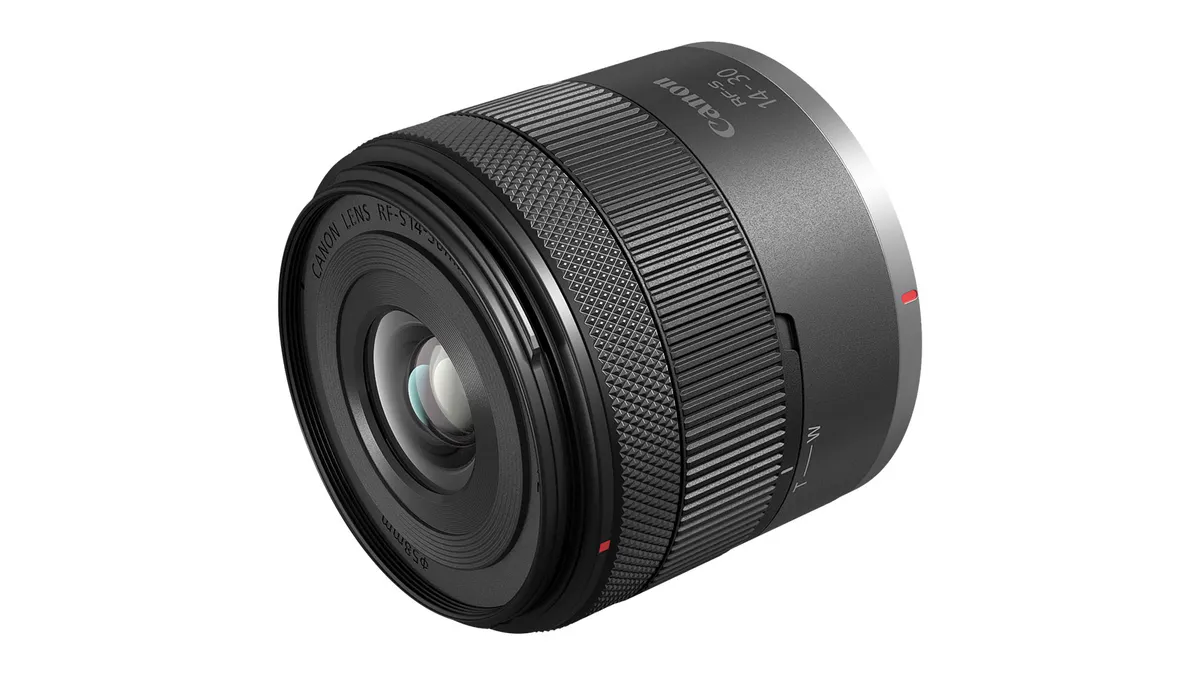
Good news for the budget-conscious came in the guise of the Canon RF-S 14-30mm f/4-6.3 IS STM PZ, engineered as an APS-C format cine lens for the masses, and the first in the series to feature a motorized ‘Power Zoom’. It immediately became the ideal kit lens for the videocentric Canon EOS R50 V, but was also available separately for $329.99 / £379.99 / AU$579.
What? You’d rather pay more? The full-frame compatible Canon RF 20mm f/1.4 L VCM also launched, pitched at content creators and hybrid shooters with both stills and video on their minds. It’s considerably pricier at $1,699 / £1,919.
While third-party alternatives have started popping up for APS-C format Canon EOS R system cameras, we reported that it looked like Canon would continue its lockdown on full-frame optics for the foreseeable future.
Maybe third-party lenses don’t save any money anyway, if the monster $100,000 Viltrox 42-420mm T5.6 Luna cine lens is anything to go by.
Okay, it’s much more the exception than the norm, and the hugely more affordable Viltrox AF 135mm f/1.8 Lab lens became available in Nikon Z mount for $899 / £829. The company also teased a decidedly cut-price Viltrox AF 50mm f/2 Air for Sony E and Nikon Z cameras, to follow in April.

Other budget-friendly announcements in March included the TTArtisan 14mm f/3.5, as a low-cost pancake lens for APS-C format Sony E-mount cameras, at $129 / £140 / AU$229.
Bigger news (bigger than a pancake, anyway) was that the company unveiled its first ever autofocus lens for L-mount cameras, in the still compact and very affordable TTArtisan AF 75mm f/2.8 L, costing $178 / £137 / AU$283.
Not to be outdone, Sirui signed up to the L-mount Alliance, technically enabling it to make first-party rather than third-party lenses, and serving up the Sirui Aurora 85mm f/1.4 as its first L-mount option, a budget portrait prime for $499 / £456 / AU$763.
Wait a minute. Whatever happened to DSLR lenses? Just to prove that not every single new lens in 2025 was just for mirrorless cameras, the Zhong Yi Optics 55mm f/2.8 1-5x Super Macro full-frame lens was announced for Canon, Nikon and Pentax DSLR cameras… and just about every brand of mirrorless camera as well.

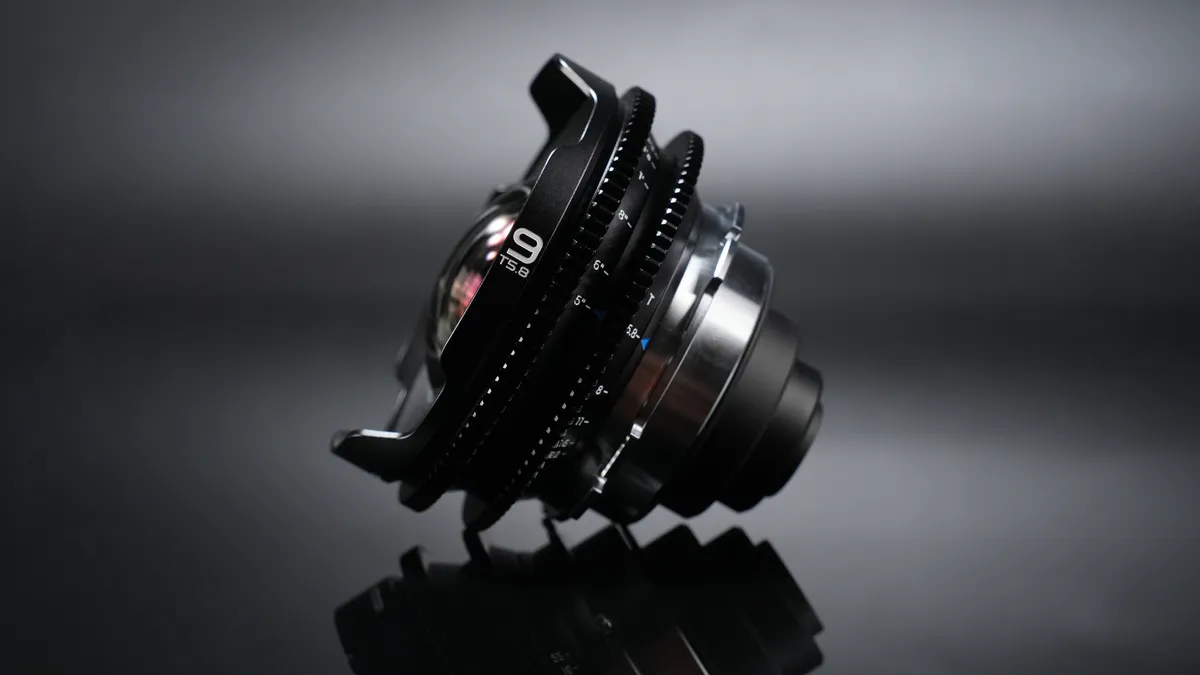
In cine news, Laowa released four new super-wide-angle VistaVision lenses. Laowa 9mm T5.8 VV Cine, 10mm T2.9 Zero-D VV Cine, 12mm T2.9 Lite Zero-D VV Cine, and 14mm T2.6 Zero-D VV Cine were up for grabs, the 9mm taking the title of the world’s widest rectilinear cine lens.
And as if that wasn’t enough, the company also brought the world’s first cine shift lenses to the market, as the Laowa 15mm T4.8 Zero-D Shift Cine and the Laowa 20mm T4.1 Zero-D Shift Cine, just to give cinematographers a new perspective.
And for something completely different, ShiftCam and Tusk kicked off a kickstarter campaign to develop the Cinema Series of mobile lenses and filters for cinematic filmmaking on an iPhone.
There was something for everybody in our March review schedule, at least in terms of weights and purchase prices. We ran a full test of the simply spectacular Nikon Z 35mm f/1.2 S, which weighs in at 1,060g / 2lb 5oz and costs $2,797 / £2,899 / AU$4,899.
At the other end of the scale, there’s the APS-C format Viltrox AF 25mm f/1.7 Air for Nikon Z, Fujifilm X and Sony E mount cameras at 170g / 6oz and $179 / £139 / AU$282. We also ran a review of the Canon RF 20mm f/1.4L VCM lens for hybrid shooters, at 519g / 1lb 2oz and $1,699 / £1,919.

You might also like...
Looking for more best-in-class glass? Take a look at the best Canon RF lenses, the best Nikon Z lenses, the best Sony lenses all for full-frame and APS-C bodies. For crop sensor cameras, check out the best Fujifilm lenses and the best Micro Four Thirds lenses. And for medium format, these are the best Fujifilm GF lenses and the best Hasselblad lenses.