





If you're looking to get seriously into making movies, you need the best camera for filmmaking. I’ve taken today’s leading filmmaking cameras into the field, testing build quality, performance, and video output to uncover the very best options available right now.
With everything from crisp 4K and 8K recording to in-body stabilization and fully articulating screens, these cameras deliver the features that truly matter when you’re out shooting. They unlock true creative scope, and can be outfitted with external mics, lights, and monitors for a complete production-ready rig. I've focused on 4K-capable mirrorless cameras with interchangeable lenses, as that's going to be the sweet spot for most filmmakers – if you think you might want a lightweight compact, our guide to the best cameras for vlogging will be more you speed.
My selection here ranges from high-end hybrids that excel equally at stills and video to cinema-first systems designed for filmmakers who live and breathe moving images.

For nearly two decades, Sebastian's work has been published internationally.
He has used many cinema cameras from the likes of Sony, RED, ARRI, and everything in between.
Best camera for filmmaking: Quick list

The Panasonic Lumix S1R II is a full-frame camera offering stunning image quality, advanced video features, and weather-sealed construction for demanding professional use.
Read more below

Exceptional stills and video performance in an attractive, well-designed body, the Lumix GH7 is ideal for content creators who have multiple strings to their bow.
Read more below

The Canon EOS C50 is the new cinema camera to beat, effortlessly outclassing much of the competition by offering open-gate video and a slew of recording options.
Read more below

With its inclusion of RED Color Science, the Nikon ZR offers amazing value for money – it's one of the most cost-effective ways to produce genuinely cinematic footage.
Read more below

If you want a great hybrid camera that can take amazing 4K video, but also capture 33MP stills, the Sony A7 IV is the perfect candidate for your kit bag.
Read more below

Not everyone needs or wants 8K – but if you want the ulitmate in video resolution the R5 Mark II is a brilliant choice It's equally as good at shooting stills as it is at filmmaking.
Read more below
View the full list ⇩

If you want a small, compact cinema camera that's capable of 6K video full frame recording then look no further, this is your perfect match.
Read more below
The best filmmaking cameras
Why you can trust Digital Camera World Our expert reviewers spend hours testing and comparing products and services so you can choose the best for you. Find out how we test.
Best overall
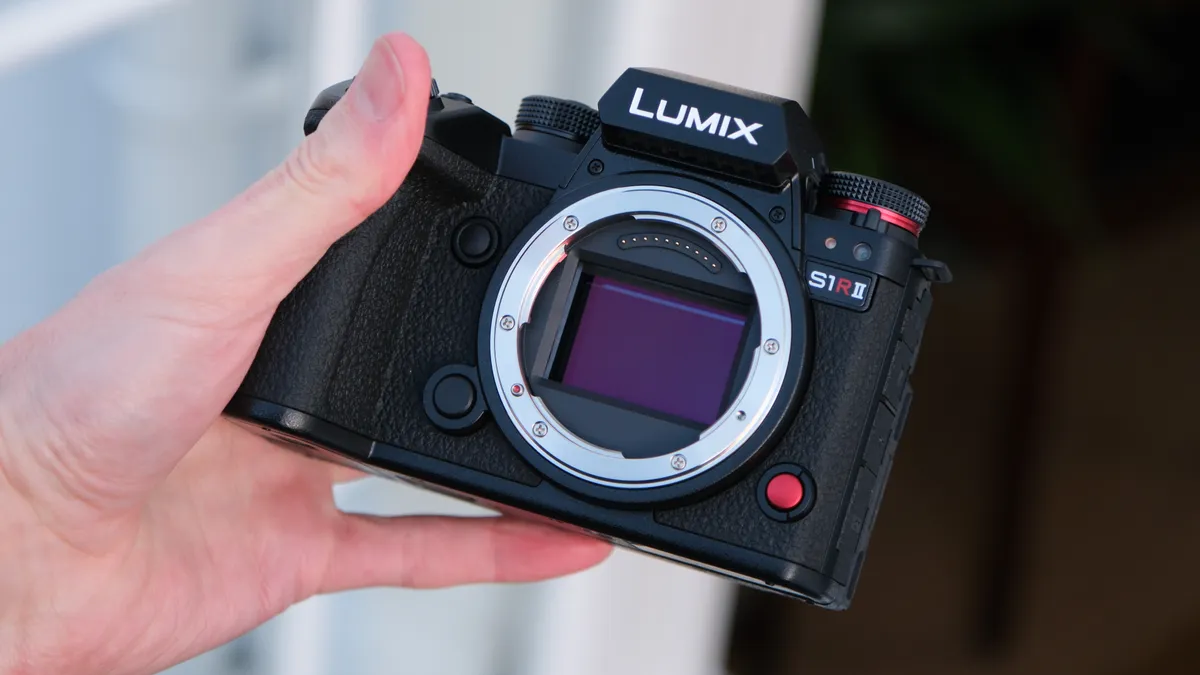
✅You want superb image quality – its new 44.3 MP BSI‑CMOS sensor delivers outstanding detail, dynamic range, and low‑light performance thanks to dual gain technology
✅You want pro video capabilities – in-camera 8K/30p, 5.9K/60p, 4K/120p plus internal ProRes RAW recording and cropless stabilization
❌You want great battery life – CIPA-rated at just ~340 shots, which trails many competitors; users often carry extra batteries
❌You want ultra-versatile AF control – subject tracking can be fiddly; switching focus mid-tracking requires manually disabling AF tracking
The Panasonic Lumix S1R II is exactly the refresh the flagship needed - elevating it once again to the top of the Lumix line with the highest resolution in the range and seriously pro-level video credentials. And when I say serious, I mean 14 stops of dynamic range in 8K, with 8K open gate video arriving soon via firmware.
With internal RAW, Apple ProRes, and a suite of professional codecs, and it’s clear this is built for serious hybrid shooters. Stabilisation also takes a leap forward, with up to 8 stops of compensation and Panasonic’s new cropless electronic IS for added versatility.
On the stills side, the upgrades are more subtle. There’s a new 44MP sensor - slightly down from the original S1R’s 47MP - but image quality is better balanced, with improved low-light performance and faster processing. Most notable, though, is speed: the old 9fps feels sluggish compared to the 40fps burst this one can fire via electronic shutter.
| Row 0 - Cell 0 | Comments: |
Rating: |
Features: |
The Panasonic Lumix S1R II delivers what I look for in a flagship - a 43MP sensor, 8K video, fast 40fps bursts, rock-solid stabilisation, and reliable autofocus. |
5 / 5 |
Performance: |
Performance on the Lumix S1R II is seriously impressive - fast, reliable autofocus, crisp 40fps bursts, and superb 8K footage make it a true workhorse for both stills and video. |
5 / 5 |
Value: |
The Panasonic Lumix S1R II feels worth every penny - it's a top-tier hybrid powerhouse that delivers pro-level photo and video tools, making it a smart investment for creators serious about pushing their craft. |
5 / 5 |
Best hybrid

✅ You want hugely flexible video options: The Lumix GH7 offers a ridiculous array of video recording formats, including ProRes RAW HQ at 5.7K 30p or 4K 60p.
✅ You want unlimited recording: Thanks to its built-in fan, the GH7 offers unlimited recording – make sure you have a big enough memory card.
❌You want long battery life: In our review, the Lumix GH7's battery performance was sub-par.
❌ You want a slim camera: The addition of the built-in fan makes the Lumix GH7's design somewhat chunky.
In my view – and it's one shared by Gareth Bevan, our reviews editor – the Panasonic Lumix GH7 is the hybrid camera to beat. If you're looking for a lightweight and capable filmmaking camera that'll also do a great job taking photos, the Lumix GH7 is the one to choose.
Offering a huge abundance of internal video recording options, including ProRes RAW HQ at 5.7K 30p or 4K 60p, open-gate 10-bit 4:2:0 recording in 5.8K 30p or 5.7K 60p, C4K 120p 10-bit 4:2:0, C4K 60p 10-bit 4:2:2, and 240p in full HD (and that's just the topline specs), the Lumix GH7 can do basically anything. And, thanks to its built-in fan, its recording times are essentially unlimited, with no overheating issues. As long as you have card space and battery power, the Lumix GH7 will keep shooting.
Its stills performance is also first-rate, as befitting its status as a hybrid camera. In both shooting modes it benefits from powerful hybrid autofocus, using a combination of of phase detection, contrast-detection (CDAF), and depth-from-defocus (DFD) technology to achieve excellent speed and accuracy. It's not quite at the level of Canon or Sony, but it's still impressive, and a big leap forward from previous Panasonic cameras.
One of the most well-rounded cameras on the market, the Lumix GH7 is an ideal choice if filmmaking is just one of the strings to your bow.
Read our full Panasonic Lumix GH7 review
| Row 0 - Cell 0 | Comments: |
Rating: |
Features: |
With a commanding array of photo and video options, this is a superb hybrid camera. |
5 / 5 |
Performance: |
Video and photos are both outstanding with excellent dynamic range and Dual IS. |
5 / 5 |
Value: |
For the amount it can do, this offers very impressive value. |
5 / 5 |
Best cine

✅ You want high-end video versatility: With 7K 60p and a raft of shooting options at your disposal, the EOS C50 equips filmmakers for all scenarios.
✅ You want cine-specific features: The EOS C50 boasts cinema features like anamorphic desqueeze support and timecode support.
❌ You want in-body stabilisation: Canon doesn't include IBIS on its cinema range.
❌ You want weather-sealing: If you're going to be shooting outdoors, you may want to consider a weather-sealed camera.
This is Canon's new cinema camera to beat. An incredibly fully featured option for videographers and filmmakers, this is the camera expressly designed to eat the lunch of Sony's FX series, and it does so. While the top-end resolution is 7K 60p, the headline feature grabbing most attention is the option for recording open-gate video, recording footage using the entirety of the 3:2 sensor.
This provides immense flexibility for cropping footage into different aspect ratios, from 16:9 cinematic for YouTube to 9:16 vertical for TikTok and Reels. It's the kind of workflow you need to plan around, as it produces huge amounts of drive-filling data, but its usefulness is unmatched.
The EOS C50 also offers what James described in our review as a 'slew' of essential filmmaking features – including internal RAW, waveforms and shutter angle. There are no built-in ND filters, which you might expect to see on a cine camera, but otherwise, the EOS C50 is incredibly fully featured.
As an alternative, you may want to consider the Sony FX2, which is a cheaper cine camera – however, its 4K 60p comes with a crop, and in our review Gareth noted some significant rolling shutter. If it meets your budget, the Canon EOS C50 is the superior choice.
Read our full Canon EOS C50 review
| Row 0 - Cell 0 | Comments: |
Rating: |
Features: |
Jam-packed with features for filmmakers and videographers – including open-gate video. |
5 / 5 |
Performance: |
Excellent video quality and performance – and not bad for stills either. |
5 / 5 |
Value: |
Not the cheapest on the market, but for what you get, the value is tough to argue with. |
4.5 / 5 |
Best value

✅ You want a top-end cinematic look: The inclusion of Red Color Science sets the ZR apart, allowing for the creation of truly cinematic looks.
✅ You want a slim, compact filmmaking solution: The Nikon ZR keeps its body nice and slimline and it slots well into a rig.
❌You want open-gate recording: This is arguably the only major omission on the ZR.
❌ You mostly shoot hand-held: The slab-like design of the ZR isn't the best for extended hand-held shoots – it's better in a rig.
The Nikon ZR heralds the beginning of a new era and a new line – Nikon's new 'Z Cinema' cameras, springing from Nikon's acquisition of high-end cinematography company Red. As such, the ZR blends the sleek design of Nikon's Z range of mirrorless camera with Red's renowned 'Color Science'. And since this is the first camera of a new range, it's priced aggressively, and offers some of the best value on the cinema market right now.
Recording 12-bit Raw video in an all-new R3D NE (Nikon Edition) format, the Nikon ZR offers immense flexibility. In our review, Adam was able to try out the gorgeous range of Red Picture Controls that users can apply to footage if they don't want to get bogged down in color processing, and he found that it was incredibly easy to give his images a dynamic, cinematic look. Of course, if you do want to get bogged down in color processing, you can – just be aware that processing R3D files requires a powerful computer.
The slimline design of the Nikon ZR makes it great for agile filmmaking, even if its slab-like form factor means it's better used in a rig than handheld, especially for long periods. But what really sets this camera apart from the competition is its price – while it's not the cheapest on offer, the price point is hard to believe considering the potential the ZR offers for producing truly professional-looking cinematic footage.
Read our full Nikon ZR review
| Row 0 - Cell 0 | Comments: |
Rating: |
Features: |
Thanks to the inclusion of Red color science, the Nikon ZR is truly a step above in terms of how much it offers. |
5 / 5 |
Performance: |
Though there's no open-gate recording, the Nikon ZR impresses with its muscular array of video options. |
4 / 5 |
Value: |
Truly exceptional for how much functionality you get – future Z Cinema cameras may not offer this kind of value! |
5 / 5 |
Best all-rounder
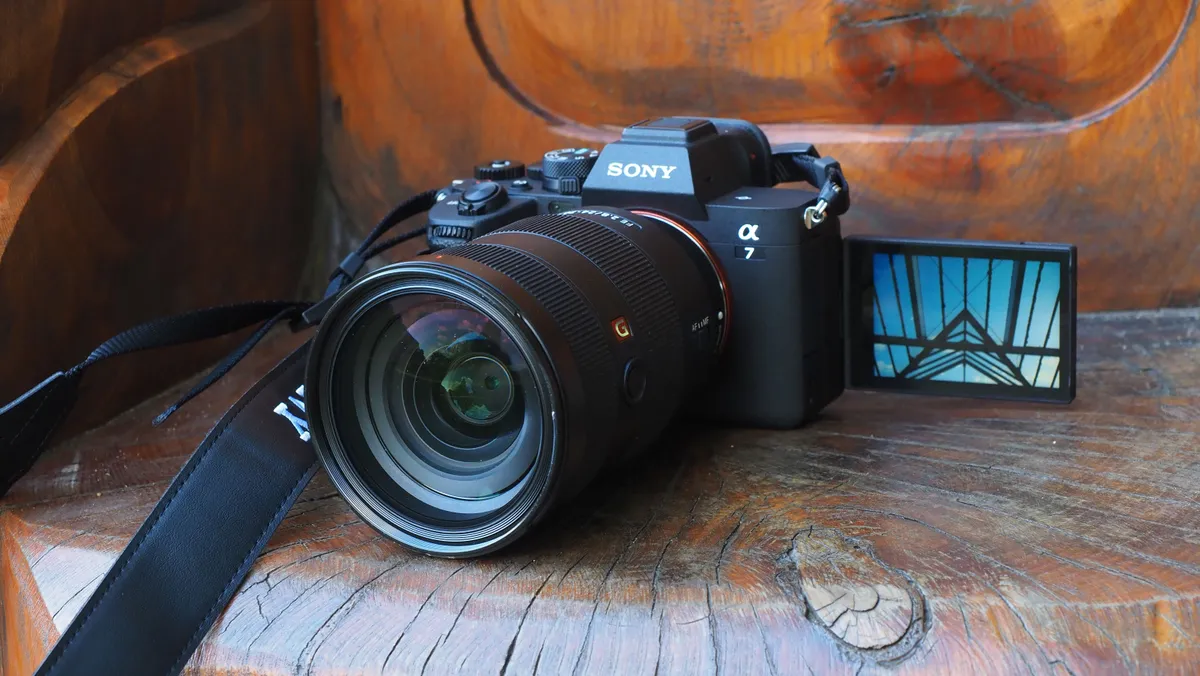
✅ You want 10-bit: the ability to record 10-bit 4:2:2 4K internally makes it great for pro work
✅ You want great autofocus: the A7 IV comes with super quick AF that responds lightning-fast in video mode
❌You have low-end cards: to shoot at the best quality Sony you need high-end media
❌ You want a "video first" camera: while it shoots amazing 4K video, the A7 IV is a photo camera first
The Sony A7 IV is a significant upgrade from the A7 III, aimed at hybrid creators seeking professional-level performance. It boasts a new 33MP sensor for sharper, more detailed stills and enhanced AI-driven autofocus, delivering excellent tracking for both photography and videography. Its improved burst mode makes it perfect for capturing fast-moving subjects, whether in wildlife, sports, or action scenes.
For filmmakers, the A7 IV introduces 10-bit 4:2:2 internal recording, making Sony’s S-Log3 profile much more effective for precise color grading in post-production. It supports 4K video at up to 60fps in Super35 crop mode, while offering full-width 4K capture at lower frame rates—a notable improvement over the A7 III, which lacked 4K 60fps entirely. The camera also delivers excellent dynamic range and high-quality low-light performance, enhancing its versatility.
By combining high-resolution stills with advanced video capabilities, the Sony A7 IV stands out as a powerful, all-purpose full-frame camera for creators who want to excel in both photography and filmmaking.
Sony has since released the Sony A7 V – however, we found its video spec a little underwhelming compared to the competition. For now, the cheaper A7 IV makes more sense as an all-rounder for filmmaking.
See our full Sony A7 IV review and lab tests
| Row 0 - Cell 0 | Comments: |
Rating: |
Features: |
Excellent 10-bit 4:2:2, 4K60p video and 33MP for stills |
4 / 5 |
Performance: |
offering super auto focus and 4k60P video, while also offering a high 33MP sensor for stills this is is aimed at the serious enthusiast |
4.5 / 5 |
Value: |
Priced at the serious enthusiasts, its a bit pricey |
3.5 / 5 |
Best for 8K video

✅ You want 8K: It's the only camera in our list to shoot 8K
✅ You want IBIS: The EOS R5 Mark II has some of the best and most effective in-body stabilisation on the market.
❌ If your computer isn't up to it: Video files can be massive with 8K, demanding top computer power.
❌ If you don't need top-end features: Not many filmmakers actually need to shoot in 8K, and it comes at a cost.
The original Canon EOS R5 represented a significant leap forward for Canon’s mirrorless camera lineup, blending cutting-edge technology with a refined design. However, while its 8K video was a headline feature, the camera was blighted by overheating issues that severely limited recording times, meaning it just wasn't really a suitable tool for a lot of professional workflows.
The EOS R5 Mark II makes fixing this issue its first priority, sporting redesigned internals with individual graphite sheets for the sensor and card slot boards to dissipate heat to the exterior, and a passive cooling system that can be upgraded to an active one via an optional external cooling fan grip. The end result is that recording times are much improved, with 4K 60p Long GOP able to be recording indefinitely.
Of course, what sets the EOS R5 Mark II apart from other cameras on this list is its ability to shoot in 8K – specifically 8K DCI Lite RAW at up to 60p. It's also significantly integrated into the Cinema EOS system, offering Canon Log 2 and 3 with Canon 709/BT.709 Std, PQ/HLG and HDR movie mode. There's also finally a full-size HDMI port and a tally lamp.
The biggest obstacle for many will be the cost. The Canon EOS R5 Mark II comes with a premium price tag, and when you factor in the cost of Canon RF lenses, building a complete setup can run into thousands of dollars. Despite this, for those who can invest, the EOS R5 Mark II offers an unparalleled combination of stills and video performance, making it a standout choice for professionals who want the best of both worlds.
See our full Canon EOS R5 Mark II review
| Row 0 - Cell 0 | Comments: |
Rating: |
Features: |
Stunning 8K 60p RAW video, Dual Pixel Intelligent AF, full integration with Cinema EOS... |
5 / 5 |
Performance: |
Performs flawlessly, fixing the overheating issues that dogged the original EOS R5. |
5 / 5 |
Value: |
It's aimed at the pros, and as such it comes with a pro-grade price tag. |
4 / 5 |
Best box camera

✅ You want compact: its box-style form factor lets this be rigged to the basics to full studio productions
✅ You value low-light performance: equipped with dual native ISOs the BS1H it excellent in low-light situations
❌ Want a built-in screen: due to its size Panasonic has removed the rear screen, so you need to use an external monitor
❌ Have to buy a battery: keeping with compact you get a DC lead for power, but you have to buy a battery for remote work
For serious video shooters, the Panasonic Lumix BSH1 boxcam can make a lot of sense as it can be rigged up for a multitude of different uses. It features a 24.2-megapixel full-frame sensor with Dual Native ISO technology, providing 14+ stops of dynamic range, and an Optical Low Pass Filter (OLPH) that helps suppress moiré and false colors, making it excellent in low-light conditions.
It's capable of recording 6K 24p or 4K 60p 10-bit when using an image area equivalent to Super 35mm. If you're using the entire 35mm sensor area, it can shoot 4K at 30p with 10-bit 4:2:2 in H.264.
With live streaming growing increasingly popular, the BS1H is capable of transmitting high-quality footage to social streaming platforms over a wired LAN connection. It can stream 4K 60p video in H.265, which means the bit rate is halved and the image quality is kept the same.
The lack of a screen may be off-putting, but its modular system means you can easily attach an external recorder such as the Atmos Ninja V, which will also make it capable of outputting 12-bit raw video.
Read our full Panasonic Lumix BS1H review for more details
| Row 0 - Cell 0 | Comments: |
Rating: |
Features: |
Box-style design, 6K full frame video, Leica L mount |
4 / 5 |
Performance: |
Offering a lot of mounting options, and 6K video this is one of the best box-style cameras out there, for a decent price! |
5 / 5 |
Value: |
While it might seems pricey to some, its the best box-style out there for affordability |
5 / 5 |
Best dynamic range

✅ You shoot a lot of doc-work: due to its form factor and features this is the perfect camera for documentary filmmakers
✅ You want great dynamic range: equipped with 16 stops of dynamic range you can be sure to capture outstanding cinematic visuals
❌Want to shoot RAW: Unfortunately, no RAW options are available on the C70
❌ Lens restrictions: due to its RF mount you are limited on lens choices
The Canon EOS C70 is Canon's first RF-mount cinema camera offering powerful video capabilities. It features Canon's Super35 sensor, Dual Gain Output, a massive 16 stops of dynamic range, and 4K 120fps / 2k 180fps.
It also includes a game-changing touchscreen which makes accurately focusing quicker and easier. The C70 boasts the deep learning iTR AFX system from the Canon EOS-1D X Mark II which offers head detection and extremely accurate autofocus.
If you don't want to invest in expensive RF lenses we suggest you use an adapter to mount EF lenses onto them. Canon's new speed booster will also enable you to use them with an extra f-stop and a full-frame angle of view. Where the C70 falls down is that it doesn't record RAW and you can't use PL glass on it - for that, you'll have to step up to the Canon C300 Mark III.
See our full Canon EOS C70 review
| Row 0 - Cell 0 | Comments: |
Rating: |
Features: |
Offering great audio options for documentary filmmakers, 4K video and RF-mount - it offer a lot in a compact package |
4 .5 / 5 |
Performance: |
with 4K 120fps or 2K at 180fps its slow-motion performance is excellent. While its dual-gain ISO makes it a perfect run-and-gun setup for docuseries filmmaking |
5 / 5 |
Value: |
This is a pro-system, so the price is quite astronomical! |
4 / 5 |
How we test the best filmmaking cameras
We test the best filmmaking cameras both in real-world shooting scenarios and in carefully controlled conditions. In our tests, we look at the resolution, dynamic range in real-world use cases and make our judgement on years of expertise in the field of filmmaking and photography.
Find out how we test and review on Digital Camera World
What other equipment can you use for filming?
These days, you’ve got no shortage of options for recording video, from action cams and smartphones to 360 cameras. A powerhouse like the Sony A1 might be the ultimate tool for a top-tier professional with a big budget, but if you’re looking to capture a first-person view of a downhill ski run, it’s hardly the most practical choice. The right camera really depends on what you want to shoot and how you like to shoot it – and that’s different for everyone.
What other things you need for filmmaking
When investing in a camera for filmmaking, you'll also have to think about the accessories you might need such as a video tripod for capturing still shots and dynamic panning motions, choosing the best video editing software such as Adobe Premiere Pro or Blackmagic DaVinci Resolve Studio 18, and video lights so you can shoot no matter how dark the environment is.
There are hundreds of video accessories out there including gimbals, microphones and camera rigs and if you're starting to get really serious it might also be worth investing in a dedicated video editing monitor. Not only will it make your job a lot easier, but it will accurately reproduce colors and be high res so you can really appreciate the 4K video.
Confused by bitrates and codecs? Check out Video jargon explained
Compare prices

