Sponsored by

Midrange marvels: Cameras with pro performance in budget-friendly bodies

As exciting as the latest flagship cameras are, dripping with the latest specs and brimming with clever tech, the truth is that most of us simply don't need all the horsepower of a professional camera.
However, by choosing a midrange camera, you can get a taste of pro performance in a body that's much more cost-effective – not to mention a darn sight smaller than traditional flagships with their bigger bodies, and chunkier batteries. Investing in one of these Goldilocks cameras really does give you the best of all worlds, especially when it comes to price.
Unless you really, truly, honestly need open gate video or 60MP resolution, you can save so much money with a midrange model. And you can make your money go even further by shopping second-hand, at a specialist used camera retailer like MPB.com, then use the savings for things like lenses that will get the best results out of your camera.
So how do find these bodies? Well, once upon a time manufacturers clearly split their product lines into three distinct categories: entry-level, enthusiast and professional. However, in recent years these lines have become more and more blurred – so here's a quick guide to the midrange marvels that are worth looking out for…

OM System OM-5
Super-compact, supremely capable
Dating back to the Olympus days, the 5-series has always been the Swiss Army knife of the lineup. Sandwiched between the entry-level 10 series and the flagship 1 lineup, the OM System OM-5 packs an amazing amount of firepower into the smallest and lightest camera system on the market.
The OM-5 is loaded with computational photography features. For example, while the svelte Micro Four Thirds sensor might only have a native 20.4MP resolution, thanks to its pixel-shift mode it can produce 50MP images handheld or 80MP shots on a tripod.
That same sensor-shift tech also powers the in-body image stabilization system, offering up to 7.5 stops of compensation. You've also got up to 30fps burst shooting along with Pro Capture – which records up to 14 frames before you engage the shutter so you never miss a shot.
The OM-5 also boasts software-based ND filters, enabling you to take silky smooth waterfall shots without needing a physical lens filter. It even boasts Starry Sky Autofocus for astrophotography. This is an outstanding camera, especially for outdoor pursuits.
One of the reasons I recommend the original OM-5 is that it's very similar to the newer OM System OM-5 Mark II. Personally, I'd buy the OM-5 and put the difference towards lenses – I've bought a lot of Micro Four Thirds glass from MPB.com, where you can get two or even three lenses for the price of a single new one.
Canon EOS R6

Mirrorless punch without the price
Everyone is currently fawning over the Canon EOS R6 Mark III – and rightly so, as this 32.5MP / 7K 60p monster offers truly astonishing performance. However, now that we've hit the third generation of the mirrorless 6-series, the original model is now a fantastic bargain.
The Canon EOS R6 ticks the two key pro boxes: it's weather-sealed, so you can keep shooting in almost any conditions, and it possesses dual memory card slots, so you're covered in case of a dreaded card failure.
While it doesn't have the resolution of its younger brother, it packs a very efficient 20.1MP full-frame sensor capable of up to 20fps bursts. And it's backed up by an image stabilization system that offers up to 8 stops of compensation. A byproduct of the lower pixel count is larger photosites, which makes the R6 a great low light performer with an ISO102,400 ceiling.
Video is offered up to 4K 60p, though this introduces a 1.07x crop. But footage is crisp and detailed (especially oversampled 4K, which uses the full 5.1K readout), 10-bit log is available and the touchscreen fully articulates – just bear in mind the field of view effect on your lenses.
Everything is powered by Canon's phenomenal Dual Pixel CMOS AF II autofocus system, with 6,072 AF positions, which is a cheat code for genres like wildlife photography. This is a fantastic jack-of-all-trades camera!
Sony A7 III
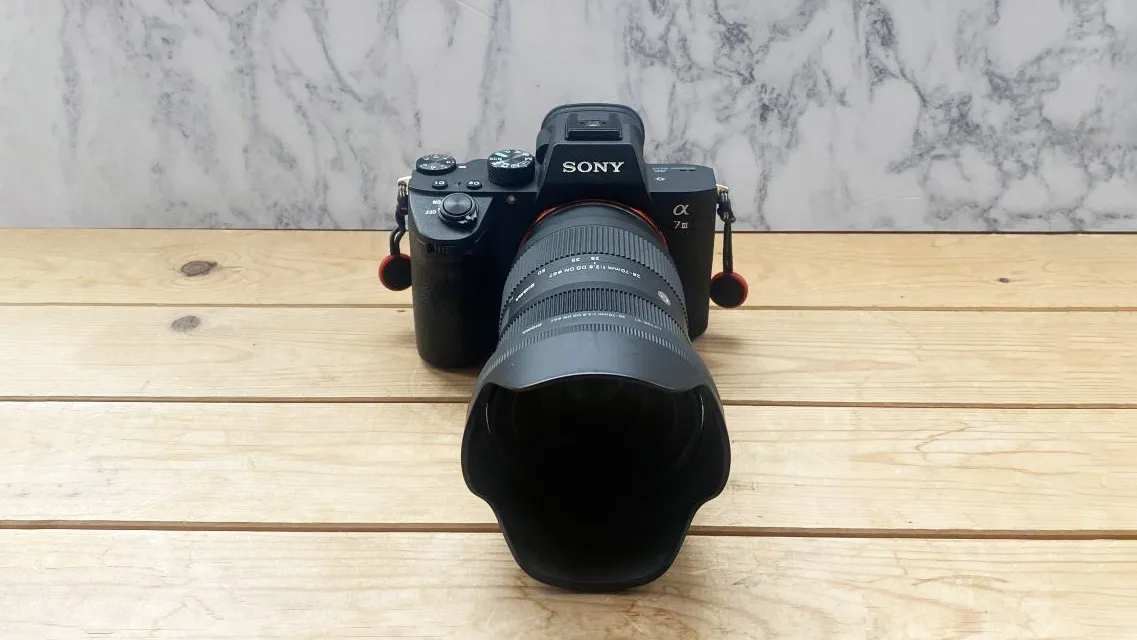
Sony's superb everyman camera
The A7 series has gradually shifted away from its entry-level roots (culminating in the almost flagship-specced Sony A7 V!), but there's a reason that the third iteration has been perhaps the most popular mirrorless camera of its generation: it hits the absolute sweet spot of price and performance.
At the heart of the Sony A7 III is a robust 24.2MP full-frame image sensor that delivers superb image quality. Even though it doesn't feature Sony's latest autofocus, the hybrid phase- and contrast-detect system is highly capable and can be trusted for most situations.
Video isn't the A7 III's strongest suit in a contemporary context, though it does the job. Like the Canon EOS R6, 4K video is cropped (this time by a slightly more severe 1.2x crop, so you're getting closer to a Super35 frame) and it's only 8-bit, though you do get log recording to maximize your dynamic range.
Though 10fps is quite conservative by today's standards, it's enough to get you shooting fast action like sports and wildlife. While just about every spec has been boosted in subsequent models, The A7 III remains a superb stills shooter with plenty of power for almost any subject – and its age, combined with the sheer number of bodies on the market, means that it's in abundant and affordable supply at used dealers like MPB.com.
Fujifilm X-T3

Filled with Fujifilm's fashionable Film Simulations
Obviously there is more to Fujifilm's brilliant cameras than just the Film Simulations. However, if you can't decide which midrange model to choose then an excellent tie-breaker is the ability to shoot using these gorgeous picture profiles!
The Fujifilm X-T3 has been eclipsed in the specs stakes by the newer Fujifilm X-T5, with its 40.2MP / 6.2K sensor, but this camera is no slouch – and offers fantastic bang for buck given its lower price point on today's market.
Its 26.1MP APS-C sensor is no slouch at all, producing stunning image quality (in much easier-to-manage file sizes, at that!) at up to 30fps! This comes with a slight caveat, as top speed images feature a 1.25x crop, but you can shoot full-fat files at 20fps – which is still blazing-fast. It captures rich 10-bit video at 4K 60p, too, including at 4:2:2 using an external recorder.
Of course, it's the signature Fujifilm flourishes that make the X-T3 so much fun to use. Aside from the beloved Film Simulations you also have the unique exposure controls, with vintage-inspired ISO and shutter speed dials on the body and aperture rings on the lenses. Combined with its video and stills smarts, this is a formidable hybrid camera by any measure.
Canon EOS 5D Mark IV

The ol' workhorse DSLR still packs a punch
Almost a decade on from release, the Canon EOS 5D Mark IV is still an incredibly capable stills camera – and its "old man strength" outclasses many of today's mirrorless offerings!
Obviously this shouldn't be your first port of call for video, even though its heavily cropped (1.64x) 4K 30p is servicable if nothing else is available. But for photography, it still produces fantastic files that belie its age. The 30.4MP sensor is still relied upon by many pros and weekend warriors – and images taken on the 5D Mark IV are still winning competitions.
While mirrorless has no doubt taken over, the best DSLRs are still going strong today – indeed, the 5D Mark IV is still an active camera in Canon's lineup. Though, as with everything on this list, you're going to get far better value for money by shopping somewhere like MPB.com.
DSLRs have a number of upsides over mirrorless cameras, not least battery life. You can shoot for days on end without worry, while mirrorless models wither after a few hundred frames. And you also have an optical viewfinder, which many people prefer over modern electronic finders. If you're looking for a great-value full-frame camera with excellent image quality for stills shooting, don't overlook the 5D!
Nikon Z6

Nikon's OG midrange mirrorless
When Nikon entered the full-frame mirrorless market in 2018, it did so guns-blazing. But since then we've seen plenty more models in its lineup, including the latest version of this series (the Nikon Z6 III) and the entry-level full-frame Nikon Z5. So what makes the original Z6 so special?
The Z6 III certainly has more hybrid horsepower, with its 6K 60p video and partially stacked sensor for up to 120fps burst shooting (albeing with a big crop). And at the other end of the spectrum, the Z5 cuts a lot of corners to achieve a friendly price.
For me, though, the OG Z6 just offers tremendous value for money. The 24.5MP sensor is back-side illuminated, an advanced kind of sensor construction that produces superior results in challenging lighting conditions. This, combined with the medium-rare pixel count and ISO102,400 threshold (expandable to 204,800) makes this a formidable low-light camera.
It can fire off 12fps bursts to keep up with fast-paced action, and offers uncropped 4K 30p and FullHD up to 120p for versatile video shooting. The only real downside is the single card slot – though it's a CFexpress Type B ( / XQD, if you have one!) so the chances of a card failure are almost zero.
If you're thinking about picking up one of these cameras, or any other for that matter, I would highly recommend checking out the enormous selection of bodies (and lenses) at MPB.com. Not only are all items professionally tested and graded, but individual images are taken for every single product listing – so you can see exactly what you're buying.
You might also like…
Check out the best mirrorless cameras across all categories, along with the best cheap cameras.

