
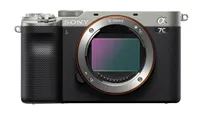
The Sony A7C is trending and while I’m not a Sony shooter, it’s a camera I consider every now and again. The Sony A7C and its successor, the Sony A7C II are an odd pairing. I can’t remember the last time I saw one out and about, and yet, the A7C II is a mainstay of Japanese retailers’ camera charts. Just recently, my colleague, Kim, reported on Yodobashi Camera’s top 10 ranking for the latter half of January where the Sony A7C II hit second place.
Clearly, people are buying these cameras. Actually, a colleague of mine who works in another department has an A7C II, but that’s the only time I’ve seen one in the wild (I swear!). On paper, it’s not hard to see why the A7C II keeps doing the business in Japan, but it’s the older A7C that I find particularly eye-catching.
Model |
Sony A7C |
Sony A7C II |
Sensor |
24MP full-frame CMOS |
33MP full-frame CMOS |
Image processor |
BIONZ X |
BIONZ XR |
ISO range |
100-51200 (exp 50-204800) |
100-51200 (exp 50-204800) |
AF points |
693 phase-detect AF points (93% coverage) |
759 phase-detect AF points (94% coverage) |
Autofocus |
AI-based Real-time Tracking and Real-time Eye AF (inc animals) |
AI processing unit, Subject Recognition, Real-Time Tracking, Breathing Compensation |
IBIS |
5-axis (5 stops) |
5-axis (7 stops) |
Burst shooting |
Up to 10fps (233+ JPEG, 115+ RAW) |
Up to 10fps (1000+ JPEG, 44 RAW) |
EVF |
2.35m-dot OLED, 0.59x magnification |
2.36m-dot OLED, 0.7x magnification |
Rear LCD |
3-inch vari-angle, 921k-dot touchscreen |
3-inch vari-angle, 1.037m-dot touchscreen |
Video |
4K / 24p full width oversampled from 6K, 1.2x crop at 30p, S&Q up to 120fps |
4K / 30p full width oversampled from 7K, 4K / 60p (Super 35mm crop), fullHD 120p, 10-bit 4:2:2 |
Storage |
1x SD UHS II, USB Type-C, HDMI micro, MI interface, mic, headphone, Wi-fi, Bluetooth |
1x SD UHS II, USB Type-C, HDMI micro, MI interface, mic, headphone, Wi-fi, Bluetooth |
Battery life |
NP-FZ100, 680 shots EVF, 740 shots LCD |
NP-FZ100, 530 shots EVF, 560 shots LCD |
Size and weight |
124 x 71.1 x 59.7mm, 509g |
124.0 x 71.1 x 63.4mm, 514g |
When you pit the Sony A7C II against the A7C, the former wins outright almost across the board. It’s got a higher resolution full-frame sensor, a better image processor, better autofocus, and better video. However, if you’re purely looking for a small-ish full-frame stills-centric camera, I think the Sony A7C is a great shout.
For starters, you can still find it new in the UK. At the time of writing, Park Cameras are selling it at the moment for just £1,049.

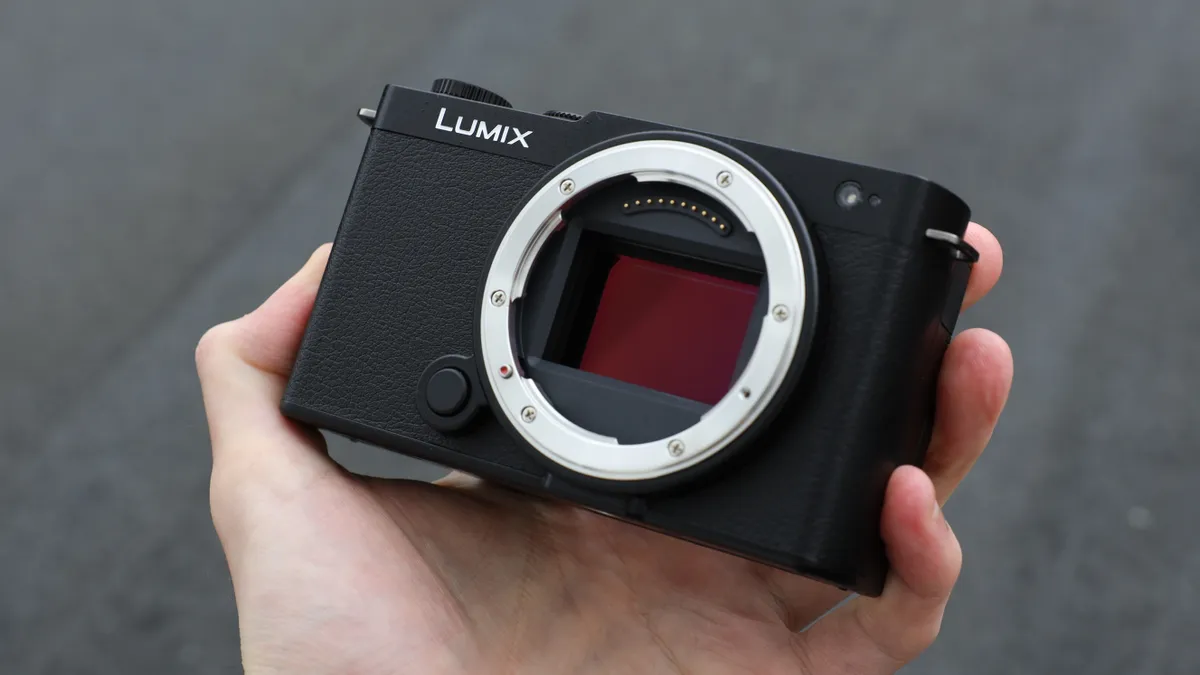
This is highlighted when you consider the competition. First up is the Panasonic Lumix S9 – which is currently £799 at Amazon in a variety of colours. Now, I’m a fan of this little ‘compact’ full-frame camera, but if you don’t care about video, the Sony A7C boasts a much better grip and a viewfinder. On paper (and by price) the Lumix S9 is the better camera, but if you’re a viewfinder photographer, the Sony A7C is probably the next best thing (assuming you don’t have the budget for the Sony A7C II).
Another contender is arguably the Fujifilm X-E5 - which you can get for £1,241.49 at Amazon. Now, don’t get me wrong, I’d dearly love an X-E5, but not only is it slightly more expensive than the Sony A7C, but it’s APS-C, and to some people, that really matters. I’d also point out that the Fujifilm X-E5 has a 40.2-MP sensor, and for everyday cameras, I prefer a smaller sensor in a bid to help prevent camera shake. To find out why, you need to know the reciprocal rule.
So there you have it, the Sony A7C and Sony A7C II, mighty popular cameras that I never seem to see out and about. But maybe that’s because they’re so portable! If you’re looking for an everyday full-frame, interchangeable-lens camera on a budget, the Sony A7C still gets a recommendation from me.
You might also like...
If you're interested in the best Sony cameras, make sure you take a look at the best Sony lenses. And if it's premium compact cameras that float your boat, here are the best full-frame compact cameras.

