
When it comes to selecting the best wildlife photography camera, there’s no easy answer. After all, everyone is working with different budgets. So, let me take a deep breath, and I’ll run through Canon, Nikon, and Sony’s biggest cameras and weigh up the pros and cons of each as quickly and simply as possible. Oh, and if you stick around until the end, I'll divulge a bit of a Joker card camera.
Firstly, if you cannot carry large lenses around or you simply don’t have the budget for long and fast glass, I'd consider an APS-C camera like the Canon EOS R7 or Nikon Z50 II. Both of these cameras boast very capable AF systems, and the 1.6/5x crop factor will get you closer to the action with shorter focal lengths.
If you’ve got the budget and don’t mind carrying around a heavy setup, I’d suggest picking up a full-frame camera. It's not an exact science, but full-frame cameras tend to perform better in low light and boast a higher dynamic range. Plus, they’re the camera of choice for most professionals and serious enthusiasts, so you’ll likely end up wanting a full-frame camera at some point, anyway.
There’s perhaps no better value full-frame camera on the market right now than the Nikon Z5 II with its RRP of $1,849.95/ £1,599 / AU$2,699. But if you’re really strapped for cash, you could opt for the older, but still capable, Sony A7 III, which you can find as low as $1,500 / £1,100 / AU$2,100.

Most photographers will automatically navigate towards higher megapixel counts, but there’s something you need to be aware of: the reciprocal rule. High-resolution wildlife photography cameras produce huge, gorgeously detailed images and allow you to crop heavily, which is always useful when capturing faraway subjects. That said, high resolutions exacerbate camera shake. As such, you may find yourself needing to double or even triple the reciprocal rule, so if you don't have access to fast glass, a 20/24-MP sensor may be the more sensible choice.
That doesn’t mean compromising on camera quality, though. The Nikon Z6 III would make a fine wildlife photography camera, as would the Canon EOS R6 Mark II (both roughly 24MP). You could also opt for a high-resolution middleground in the Canon EOS R6 Mark III and Sony A7 IV or Sony A7 V, all loaded with roughly 33-MP sensors.
At the higher end of the spectrum, the Nikon Z8 and Canon EOS R5 Mark II come highly recommended. Within that same class, the Sony A7R V is a monstrous camera. However, its 61-MP sensor and only 10-fps burst speeds mean I would personally avoid it as a wildlife photography camera, specifically. Then you head into flagship territory.
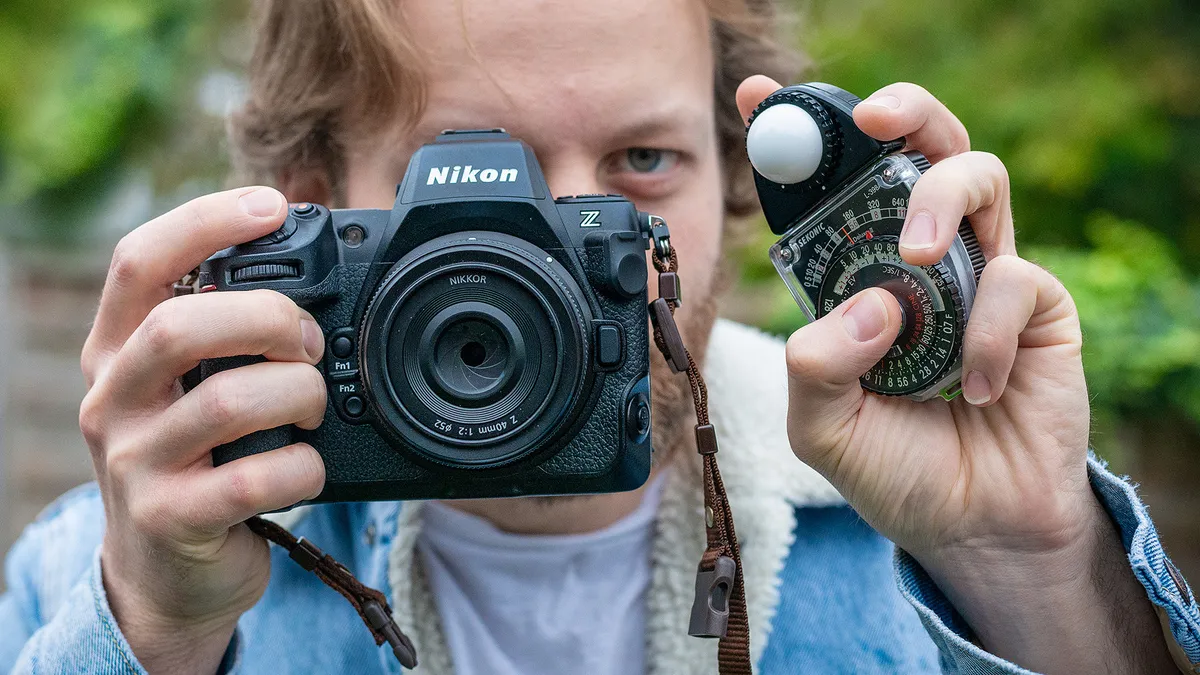
The Nikon Z9 is essentially the same camera as the Z8, but bigger and with a few more pro hardware appointments. The Canon EOS R1 boasts incredible autofocus, 40fps bursts, and a 24.2-MP sensor, which is a boon for camerashake. And out of the Sony A9 III and Sony A1 II, I’d opt for the former, thanks to its lightning burst speeds, whip-fast AF, and 24.6-MP sensor (as opposed to the 50.1-MP monster in the A1 II).
Personally, I use a Nikon Z8. I’d actually prefer a lower resolution sensor, but I get along with the camera’s 45.7-MP offering just fine. It’s a beefy camera that helps to balance a long lens, but it’s not so big that it feels like it’s taking up precious camera bag real estate. It also has a great AF system, and while 20fps RAW shooting isn’t super fast in comparison to some other high-end cameras, it’s fast enough for me. I personally find anything over 20fps to be overkill, requiring more storage space and extending time spent in post sorting through hundreds of nearly identical images.
Are DSLRs still good wildlife photography cameras?
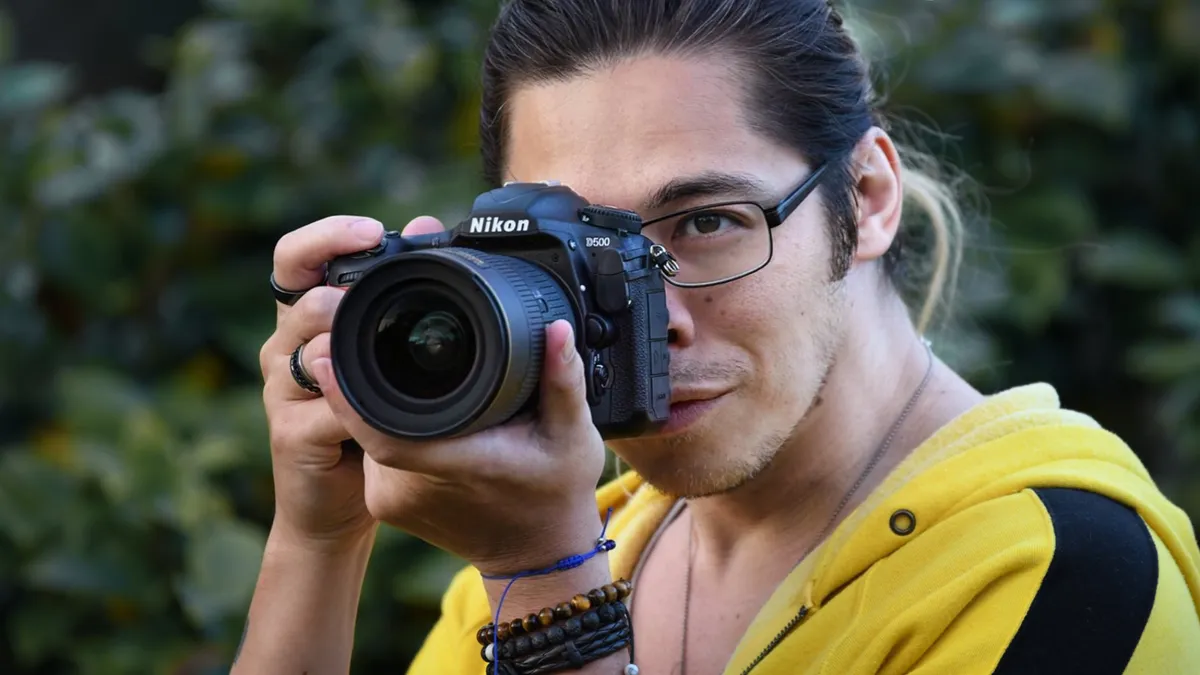
There is one other option for anyone on a tight budget, and that’s picking up a Canon or Nikon DSLR. Despite a few examples still featuring in their respective line-ups, I wouldn’t buy a DSLR new, as they tend to be rather expensive. However, you can pick up some absolute bargains on the used market.
My top picks for higher resolution offerings would be the Canon 5D Mark IV and Nikon D850. For lower resolution flagship offerings, I’d suggest looking at the Canon EOS 1DX Mark III and Nikon D5. And for APS-C DSLRs, you cannot go wrong with the incredible Nikon D500.
If you’re very strapped for cash, DSLRs can be a great choice, because although they won’t boast all the bells and whistles of a mirrorless camera, premium DSLRs are usually weather sealed. And when it comes to wildlife photography cameras, weather sealing can be very important, as you’re likely to be out in the rain or handling your camera in dusty and muddy conditions.
If you haven't come here from my article on wildlife photography lenses, then you'll probably be interested to know why I only recommend ‘The Big Three’ for serious wildlife photography. Hint: it has nothing to do with cameras and everything to do with optics!
The joker: Nikon Coolpix P1100

I recently declared that the Nikon Coolpix P1100 is my favorite all-in-one camera for birders, and if you haven’t got time to read that article, the long and short of it is that it’s an affordable one-time purchase, and you’ve got everything you need off the bat.
The ace up this superzoom bridge camera’s sleeve is that it presides over a monster 24-3000mm (equivalent) optical zoom range. For what is technically a compact camera, the P1100 is huge, but when you consider it has the versatility of a huge bag of lenses (and then some), it’s positively tiny.
There is a caveat, though; the image quality really isn’t the best, given its 16-MP 1/2.3-in CMOS sensor. I like to think of the Nikon Coolpix P1100 and its P1000 predecessor (essentially the same camera) as the best wildlife cameras for casual wildlife photographers.
You might also like...
Interested in my personal camera? The Nikon Z8 is two years old, but I reckon it could remain in my kit bag for a decade AT LEAST. Perhaps you'd like to know why I still prefer my Canon DSLR over mirrorless: "The ONE setting the 5D Mark IV has that the EOS R5 doesn’t!" Plus, here are my 10 tips for wildlife photography.

