





I was in Nashville, Tennessee, with a Sony A7 in hand in 2013 when Sony changed the direction of modern mirrorless cameras by announcing the first mirrorless cameras with a full-frame sensor. Sitting here at my desk with the newly launched Sony A7 V in front of me, however, I can’t help but feel like Sony’s original entry into full-frame mirrorless has gone off the rails – but not in a bad way.
The Sony A7 series has always been one of Sony’s more affordable full-frame mirrorless cameras next to options like the A7R, but bestowing the title of “entry-level” or “prosumer” on the 33MP stacked sensor camera feels wrong. Many of the Sony A7 V’s specs, like the 30 fps bursts and subject detection autofocus, belie the title of entry-level and feel more like a budget pro tool that could dabble in nearly any genre of photography.

The A7 III, which is still available, feels more entry-level, while the A7 V is pushing mid-tier. Keeping the old model around as the budget entry isn’t a bad strategy, and I suspect the A7 IV, with its reduced price, will, like the A7 III before it, remain a popular choice.
The original Sony A7 certainly drew criticism from pro DSLR shooters who scoffed at specs like the 340-shot battery life. When I first tested it, I thought the camera had some features that worked for certain genres, but not others. The A7 fit well into the prosumer category.
But the A7 series has come a long way from its infancy, and where the original A7 felt like a one-trick camera cramming a big sensor in a small body, the new A7 V feels like a multi-genre photography tool. The likes of the Sony A1 II and A9 III may be more prevalent in the hands of professional sports photographers, but the Sony A7 V feels like it has the potential to shoot action, then go to portraits, then back again, and even toss in some 4K video into the mix.
The Sony A7 series is no longer a 5fps camera with poor battery life and ‘meh’ autofocus of the original 2013 launch – and perhaps it hasn’t been for a long time. I certainly wouldn’t have hesitated to recommend the Sony A7 IV to a pro portrait or wedding photographer on a limited budget.

The original A7 was a prosumer camera with excellent image quality, but without the performance to really excel as a multi-genre camera. What I’ve experienced of the Sony A7 V so far indicates the camera is one with a blessedly lovely identity crisis, moving from portraits to action and back again. The 30 fps burst and fast autofocus feel like a multi-genre tool without getting into the price of the likes of the Sony A1 II or A9 III. The biggest drawback keeping the A7 V from feeling like a true any-genre hybrid is the missing video specs, like the lack of 6K and open gate.
Sony has jumped off the rails of prosumer – the Sony A7 V is now barreling down the track for a versatile hybrid that feels as if it may be both at home in the hands of pros on a budget and serious hobbyists. The move may not exactly be true to the original A7 roots, but it’s a welcome evolution.
Of course, in 2013, there were just two full-frame mirrorless cameras to choose from, the Sony A7 and the Sony A7R. Sony’s full-frame has burst from its original two models into a series that now includes the A7C, A9, A1, and all their subsequent generations.
The Sony A7 V feels too pro for the series’ original roots – and that may have been a bad thing, if it was going to be Sony’s most affordable full-frame camera, but it’s not. There’s still the A7 IV, which isn’t going anywhere, and the A7C II. And, despite its age, the Sony A7 III still seems to be readily available as well.
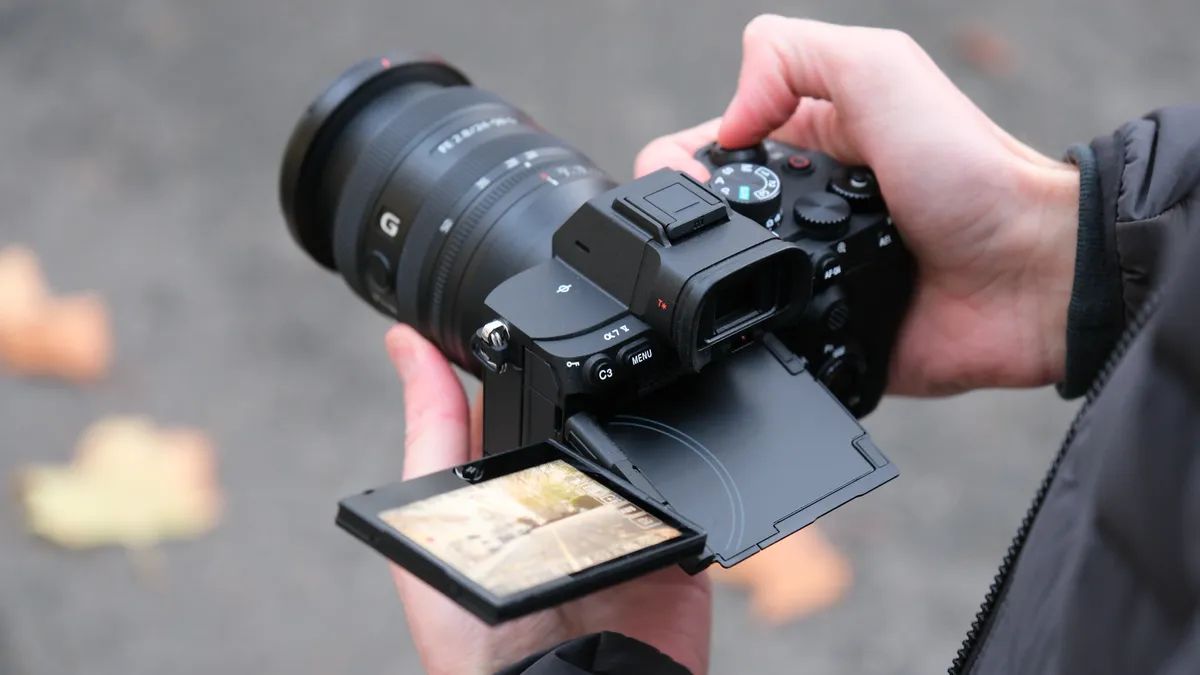
The Sony A7 V sitting on my desk right now feels like an entirely different category than the very first Sony A7 that I held in 2013. But, while the series no longer feels prosumer nor entry-level, it’s also a natural progression that feels right. The Sony A7 V is more of a generalist camera that fits into multiple genres than the A7 series ever was before, and that’s not a bad thing.
I haven’t done more than pull the Sony A7 V out of the box, charge the battery, and admire the screen that’s now both hinge-style and tilt-style in one. My colleague Gareth Bevan was able to get a sample a bit earlier than I did and calls the camera a “smarter, faster all-rounder.” I’m excited to give it a try – and I’m going to start with genres that the original A7 prosumer would have struggled with, like wildlife.
You may also like
Compare the full family history in these three comparison guides:

