
The original, tried-and-tested Nikon Z5 has looked a little tired, post-Nikon Z5 II launch. But if you can't afford its excellent successor, it’s still a fantastic choice for stills photographers on a budget who want to sample the delights of full-frame photography at an affordable price.
I’m always a proponent of spending less on the body and more on lenses, and the Z5 fits that mantra perfectly. Heck, right now I can see it’s going for just £653 on Amazon UK – that’s a steal!
But if you’re considering a Z5, you’re likely torn between this less-technically-advanced full-frame option and the more-technically-advanced APS-C option that is the Nikon Z50 II.
In 2026, the APS-C vs full-frame narrative has definitely changed. Not many years ago, APS-C cameras were seen as less professional than – even inferior to – their full-frame counterparts. But sat in its ivory tower, full-frame couldn’t shake the fact that it was darned expensive.

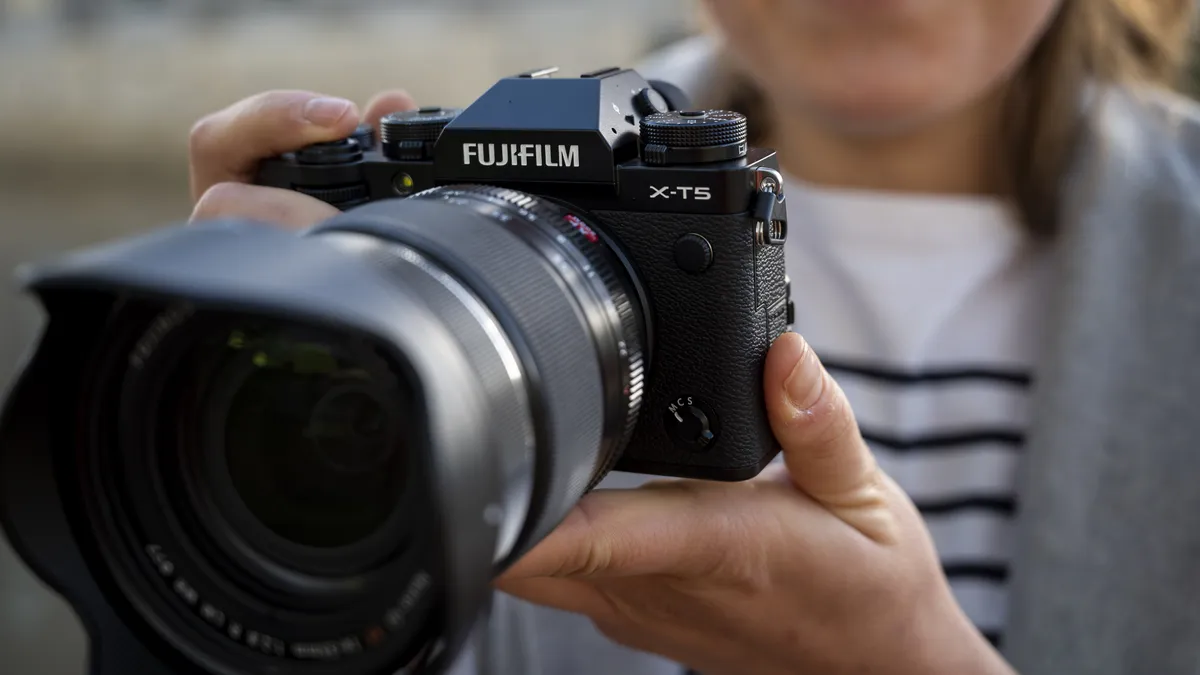
Nowadays, we look much more favorably upon APS-C cameras – and I think much of that is owed to the rise and rise of the X-Series Fujifilm cameras, with crop-sensor home runs like the Fujifilm X100VI and the Fujifilm X-T5.
And thanks to cameras like the Nikon Z5, its successor, the Canon EOS RP, as well as a wealth of cheap lenses, full frame is no longer seen as the preserve of the pro or serious enthusiast. All this, of course, is no help to anybody stuck between the Z5 and Z50 II!
So what really is the benefit of full-frame over APS-C – and vice versa? Well, the biggest difference is low-light performance.
If you’ve got a full-frame and APS-C camera with roughly the same resolution, the photosites on the full-frame camera will be larger and more adept at gathering light. This is also why full-frame cameras tend to boast better dynamic range, all amounting to better image quality.
It’s often purported that full-frame cameras provide inherently shallower depths of field, but this isn’t quite as simple as it sounds. Essentially, an APS-C camera’s crop factor requires you to stand further back than an equivalent full-frame setup, thus producing a larger depth of field.
In reality, you can still capture lovely shallow depths of field with an APS-C camera; you simply have to get a little closer, pull your subject away from the background, and so on.
And finally, Nikon’s 1.5x APS-C crop factor means that you will struggle to get super-wide fields of view. As it stands, the widest native Nikon lens is the Nikkor Z DX 12-28mm f/3.5-5.6 PZ VR – which provides an equivalent 18-42mm focal length in full-frame terms.
So there are the main differences between full-frame and APS-C cameras, but what about the tech behind the Nikon Z5 and the Nikon Z50 II?
Well, the Nikon Z50 II is the more technologically advanced camera. Its resolution is only 20.9MP in comparison to the Z5’s 24.3MP, but it trumps the Z5 by having a back-side illuminated sensor. The Z50 II also has the latest Expeed 7 processor and no low-pass filter (either a plus or a minus).
However, the Z5 does boast in-body image stabilization and dual card slots, but while it has more AF points, the Z50 II has notably better AF, with hand-me-down tech from the flagship Nikon Z9.

It’s here that the Z50 II really starts to pull away with Pre-Release Capture, notably faster burst speeds, better low-light AF sensitivity, all-around better video specs and a fully-articulating rear LCD.
Phew! If your head’s spinning, mine is too. So, which one’s best?
Well, the Nikon Z50 II’s Expeed 7 image processor enables it to be technically better almost across the board. But the Nikon Z5 is a full-frame camera, which definitely does matter to some (myself included), and if you can find a good deal, there’s very little difference in price between the two cameras.
The only other thing to consider is that the Nikon Z50 II and its DX lenses make for a significantly smaller setup than the Nikon Z5 and Nikon’s FX lenses.
Ultimately, though, they’re both great cameras that are available at quite incredible prices. There might not be a definitive answer as to which one’s better, but any photographer will agree, they’re exceptional value. And if you want the best of both worlds and don't mind increasing your budget, there's always the Nikon Z5 II.
You might also like...
Want to hear what I think about other Nikon cameras? The Nikon D800 is old, cheap and still takes gorgeous photos. If you're in the market for a new Nikon, here are the best Nikon cameras and the best Nikon Z lenses.

