
When it comes to the Canon EOS R5 vs EOS R6 Mark III, Canon doesn't make it easy to pick. Both are hybrid camera workhorses that shoot high-quality stills and video, and are suited to serious hobbyists and professionals.
What’s more, the EOS R5, released in 2020, and the EOS R6 Mark III, released in 2025, typically retail for around $2,700 (approximately £1,953 / AU$3,816), so how do you choose?
These Canon cameras compete with each other on many fronts – and the devil really is in the detail. So which is the better choice, everything considered, from stills and video to versatility and build quality?
Canon EOS R5 vs R6 Mark III: TLDR
The R6 Mark III is my pick. Video recording is a smoother experience thanks to open gate and less risk of overheating. Stills are lower quality, although hardly shabby, and the burst rate is double that of the R5. Pre-continuous shooting is available and the overall battery life is also much better.
Choose the EOS R5 if you want stills and video with superior resolution but don’t mind shorter battery life, and reduced low-light and autofocus performance.
Canon EOS R5 vs R6 Mark III: Photo

Yes, the Canon EOS R6 Mark III has a lower 32MP resolution than the 45MP of the R5. Yes, the R5 has a clearer electronic viewfinder (EVF) with 5.76 million dots compared to the R6 Mark III’s 3.69 million. And yes, this does mean the EOS R5 is more geared towards high-resolution stills.
That said, the R6 Mark III certainly doesn't shoot poor stills and, on a digital screen, the 12.5MP deficit doesn't make that much of a difference. Though granted, for commercial work and printing, having 45MP in your arsenal gives you an upper hand.
Straight-up image quality aside, the R5 doesn’t have much else over the the newer model here. The R6 Mark III has up to 8.5 stops of image stabilization compared to the R5’s 8 stops, meaning crisper handheld shots at slower shutter speeds.
In the speed stakes, the R6 Mark III performs better as well. Not only does it shoot at a maximum 40fps (using the electronic shutter), which is double that of the R5, it also has pre-continuous shooting.

Sometimes called pre-capture, this feature works by buffering images when you half-press the shutter. Upon fully pressing the shutter, the camera saves the most recent buffered shots (typically around half a second) along with the new images captured after that point.
The R6 Mark III can pre-shoot up to 20 frames, with the idea being that you get an extra split second to capture fast action. I’m not saying that you’ll never miss the action – and realistically, you already need your finger on the shutter for the extra half second to count.
But why pass on the opportunity to secure a few more frames, especially if burst mode is something you know you’re going to use? You’d be buzzing if pre-shooting saved you from missing even one key moment.
Battery is a key consideration, too. Everyone hates running out of juice and with the R6 Mark III you can take more pictures before this happens. On a full charge and in battery saver mode, you can take 390 shots through the viewfinder and 620 using the LCD. This is significantly higher than what R5 can do, clocking in at 320 and 490 respectively.
Canon EOS R5 vs R6 Mark III: Video
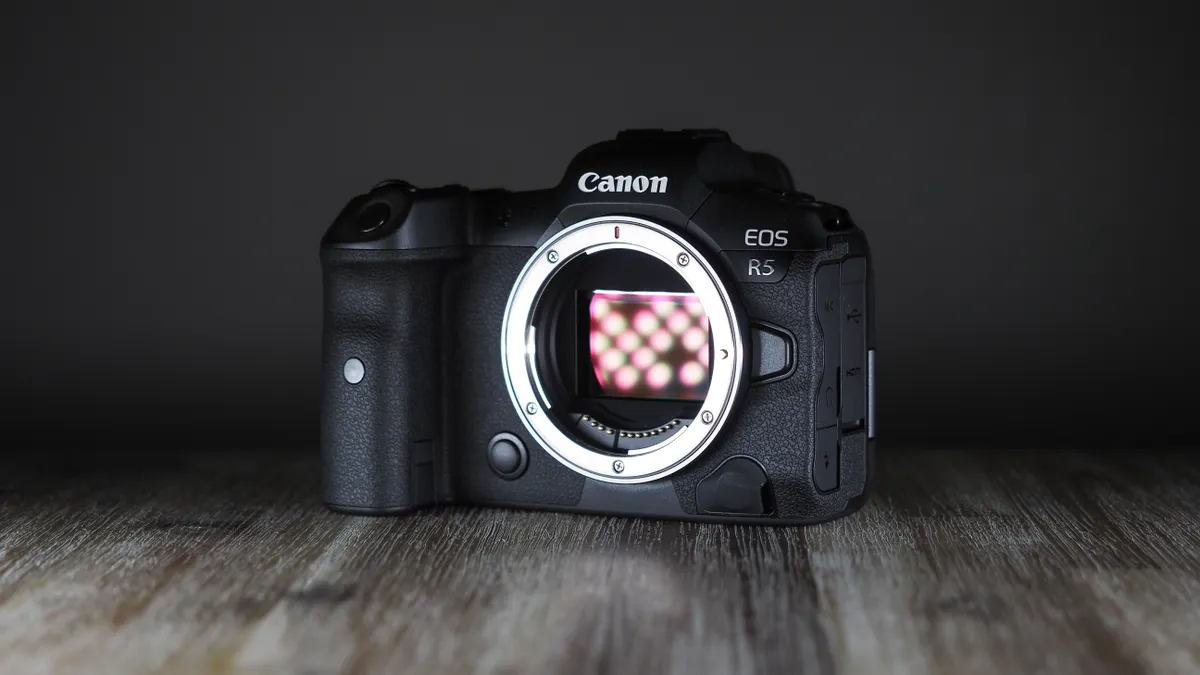
The Canon EOS R5 shoots higher-resolution 8K RAW video, but that’s its only brownie point here. It does mean that you can capture future-proof footage, with a lot more scope for reframing and digital camera moves, but we also have to consider recording restrictions.
The R5 is of the generation that had 30-minute recording limits for video files, on top of a nasty reputation for overheating at high resolutions and framerates. Canon addressed this somewhat with firmware, introducing new Standard and High temperature cutoff points, enabling the camera to film for longer before shutting off, but it’s not ideal.
The EOS R6 Mark III shoots 7K 60p RAW, which may not be as crisp as the R5 but is still sky-high resolution. It also blows the R5 out of the water by doing away with the default 30-minute recording limits, along with more lenient restrictions when shooting at extreme resolutions.
The rise of social media and short-form video means that creators now need greater flexibility around aspect ratios. The R6 Mark III has the sauce here, being able to record open gate video at 7K 30p. In fact, we recently named it as the best open gate camera all round.
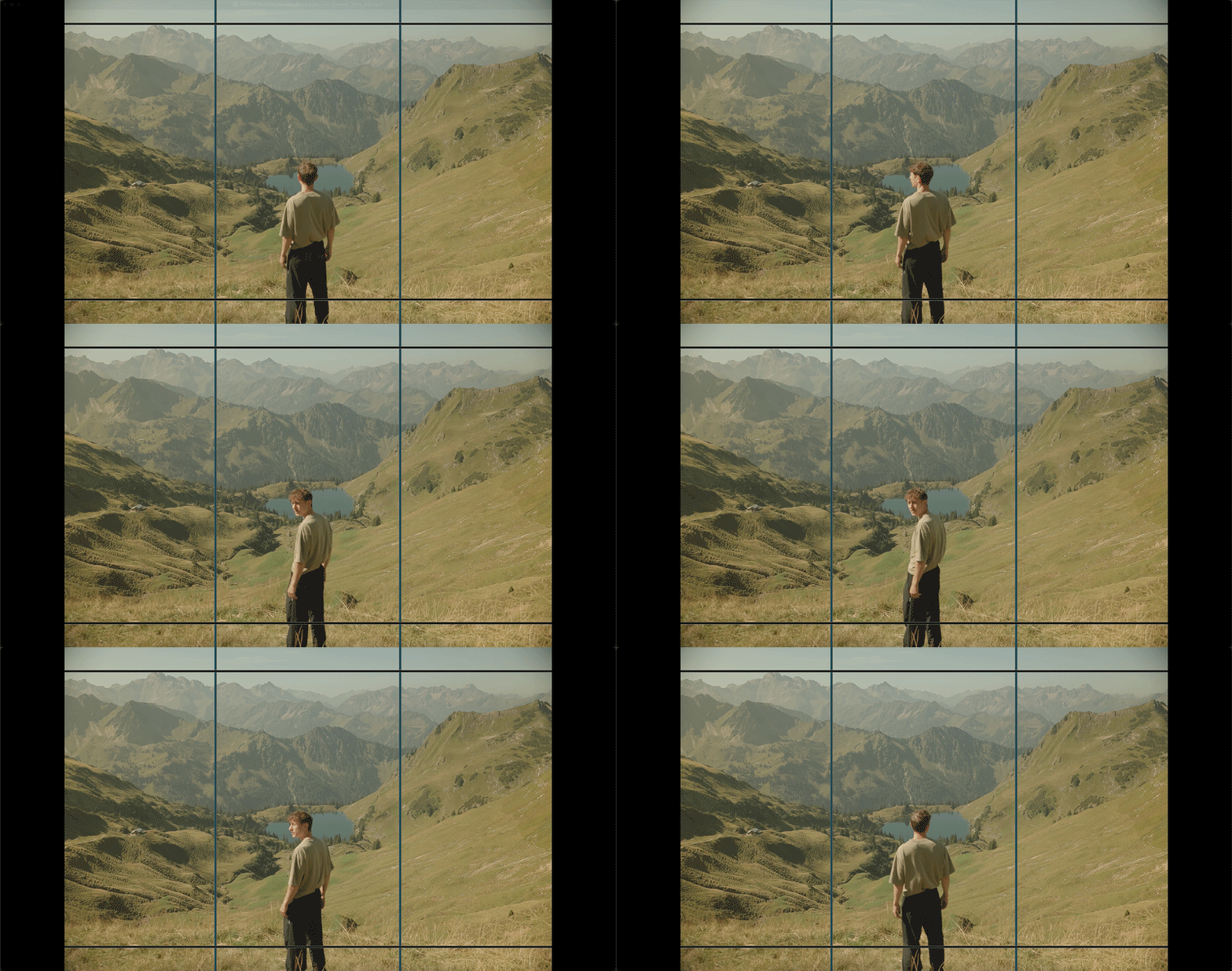
Open gate records the entire sensor height and width, as opposed to cropping to 16x9. It’s been around for years, but now it’s more necessary than ever. Recording the R6 Mark III's full 3:2 sensor readout gives you more ability to reframe footage later without losing resolution.
Because the R5 crops to 16:9, despite its higher 8K resolution, its maximum video height is (8192 x) 4320 – which is less than the (6960 x) 4640 achieved by the R6 Mark III reading the full sensor in 7K open gate.
When it comes to log, both cameras can shoot in C-Log (Canon Log) 3 – but only the R6 Mark III can shoot in C-Log 2, which is considered superior thanks to its greater dynamic range (with a tradeoff of slightly more noise).
To clarify, to shoot the highest resolution RAW video, opt for the EOS R5. Choose the EOS R6 Mark III if you want to film for longer and have the versatility to work with a range of aspect ratios without sacrificing pixels.
I’ve thrown around a lot of technicalities in this section and, if you need it, we’ve got an article deep diving into videography jargon to further help you understand what specs to look for in a camera.
Canon EOS R5 vs R6 Mark III: Autofocus
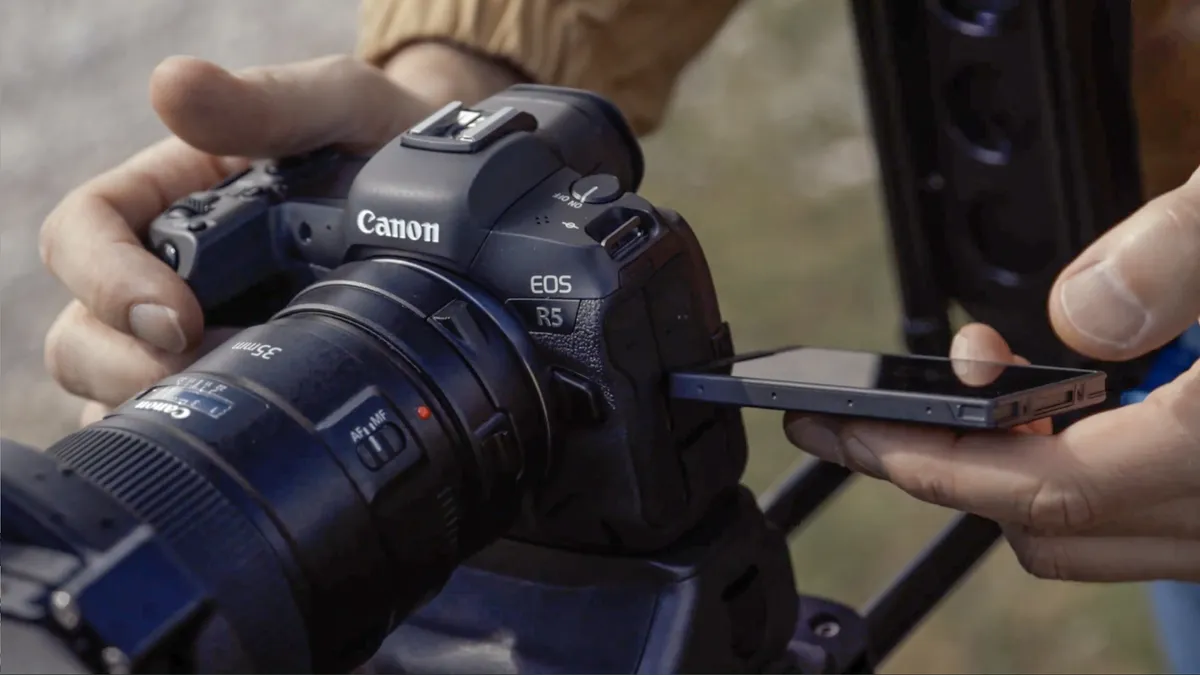
Neither of the cameras are slouches when it comes to autofocusing, but the Canon EOS R6 Mark III comes out on top here as well. Both bodies employ Canon’s Dual Pixel CMOS AF II system, which picks up on faces, eyes and bodies for both humans and animals, along with vehicle recognition.
However, where the R5 recognizes dogs, cats and birds along with cars and motorbikes, the R6 Mark III adds horses, airplanes and trains. This is all great but, for me, it’s these next features that win the AF battle for the R6 Mark III.
The first of these is Registered People Priority, which Canon brought over from the EOS R1 and R5 Mark II. Registered People Priority enables you to program up to ten faces in order of priority into the camera so it knows whom it should focus on in group situations.
And then there's the low-light AF performance; the R6 Mark III has a half-stop greater sensitivity, up to -6.5 EV. You won’t rave about this, considering the R5 is sensitive to -6 EV, but on paper it does mean the R6 Mark III can autofocus in darker situations than the R5.
Canon EOS R5 vs R6 Mark III: Build quality

Both of these cameras are built with sturdy materials and feature capable weather sealing, but the Canon EOS R5 has a higher-quality build. Designed for the most demanding environments, the full magnesium alloy shell provides maximum camera durability.
In contrast, the Canon EOS R6 Mark III has a hybrid construction combining a magnesium-alloy chassis with a lighter, slightly less durable polycarbonate shell. The build quality is robust, but the R6 Mark III can’t take a beating like the EOS R5.
While Canon's cameras are not (publicly) certified to IP standards, the R5 does boast superior sealing (equivalent to the high-end resistance of 5D DSLRs) to the R6 Mark III (equivalent to the moderate sealing of the 6D Mark II DSLR).
This does mean, though, that the EOS R6 Mark III is slightly lighter, weighing 24oz (699g) with the battery and a memory card inserted, while the EOS R5 weighs 26oz (738g).
Canon EOS R5 vs R6 Mark III: Verdict

Debating the Canon EOS R5 vs EOS R6 Mark III hasn’t been easy, as both are hybrid powerhouses that get the job done to professional standards. But for me, the R6 Mark III is the winner.
You get greater video capabilities including proper recording times, stills that are far from shabby, and improved performance features such as more versatile AF and low-light sensitivity. All this speaks to better productivity and, overall, the R6 Mark III is a camera that works for you in every respect rather than against you.
There’s no denying that the 45MP sensor, crystal-clear EVF and superior build of the EOS R5 enables you to shoot higher-quality stills in harsher environments. But the camera lags behind in terms of AF, while the reduced battery life along with greater video restrictions create clunkier workflows.
When you consider that these two cameras now retail for pretty much the same price, it doesn't make sense to go with the R5 over the R6 Mark III unless you’re a through-and-through landscape photographer.
Despite my humble opinion, if you are still leaning towards the R5, then your next move should be to compare the Canon EOS Mark II. Released in 2024, the newer camera has improved burst speed and low-light performance along with the same AF system as the EOS R6 III – but still lacks the latter's open gate ability.
Ultimately, though, these are among the best Canon cameras you can buy – so you can't go far wrong with any of these bodies!

You may also like…
Once you've picked your own winner, check out the best lenses for the Canon EOS R5 along with the best lenses for the Canon EOS R6 Mark III.

