




It's true: your camera is constantly changing stuff that should stay the same. Not all the time, but often enough for it to be at best an annoyance and at worst a real problem.
The first rule of any technology… is that automation applied to an efficient operation will magnify the efficiency. The second is that automation applied to an inefficient operation will magnify the inefficiency"
Bill Gates
This is a serious and often overlooked issue with the way camera automation works. The camera will check and adjust the settings for every shot you take, even if they are just seconds apart and of the same subject taken in the same place at the same distance.
It will check and adjust the exposure, even if you’ve moved just a foot to the left, even if the light hasn’t changed. It will check and adjust the white balance for every shot, even if they’re all taken in the same quality of light.
It will refocus on whatever it thinks it needs to focus on every time you change your position or framing. It doesn’t know it already did it for the last shot, so it does it all over again. Smart as they are, cameras are, in this respect, not smart at all.
The fact is, there are times when manual control is desirable, even essential. If you are shooting a panoramic ‘stitcher’, for example, then the exposure and the focus point must be constant across the whole series. However, the key point is not necessarily control, but consistency.

If you carefully set up a portrait shoot with precisely arranged lighting, you won’t want the camera re-estimating the exposure for each shot.
You’ll end up with a series of images where the exposure is slightly different each time, and sometimes completely wrong, just because the subject has changed position slightly, because you’ve changed position, or because the camera has decided arbitrarily that it needs to expose for a darkened backdrop and not the subject’s face.
Incidentally, this is where the best tripods can really help change your approach. They buy you extra time to make decisions, adjust the angles, decide on the camera settings and stick to them.

You might think special cases like these are rare, but they’re not. Even in ordinary day-to-day photography, there are many situations where you do not want the camera making micro-adjustments to the exposure from one shot to the next.
You may be shooting landscapes, or street scenes, or night shots, or still life images, where the light is the same throughout – but these exposure micro-adjustments spoil the visual consistency and continuity of the series as a whole.
You could argue that each shot is technically correct, but that’s no consolation if you are trying to create a visually cohesive series.
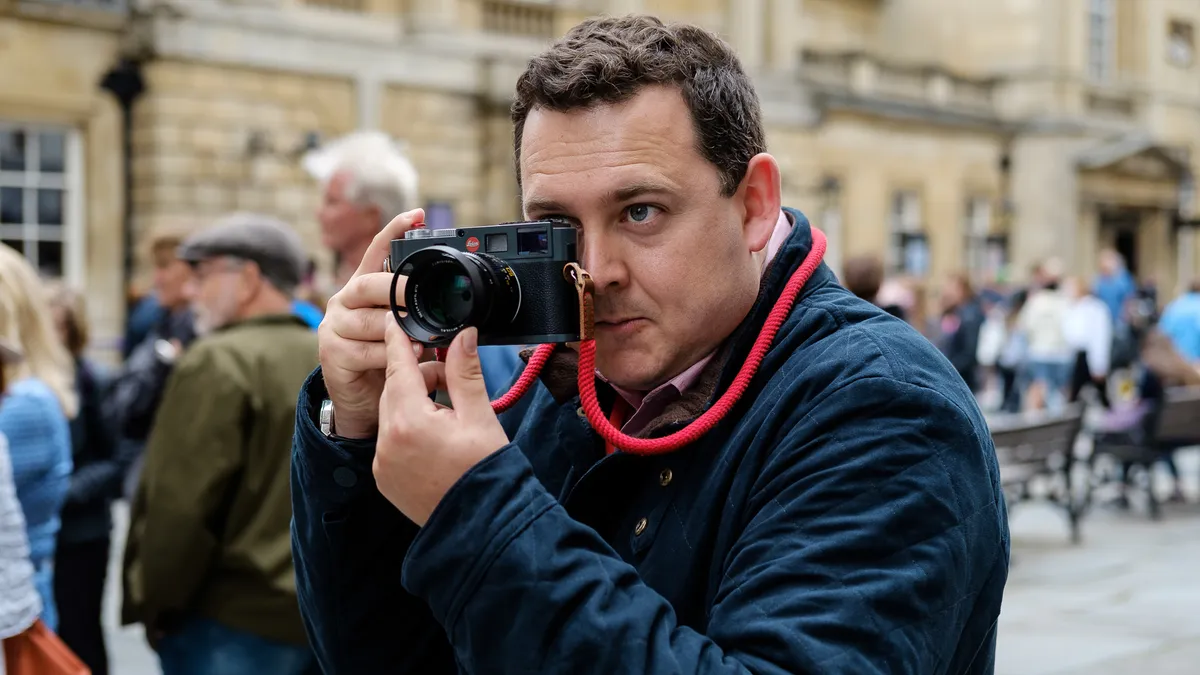
Many street photographers use zone focus rather than AF for speed and depth of field. They don’t want the camera guessing at the focus distance and lens aperture. Cameras themselves have no idea what depth of field is or why it matters.
But what about situations where you don’t need to lock down the settings or you’re not looking for any kind of consistency? So what if your camera tweaks the exposure by 0.3EV or the focus distance by half a meter, just because you’ve adjusted your position? Does that matter? Yes, because it didn’t need to do it. It’s just annoying!
So here is one of the most important reasons for taking manual control of your camera. Automation is ‘forgetful’. It has no memory of the scene it just photographed and no awareness of whether anything significant has changed. Your camera doesn’t even have the mind of a goldfish.
If you want to stop your camera guessing, if you want to achieve any kind of consistency or continuity in a series of photographs, this is the time to take manual control.
You might also like…
Want more core skills tips and tricks? Stop letting your camera guess exposure: trust me, manual mode is simpler than you think. If you keep getting shaky shots, try the reciprocal rule. And if you're looking for an upgrade, here are the best mirrorless cameras.

