




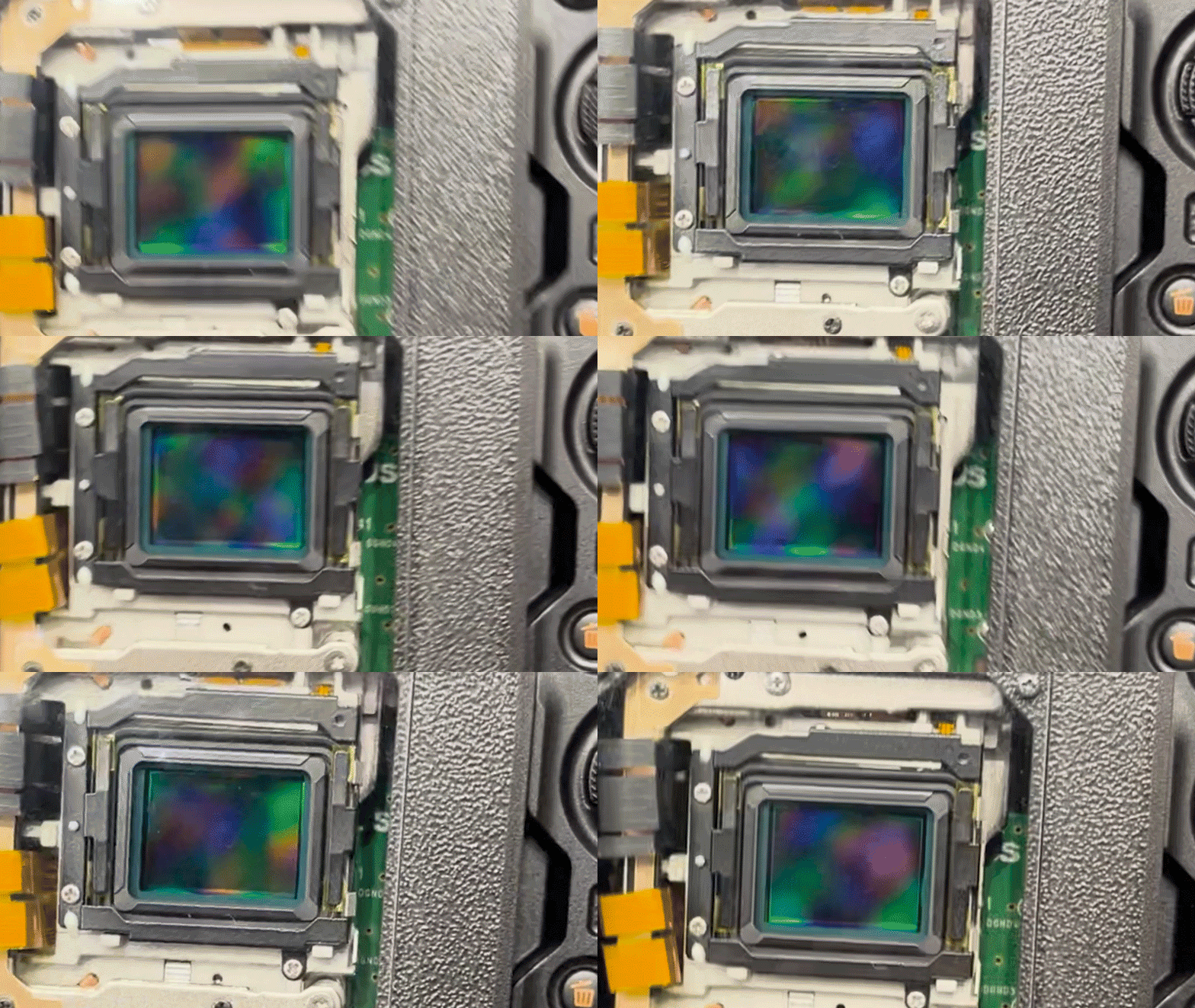
Have you ever wondered how your camera's in-body image stabilization (IBIS) actually keeps your sensor still? Then you should definitely watch this short video!
I saw dozens of cool things at the CP+ 2026 show in Japan, but perhaps the coolest was this camera exhibit by OM System. To demonstrate how sensor-shift stabilization actually works, the company had a special rig of its flagship OM System OM-1 Mark II with an exposed sensor and IBIS system.
As you can see in the video below, as I introduce movement to the camera body, the stabilization system moves the sensor in the opposite direction to compensate:
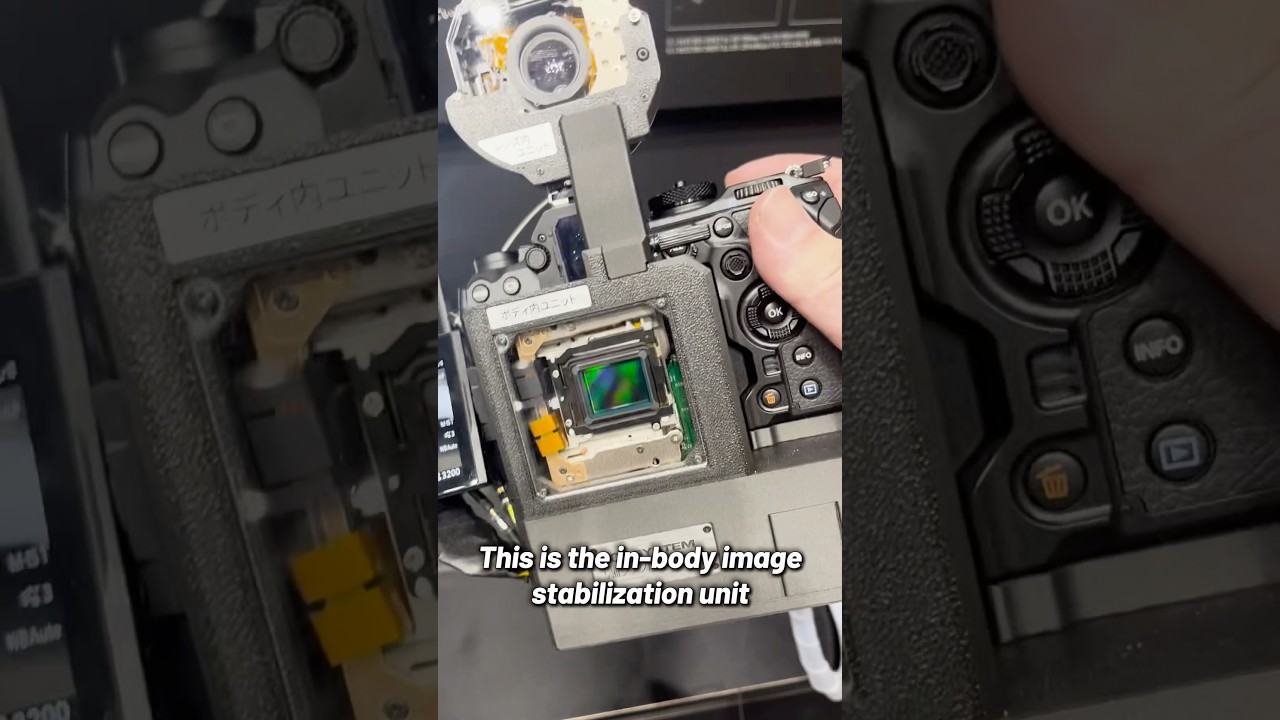
IBIS systems from all brands work in the same way, so this is what's going on inside your camera whether you use Canon, Nikon, Sony or any other mirrorless camera with sensor-shift stabilization. (In fact, some Pentax DSLRs actually possess IBIS as well!)
Earlier IBIS units topped out at three axes, but modern systems boast five-axis stabilization like the one depicted here – which compensates for pitch, roll and yaw, along with horizontal and vertical movement.
Once upon a time, crop sensor systems like Micro Four Thirds and APS-C were able to achieve superior real-world stability thanks to the fact that the sensors were physically smaller (and, thus, easier to stabilize than larger sensors).
Today, however, cameras like the OM-1 Mark II and Canon EOS R5 Mark II can achieve up to 8.5 stops of shake compensation, while the Hasselblad X2D II 100C delivers an astonishing 10 stops despite having a huge medium format image sensor.

Some in-body image stabilization systems can actually work in tandem with the optical stabilization systems in lenses, amplifying the native compensation offered by the camera or lens alone.
And some cameras still offer stabilization even though they don't have an IBIS system. This is known as electronic stabilization, and is achieved by cropping into the image and using that "dead" area to reframe and digitally compensate for motion (similar to tools like Warp Stabilize in video editing software).
So there you have it. The next time you're shooting handheld, you know exactly how your camera is cleverly keeping your images nice and stable!
You might also like…
Read my full OM System OM-1 Mark II review to see what else this technological marvel is capable of. And if you're looking for the sturdiest stabilization on the market, the best Panasonic Lumix cameras are hard to beat!

