





You can be the biggest company in the world. Make the biggest leaps in technology. And even make the best products. But there’s one thing you can’t buy, innovate or earn, and that’s heritage. Heritage is the driving force behind luxury brands such as Rolex, Ferrari, and Gibson. The photography industry is full of heritage brands, and not only is Nikon one of the biggest, but it’s also one of the oldest, having just celebrated its 109th birthday.
From S-mount to F-mount
The ‘Big N’s’ history can be traced all the way back to the merging of three optical companies in 1917 to form Nippon Kōgaku. However, it would be several decades until it released its first Nikon camera, 1948’s Nikon, which would ultimately become known as the Nikon I. This rangefinder 35mm film camera debuted the company’s S mount, but according to Nikon Museum, its unusual 3:4 (24 x 32mm) format prevented its export to the US, so it wasn’t a big seller.
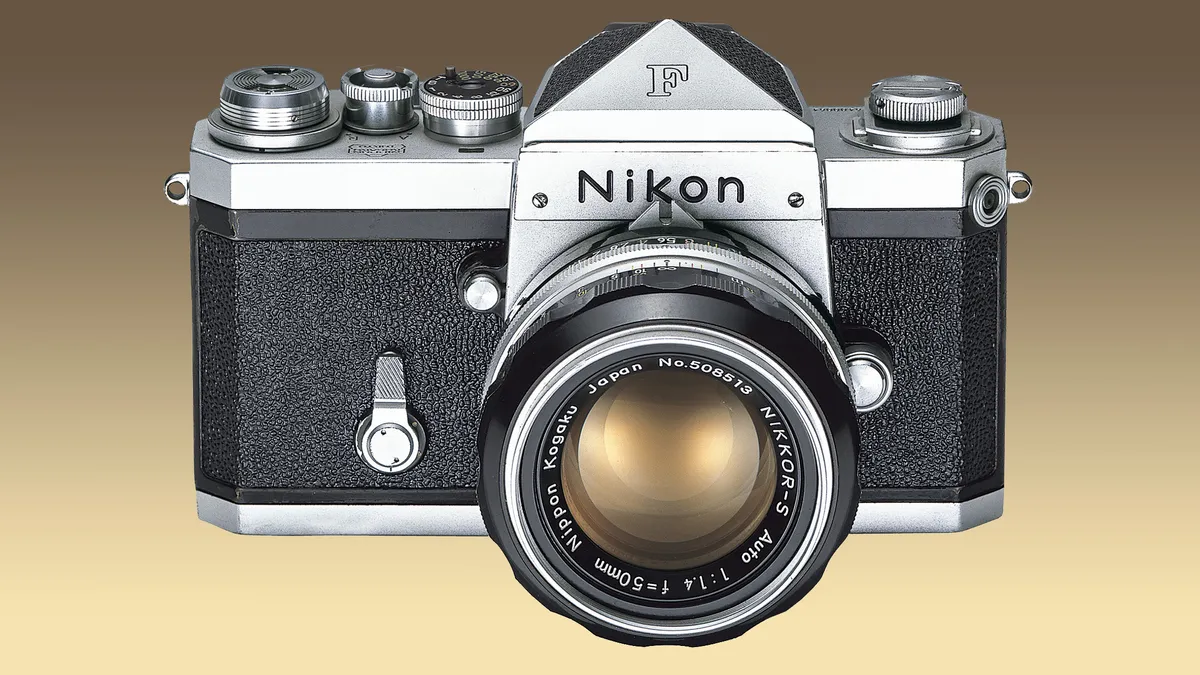
Still, the S mount would persist over the coming years with various camera releases until it was discontinued in 1964. What hastened its demise was arguably the single most important invention in Nikon’s history, which started with the release of the Nikon F in 1959. That invention was, of course, the F mount. The company’s first SLR mount would remain relatively unchanged for over 60 years, making it far and away the longest-running 35mm SLR lens mount of all time.
Nikon’s digital revolution

During that time, Nikon spawned a huge number of classic cameras such as the Nikon FM2 and Nikon F3, and in 1988 the company name would be officially changed to Nikon. In 1999, just 2.5 years after the release of the company’s flagship Nikon F5 film camera, it would launch an innovation that would kickstart a shift so monumental, it would send reverberations throughout the entire industry.
I am, of course, talking about the release of the Nikon D1. The company had already flirted with digital tech, launching its collaborative E series with Fujifilm in 1995 and releasing the Nikon Coolpix 100 in 1996, but the D1 was the first DSLR camera produced and marketed solely by Nikon. In a world where film was still very much the go-to format, the Nikon D1 was one of the first DSLR cameras to start attracting the attention of professionals as a serious alternative to film.

In the early noughties, the company would launch its first bridge camera, the Nikon Coolpix 5700, and Nikon DSLRs would go from strength to strength. But film wasn’t done yet. In 2004, Nikon would release its last film camera, widely regarded as the greatest film camera of all time, the Nikon F6, which would, rather remarkably, remain in production until 2020.
The ‘Big N’ would finish the 2000s amidst a cacophony of Coolpix and DSLR cameras, before shaking up the industry once again in 2012 with the release of the megapixel monster that was the Nikon D800. But the camera that nobody can forget came in 2017, taking the D800’s visionary DNA and refining it to perfection in the Nikon D850.
The move to mirrorless

Unbeknownst to Nikon faithful at the time, the Nikon D850 was something of a swan song for Nikon DSLRs, because the following year, the Z mount would burst onto the scene and with it Nikon’s first full-frame mirrorless cameras. This wasn’t the first time Nikon had made the move to mirrorless, having launched the doomed Nikon 1 System back in 2011. But far from a pocket-sized 1-inch-type oddity, the Nikon Z6 and Nikon Z7 were serious cameras for serious photographers.
Still, there was life in the old DSLR yet, as evidenced by the release of Nikon’s final DSLR camera and lens in 2020, the Nikon D6 and Nikon 120-300mm AF-S f/2.8E FL ED SR VR. But rather than prolong the inevitable, the following year brought the introduction of the Nikon Z9, the company’s first proper mirrorless flagship.

Some incredible launches such as the retro Nikon Zf, Nikon Z8, Nikon Z50 II and more would follow, but 109 years on from Nippon Kōgaku’s inception, the Z9 era is where we find ourselves. But if the best camera rumors are to be believed, we could be getting a follow-up at some point soon, ushering us into the true second generation of Nikon Z mount.
So, there you have it, a very potted history of Nikon. I could have waxed lyrical about the Noct, an eye-wateringly expensive Nikon fisheye, and how the inventor of the DeLorean ended up designing Nikon cameras. But maybe I’ll save that for next year’s 110th.
You might also like...
I bought the only film camera I’ll ever need: the Nikon FM is an SLR in its purest form. Opinion: The decade-old Nikon D800 is still a beast, and here’s why. I bought a Nikon Z8 two months before the Z6 III launch – did I make a mistake?

