
The Nikon D700 is trending, and while it might not be the first budget camera I’d stick on my recommendations list, you cannot argue with the image quality or price. At the time of writing, a working Nikon D700 can be picked up from used camera retailer MPB for as little as $249 / £149. Evidently, photographers are buying up DSLRs, and when you consider what you get for your money, it’s not hard to understand why.
Nikon announced the Nikon D700 in July 2008. Its biggest selling point was its heavy infusion of Nikon’s flagship D3 tech, and that’s still appealing today. You see, the D700 might be an aging piece of kit, but it still feels like a high-end product. After all, it’s a pro-grade, weather-sealed Nikon, made in Japan. It’s got that reassuring, high-end Nikon DSLR feel in that it’s like holding a miniature tank.
Nikon D700: Aging specs, premium build

The Nikon D700 is built around a 12.1-MP full-frame sensor, which in and of itself is reason enough as to why photographers on a budget may be interested in an aging DSLR like this. Full-frame cameras aren’t cheap and while 12.1MP isn’t up to today’s standards, the D700 is still capable of capturing gorgeous imagery. You just have to be much more regimented about getting it right in-camera.
And that’s another reason why a DSLR can prove to be a great buy. It’s a harder tool to learn than a modern mirrorless camera; it will force you to become a better photographer. Despite the D700 having impressive specs for its time, you’ll need to consider your ISO carefully to avoid noticeable noise; you won’t be able to fire off super-quick bursts because it’s capped at 5fps (without the MB-D10 battery pack), and you’ll have to wrestle with a robust but technically dated AF system. And all that’s before you consider the lack of an EVF.
But the good news is, if you learn on a cheap but capable DSLR like the D700, you’ll find the transition to mirrorless much easier. This old camera has another cool feature (or lack thereof) up its sleeve: it doesn’t do video. Now, that might seem like a shortcoming in 2026, but if the D700 did have video capabilities, they’d be undesirable anyway.
What you’re left with is a rarity in the modern world of photography: a stills camera that’s a stills camera only. If you’re determined to become a true student of stills photography, the D700 is an all-out photography machine. No video-centric distractions. Don’t get me wrong, it’s easy to ignore a camera’s video features, but there’s something pure and characterful about the D700’s limited featureset that’s a rarity in modern photography.
Nikon D700 as a cheap lens platform
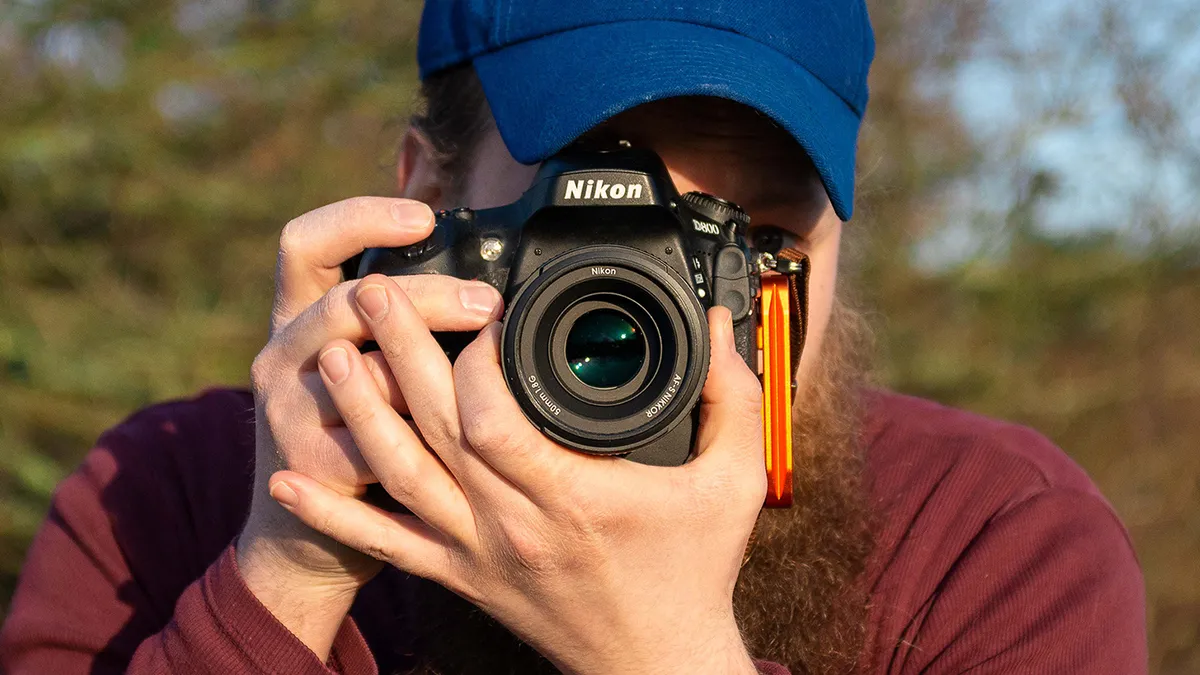
And finally, perhaps the best reason to pick up a D700 or any DSLR for that matter is that you can take advantage of cut-price DSLR glass. My number one tip for new photographers or photographers getting into an interchangeable-lens system for the first time is to avoid spending all of your budget on a fancy camera and have nothing left over for lenses.
If your budget is really tight, a cheap DSLR can be used as a lens platform to start with, and then in the future you can always upgrade the camera. In the case of Canon and Nikon DSLR cameras, you can pick up official adapters so you can even end up with a new mirrorless camera and still make use of your lens collection.
So there you have it; the D700 still isn’t the first camera I’d recommend for photographers on a budget, but this exceedingly cheap DSLR could still prove a great entry point into the world of serious photography for the right photographer.
You might also like...
If you’re a fan of the ‘Big N’ then you’ll want to pick up one of the best Nikon cameras. The Nikon Df is the DSLR I'd buy today – and reminds me that photography isn't always about cutting-edge perfection. Has the compact camera trend already stalled? Camera numbers are down across every major category in the latest data from Japan.

