





Almost everyone who loves photography also loves retro cameras. In fact, even non-photographers appreciate their aesthetic appeal – as evidenced by the insatiable appetite for the Fujifilm X100 series.
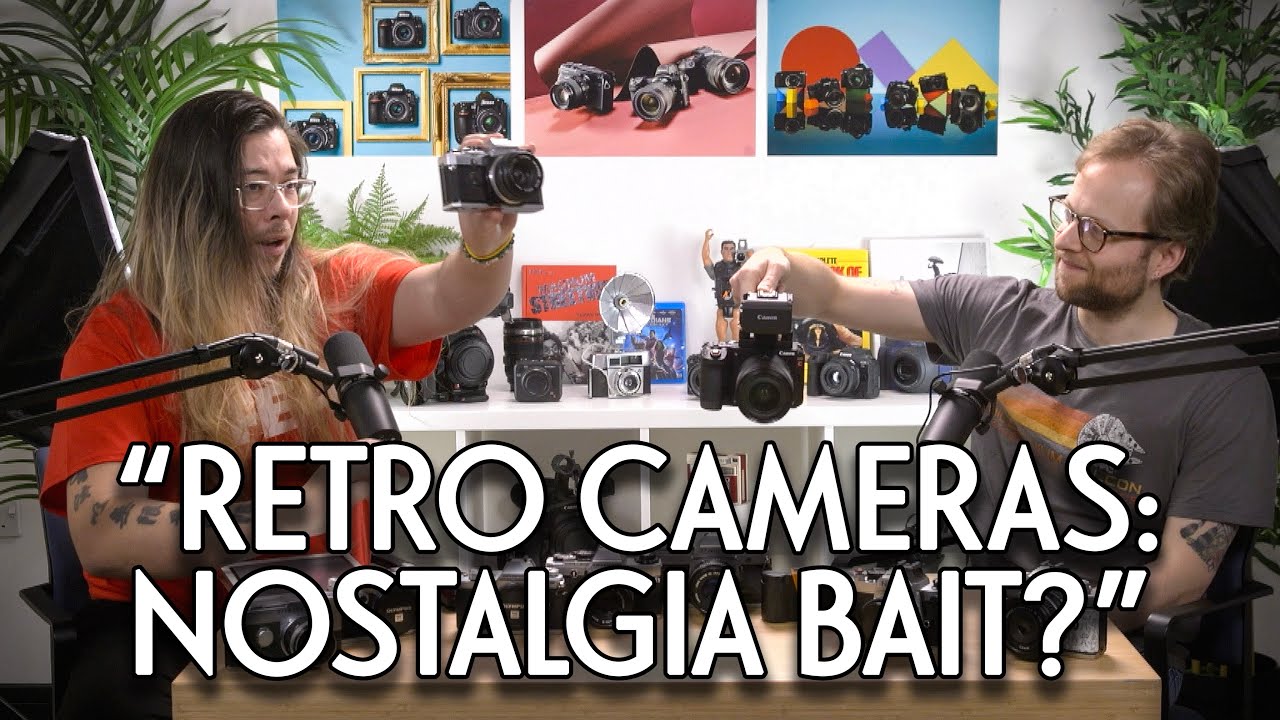
On the latest episode of our podcast, Bokeh Face, my colleague Mike and I talked about the virtues of retro cameras, covering everything from their vinyl-like collectible appeal to what the future looks like for this subgenre of camera.
But while some photographers are under the impression that retro cameras are a Fujifilm thing, and a recent thing at that, when you look at the timeline of the trend you realize that it was far from alone in starting the craze – a craze that has actually been going on for well over a decade!
I invite you to check out our conversation below for more detailed discussion (the link will jump you straight to this part of our conversation), but here's a quick rundown of the retro mirrorless camera timeline… (This isn't a list of every retro body, but the key first models that kicked retro product lines.)
2012 – Fujifilm X-Pro1
The original X100 had already launched in 2011, but that was a compact camera (and as such was actually part of the Finepix line, to begin with) and many manufacturers made retro-looking compacts. But January saw the first ever retro mirrorless camera, in rangefinder style, with a 16.3MP APS-C X-Trans sensor and 49-point contrast-based AF system.
2012 – Olympus OM-D E-M5
The following month, Olympus dropped the groundbreaking E-M5 – arguably the camera that proved mirrorless could be a high-level, even professional tool. Packing a 16.1MP Micro Four Thirds sensor with a 5-axis in-body image stabilization system and weather sealing, this camera cemented Olympus as a pioneer of post-DSLR photography.
2013 – Nikon Df
I know it's a DSLR, not mirrorless, but that actually speaks to the story of the Df – a retro camera that was, ironically, ahead of its time. Nikon embraced the throwback aesthetic but applied it to bulky DSLR technology (taking the full-frame 16.2MP sensor from 2012's flagship D4), resulting in what Mike called a "Fallout camera" that looks almost like a parody camera from the future.
2014 – Fujifilm X-T1
It took Fujifilm a couple of years to release an SLR-inspired body to complement the rangefinder camera design of the X-Pro – and it upped the ante with its newer 16.3MP X-Trans II sensor and the introduction of phase-detect autofocus (making it a rival to Olympus' next OM-D camera, the decidedly non-retro E-M1).
2016 – Olympus PEN-F
Where Fujifilm started with a retro rangefinder before bringing out an SLR-style camera, Olympus did it the opposite. The E-M5 spawned a successor, as well as a retro sibling in the form of the E-M10, but arguably the company's magnum opus was the mighty PEN-F – milled from a single block of aluminum, built around a 20.3MP sensor and introducing Oly's first film simulations.
2020 – Hasselblad 907X
We had mirrorless cameras inspired by rangefinders and mirrorless cameras inspired by SLRs, so Hasselblad said "Hold my schnapps" and gave us a mirrorless camera inspired by modular medium format systems. Technically the world's thinnest mirrorless camera, the 907X enables you to mount a 50MP or 100MP digital back to the best Hasselblad XCD lenses.
2021 – Nikon Zfc
After getting its fingers burned in 2013, Nikon did retro right this time with the Zfc – taking the guts and the 20.9MP APS-C sensor of the Nikon Z50 and putting them inside a slick (albeit plasticky) throwback body. It would perfect the formula in 2023 with the full-frame Nikon Zf, marrying the 24.5MP DNA of the Z6 series with a proper metal body.
2025 – OM System OM-3
As beloved as the PEN-F was, it didn't sell enough to be considered a success. But after Olympus sold its camera division in 2021, the reborn OM System brand gave us the most faithful Oly tribute camera ever. The OM-3 put all the flagship firepower of the OM System OM-1 Mark II in a breakthrough body that did as much for the company's image as it did for photographers' image quality.
You might also like…
Take a look at the best retro cameras from all brands. Want to get really retro? Check out the best film cameras and the best instant cameras for the full analog experience.

