
When are cameras fast frames-per-second rates going to be fastest enough for you? Canon’s flagship EOS R1 tops out a continuous shooting rate of 30fps in high-speed drive mode. Need to go faster? The latest cameras from Canon and Fuji, such as the Canon EOS R6 Mark III and Fujifilm X-H2S, max out at 40fps in their standard electronic shutter modes.
Want to go faster still? Check out the Sony A9 III and Nikon Z8 and Z9, which offer a super-speedy 120fps (although only for 11MP JPEGs in the Nikons). Faster still? The Canon EOS R3 has a Custom High Speed Continuous option (added in firmware v1.2.0 update) with the electronic shutter to shoot at an eye-watering 195fps for 50 RAWs!
That's nearly two hundred frames in one single second. Incredibly impressive, yes. But do you really need to shoot this fast? Unless you’re a pro who’s shooting at the Winter Olympics, the answer is no.
I remember when cameras started offering the magic 10fps – the Canon EOS-1D Mark III in 2007 to be precise – and I often think 10fps is more than quick enough for most photographers.


Shoot at 120fps on a Nikon Z9 for just 4 seconds (the approx limit in this high-speed mode) and you’ll have nearly 500 images. You only have to do four bursts at those fps speeds and you’ll have 2000 images!!
Even if you’re shooting at ‘only’ 40fps – just to spell this is out – that’s 40 images every single second. In five seconds you will have 200 images (if your camera’s buffer can handle it). If you’re photographing a 90-minute soccer game (which is 5400 seconds) you could end up with over 200,000 images!
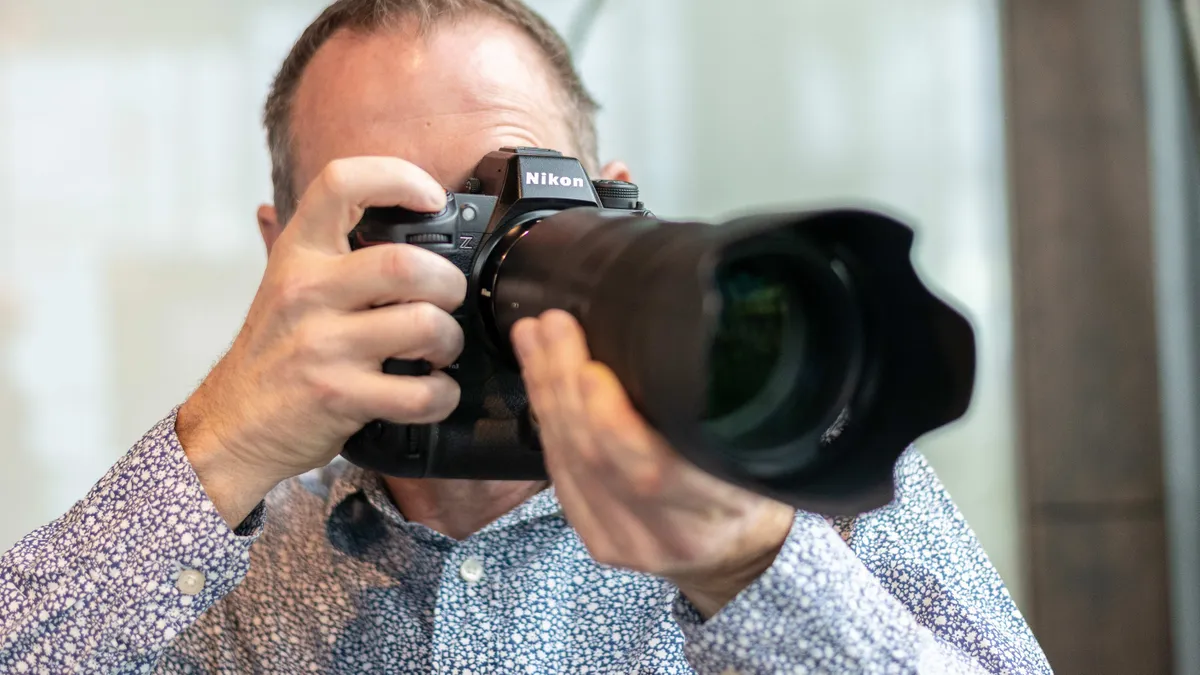
I’m being pedantic, but you get my point. Shooting at these fps speeds eats up memory cards, fills up your computer’s HDD or portable SSD, and more importantly - it adds hours and hours to your image-editing time.
I’m getting a stress headache just thinking how long it’ll take you to trawl through hundreds of thousands of images on your computer, just to pick a handful of good ones with your subject in focus and in a pleasing position.
These super-fast fps rates also make you lazy and less focused when blindly holding down the trigger on your camera. These sorts of amateurs are oblivious if their focus is locked on to their subject or not, and if they’re still holding down the trigger, they’re not pausing to the action, they’re just aimlessly shooting and their bad photos will prove it.

And here’s my point. 40fps is often too much. I very rarely need 40 images per second of whatever action I’m shooting; whether it’s birds flapping about on the water, or players sprinting on the pitch.
So I slow down the fps rate on my Canon cameras like the EOS R5 Mark II. I don’t use the 30fps in High Speed Continuous+ mode, instead I use the High Speed mode at 15fps. Or I customise the High Speed Continuous+ speed mode down to 20fps.

It's far more effective to shoot at more considered fps and in short bursts of 5-10 frames, studying your subject and reacting when there’s a key moment of action on the pitch, or the wildlife is about to move in an interesting way.
This also allows you time to ensure your focusing is spot on, ensure your shutter speed is 1/2000 sec or fastest enough for your subject, and you’ve thought about your composition, and what’s in the background.
Try it next time you’re photographing sport or wildlife, and I bet your hit rate improves.

