
If you're searching for the best camera for beginners, you might be interested in the Canon EOS R100. The R100 remains one of the most popular entry-level mirrorless cameras since its launch in 2023.
The Canon EOS R100 is sitting at No.1 on Amazon's US and UK bestseller December charts. And this is not the first time the mirrorless is topping sales lists – that kind of sustained demand isn't accidental.
In our buying guide, the Canon EOS R100 was rated as the best beginner camera overall, not because it has the most features, but because it gets the fundamentals exactly right.
For first-time photographers, it delivers what matters most: great image quality, reliable autofocus (AF), simple controls, and access to one of the strongest lens ecosystems in photography.
Crucially, this isn't a camera that beginners will "outgrow" overnight. The R100 is designed to teach photography properly – rewarding curiosity and experimentation – while remaining affordable, compact, and unintimidating
That balance is why it continues to top sales charts well into 2025... Let's take a closer look at the EOS R100.
Why the R100 is such a great beginner camera

At its core, the R100 is built around a 24.1MP APS-C sensor paired with Canon's Dual Pixel CMOS autofocus (AF), a system derived from the brand's professional cameras. Face detection and eye tracking take the pressure off nailing focus, letting beginners concentrate on composition and light.
Canon's guided menu system is another standout feature. Instead of throwing technical jargon at new users, it explains what shooting modes actually do – a subtle but hugely valuable learning tool.
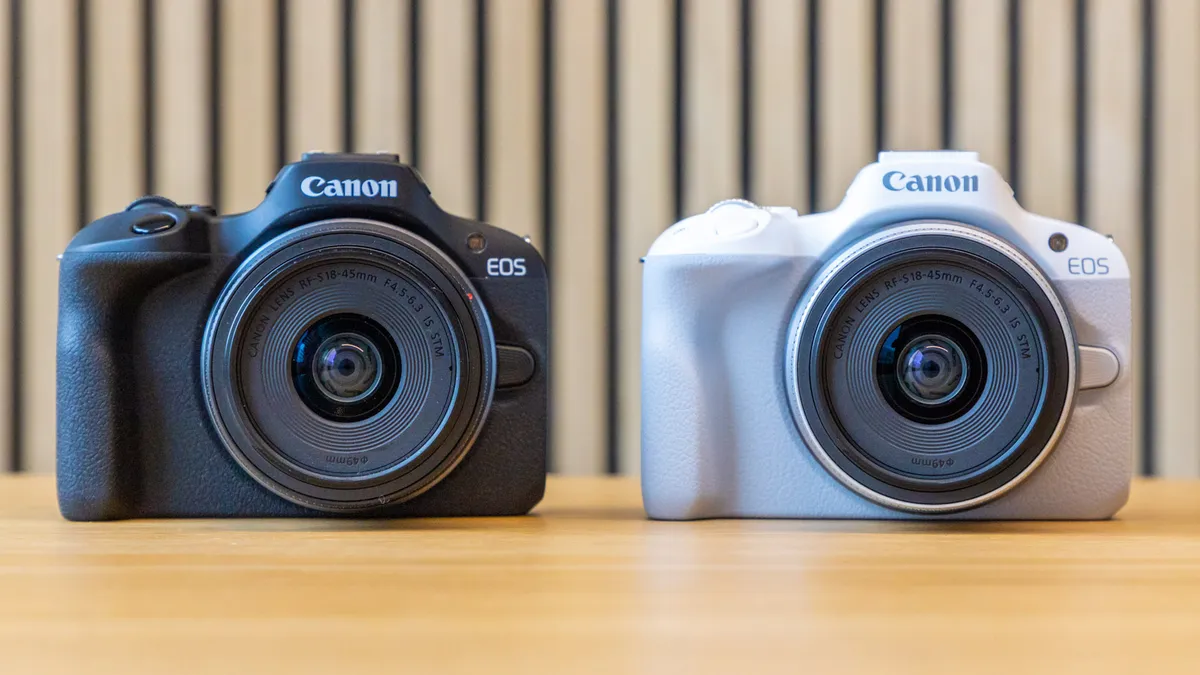
Add a lightweight body, logical button layout, and access to Canon's RF lens range (plus EF lenses via an adapter), and you have a camera that genuinely grows with you.
Two years on, the R100 holds its own. For still photography, it delivers results that are good enough for serious hobbyists, social media, prints, and even editorial use in the right hands. Its continued popularity also means strong availability, competitive pricing, and a healthy ecosystem of accessories.
What about drawbacks – and the Canon EOS R50?
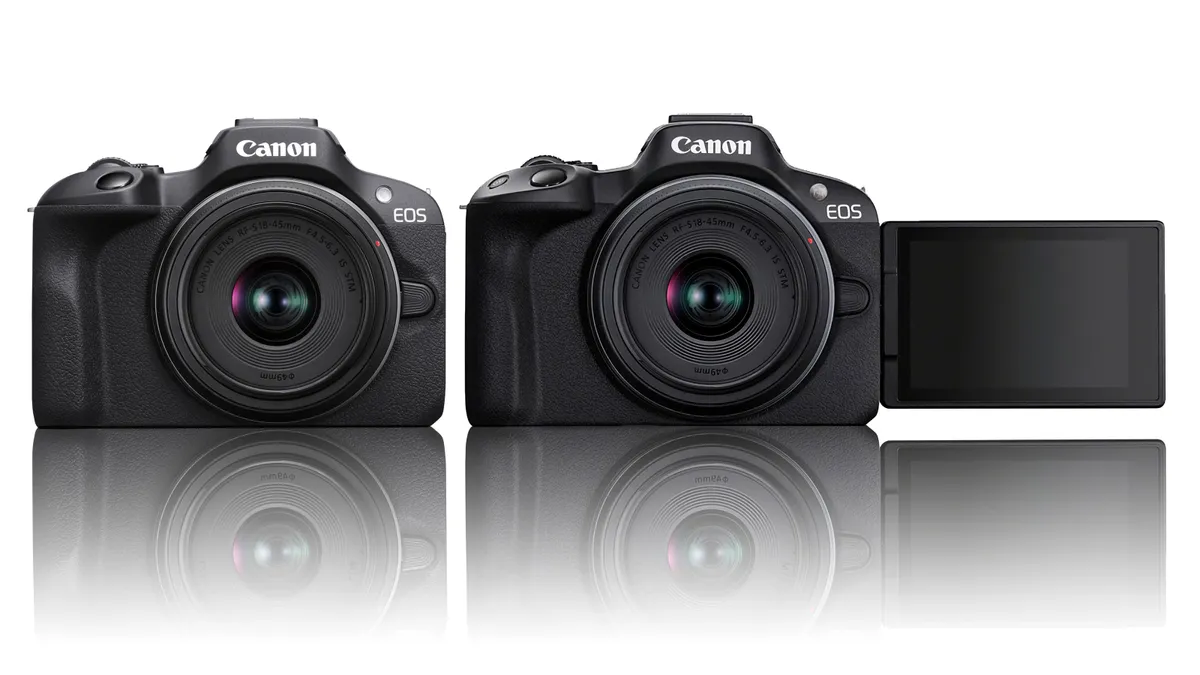
To keep costs down, Canon made some conscious compromises. The fixed, non-touchscreen display is the most discussed, especially compared to the Canon EOS R50, which offers touch control and a more video-friendly design. For some users, that alone will justify spending more.
However, it's important to frame this correctly: the lack of touch control doesn't make the R100 harder to use, just more traditional. Everything is accessible via buttons and the D-pad, and for photographers focused on learning stills, the experience remains intuitive and effective. For more information, read our R100 and R50 comparison.
For pure photographic value, the R100 remains a standout beginner choice in 2025.
You might like...
Browse the best cameras for beginners, the best budget telephoto lenses, and the best camera accessories.

