
Welcome to my guide to the best Canon portrait lenses. Whether you're using a Canon EOS R system mirrorless camera or an EOS DSLR, these are the fast primes that will get you perfect portraits, every time.
As Digital Camera World's go-to lens reviewer, I've covered lenses for all of Canon's systems, and this list represents the best of the best, in my view. One thing to note, however, is that I've not just picked the most expensive professional lenses – sometimes I think that more affordable options make smarter buys, so I've included some budget-friendly lenses.
See the bottom of this page for more detail on my selection criteria, or check out our team's other guides to the best Canon DSLR lenses and the best Canon mirrorless lenses for RF-mount. But for now, let's get started with the best Canon portrait lenses!

Portraits have been my bread and butter as both an EOS and EOS R shooter for many years. As Digital Camera World's principal lens reviewer, I've tested more primes and zooms than some people have had hot dinners – and the lenses on this list are my top recommendations.
The best Canon portrait lenses
Why you can trust Digital Camera World Our expert reviewers spend hours testing and comparing products and services so you can choose the best for you. Find out how we test.
Best Canon RF portrait lens
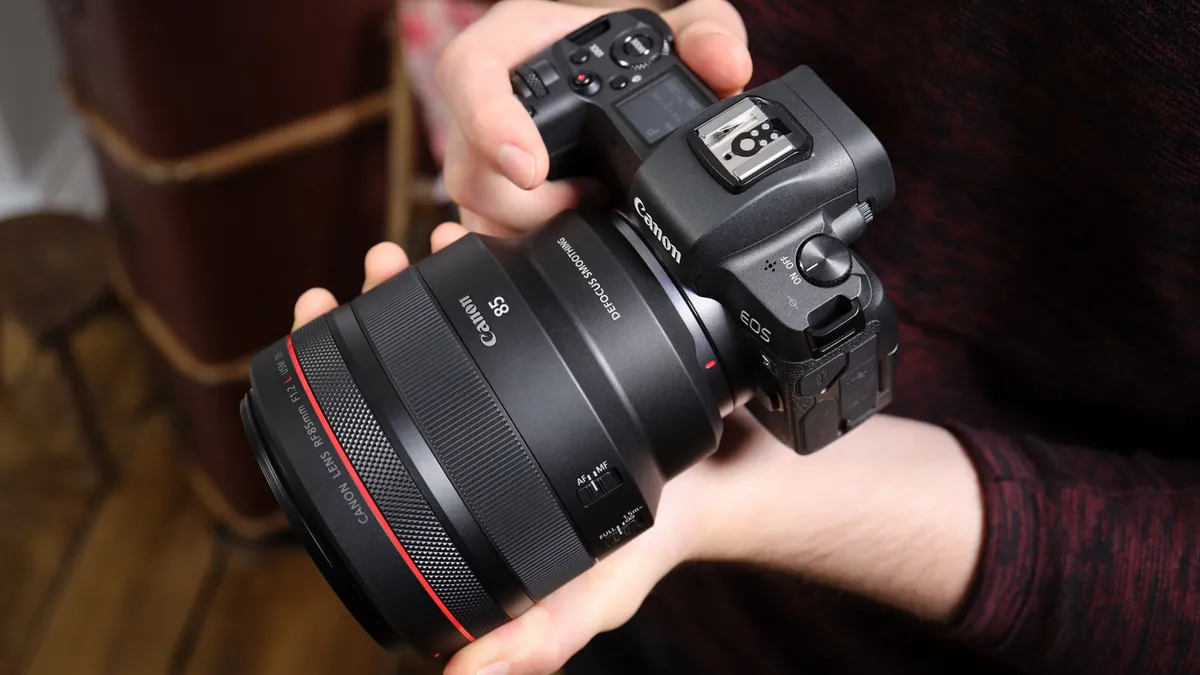


Canon’s RF 85mm f/1.2L USM is arguably the best portrait lens in the world right now. It combines premium aspherical and UD (Ultra-low Dispersion) and BR (Blue spectrum Refractive) optical elements with high-tech ASC (Air Sphere Coating) to deliver absolutely stunning image quality in all respects.
Unlike the EF 85mm f/1.2 lens for DSLRs, this RF-mount lens for EOS R-series cameras features weather seals and fluorine coatings on the front and rear elements. It also has a much faster autofocus system, although the electronically coupled manual focus ring is retained, which enables very fine and precise adjustments. Sharpness is stunning and bokeh is sublime and, as noted, this becomes an effective 136mm optic on an APS-C camera – making it ideal for those shooting on crop sensors.
For the most demanding portrait photographers, there’s an even pricier version of the lens: the Canon RF 85mm f/1.2L USM DS, which has an additional Defocus Smoothing coating. This further softens the edges of bokeh discs caused by defocused lights and bright spots for the creamiest bokeh you've ever seen! We'd still ultimately opt for the RF 85mm f/1.2L USM, as the loss of transmission in the DS version is a bit of a drawback.
Read our full Canon RF 85mm f/1.2L USM review
Features ★★★★★ |
The top feature is the quality of the glass but it’s backed up by an autofocus system with pinpoint accuracy. |
Design ★★★★★ |
It’s necessarily a big and hefty lens but build quality and handling are superb. |
Performance ★★★★★ |
Spectacular sharpness and clarity combine with wonderfully dreamy bokeh. Autofocus accuracy does justice to the super-shallow depth of field. |
Value ★★★★☆ |
It’s a hugely expensive lens but you get what you pay for and more besides. |
Best Canon RF environmental portrait lens


Think super-fast standard primes and if you’re a Canon mirrorless shooter, the mighty Canon RF 50mm f/1.2L USM will probably spring to mind. After all, it’s Canon’s relatively well established, flagship ‘nifty fifty’. However, if you aspire to a prime lens with an f/1.2 aperture rating, the Canon RF 45mm f/1.2 STM is a much more affordable proposition, only costing around a fifth of the price.
The f/1.2 aperture is the main highlight, enabling a really tight depth of field for isolating subjects against fussy backgrounds, as well as for enabling faster shutter speeds under low lighting conditions, for freezing the action. The lens is relatively small at 76x75mm and 346g in weight, and has a modestly sized 67mm filter attachment thread.
Good sharpness combines with smooth bokeh to deliver pleasing results, making the lens a very good buy at the price. It’s also a great choice as a portrait lens on Canon’s APS-C format R series cameras, where it has an ‘effective’ focal length of 72mm.
Read our full Canon RF 45mm f/1.2 STM review
Features ★★★★☆ |
Top of the list is the super-speedy f/1.2 aperture rating but there’s not much else in the way of fancy features and you even have to buy the hood separately. |
Design ★★★★★ |
Proving that actually can squeeze a quart into a pint pot, Canon has succeeded in combining a 45mm focal length with an f/1.2 aperture into a remarkably compact and lightweight build. |
Performance ★★★★☆ |
Image quality relies to some extent on automatic in-camera corrections and wide-aperture edge-sharpness is disappointing but the net results are very satisfying overall. |
Value ★★★★★ |
For an own-brand Canon f/1.2 prime lens, this one is insanely great value for money. |
Best Canon portrait lens for headshots


It took some 27 years for Canon to get around to releasing a successor to its hugely popular 135mm f/2 L USM EF lens – but it was certainly worth the wait. The RF 135mm f/1.8L IS USM lens is ultra-sharp and built to the exacting standards of Canon's premium L series.
With a tighter field of view than the 85mm standard portrait lens, it's ideal for getting headshots and head-and-shoulders portraits, placing firm emphasis on the subject rather than their environment. It's also stabilised, with 5.5 stops of lens-based IS, which can be upgraded to 8 effective stops when used with compatible EOS R cameras.
Of course, given that this is an L-series lens, it's certainly not cheap. It's also a hefty customer – weighing in at almost a kilogram, it's certainly a lens that you'll be painfully aware of if you carry it around on your neck all day.
Read our Canon RF 135mm f/1.8L IS STM review
Features ★★★★★ |
Rapid autofocus, 5.5-stop optical stabilization and high-end handling lead the feature set. |
Design ★★★★★ |
The build quality is excellent and the lens isn’t overly large or heavy, and includes function buttons and weather-seals. |
Performance N/A |
The jury’s still out on performance. It performed flawlessly in our ‘real world’ tests but we haven’t been able to lab-test it yet. |
Value ★★★★☆ |
It’s typically expensive for a top-notch, L-series lens but a real keeper and good value at the price. |
Best Canon portrait macro portrait lens


There's no getting away from the fact that Canon's RF 85mm f/1.2L USM in our number-one spot is an expensive lens. So, if you're looking for a more affordable option, the RF 85mm f/2 Macro is the way to go – especially since it does double duty as a light macro lens, with a 1:2 reproduction ratio, making it a great option for both kinds of close-ups.
While the maximum aperture of f/2 might not be the fastest, I still found this lens to be very capable of delivering really pleasing defocused backgrounds – and it's also incredibly sharp. If your budget won't stretch to the 85mm f/1.2, or you simply want something that isn't bigger and heavier than the camera you're mounting it on, you certainly won't be disappointed with this lens.
Read our full Canon RF 85mm f/2 Macro IS STM review
Features ★★★★★ |
There’s a lot packed in, with top-notch autofocus and optical stabilization, and even a 0.5x macro facility. |
Design ★★★★☆ |
The lens is refreshingly compact and lightweight but doesn’t feature weather-seals and the hood is sold separately. |
Performance ★★★★★ |
Depth of field isn’t as tight as with an f/1.2 or f/1.4 lens but sharpness and bokeh are both still very impressive. |
Value ★★★★★ |
It’s great value at the price, so long as you don’t need a lens with a faster aperture. |
Best Canon portrait lens for APS-C


While this isn't nominally an RF-S lens, its lightweight build means it balances well on Canon's smaller APS-C cameras. And what's more, the crop factor of APS-C means that when this lens is mounted to a Canon camera with a smaller sensor, like the EOS R100 or the EOS R50, it produces an effective focal length of 80mm. This makes it a much better candidate for portraiture than any of the dedicated RF-S lenses, which are mostly zooms with fairly narrow maximum apertures.
This lens is a successor to the famous EF 50mm f/1.8 STM 'nifty fifty' – users of Canon APS-C DSLRs will want to consider that lens instead. However, this new version improves on its predecessor in pretty much every conceivable way, without adding any extra bulk.
It delivers brilliantly punchy images right the way through its aperture range, providing excellent separation of subject and background. It's not quite in the same league as the RF 50mm f/1.2L (more on which below), but as we found in our testing, it can match the bigger lens for sharpness in certain situations – and for a tenth of the price!
See our full Canon RF 50mm f/1.8 STM review
Features ★★★★☆ |
The lens has a reasonably fast f/1.8 aperture rating and STM autofocus system, but no optical stabilizer. |
Design ★★★★☆ |
Although small and lightweight, the lens feels very well built and a joy to use. |
Performance ★★★★☆ |
There’s plenty of sharpness and clarity on tap, along with pleasantly soft bokeh. |
Value ★★★★★ |
This is as good as it gets for an own-brand Canon RF lens, in terms of value for money. |
Best Canon EF portrait lens

Canon’s EF 85mm f/1.2L USM II lens is often seen as the holy grail of portrait primes, with its super-fast aperture rating, but we actually prefer this f/1.4 lens. It’s smaller, lighter, has a much faster autofocus system and adds weather seals. Even more importantly, it adds a 4-stop image stabilizer which can be a massive help in getting consistently sharp handheld images under dull ambient lighting. These upgrades stack up particularly well for wedding portraiture.
Another bonus of this lens over the bigger f/1.2 is that it has nine diaphragm blades rather than eight, enabling a better-rounded aperture when stopping down a little. This avoids the problem of the f/1.2 lens producing noticeably octagonal bokeh discs from defocused pinpricks of light and bright spots.
See our full Canon EF 85mm f/1.4L IS USM review
Features ★★★★★ |
The strong feature set includes both optical image stabilization and fast, virtually silent USM autofocus, complete with full-time manual override. |
Design ★★★★★ |
The lens is robust, weather-sealed and impeccably turned out, without being overly large or heavy. |
Performance ★★★★★ |
Sumptuous image quality combines scintillating sharpness with beautiful bokeh. |
Value ★★★★★ |
It’s an expensive lens but one that really delivers on every level, making it great value for money. |
Best third-party EF lens

A supersized 85mm optic, this Sigma is a bit like the Incredible Hulk of portrait lenses. At 95x126mm and 1130g, it’s one of the biggest lenses on this list.
Uncommonly for a Sigma lens, everything’s wrapped up in a weather-resistant dust/splash-proof casing, and, as with the 50mm Art lens also featured, it’s compatible with Sigma’s USB Dock for applying firmware updates and customizing settings. Also like the Sigma 50mm lens, this one comes complete with a lens hood and padded soft case.
Autofocus is fast, extremely quiet, and unerringly accurate. Sharpness away from the center of the image frame is outstanding, even when shooting wide open at f/1.4, although center sharpness at the widest aperture isn’t quite as spectacular as from Sigma’s smaller 50mm Art lens.
All in all, this lens delivers a superb performance, but it’s pricey and rather cumbersome for an 85mm prime lens.
See our Sigma 85mm f/1.4 DG HSM Art review
Features ★★★★★ |
An epic portrait lens for DSLRs, with a fast f/1.4 aperture and an ideal focal length, plus quick and quiet autofocus. |
Design ★★★★★ |
It’s a real heavyweight of an 85mm f/1.4 prime but beautifully build and impeccably finished. |
Performance ★★★★★ |
Scintillating sharpness and clarity combine with beautifully soft bokeh to deliver top-drawer quality for portraits. |
Value ★★★★★ |
For such an imposing lens with a truly pro-grade build and epic all-round performance, it’s a steal at the price. |
Best Canon EF-S lens for portraiture
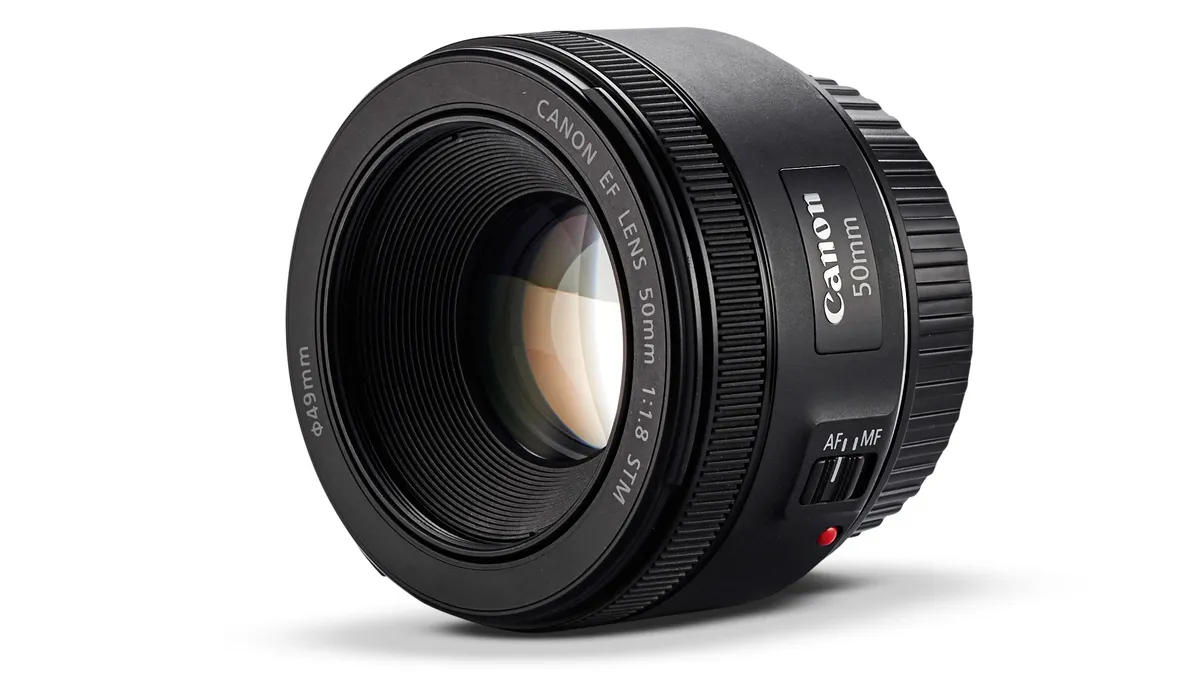
This is a full-frame compatbile lens rather than strictly an EF-S lens designed. However, it will still work just as well and it’s such a useful lens that I couldn’t omit it from this list. Super sharp, fast focusing is powered by a quiet Stepper Motor (STM) technology meaning it’s suitable for both stills and video recording.
The effective 80mm focal length on APS-C format DSLRs makes it ideal for portraiture. Consider that alongside a fast f/1.8 aperture that oozes charm when shot wide open, and you have a recipe for magical-looking portrait images on a shoestring budget.
See our full Canon EF 50mm f/1.8 STM review
Features ★★★★☆ |
The f/1.8 aperture should prove fast enough for most and the stepping motor autofocus is an upgrade over previous versions. |
Design ★★★★☆ |
Unlike some older versions, this one has a metal rather than plastic mounting plate, better-rounded aperture diaphragm and the focus ring no longer rotates during autofocus. |
Performance ★★★★☆ |
Image quality and other facets of performance are impressive for such a budget-friendly lens. |
Value ★★★★★ |
This Canon prime lens is standout value for money although, as usual with non-L-series lenses, the hood is sold separately. |
Lab data and comparisons
The graphs below show the comparative performance of the lenses in this guide, based on our in-house lab tests. The Canon RF-S 85mm f/2 Macro and Sigma 85mm f/1.4 EF-mount lens lead the way for sharpness, but there are no underachievers in this group.
Scores for sharpness and color fringing are averaged from data taken across the entire image frame, from the center to the edges and corners, throughout the aperture range. For zoom lenses, the scores are also averaged from data measured at all marked focal lengths, and the same applies to distortion.
Bear in mind that these average values don't fully reflect specific areas of performance. For example, a zoom lens might have noticeable barrel and pincushion distortion at its shortest and longest focal lengths respectively, which tends to average out when looking at the data overall. For more detailed graphs of each lens's performance, which give the full picture, check out the graphs in our full standalone lens reviews.
How to choose the best Canon portrait lenses
You can make a striking, interesting and dynamic portrait with basically any lens, so we're not going to give you hard-and-fast rules here. However, as you've probably already noticed if you've scanned through this guide, there are a number of lens qualities that portrait shooters tend to favour.
The first is a short telephoto focal length. While specifics vary, 85mm is generally considered the sweet spot, with 70mm to around 110mm also being favoured. There are two key reasons for this: first, a longer focal length provides a compressed perspective that results in more flatter rendition of facial features. Second, the separation between subject and background is stronger, allowing for the characteristic sharp subject / blurred background combination that is characteristic of a good portrait.
With that said, some shooters prefer using slightly shorter focal lengths like 50mm to create more environmental portraits that place a subject in context. Also, remember that if you're using a camera with an APS-C sensor (an EF-S, RF-S or EF-M model) then you'll need to apply a 1.6x crop factor to the stated focal length to work out what the lens will actually deliver. So, a 50mm lens mounted to an APS-C Canon DSLR will produce an effective focal length of 80mm.
The other key factor is a nice and wide maximum aperture, allowing you to create a shallow depth of field to further accentuate that difference between sharp subject and blurred background. In general, you want at least f/2 to work with, though f/1.8 is better, and f/1.4 is better still. The ultra-professional portrait lenses will generally go to f/1.2, though this isn't strictly necessarily, and will be beyond most people's budgets.
How we test the best Canon portrait lenses
We test lenses using both real-world sample images and lab tests. Our lab tests are carried out scientifically in controlled conditions using the Imatest testing suite, which consists of custom charts and analysis software that measures resolution in line widths/picture height, a measurement widely used in lens and camera testing.
We also test each lens in live shooting environments, often for portfolio or paid client work, to truly put them through their paces. Results removed from the lab are less theoretical, and really reveal the proof in the pudding, especially when used in challenging and uncontrolled environments.
We find the combination of lab and real-word testing works best, as each reveals different qualities and characteristics.
FAQs
What are beginner tips for portrait photography?
Portrait photography is a discipline that's challenging to master, but relatively easy to start – all you need is a camera, a lens and a willing subject. The best way to learn is simply by doing, but for some starter tips, we'd say the most critical things to remember are: focus on the eyes, use a shallow depth of field for a blurred background, and always shoot from above your subject's eye level. For more tips, check out our guide to 8 portrait photography mistakes (and how to avoid them).
Can you use Canon DSLR lenses on mirrorless?
It depends which type of mirrorless camera you have. Canon EF-mount DSLR lenses can easily be adapted to Canon EOS R (RF-mount) cameras using one of Canon's EF-EOS R adapters. Generally, the lenses will fully function with autofocus and stabilization if they have it, just as they would on a DSLR. Note that this process does not work in reverse – you cannot adapt RF-mount lenses to work on EF-mount DSLRs.
There is also not an adapter available for the EOS M series. If you are using one of these cameras, you will need to use EF-M mount lenses, which also cannot be adapted to other mounts.
Which Canon camera is best for portraits?
Lens choice tends to be a lot more important than camera choice when it comes to portraiture, as you're unlikely to need super-fast burst rates, top-notch low-light performance or other such features. If you're planning on printing your portraits, it's worth ensuring you get a camera that offers enough resolution to make this practicable (though they basically all do nowadays). Also, a larger full-frame sensor can be helpful in creating images with a shallow depth of field, though this is by no means essential. Take a look at our guide to the best Canon cameras to get an idea of what's out there currently.
You might also be interested in the best portrait lenses across all camera brands, as well as the best 50mm lenses and the best Canon standard zoom lenses.
