Digital Camera World Verdict
The Sigma 35mm f/1.4 DG II Art is the latest incarnation of one of my all-time favorite prime lenses. I was an early adopter of the original edition for DSLRs, the next in line was even better for mirrorless cameras, and this one is the best yet. The build quality and design are impeccable, handling is superb and image quality and all-round performance are absolutely top-drawer, all at a very reasonable price. It’s as good as it gets for a 35mm prime – I just wish it was available in more mount options.
Pros
- +
Sumptuous image quality
- +
Excellent handling
- +
Superb build quality
- +
Great value for money
Cons
- -
Only Sony E and L-mount options
Why you can trust Digital Camera World Our expert reviewers spend hours testing and comparing products and services so you can choose the best for you. Find out how we test.
Let’s turn the clock back to 2012. The original Sigma 35mm f/1.4 DG HSM | Art was unleashed as the very first ‘Art’ lens in Sigma’s Global Vision line-up. Designed primarily for Canon and Nikon full-frame DSLRs, it was the best 35mm prime lens that I’d ever used at the time.
Keeping abreast of changes in the marketplace, Sigma brought out a subsequent 35mm f/1.4 DG DN | Art for mirrorless cameras in 2021, available in Sony E mount and L-mount options. The latest Mark II pushes the envelope even further, with a raft of improvements that aim to ensure that it keeps top spot as one of best 35mm lenses on the market. Even so, it’s still only available in the same two mount options.

Sigma 35mm f/1.4 DG II Art: Specifications
Mount options |
Sony E (FE), L-mount |
Lens construction |
15 elements in 12 groups |
Angle of view |
63.4 degrees |
Diaphragm blades |
11 |
Minimum aperture |
f/16 |
Minimum focus distance |
28cm / 11.1in |
Maximum magnification |
0.19x |
Filter size |
67mm |
Dimensions |
73x95mm / 3.8in |
Weight |
525g / 18.5oz |
Sigma 35mm f/1.4 DG II Art: Price
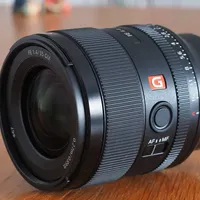
The Sigma 35mm f/1.4 DG II Art comes with an official price tag of $1,059 / £849 / AU$2,049. That’s pretty reasonable for a top-class, pro-grade prime lens, especially within the context of the own-brand Sony FE 35mm f/1.4 G Master, which lists at $1,598 / £1,429 / AU$2,449.
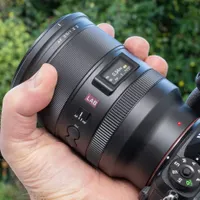
That makes the Sigma less than two-thirds the price of the Sony lens in some world regions, and about the same price as the ultra-competitive Viltrox AF 35mm f/1.2 LAB, which is a third of an f/stop faster and costs $999 / £869 / AU$1,649. The Viltrox is available in Sony E mount as well as Nikon Z mount options, but not yet for L-mount cameras.
Sigma 35mm f/1.4 DG II Art: Design & Handling
Sometimes, less is more. I really like using a 35mm prime lens for street photography, where it pays to be inconspicuous. I liked that the original 35mm Art lens for DSLRs was a lot less chunky than many Sigma Art lenses, which were typically designed with premium image quality in mind and no compromise in terms of size and weight. Fast forward two generations, the Mark II of the mirrorless lens is significantly shorter and more lightweight than its predecessor, and a real joy for everyday shooting.
Although relatively small and lightweight, there’s no shortage of high-quality glass. The optical design is based on no less than 15 elements, arranged in 12 groups, including four aspherical elements and two SLD (Special Low Dispersion) elements. The overall aim is to optimize clarity and sharpness, while minimizing color fringing and other aberrations. The quality of bokeh is another key factor, which is helped when stopping down a little by a very well-rounded 11-blade aperture diaphragm.

A key upgrade in the Mark II lens is that it has a go-faster autofocus system. It’s driven by two of Sigma’s HLA (High-response Linear Actuator) motors, which shift two separate groups of lens elements with speed and accuracy, in almost total silence.

Most of us use autofocus, for most of the time but manual focusing can still be advantageous in certain situations. I hate having to rummage around in a camera’s menu system to make the change, so I’m glad that the Sigma features an AF/MF focus mode switch.
Another handling luxury is that the lens features two customizable function buttons, offset on the barrel at a 90-degree spacing. The upshot is that they fall neatly under the thumb when you’re shooting in either landscape or portrait (upright) orientation, so the ergonomics feel entirely natural. The range of available functions depends on the Sony E-mount or L-mount camera body that you’re using, but I’d normally double up on AF-Hold for both of them.

Even if you’re not a ‘hybrid’ photographer intent on content creation, the chances are that you shoot video at least occasionally. The lens obliges with a click/de-click switch for the aperture ring, the de-click mode ensuring smooth and silent aperture adjustments for if and when you’re shooting video.

As I’d expect, the aperture control ring itself is clearly marked in one-third f/stops, all the way from f/1.4 to the narrowest aperture of f/16. Thanks to the click/de-click switch shown in the previous image, you can use this in steps for stills or in stepless mode when shooting video. With either option, the aperture ring works is useful when you’re using your camera in Aperture-priority or Manual shooting modes.

Call me clumsy but I often find that it’s all too easy to accidentally nudge the aperture control ring in lenses that feature one, from its Auto position to a narrow aperture setting. It seems I’m not the only one, as Sigma has taken the sadly unusual step of retaining a locking switch for Auto aperture control, which is sadly lacking in a great many modern lens designs.

I’d expect any decent lens to come complete with a hood but sometimes I’m disappointed, and feel somewhat aggrieved that I have to buy the hood separately, as an ‘optional extra’. Like many third-party rather than own-brand lens manufacturers, Sigma tends to supply hoods with all of its lenses, and this one comes with a highly effective petal-shaped hood that includes a locking button.

As usual for Sigma lenses, the mounting plate is made from coated brass, for the sake of precision and long-lasting robustness. Unlike the original 35mm Art lens for DSLRs, the mounting plate of this one has a rubber weather-seal ring to guard against dust and moisture, as fitted to most Sigma lenses nowadays.

Sigma 35mm f/1.4 DG II Art: Performance
Before we get into the all-important business of image quality, let’s spare a couple of moments and a few words on autofocus performance. I found autofocus very fast and consistently accurate, well able to keep up with the tracking facilities on my Sony camera. Consistently accurate autofocus is particularly vital when shooting close-ups at wide apertures, where the depth of field becomes very shallow. The lens continued to impress in this situation, giving me a great hit rate.
Naturally, in the context of street photography and general shooting, a tight depth of field often isn’t preferable. At medium to narrow apertures in real-world shooting, I found that the lens delivered fabulous clarity, sharpness and color rendition, with sharpness staying on song from the center right out to the extremities of the image frame.

Okay, so medium aperture settings return excellent edge-to-edge sharpness, but you’re only likely to buy a ‘fast’ prime lens if you want to use it at wide apertures for at least some of the time. There are two advantages, so I’ll start with the most obvious. Wide apertures equate to a tight depth of field, so you can isolate the main subject in a scene by blurring the background. The Sigma does well to combine excellent sharpness even wide-open at f/1.4 with beautifully smooth and soft bokeh.

The second advantage of ‘fast’ apertures is that you can retain quick shutter speeds even under very low lighting conditions, without the need to push your camera’s ISO setting too far. This enables you to freeze motion and to avoid camera-shake when shooting handheld, for example in cathedrals and museums, where the use of a tripod is often prohibited. I’m impressed that even wide-open at f/1.4, the Sigma exhibits impressive clarity and edge-to-edge sharpness.

Sigma 35mm f/1.4 DG II Art: Sample Images
The following gallery starts with a mix of outdoor shots taken on a sunny morning in the gardens of the Bishop’s Palace in the English city of Wells, in early spring. From there, I moved on to Wells Cathedral to shoot some architectural interiors.


Sigma 35mm f/1.4 DG II Art: Lab Results
We run a range of lab tests under controlled conditions, using the Imatest Master testing suite. Photos of test charts are taken across the range of apertures and zooms (where available), then analyzed for sharpness, distortion and chromatic aberrations.
We use Imatest SFR (spatial frequency response) charts and analysis software to plot lens resolution at the center of the image frame, corners and mid-point distances, across the range of aperture settings and, with zoom lenses, at four different focal lengths. The tests also measure distortion and color fringing (chromatic aberration).
Sharpness:

Center sharpness is impressive from f/1.4 right through to f/11, and it stays so even as you move out towards the corners of frame. When you reach the corners there's a noticeable drop in sharpness at larger apertures, but by f/4 detail is remarkably consistent across the whole frame.
Fringing:

Chromatic aberration is very well controlled at all apertures - you'll struggle to spot any fringing in real-world images.
Distortion: -0.91
The lens produces a tiny bit of barrel distortion, but it should go unnoticed.
Sigma 35mm f/1.4 DG II Art: Verdict
I used to feel that the original Sigma 35mm f/1.4 Art lens was the pinnacle of primes, back in the glory days of DSLRs. I absolutely loved mine and it was a constant companion. As the saying goes, ‘the more things change, the more they stay the same’. The mirrorless Mark II lens is certainly much changed, from its downsized, relatively lightweight build to its improved optical prowess and super-fast autofocus system. What remains the same is that the new lens is still a frontrunner in terms of image quality and overall design. It’s also great value for money, making it a top choice if you own a Sony Alpha E-mount camera or an L-mount body.
Features ★★★★★ |
Speedy thrills include a fast f/1.4 aperture and rapid autofocus system, along with high-end handling features. |
Design ★★★★★ |
The pro-grade design combines robust and impeccable build quality with excellent handling extras, packed into a reasonably compact and lightweight build. |
Performance ★★★★★ |
Image quality is simply stunning, in terms of sharpness and clarity, smoothness of bokeh and negligible aberrations. |
Value ★★★★★ |
As one of the finest 35mm prime lenses of all time, this Sigma is set to become a classic and is standout value at the price. |

Alternatives