
If you're a photographer or filmmaker who uses Adobe software, 2025 was the year that the company stopped pretending that you were the main character in its story. You became the supporting cast.
That's neither an insult to you, nor shade at Adobe. But it is an honest observation that explains everything Adobe announced this year, from the genuinely useful (AI culling in Lightroom) to the bewildering (50,000 generative credits per month on the Firefly Premium plan).
The common thread? Photography and filmmaking are no longer ends in themselves in Adobe's universe. They're inputs into something larger: an industrial-scale content production machine designed for brands, agencies and marketing departments drowning in demand.
Serving enterprise, not photographers
Back in 2023, Adobe's research showed that creative and marketing teams were facing an insatiable demand for content that was likely to outpace their resources.
This is the problem that Adobe has spent the time since then solving. Not how to make your images better (though plenty of features do that incidentally), but how to industrialize content creation at enterprise scale.
Of course, photographers and filmmakers happen to create the raw materials that this machine needs: compelling imagery, authentic moments, professional footage. But we're now one ingredient in a much larger recipe.

Consider GenStudio, Adobe's "end-to-end content supply chain solution". Never heard of it? Most photographers haven't, but believe me: it's been a cornerstone of the company's 2025 strategy.
For the uninitiated, GenStudio enables marketing teams to plan, create, manage, activate and measure content with integrations spanning Amazon Ads, Google Marketing Platform, LinkedIn and TikTok.
But if you're a solo photographer, it's not designed for you. It's designed for the people who license your work. Or increasingly, generate approximations of it using AI.
Useful tools
Don't misunderstand me: Adobe has still delivered some genuinely useful tools for photographers in 2025.
The assisted culling feature in Lightroom – which uses AI to identify sharp, well-composed images and flag technical failures – could save you hours on every shoot. Automatic dust spot removal has finally arrived. Distraction and reflection removal tools expanded from Camera Raw into Lightroom proper. Fantastic.
For Photoshop users, the headline features included Select Details for isolating hair and facial features with one click, and Harmonize, which automatically matches lighting and color when compositing elements from different sources.
Then came the big one. Adobe Max 2025 introduced agentic AI: conversational assistants that can understand complex, multi-step instructions and execute them autonomously.

To put that in plain language: in Photoshop, you can now tell the AI assistant to brighten everything except the subject, and it will create non-destructive adjustment layers to accomplish the task. You can ask it to review your design layout and suggest improvements.
You can even tell it to rename all your layers based on visual analysis of their contents, which earned genuine applause at the keynote demo.
Premiere Pro updates, meanwhile, included AI Object Mask in Premiere Pro, which tracks people and objects across moving footage without manual rotoscoping; potentially you saving days on complex projects.
Generative Extend, which fabricates additional frames at the beginning or end of clips, graduated from beta to support 4K and vertical formats. Media Intelligence brought natural-language search to vast footage libraries, enabling editors to find a scene just by typing something like "shot of person walking on beach at sunset".
Double-edged sword
These are all real improvements. They all address tedious bottlenecks. But they're also somewhat of a double-edged sword. Because broadly speaking, while AI is often a friend to photographers and video editors, it's often trained on our content and increasingly set to replace our skills.
In one sense, Adobe has long stood apart as the white knight here. Its generative AI engine, Firefly, famously only trains on properly licensed material – and that's to its credit. Its creation of Content Credentials to identify ownership of content also puts it on the side of the angels.
But the most revealing development in 2025 was the company's embrace of third-party generative platforms. After years of promoting Firefly, Adobe suddenly integrated models from Google, OpenAI, Black Forest Labs, Runway, Topaz and others throughout its applications.
Models that, let's be honest, might well have been trained on your content without permission.

For anyone wanting to use these models, meanwhile, the main catch is the cost. While Firefly operations cost one generative credit, using partner models costs significantly more.
Gemini images cost 20 credits, ChatGPT images cost 60. For photographers on the basic Photography Plan with just 25 monthly credits, this pricing structure is almost comically punitive. But it makes perfect sense when you understand who Adobe is actually serving.
Enterprise clients with Firefly Pro or Premium plans, carrying 7,000 or 50,000 monthly credits respectively, barely notice these costs. They're investing in velocity and output quality at industrial scale.
To put it bluntly, individual photographers watching their monthly allocation evaporate after three or four generations are not the audience for these tools.
The Frame.io revolution
To be fair to Adobe, it hasn't just been about AI this year. The most significant infrastructure development for working photographers and filmmakers was Frame.io's Camera to Cloud expansion.
Select professional cameras can now upload proxy files directly to Frame.io via network connection, allowing editors and clients to start working with footage before the shoot even wraps.
Fujifilm became the first brand to add still photography support for Frame.io Camera to Cloud, extending this capability beyond video. Photographers can make selections in Frame.io and instantly push files to Lightroom for real-time editing and retouching from any location.

This fundamentally changes production workflows but, again, notice whose problem it solves. It's brilliant for agencies coordinating distributed teams on tight deadlines. It's transformative for productions where clients need immediate feedback and approval. It accelerates the content supply chain.
For the solo photographer shooting a wedding or a portrait session? It's technological overkill addressing a problem you probably don't have.
A year of price hikes
Here's a problem that many solo photographers do have, though: paying for all this. At the start of 2025, Adobe hiked prices on Photography Plans for the first time in over a decade, with some plans increasing up to 50%.
The company justified this by pointing to hundreds of innovations delivered across Photoshop and Lightroom without previous price increases, plus the computational costs of running AI models. Fair enough.
But the timing crystallizes the tension. Adobe is charging solo photographers more for software that's increasingly optimized for workflows they don't actually use. They're embedded in an ecosystem designed for different priorities.
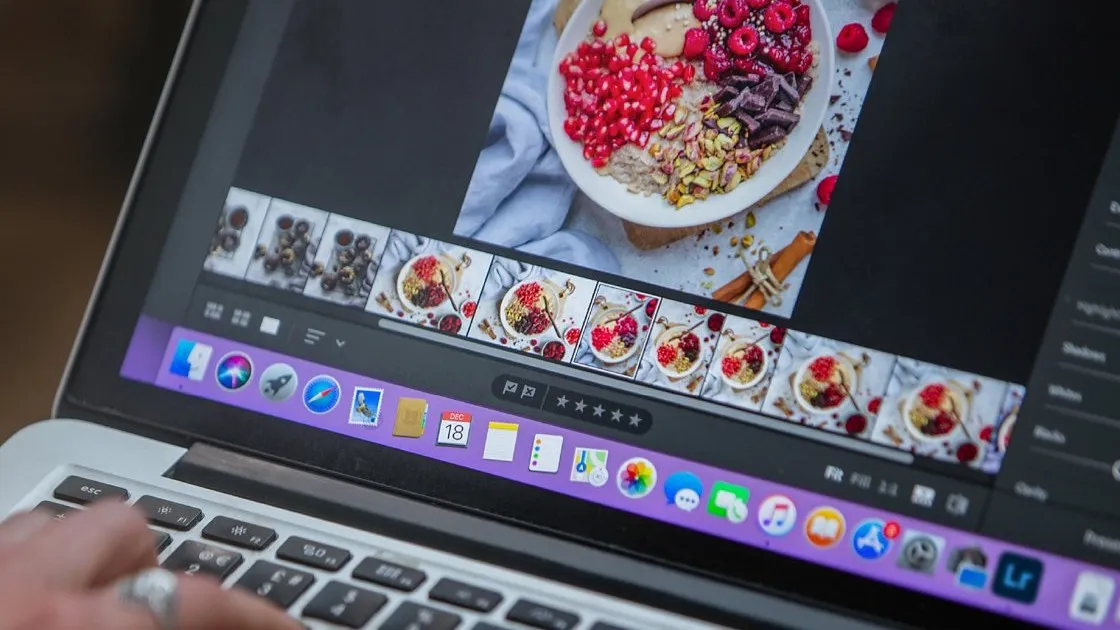
None of this means Adobe's software has become useless for photographers. Quite the opposite: Lightroom and Photoshop remain the industry standard, and many 2025 updates directly improve core photography workflows.
The dust removal tool alone may justify the subscription hike for anyone who's spent hours spotting clone-stamping sensor dust across a wedding shoot.
But 2025 clarified something that was already becoming apparent: Adobe isn't a photography company that happens to make software. It's a content production infrastructure company that counts photography among its many inputs.
Your images, whether captured through a lens or conjured from pixels, are raw material for a vastly larger economy built around feeding brands' bottomless need for content.
Conclusion
So what have we learned? I'm not saying we shouldn't continue using Adobe's tools – which remain excellent for what they do. But I do think we need to recognize our changing position in the ecosystem they're building.
Adobe spent 2025 building infrastructure for a world where content creation scales exponentially through AI augmentation, where brands generate thousands of variations from seed imagery, where marketing teams run content factories that would have required armies of creators just a few years ago.
Individual photographers and filmmakers aren't being eliminated from this ecosystem, but we're being redefined within it. Our role is increasingly to provide the authentic raw material – the real moments, the genuine human perspective, the original vision – that gets multiplied, modified and distributed through AI-powered content engines.
Whether that's progress or setback depends on your perspective. Either way, that's what Adobe's 2025 was actually about.
You might also like…
See where Adobe's software ranks among the best photo editing software – and if you're feeling burned by the change in tact, take a look at the best Photoshop alternatives and the best Lightroom alternatives.

