"Keep your ISO low to avoid introducing noise." Is this the most misleading, harmful advice in photography? (I could make a similar argument for videography, but I'll save that for another day.)
I understand the sentiment, of course. Carelessly cranking the sensitivity isn't the most efficient way to exploit the exposure triangle. However, in dispensing this advice, I think we've demonized a) the ISO setting in general and b) the presence of grain in our images.
But look back at the work of the masters – the Capas and Cartier-Bressons – and what's the first thing you'll see? Grain. Usually a lot of it. Many of the greatest photographs ever taken are festooned with grain. So why are we telling stories about ISO like it's the boogieman?
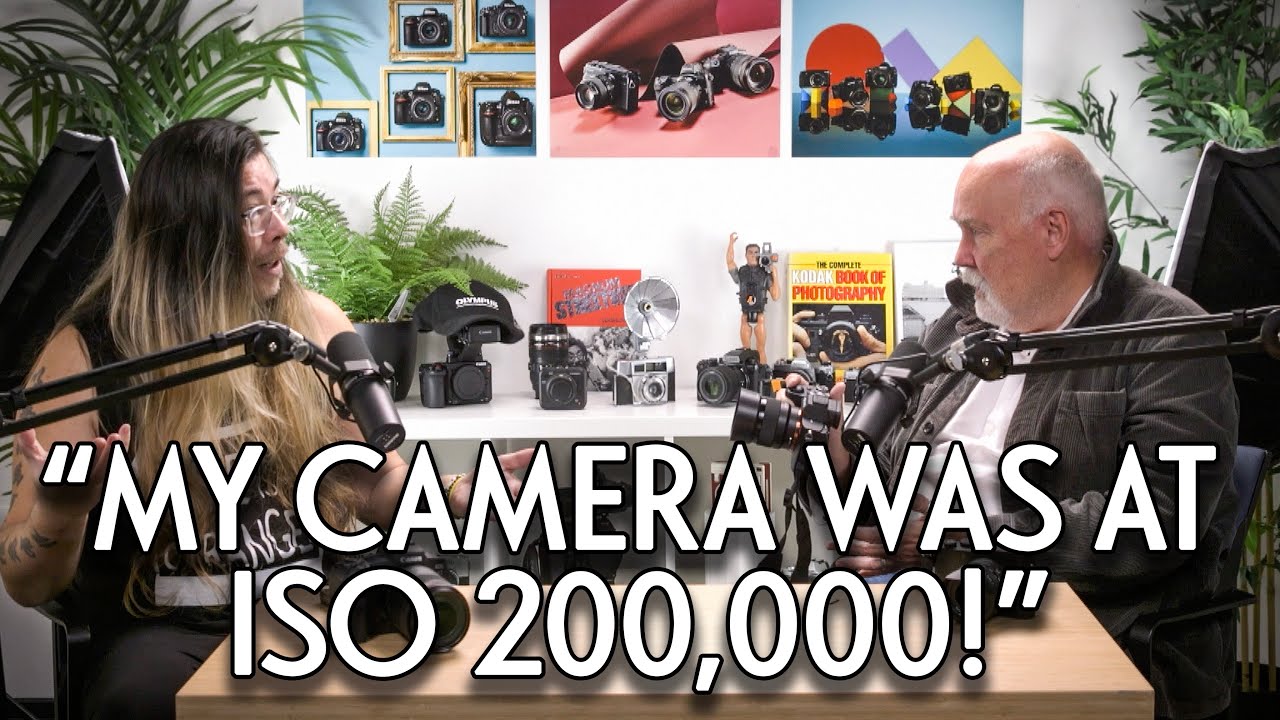
This is a topic we discussed on a recent episode of our podcast, Bokeh Face. If you're interested in listening to us talk about images shot at high sensitivities (including at ISO200,000) I've teed up the discussion at the right timecode below:
Between preaching "best practice" when it comes to ISO and all the AI denoise tools flooding the market, it's no wonder we've got a whole generation of photographers terrified about having grain in their photographs.
But we've done grain dirty. So dirty that, when we explain the exposure triangle, we extoll the virtues of aperture and shutter speed as creative variables – but we never discuss ISO as a tool for creativity. It's the triangle's redheaded stepchild, whose only purpose is to prop up either of the "real" creative options.
This is a travesty. Increasing the sensitivity to introduce grain is as valid a visual expression as opening the aperture to blur the background or slowing the shutter to exaggerate motion. Here are some examples of portraits I've taken, where I introduced grain at the point of capture:


Perhaps it's because I come from a film background. The same conversations still took place there, of course – "Be careful about using film that's too fast or you'll get grainy images" – but it was a valid creative choice.
I've always loved Tri-X 400 specifically because it gave a crunchy, textured quality to my photographs. Heck, some folks (like my buddy Chris Niccols) went even crazier with film stocks like Neopan 1600. Grain wasn't simply a regrettable byproduct; these were intentional choices of shooting with intentional creative expression.
Street photography and reportage are so famous for their grain that it's practically part of the DNA of the genres. And I dare say that you can elevate the artistic expression of your photography by introducing grain when shooting on the street. Again, here are some of my own examples:


As I allude in the podcast, though, when it comes to digital photography, not all grain is created equal. Some sensors have a beautiful digital grain structure; cameras like the Leica Q3 Monochrom, blessed with a mono image sensor, not only render gorgeous grain, but can shoot at up to ISO200,000 with quite a filmic effect.
Other cameras, however, do not handle high sensitivities well at all. Push the ISO (or the Photoshop slider) too hard and you'll be met with aggressive, abrasive noise that's more like electronic vomit than something that evokes the texture of film.
So you need to know your tools, as well as the technique. But I do feel that the introduction of grain is a legitimate technique. And I'm not alone; some people spend a lot of time adding it in post, often scanning old film photos to emulate authentic grain structure. Heck, Nikon even added a grain filter in a firmware update for the Nikon Zf!
Next time you're trying to add an extra dimension to your photography, try cranking up that ISO setting. And if you haven't already, have a listen to what I said on the podcast and let me know if you agree or disagree.

You might also like…
Typically, the best cameras for black and white photography produce very pleasing grain. A lot of grain addicts also speak highly of the best Fujifilm cameras, so give those a look as well.