
I don’t like to think I’m lazy and I honestly don’t mind ‘zooming with my feet’, but that’s not always possible. To get as close as I’d ideally like, I’d have to jump the barriers at sporting events, sprout my own pair of wings at airshows, and risk getting eaten alive by hungry wildlife. Sometimes discretion is the better part of valor, and a 150-600mm lens can get you close to the action from a respectable (and safe) distance.
Originally pioneered by Sigma and adopted by Tamron, 150-600mm lenses used to be a rare breed. Camera manufacturers often didn’t make their own and even if they did, some of the old DSLR examples have now been discontinued. To make this guide as useful as possible, I've included not only ‘150-600mm’ lenses that are currently available, but also a selection of ultra-telephoto zooms that cover a fairly similar range.
The debate on the 'best' zoom range, of course, rages on – many photographers prefer the best 70-200mm lenses or the best 100-400mm lenses as their favorite working distance. However, the 150-600mm outstrips them both in terms of sheer range and raw distance.

Matthew Richards is a photographer and journalist who has spent years using and reviewing all manner of photo gear. He is Digital Camera World's principal lens reviewer, and as such he has tested more primes and zooms – including plenty of 150-600mm optics – than most people have had hot dinners!
Best 150-600mm lenses
Why you can trust Digital Camera World Our expert reviewers spend hours testing and comparing products and services so you can choose the best for you. Find out how we test.
Here are my picks of the best 150-600mm lenses you can buy right now, for both mirrorless and DSLR cameras.
Best for Canon
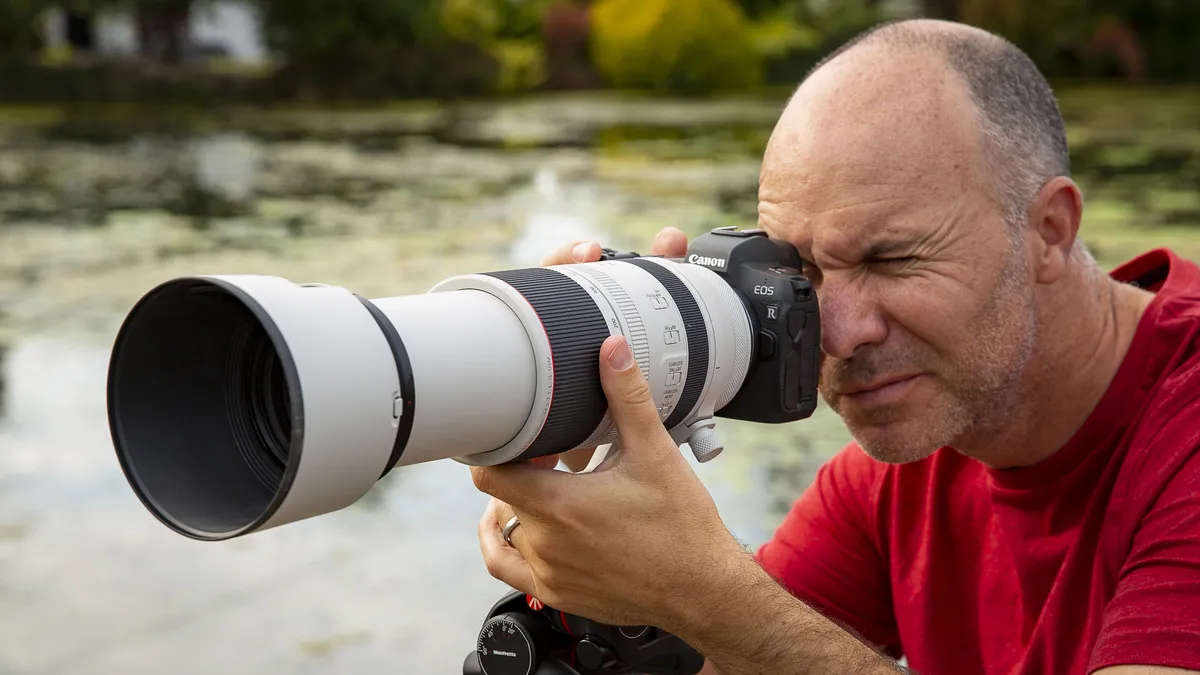
True to its 'L-series' designation, the Canon RF 100-500mm f/4.5-7.1L IS USM features professional-grade build quality with robust weather sealing and a heat-shielding white coating for shooting in extreme conditions. A standout feature is the adjustable zoom tension ring, allowing users to switch between a smooth feel for fast action and a tight setting to prevent lens creep. It also includes a programmable Lens Control Ring for tactile adjustments of settings like ISO or exposure compensation.
Optically, the lens is superb, utilizing Super UD and UD elements to deliver high contrast and sharpness across the entire focal range. While the f/7.1 maximum aperture is slow at the extreme telephoto end, the aperture only reaches f/7.1 past the 450mm mark, remaining at f/5.6 up to 350mm. Furthermore, the lens remains remarkably sharp even wide open.
The lens utilizes Dual Nano USM motors for nearly silent, lightning-fast autofocus. The lens-based Image Stabilization (IS) works in tandem with In-Body Image Stabilization (IBIS) on newer Canon bodies to provide up to 6 stops of shake correction. This makes handheld shooting at 500mm entirely viable, combined with a weight-saving design that makes long days in the field much more manageable.
See our full Canon RF 100-500mm f/4.5-7.1L IS USM review


Features ★★★★★ |
There’s a smorgasbord of features packed into this lens with optical stabilization, dual Nano USM autofocus motors and a very high-end optical path. |
Design ★★★★★ |
Flourishes include a zoom ring torque adjustment, carried forward from the EF lens, and robust weather-sealed build quality. |
Performance ★★★★★ |
Autofocus performance needs one of the more recent than original EOS R bodies to get the most out of the lens, but image quality is fabulous. |
Value ★★★★☆ |
It’s pretty good value for what it is, but this lens will nevertheless make a sizeable dent in your bank balance. |
Best for Nikon

This big zoom is as close as Nikon has got to matching the 150-600mm focal length – and it's an outstanding lens. Earning the full five stars in our review, the Nikon Z 180-600mm f/5.6-6.3 VR offers tack-sharp image quality right the way through that zoom range. While it's a relatively hefty lens, it's light enough that you'll be able to use it handheld for a decent chunk of time. I particularly love the four customizable function buttons, which sit just under where the thumb naturally falls.
A particular asset of this lens is its optical VR (Vibration Reduction) system, which is rated to provide up to 5.5 stops of effective compensation. This makes the far end of the telephoto much more usable handheld, and helps you make the most of all that gorgeous sharpness. Great for sports, wildlife, and other types of telephoto shooting, the Nikon Z 180-600mm f/5.6-6.3 VR is the best choice for approximating the 150-600mm focal range on Nikon Z cameras.
Read our full Nikon Z 180-600mm f/5.6-6.3 VR review


Features ★★★★★ |
Compared with Nikon’s F-mount 200-500mm zoom, this one has longer telephoto reach and more effective 5.5-stop optical stabilization. |
Design ★★★★★ |
The lens is impeccably built with extensive weather-seals and is noticeably lighter than Nikon’s 200-500mm lens for DSLRs. |
Performance ★★★★★ |
Sharpness and clarity are exceptional, even at the longest zoom setting, backed up by super-fast autofocus and highly effective stabilization. |
Value ★★★★☆ |
It’s a little pricier than the F-mount 200-500mm lens but well worth the extra outlay. |
Best for Sony
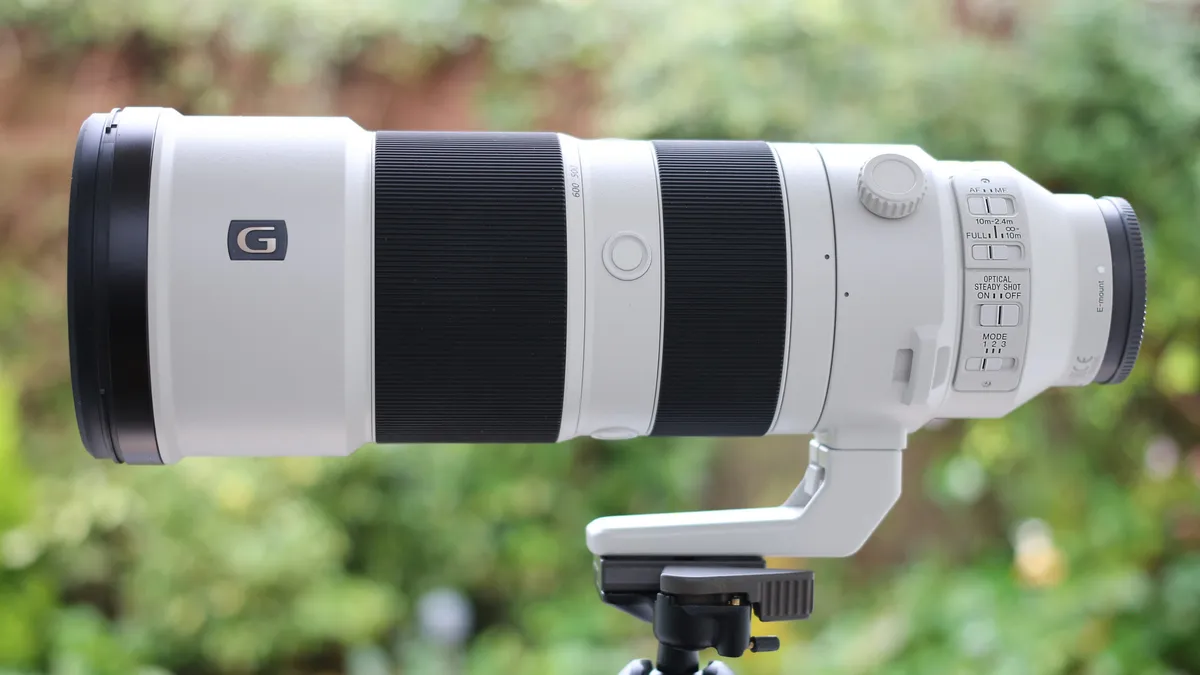
This used to be the nearest Sony users could get to a 150-600mm, but even though the Sigma 150-600mm f/5-6.3 DG DN OS | Sports has now stolen its thunder, it's still a good choice. The Sony FE 200-600mm f/5.6-6.3 G OSS comes pretty close to offering the same sort of reach for what is actually a pretty reasonable price for a Sony lens.
It doesn't boast Sony's G Master badge of optical excellence, and it does have a relatively restricted maximum aperture of f/5.6-6.3, but it has built-in optical stabilization, so pairs well with any Sony Alpha model, including those without IBIS.
See our full Sony FE 200-600mm f/5.6-6.3 G OSS review


Features ★★★★★ |
There are all the up-market controls, switches and handling extras you could hope for. |
Design ★★★★★ |
It’s a necessarily big lens but less of a heavyweight than some, along with robust build quality. |
Performance ★★★★★ |
Image quality is great throughout the entire zoom range, with effective stabilization and fast autofocus. |
Value ★★★★☆ |
It’s pricier than the alternative Sigma lens but not bad value for an own-brand Sony G zoom. |
Best for L-mount

A retooling of an already excellent DSLR lens, the Sigma 150-600mm f/5-6.3 DG DN OS Sports is the complete package for L-mount (and Sony E-mount) shooters. Pairing superb internal optics with an all-around excellent, weather-sealed build, this heavy-duty zoom lens is a big customer.
Of course, that wouldn't matter if the lens itself were no good. Fortunately, it's excellent. The optical path is a little different from the DSLR version, including 25 elements arranged in 15 groups, and it produces impressive sharpness throughout the entire zoom range. There's some inevitable fall-off in the corners, but not enough to worry about, and it's the sort of thing that will be hidden anyway when you're shooting with a shallow depth of field.
The autofocus is excellent, though you'll need to make sure your camera is set up in the optimal way to take advantage of it. The build quality of the lens is also impressive – while no one is going to pretend this is a lightweight lens, it handles well, with tactile zoom and focus rings and a series of on-body controls for functions like AF speed, stabilization intensity, and in a new addition for the mirrorless version: Zoom Torque control to adjust the resistance of the zoom ring. It's an all-around excellent lens that's absolutely worth the money for L-mount and E-mount users.
See our full Sigma 150-600mm f/5-6.3 DG DN OS Sports review


Features ★★★★★ |
The lens inherits the high-end features and handling of the older version for DSLRs, in a smaller, lighter package. |
Design ★★★★★ |
The design is very refined, while build quality is excellent and includes extensive weather-seals. |
Performance ★★★★★ |
Excellent inherent sharpness is further boosted in real terms by highly effective optical stabilization. |
Value ★★★★★ |
It’s a pro-grade super-telephoto zoom with a ‘consumer’ price tag, making it standout value. |
Best for Fujifilm

Providing a massive full-frame equivalent reach of 229-914mm, thanks to the APS-C 'crop factor', the Fujinon XF 150-600mm f/5.6-8 R LM OIS WR is a game-changer for wildlife, sports, and aviation photographers who require extreme reach without the prohibitive weight and cost typically associated with such focal lengths.
Unlike many ultra-telephoto zooms that extend physically, the XF 150-600mm maintains a constant length, due to an internal zoom mechanism. This design keeps the center of gravity stable, making it exceptionally well-balanced on a gimbal or when shooting handheld. Despite its size, it weighs a relatively modest 1,605g, thanks to its magnesium alloy construction. The barrel is finished in a matte silver heat-shielding paint to prevent internal temperature fluctuations during long outdoor shoots.
The lens features a linear motor autofocus system that is both nearly silent and incredibly rapid. To assist in high-speed environments, Fujifilm included a focus limiter and a focus preset button, allowing photographers to jump to a specific distance instantly. While the f/8 maximum aperture at the long end is rather slow, the 5-stop Optical Image Stabilization (OIS) is highly effective, allowing for sharp handheld shots even in less-than-ideal lighting.
See our full Fujifilm XF150-600 f/5.6-8 R LM OIS WR review


Features ★★★★☆ |
Mighty effective zoom range is equivalent to 225-900mm on a full-frame camera, and it comes with 5-stop stabilization. |
Design ★★★★☆ |
Typical of Fujifilm XF lenses, it has up-market build quality and extensive weather-seals. |
Performance ★★★★☆ |
Autofocus is fast and overall performance is good apart from a drop in sharpness at the long end of the zoom range. |
Value ★★★★☆ |
Considering the ultra-long effective reach, extensive spec sheet and high-end handling, it’s very good value. |
Best for Micro Four Thirds

The Micro Four Thirds system has a 2x crop factor, relative to a full-frame camera. This means that, although this lens has an advertised 150-600mm focal range, when fitted to an MFT body its field of view will be equivalent to a 300-1200mm full-frame lens. Consequently, this lens offers immense reach for capturing distant subjects, while up to 7 stops of image stabilization helps keep things steady when you're zoomed in to the max.
Keen lens nerds may have spotted that this lens looks very similar to the Sigma 150-600mm f/5-6.3 DG DN OS Sports (for L-mount Alliance and Sony E-mount cameras). And that's because it is essentially the same lens, adapted for use on Micro Four Thirds bodies. While that has its benefits, as a full-frame lens, it does mean the OM System M.Zuiko 150-600mm feels very bulky and heavy compared to more typical MFT optics.
I was a little disappointed by the lens's overall sharpness, which was significantly down on the performance of the Sigma 150-600mm. But if you must have telescope-rivalling levels of zoom for your Micro Four Thirds camera, this is the only lens to go for.
Read our full OM System M.Zuiko 150-600mm f/5.0-6.3 IS review


Features ★★★★☆ |
Top of the features list is the humungous 1200mm maximum ‘effective’ focal length, backed up by as much as 7-stop stabilization. |
Design ★★★★☆ |
Build quality is tough, with IPX1 weather-proofing, although it’s big and heavy for a Micro Four Thirds lens. |
Performance ★★★☆☆ |
Levels of sharpness are a bit disappointing, especially at longer zoom settings. |
Value ★★★☆☆ |
It’s not particularly good value, especially in comparison to the Sigma 150-600mm full-frame zoom it's based on. |
Best multi-mount mirrorless

The Tamron 150-500mm f/5-6.7 Di III VC VXD is the company’s first ultra-telephoto zoom for full-frame Sony mirrorless cameras (it has since been released in Nikon Z and Fujifilm X mounts). It’s up against stiff opposition from the excellent own-brand Sony FE 200-600mm f/5.6-6.3 G OSS, which gives even greater telephoto reach. However, the Sony lens is physically nearly 50 per cent longer, somewhat heavier and more expensive to buy.
Despite not having quite the reach of a 150-600mm, the range is still attractive for action, sports and wildlife photography. It is backed up by super-fast autofocus and highly effective optical stabilization. It’s sufficiently compact and lightweight for prolonged periods of handheld shooting, and the removable Arca-Swiss compatible tripod mount collar is a further handling bonus. All in all, it’s a high-performance lens with a strong set of features and is a very good buy at the price.
Read our full Tamron 150-500mm f/5-6.7 Di III VC VXD review


Features ★★★★☆ |
There’s a strong feature list that includes a triple-mode optical image stabilizer and fast autofocus. |
Design ★★★★☆ |
The build is robust, right down to the Arca-Swiss compatible foot on the tripod mounting ring. |
Performance ★★★★☆ |
Sharpness drops off a little at the long end of the zoom range, but overall performance and image quality are very appealing. |
Value ★★★★☆ |
The Tamron is very good value at the price and you might find some attractive deals if you shop around a little. |
Best 10x zoom

The Sigma 60-600mm f/4.5-6.3 DG DN OS Sports is a versatile 10x ultra-telephoto zoom lens designed specifically for full-frame mirrorless cameras (Sony E-mount and L-mount). By starting at 60mm and reaching 600mm, it effectively replaces two common lenses: a 70-200mm and a 150-600mm. This allows photographers to capture wide-context environmental shots and tight action close-ups without the need for a lens change, which is critical in fast-moving scenarios like air shows or safaris.
Part of Sigma’s Sports line, the lens is built to withstand professional use. It uses a multi-material design including magnesium alloy, Carbon Fiber Reinforced Plastic (CFRP), and Thermally Stable Composite (TSC) to balance weight and durability. A Dual Action Zoom mechanism supports both traditional rotary and 'push-pull' zooming by grasping the front of the lens, allowing for rapid focal length changes. It features a dust- and splash-resistant structure with seals at the mount, rings, and switches, plus a water- and oil-repellent coating on the front element.
It's the first lens to feature Sigma's High-response Linear Actuator (HLA) motor, which provides lightning-fast, quiet, and precise focusing with improved subject tracking, and an improved Optical Stabilizer (OS) uses a new algorithm to deliver up to 7 stops of stabilization at the wide end and 6 stops at the telephoto end. The construction includes 27 elements in 19 groups, including two FLD and three SLD glass elements to combat chromatic aberrations. Edge-to-edge sharpness is excellent across the entire zoom range, even when shooting wide open. Prioritizing versatility and performance over portability, its weight makes it a 'two-handed' lens that requires a monopod or other support.
See our full Sigma 60-600mm f/4.5-6.3 DG DN OS Sports review


Features ★★★★★ |
It’s packed full of features but the best of them is the monster 10x zoom range that stretches from a natural perspective to extreme telephoto. |
Design ★★★★☆ |
It’s a big strong lens but the design can feel a bit of a chore as it’s very heavy at 2.5kg. |
Performance ★★★★★ |
Sharpness is excellent throughout the entire zoom range and right across the whole image frame, That’s a real achievement, given the oversized 10x zoom range. |
Value ★★★★★ |
It’s reasonably priced as one of Sigma’s up-market ‘Sports’ lenses and is like a 70-200mm and 150-600mm lenses in one. |
Best for DSLRs

This G2 (Generation 2) edition of Tamron’s 150-600mm lens is upgraded in pretty much every facet of its features, handling, and performance. The LD (Low Dispersion) element count goes from one to three, and BBAR (Broad-Band Anti-Reflection) coatings add to the older lens’s eBAND (Extended Bandwidth and Angular-Dependency) coatings, to further suppress internal reflections.
The uprated autofocus system delivers faster performance, better able to track moving subjects, and the redesigned VC (Vibration Compensation) system gives class-leading 4.5-stop effectiveness, plus two additional switchable modes. The second mode is for panning, and the third applies stabilization only during exposures, making it easier to track erratically moving objects. However, the optical stabilizer is only featured in the Canon and Nikon mount editions of the lens. With the Sony A-fit edition, you’ll need to rely on in-camera stabilization.
A flex zoom lock enables you to lock the zoom at any position, rather than just at settings for which a focal length is marked on the barrel. There's an optional USB dock, which Tamron calls a ‘TAP-in Console’, for applying customization and firmware upgrades. Autofocus speed and the effectiveness of its image stabilization are excellent. Image quality is very good overall, but sharpness is a bit of a mixed bag.
See our full Tamron SP 150-600mm f/5-6.3 Di VC USD G2 review
Features ★★★★☆ |
The ‘Generation 2’ edition of this lens has a strong feature set with upgraded autofocus and stabilization systems. |
Design ★★★★☆ |
The design is pretty crafty and I like that this lens is the best part of a kilogram lighter than Sigma’s competing Sports lens for DSLRs. |
Performance ★★★★☆ |
Image quality and overall performance are impressive overall but the lens could be sharper at the short end of its zoom range. |
Value ★★★★☆ |
The Tamron is keenly priced for a DSLR-focused 150-600mm, with high-end specs and handling. |
How we test lenses
The lens experts in our testing lab run a range of tests under controlled conditions, using the Imatest Master testing suite. Photos of test charts are taken across the range of apertures and zooms (where available), then analyzed for sharpness, distortion and chromatic aberrations.
We use Imatest SFR (spatial frequency response) charts and analysis software to plot lens resolution at the centre of the image frame, corners and mid-point distances, across the range of aperture settings and, with zoom lenses, at four different focal lengths.
There's more to it than just the technical side, though! Beyond the lab, our reviewers test lenses in real-world environments – and sometimes on professional shoots! We work with lenses both indoors and outdoors, in studio conditions and in natural light, with as many different subjects as is possible (or appropriate – there's no point testing a landscape lens' ability to shoot a portrait!).
We take into account everything from handling and ease of use to speed of autofocus and the overall quality of the images produced.
Find out more about how we test and review on Digital Camera World
Lab test data and comparisons
The graphs below show the comparative performance of the lenses in this guide, based on our in-house lab tests. The Canon RF 100-500mm f/4.5-7.1L IS USM leads the way for sharpness, but some of the others run it very close. The OM System M.Zuiko 150-600mm f/5.0-6.3 IS is the least inspiring for sharpness, especially towards the long end of its mighty zoom range.
For zoom lenses, we repeat our test at the widest and longest ends of the zoom range, plus intermediate 'mid-wide' and 'mid-telephoto' settings. Use the dropdown menus to select between them (for primes, the same data appears on all the graphs for comparison purposes).
For more detailed graphs of each lens's performance, which give the full picture, check out the graphs in our full standalone lens reviews.
Center sharpness
Use the dropdown menu to select between wide-angle, mid-wide, mid-tele, and telephoto zoom settings (prime lens data is replicated across all charts for ease of comparison)
| Timestamp (f-stop) | Canon RF 100-500mm f/4.5-7.1L IS USM () | Nikon Z 180-600mm f/5.6-6.3 VR () | Sony FE 200-600mm f/5.6-6.3 G OSS () | Sigma 150-600mm f/5-6.3 DG DN OS | S () | Fujifilm XF 150-600mm f/5.6-8 R LM OIS WR () | OM System M.Zuiko Digital ED 150-600mm f/5.0-6.3 IS () | Tamron 150-500mm f/5-6.7 Di III VC VXD () | Sigma 60-600mm f/4.5-6.3 DG DN OS | S () | Tamron SP 150-600mm f/5-6.3 Di VC USD G2 () |
|---|---|---|---|---|---|---|---|---|---|
| 4 | 2532 | N/A | N/A | 2065 | N/A | 1041 | 1416 | 2031 | 1497 |
| 5 | 2417 | 2351 | 2199 | 2146 | 1631 | 1083 | 2167 | 2126 | N/A |
| 6 | 2408 | 2534 | 2435 | 2142 | 1907 | 977 | 2451 | 2178 | 1300 |
| 7 | 2096 | 2336 | 2144 | 1946 | 1604 | 793 | 2059 | 2050 | 1307 |
| 8 | 1805 | 1898 | 1759 | 1660 | 1260 | 690 | 1765 | 1730 | 1414 |
| 9 | 1442 | 1453 | 1348 | 1329 | 967 | 660 | 1376 | 1361 | 1261 |

Fringing @ f/8
Use the dropdown menu to select between wide-angle, mid-wide, mid-tele, and telephoto zoom settings (prime lens data is replicated across all charts for ease of comparison)
| Product | Value |
|---|---|
| Canon RF 100-500mm f/4.5-7.1L IS USM | 0.19 |
| Nikon Z 180-600mm f/5.6-6.3 VR | 0.05 |
| Sony FE 200-600mm f/5.6-6.3 G OSS | 1 |
| Sigma 150-600mm f/5-6.3 DG DN OS | S | 0.08 |
| Fujifilm XF 150-600mm f/5.6-8 R LM OIS WR | 0.27 |
| OM System M.Zuiko Digital ED 150-600mm f/5.0-6.3 IS | 0.87 |
| Tamron 150-500mm F5-6.7 Di III VC VXD | 0.19 |
| Sigma 60-600mm f/4.5-6.3 DG DN OS | S | 0.07 |
| Tamron SP 150-600mm f/5-6.3 Di VC USD G2 | 0.15 |
Distortion
Use the dropdown menu to select between wide-angle, mid-wide, mid-tele, and telephoto zoom settings (prime lens data is replicated across all charts for ease of comparison)
| Product | Value |
|---|---|
| Canon RF 100-500mm f/4.5-7.1L IS USM | -0.04 |
| Nikon Z 180-600mm f/5.6-6.3 VR | 0.96 |
| Sony FE 200-600mm f/5.6-6.3 G OSS | 1.56 |
| Sigma 150-600mm f/5-6.3 DG DN OS | S | 1.4 |
| Fujifilm XF 150-600mm f/5.6-8 R LM OIS WR | 0.45 |
| OM System M.Zuiko Digital ED 150-600mm f/5.0-6.3 IS | 0.39 |
| Tamron 150-500mm F5-6.7 Di III VC VXD | 2.33 |
| Sigma 60-600mm f/4.5-6.3 DG DN OS | S | 0.85 |
| Tamron SP 150-600mm f/5-6.3 Di VC USD G2 | 1.59 |
How to choose the best ultra-telephoto lens
The first true 'ultra-telephoto' lenses, pioneered by third-party lens makers Sigma and Tamron for DSLRs, had a 150-600mm focal length. However, for this guide, I'm including zooms that reach 500mm or higher at the telephoto end, which is a significant jump from the 400mm maximum reach of a super-telephoto zoom, and all lenses in this guide are good choices for sports, wildlife, and aviation photography.
The exact focal range aside, the most obvious consideration will be your camera's lens mount. Sony photographers have the most options, while Canon and Nikon mirrorless users can also use DSLR lenses with the appropriate adaptor.


Note that should you mount a 150-600mm lens on an APS-C sensor camera body, the 1.5x crop factor gives an even greater ‘effective’ zoom range of 225-900mm (on Canon APS-C bodies, the tighter 1.6x crop factor delivers an even mightier 240-960mm zoom range). Micro Four Thirds cameras have a 2x crop factor, effectively doubling the reach of a 150-600mm lens to 300-1200mm, for near telescopic levels of magnification.
FAQS
What is a 150-600mm lens good for?
As you might imagine, lenses with a 150-600mm range (or similar) offer a great deal of shooting versatility as well as telephoto reach. This makes them naturally a good fit for sports and wildlife shooting, where you aren't always going to be able to predict how close your subject will get to you. Being able to cover such a great distance with a single lens will make you very nimble as a photographer. A 150-600mm lens can also be very handy for astrophotography, especially for close celestial objects like the moon.
However, don't go thinking that these are the only uses for a 150-600mm telephoto. These types of lenses can also be useful for creating landscape and architecture images with a bit of difference to them. Rather than capturing the standard wide shot, you can push in on details for a more abstract composition. If you want to convey distance in your images, you'll accomplish that much more effectively with a narrower perspective.
What are the disadvantages of 150-600mm lenses?
Unavoidably, 150-600mm lenses tend to be pretty heavy, and will generally have a slower maximum aperture than a shorter zoom like a 70-200mm (f/5-6.3 is the common one, as pioneered by Sigma in its original version). This can be restrictive in low light or when you want to create a shallow depth of field. The sharpness they produce also tends to be inferior to telephoto primes (which, to be fair, also tend to be much more expensive).
You might also like to read about the best telephoto lenses, as well as the best budget telephoto-zoom lenses and the best lenses for bird photography.
