
Rumor has it LG may discontinue production of 8K LCD and OLED displays, citing a lack of demand for 8K televisions (although it hasn't ruled out producing them again if demand increases). And LG isn't the only television manufacturer to roll back on 8K. Apparently TCL announced in 2023 that it was no longer developing 8K televisions, also due to falling demand. Sony also continued this retrograde trend in 2025 when it too ceased production of 8K TVs.

This isn't the first time we've seen a backwards step in television tech. 3D-capable TVs were touted as the next big thing in 2010, but by 2017 3D TV's were all but extinct. Luke-warm consumer demand and a lack of 3D content were often cited as contributory factors to 3D TV's demise, and wouldn't you know, these reasons can also be attributed to 8K's decline.

But with 8K cameras being readily available since around 2020 when the Canon EOS R5 was launched, how can there still be a relative shortage of 8K content? One factor is likely the supporting hardware required for producing 8K footage. Ultra-fast, high-capacity memory cards are a must for smooth 8K recording, and hugely powerful computers will be required for 8K editing.
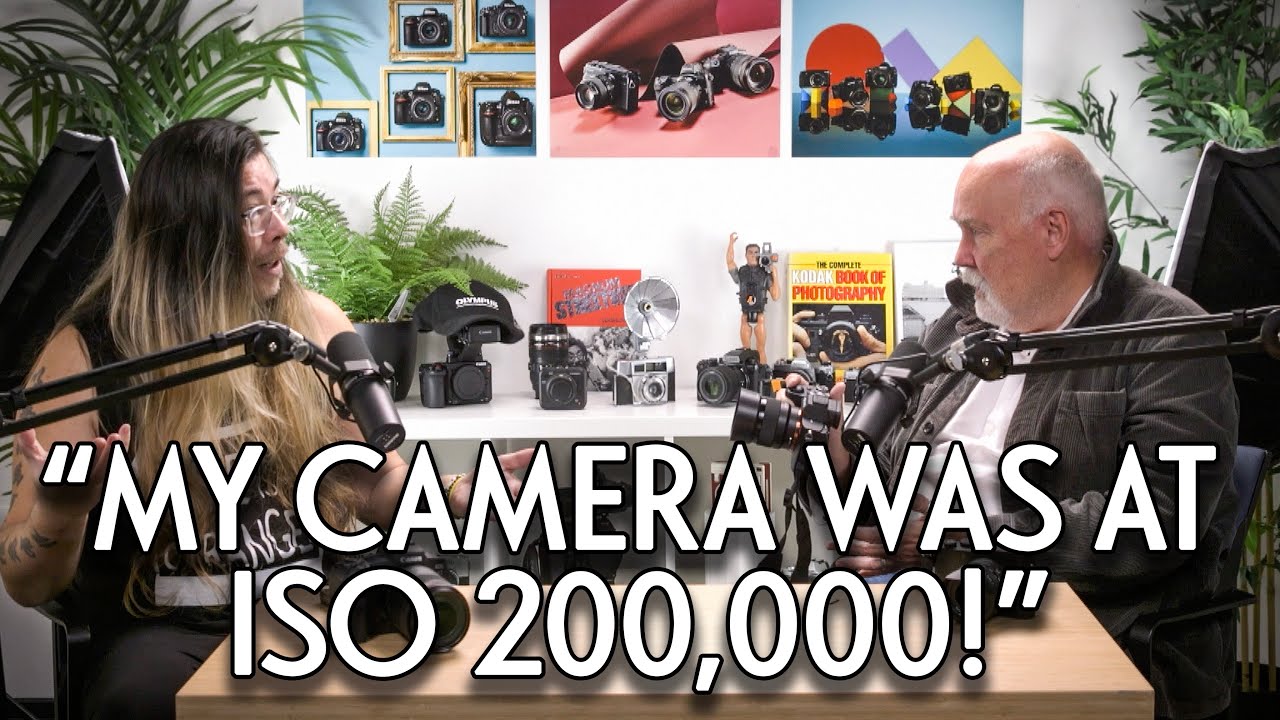
The issue of whether anyone truly needs an 8K camera is discussed in Digital Camera World's weekly podcast, Bokeh Face, available to view here:
Then there's the small matter of previewing 8K content. Back in 2017 Dell launched the first consumer 8K monitor, the 32-inch UltraSharp UP3218K. Since then it has been discontinued and almost no other 8K monitors have been launched. Right now there's only a single 8K 16:9 monitor available to buy at B&H, and it'll cost you a whopping $8,799.
As a viewer of 8K content, you're also going to need a considerably faster internet connection to stream 8K video smoothly, as with 4x as many pixels as 4K, the bit rate of an 8K video stream will be significantly higher and more bandwidth-intensive.

However, there's another, more fundamental reason why I think 8K television is following the same path as 3D TV: it simply isn't necessary. For the last 25 years or so, the world of digital video has been obsessed with increasing resolution. 'HD' (1280 x 720 pixels) and 'Full HD' (1920 x 1080) were the resolutions of choice from the early-mid 2000s, and a decade later 4K (3840 x 2160, or 4x the number of pixels in Full HD) became the resolution we had to have. But as with many technological advancements, we're now at a stage where subsequent improvements yield diminishing returns. While the jump from Full HD to 4K gave a modest tangible improvement to image quality, the difference between 4K and 8K is almost imperceptible in most cases.

Logically this shouldn't be the case though. 8K has 4x as many pixels per video frame as 4K, so it should look 4x sharper, right? Wrong. There's one constant here that hasn't been considered, and which can't change: the resolving power of the human eye. Just because your shiny new 8K TV packs 4x the number of pixels as your old 4K panel of the same size doesn't mean your eyes can actually see that extra detail when viewed from the same distance as before. Boffins have calculated the exact resolving power of a lens like the human eye using the Reyleigh formula, and we can use this to calculate how close you'd need to view your television in order to actually see the extra resolution of 8K.
Screen size |
Optimal 8K distance |
Optimal 4K distance |
Optimal Full HD distance |
|---|---|---|---|
75" |
2.5 ft. (0.79 m) |
4.9 ft. (1.48 m) |
9.7 ft. (2.97 m) |
70" |
2.3 ft. (0.70 m) |
4.6 ft. (1.40 m) |
9.2 ft. (2.79 m) |
65" |
2.0 ft. (0.61 m) |
4.3 ft. (1.31 m) |
8.6 ft. (2.62 m) |
60" |
2.0 ft. (0.61 m) |
4.0 ft. (1.22 m) |
7.7 ft. (2.36 m) |
55" |
1.7 ft. (0.52 m) |
3.7 ft. (1.14 m) |
7.2 ft. (2.18 m) |
50" |
1.7 ft. (0.52 m) |
3.2 ft. (0.96 m) |
6.6 ft. (2.01 m) |
43" |
1.4 ft. (0.44 m) |
2.9 ft. (0.87 m) |
5.7 ft. (1.75 m) |
In the case of a 75" television, you'd need to be viewing from as close as 2.5 feet (79cm) to really perceive the 8K difference. You'll see a small benefit over 4K when sitting between 2.5 feet and 4.9 feet away, but step back more than 4.9 feet from your 75" TV and you'll see no difference between 4K and 8K. Given that even Panasonic recommends a viewing distance of 6-9 feet for its 70" 4K TVs, and Samsung suggests a 7.5-foot viewing distance from a 75" television, getting closer than 4.9 feet is unrealistic for most people.
For more information on this, check out this excellent article on the subject from Forbes.
So with this in mind, even if you ignore the production difficulties with recording, editing and transmitting 8K video, there simply isn't a compelling reason for actually viewing 8K content in the home. We've reached a point in video resolution where going beyond 4K is ultimately pointless for the vast, vast majority of consumers. Now it looks as though television manufacturers have woken up to this.

