
I think 2025 might have been Canon's most diverse year ever, but it was certainly its most market-aware.
The company catered to almost every trend in the industry. Cheap point-and-shoot cameras? Check. Premium compact cameras? Check. Open gate video? Check. Cheap RF lenses? Check. Video-oriented lenses? Check. An answer to the Sony FX3? Check.
For a long time, Canon had the reputation of being a very conservative company that often told customers what they wanted instead of listening to what they'd actually like. In 2025 however, I think it finally shook that monkey off its back.
Here's a quick rundown of what the year looked like for Canon…
January: All hail the king of print
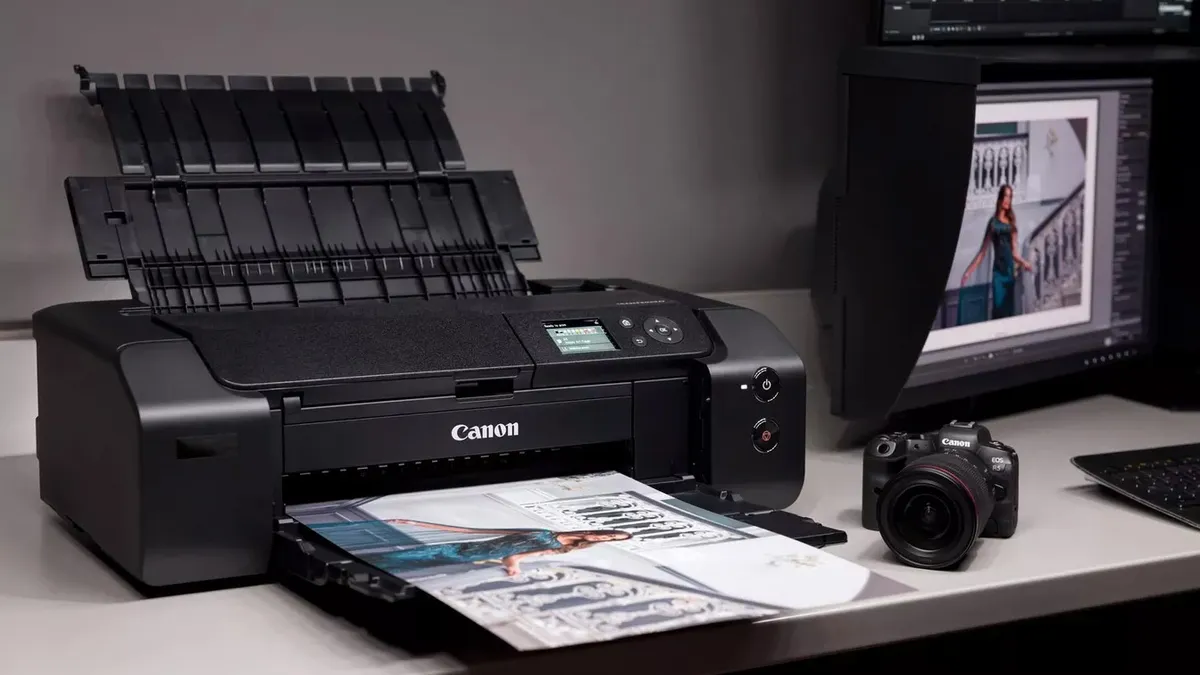
It's easy to forget that Canon doesn't just provide the means to take photographs, but also to print them – and to print them in the best quality possible.
The manufacturer started the year by launching the phenomenal Canon ImagePrograf Pro-310 – an A3+ pro-grade printer that replaced the also-excellent Pro-300, which is my personal favorite printer and the one on which I print my personal and client work.
I know printers are boring, and you're probably not reading this article to hear about them, but the Pro-310 was absolute manna from heaven for the sub-A2 print crowd – especially those of us who shoot and print a lot of mono photographs, as the tonal range of the blacks on this thing are absolutely next level.
February: PowerShot comes back with a bang
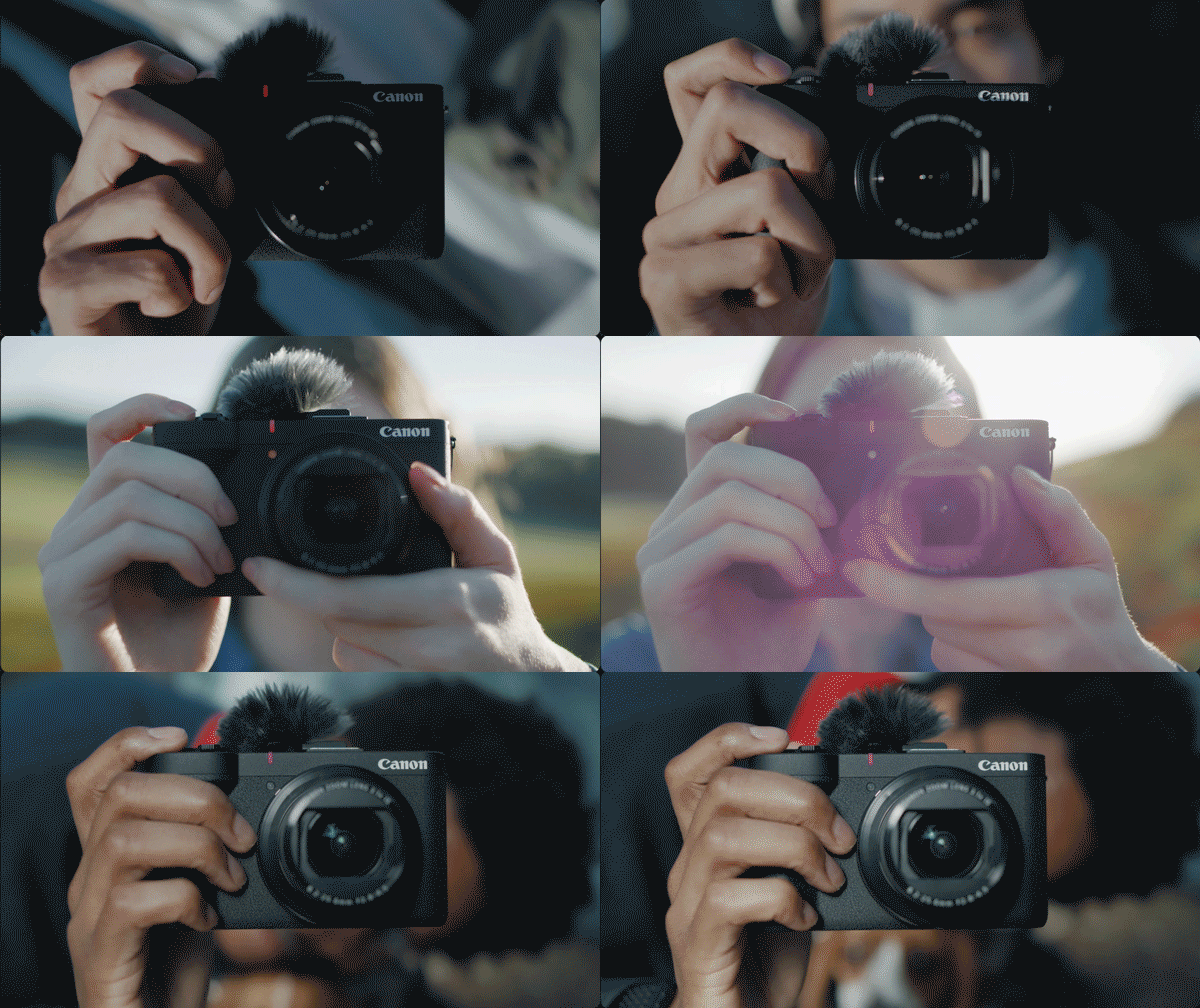
The PowerShot brand isn't typically one that catches the attention of serious shooters, but this was no ordinary PowerShot product.
I was in Japan for the launch of the Canon PowerShot V1 and was one of the first people in the world to get my hands on one at the CP+ 2025 trade show (I had a VIP pass and everything!). For months there had been camera rumors about a new Canon compact, but the V1 was actually a vlogging camera rather than the expected point-and-shoot.
Taking aim squarely at the Sony ZV-1 II, the V1 offered a video-friendly 17-52mm zoom range with built-in ND filters, oversampled 4K 30p video, the now obligatory souped-up internal mic with wind muff, and most intriguingly an all-new 1.4-inch sensor format with 22.3MP resolution.
Sony's ZV range has a pretty good stranglehold on the creator and YouTuber market, but with creators and vloggers like Micro Four Nerds embracing the PowerShot V1 it feels like the camera has started to find its audience.
Perhaps more importantly, what started as a seemingly disparate offering of "V" products was about to become a fully-fledged ecosystem…
March: More than a V-ling
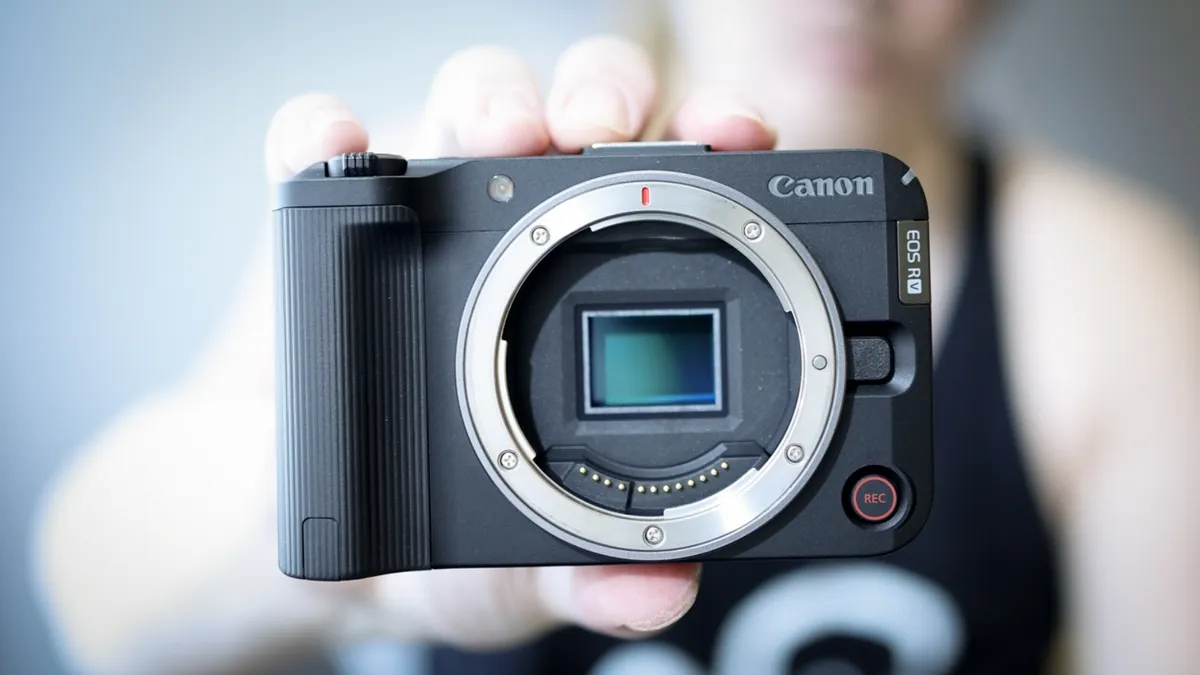
In the previous generation, the Canon EOS M50 and M50 Mark II were two of the most popular APS-C content creator cameras on the market. However, while the EOS R50 that succeeded them was a very capable camera, the expectations for entry-level and general-purpose video had changed quite a bit.
Rather than simply releasing an R50 Mark II, Canon decided to expand its portfolio by offering a sister model: the Canon EOS R50 V, a complementary camera that would transplant the R50's DNA into the company's fledgling V-series of cameras.
Joining the Canon PowerShot V10 and V1, the R50 V became the third pillar of the V-series and gave experienced creators a more advanced, interchangeable lens option. Completely redesigned from the ground up, purely for video, this was in many ways a baby Cinema EOS body, packed with features that were previously reserved for Canon's cinema cameras.

Along with it came the RF mount's first ever Power Zoom lens, the Canon RF-S 14-30mm f/4-6.4 IS STM PZ – a video kit lens (with a 22.4-48mm equivalent range)that punches above its weight and makes the perfect tag team partner for the R50 V, with its buttery-smooth electronic zoom and image stabilization.
However, far more exciting was another video-first optic: the Canon RF 20mm f/1.4L VCM, the brand's latest hybrid lens, joining the RF 24mm, RF 35mm and RF 50mm f/1.4L lineup of primes.
While 20mm isn't a focal length I use very often for stills, it's an absolute staple for videography (and of course, it's an equivalent 32mm on Canon's APS-C bodies) so there's an eager audience for this focal length with this aperture – especially at this size and with this performance.
April: They see me troll-ing, they ha-ting

This month was less "April fools" than it was "April, fools!" in a Mr T voice, as Canon set the cat among the pigeons with its spring lens release.
The Canon RF 75-300mm f/4-5.6 wasn't initially launched in the United States (as, lest we forget, this was also about the time when Trump's tariff policy was starting to throw release schedules into disarray) but it certainly set tongues wagging when it hit other territories.
Yes, it is a rebodied version of the EF 75-300mm f/4-5.6 III DSLR lens – one that wasn't exactly beloved when it originally launched in 1999. And while I'll never describe it as a brilliant lens in terms of image quality, I do believe that it absolutely deserves a place in Canon's RF lineup.
What's the one thing that everyone has always said about RF glass? It's too expensive, with not enough choices at the beginner and entry level. And what is the RF 75-300mm? A sub-$250 lens that's absolutely ideal for newcomers.
Pretty much everyone who gets into wildlife or telephoto shooting cuts their teeth on a cheap and cheerful 75-300mm. When you're starting out, you don't want to pay thousands of dollars for premium performance – you just want as much reach for as little money as possible. And this lens is absolutely perfect for that.
September: More upcycling, more hype-brid products

Everyone who hated the fact that Canon upcycled a 1999 camera lens really hated the fact that it upcycled a 2016 compact camera! But, again, there's a method to the madness.
The Canon PowerShot Elph 360 HS A (aka the Canon Ixus 285 HS A in Europe and Australia, and the Canon Ixy 650 M in Asia) was a minimal refresh of an old point-and-shoot. And there were dozens of YouTubers and reviewers ranting and raving about how outrageous this was, and how can anyone justify releasing a camera like this in 2025.
Which shows an astounding level of obliviousness to the fact that exactly this kind of camera has been selling like crack cocaine on every auction site, camera site and brick-and-mortar camera store for the past few years. Gen Zers clearly wanted to buy 2016 point-and-shoots instead of 2025 cameras, so that's exactly what Canon gave them – what's the issue?

For those who did want a cutting-edge camera, as well as those wanting an answer to Sony's perennially popular FX3, the company certainly delivered in the form of the Canon EOS C50. This 7K 60p, open gate, hybrid cinema powerhouse was the latest cog in the company's hybrid ecosystem – and didn't just blow the ageing FX3 out of the water, but also torpedoed the brand-new Nikon ZR.
Fittingly, the C50 was accompanied by another new hybrid lens: the Canon RF 85mm f/1.4L VCM. This was one of my favorite lenses of the year, even giving my mighty RF 85mm f/1.2L a run for its money, with its super-svelte form factor and beautifully bokehlicious rendering.
Nobody knew it at the time, but both the C50 and the 85mm f/1.4 were actually big clues as to what Canon's final products of the year would look like…
November: The need for speed
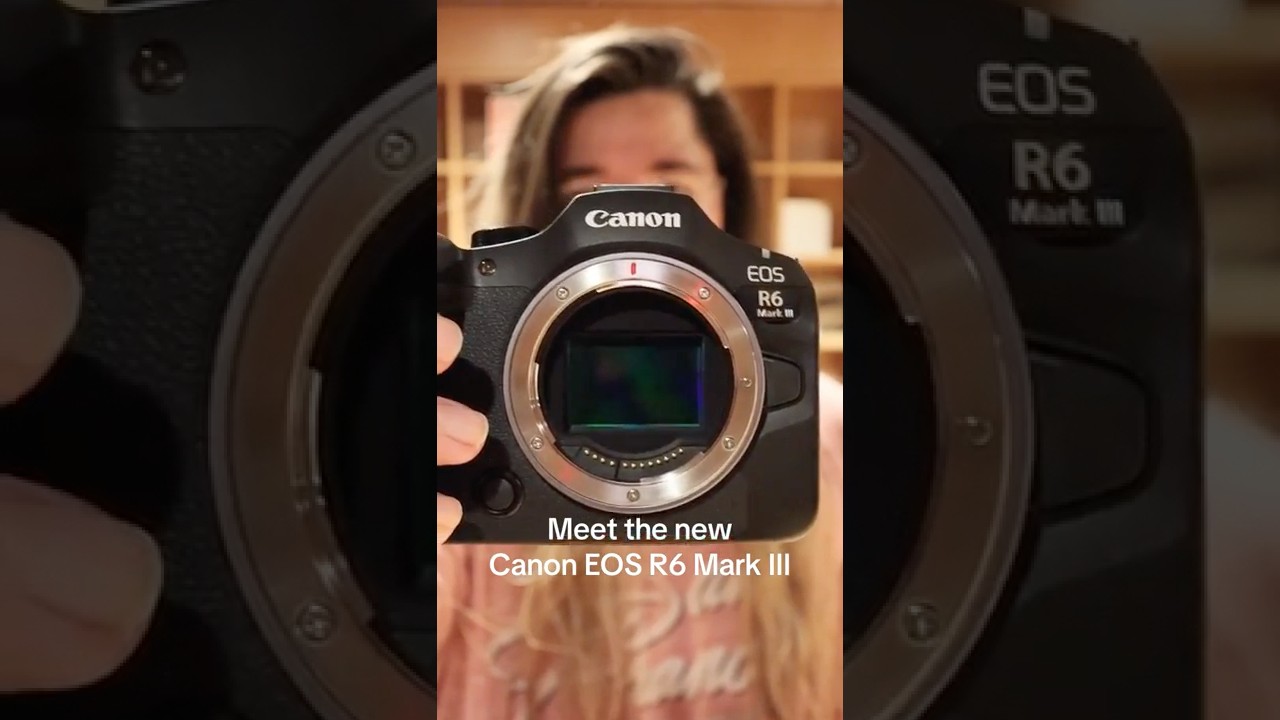
September's launch of the C50 was only half the story – literally. That camera boasted a brand-new 32.5MP full frame sensor capable of 7K open gate video and 40fps burst shooting, but it was a video-first body (with features like an active cooling system).
The Canon EOS R6 Mark III would serve as the other side of the coin; the photo hybrid compared to the video hybrid that was the C50. It used the same 32.5MP sensor, and boasted the same headline 7K and 40fps specs, but incorporated photography features like in-body image stabilization and traditional EOS ergonomics – making this a highly-capable successor to the uber-popular R6 Mark II.
It also went head-to-head, the next month, with the much-anticipated Sony A7 V – providing an overall superior shooting experience and particularly outclassing Sony in the video stakes.

While the R6 Mark III was a product that we all knew was coming, Canon's other November release took everybody by surprise. The Canon RF 45mm f/1.2 STM was the company's answer to the trend of super-cheap, super-fast third-party lenses for the RF mount – but where those lenses were all manual focus-only, Canon's lens boasted full autofocus.
I was pretty blown away by the lens, as was almost everyone else who used it. The bokeh is a little noisy, sure, but this $470 optic offers L-series speed and impressive image quality for a fraction of the price. However, Christopher Frost discovered a pretty severe focus shift issue that affects owners of cameras like the OG Canon EOS R5 and R6.
I tried the lens on the R6 Mark III at launch, so I'm eagerly awaiting a new copy of the RF 45mm to give it a full workout and put it through our battery of lab tests. (This is why we don't score our reviews until we've performed our lab work!)
While this would be a bit of a sour note on which to end the year, overall Canon has had a heck of a 2025 – perhaps even the best 2025 of any camera brand.
It's given us the latest 6-series camera with near-flagship video specs along with a killer cinema camera, a baby cinema camera, a user-and travel-friendly content creator camera, an old school point-and-shoot camera, a fantastic pro-grade printer and a suite of great lenses across a range of focal lengths and price points.
Of course, I was dearly hoping for that retro camera… but there's always next year…
You might also like…
Take a look at the best Canon cameras on the market, along with the best Canon RF lenses for mirrorless cameras and the best Canon lenses for DSLRs.

