
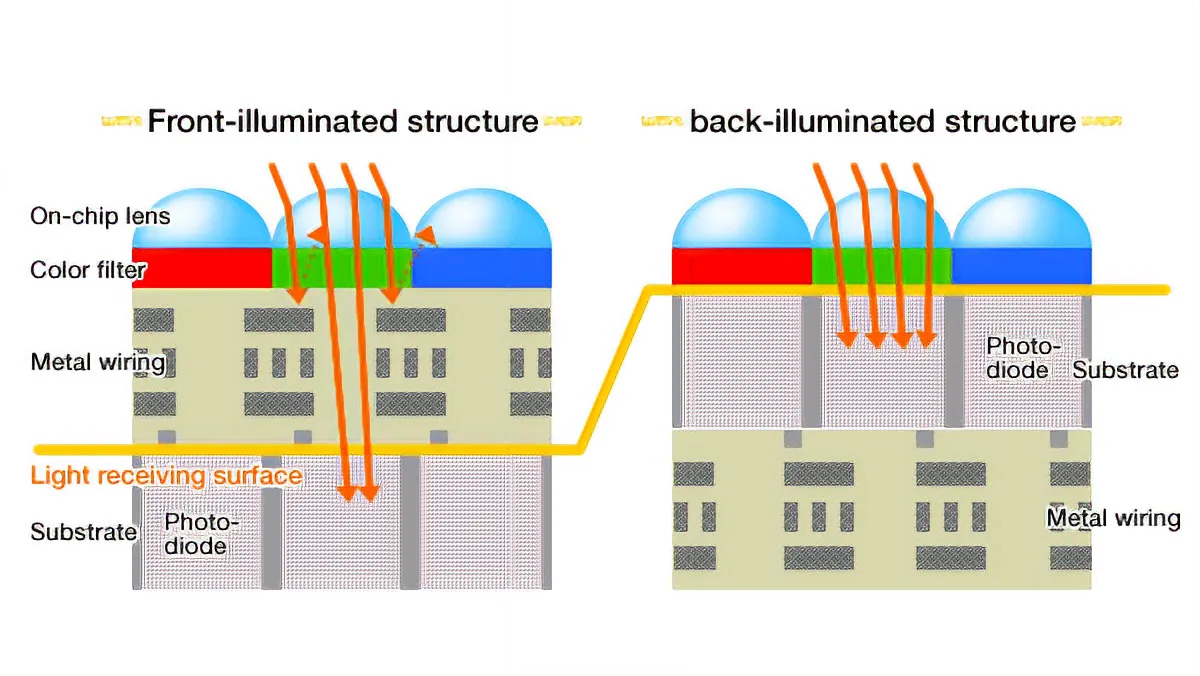
Perhaps Sony took a leaf out of the Dark Lord Sauron’s playbook when it created the IMX410 sensor. Much like the One Ring, this 24.6MP full-frame backside illuminated CMOS sensor had an irresistible draw – and it quickly came to dominate.
A recent article by YM Cinema illustrated just how dominant this sensor architecture has become, finding its way not just into Sony's own cameras but also those made by Nikon, Panasonic, Leica, Blackmagic and DJI.
Following its release in 2018 it wasn’t long before the industry fell under the spell of the IMX410, which came down to two things: its versatile architecture – widely praised for having excellent dynamic range and strong handling of tricky low-light conditions – and perfect timing.
By this time the transition to mirrorless cameras was in full swing and, while Sony got to work implementing the IMX410 in its own cameras, including mid-tier hybrid shooters such as the A7 III, other manufacturers began looking to it for inspiration.
Shortly after, a host of mirrorless cameras from other brands – such as the Nikon Z6 (2018) and Z6 II (2020), the Lumix S1 (2019) and S1H (2019) and the Leica SL2-S (2020) – were released featuring sensors closely based on the IMX410.
And even in 2023 we were seeing Sony IMX410-inspired sensors in new cameras, such as the Blackmagic Cinema Camera 6K.
The IMX410 is no longer as widely used as it was, back when the big camera brands were pushing hard to get their early mirrorless models out into the world. And since then we've seen much higher resolutions in full-frame sensors, from 33MP in mid-tier models to 61MP in flagship cameras.
However, if you’ve ever wondered why 24MP became a global standard in the first place, it was because of the IMX410. This sensor raised the bar for mirrorless cameras and models featuring the IMX410, or sensors closely based on it, will be used for years to come.
No doubt the Dark Lord Sauron would be proud if he could see how Sony used the IMX410 to spellbind the industry.
You might also like…
Sony flagship models now feature much more powerful sensors than the IMX410. Check out our reviews of the Sony A1 and A9 III to find out more.

