
Physics dictates that a camera phone can never be as good as a high-end conventional camera. This is the conclusion reached by Marques Brownlee in a recent YouTube video where he presents his thoughts on the Oppo Find X9 Ultra: Oppo's latest flagship, which pushes the boundaries of what's possible from a phone camera.

Taking that conclusion in isolation, you'd be forgiven for thinking Brownlee is not impressed by the Find X9 Ultra, but it's quite the opposite. He is very complimentary about the phone's incredible versatility, from its quad-camera array (plus additional color spectrum sensor), to its uncanny ability to help you take great shots, time and time again.
I personally use a Find X8 Pro as my daily phone and can concur with Brownlee: even though the Find X8 Pro's tech is now 18 months old, it's still an awesome camera phone that produces incredible images, even in scenarios where most phones would struggle.

But what of the assertion that it's physically impossible for a phone to ever be as good as a high-end, 'proper' camera? I lab test cameras for a living, from relatively mundane compact cameras, right up to full-frame and medium format powerhouses. If you judge a good camera to be one which provides the highest possible resolving power, while also giving the lowest possible image noise and the widest single-exposure dynamic range, then a big sensor (and in turn, big pixels) are paramount. My lab results verify this correlation, with cameras like the medium format Fujifilm GFX 100 II reigning supreme for detail capture. Bigger is better, and biggest is best. Judged purely on these traditional performance metrics, it's true: a camera phone can't compete. But here's the thing: does it need to?
The case for the camera phone
We could actually flip Brownlee's physics argument on its head, in favor of the camera phone. For the conventional camera to compete with (or better) a phone’s image quality, it must be physically larger, but that in turn makes it increasingly more inconvenient. Sure, if you're a committed photographer and are happy to lug around a dedicated camera and lenses, then credit to you. But like it or not, you're now in a tiny minority.
The goal for most people is to get the best possible image quality in the most convenient package, and it's this compromise that the camera phone nails so perfectly. While a phone-captured image won't match the fine detail of a photo from a full-frame or medium-format camera (even if the phone has a 200MP sensor), when you're viewing your shots primarily on the phone itself, who cares?
What's far more important than something like outright resolution (and as Brownlee points out) is the ability to get the maximum number of great-looking photos from the minimum number of shutter button presses. Judged on this metric, even a $5000+ pro camera cannot come close to the hit rate of a phone like the Find X9 Ultra. The immense processing power of a camera phone means it can compensate for user error, as well as the phone's camera hardware limitations. As a case in point, Google re-used the same image sensor for four consecutive generations of Pixel, yet image quality still noticeably improved each year.

Image processing is key here: it can take what would otherwise be a mediocre-looking image and turn it into a vibrant, detailed shot with incredible dynamic range, all without you doing a thing. This is noticeable on my Find X8 Pro: there's a split second where you see the initial, rather bland image upon immediately reviewing a photo, then the processing does its thing and boom, you're hit with a stunning image. The difference is most obvious when shooting at focal lengths exceeding the phone's native optical zoom. Then AI is employed to add fine detail where there would otherwise be none. At this point an image goes from being enhanced to partially fabricated. But again, I'd argue that this doesn't need to be a problem. Unless you're very familiar with the subject matter, you'll never know that the texture AI has applied to a certain portion of the image doesn't match the actual texture of the real subject. After all, photographs are most often used as memory aids, and to effectively fulfil this purpose they don't have to be exact emulations of the source material.
So is there still a place for 'proper' cameras?
This entirely depends on what you want a camera for. If you simply want to take photos, then stick with a phone. It has made a dedicated camera obsolete for this purpose, for the reasons above. However, if you want to learn or practice photography, as a hobby or a profession, then a phone is still no match for a 'real' camera.
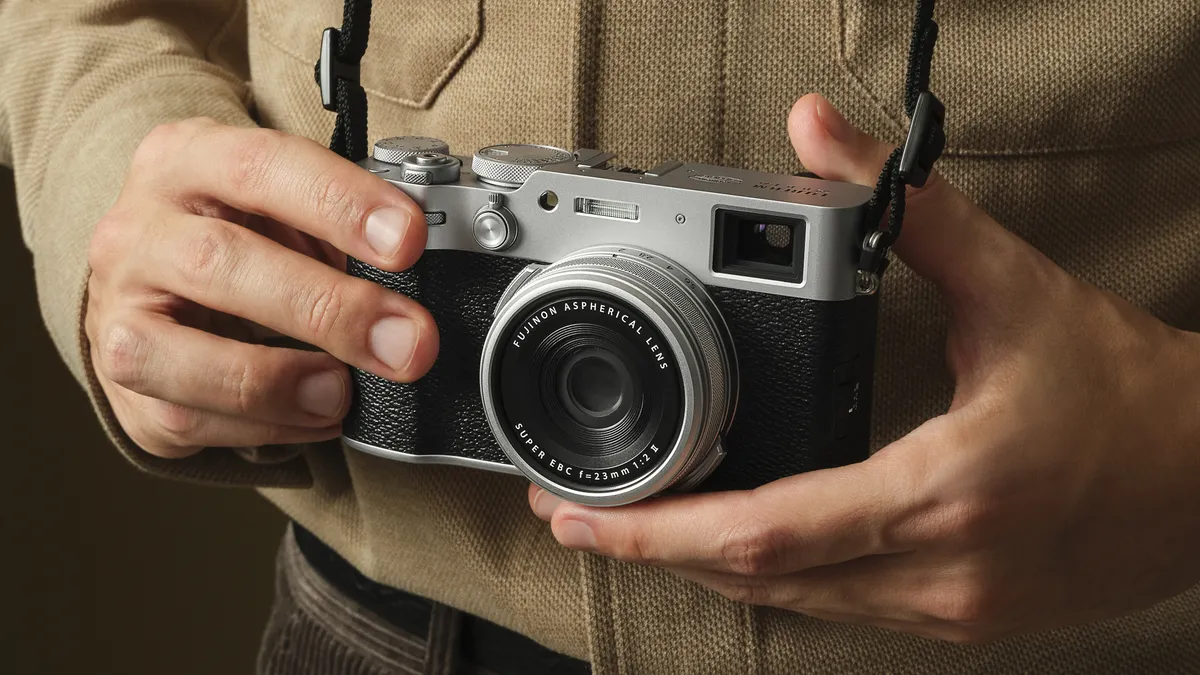
For hobbyist photographers, the vastly superior ergonomics and plethora of physical controls you get with a camera like the Fujifilm X100VI or OM System OM-D E-M10 IV will make your shooting experience far more immersive and therefore more enjoyable. Phone manufacturers like Oppo, Xiaomi and Vivo have tried to improve their flagship phones' ergonomics with optional add-on grips, but even these can't match the level of physical control you get with a dedicated enthusiast's camera.

Then there's the professional photographer. A key requirement for the pro is to record not just attractive images, but also to achieve faithful subject depiction. When it comes to sports, reportage, or nature photography, a large part of these photos’ appeal (especially in the age of AI) is their authenticity and accurate representation of the moment or subject. These are scenarios where eye-popping dynamic range or AI-fabricated elements are at best jarring, and at worst wholly inappropriate. Sure, premium camera phones do have manual modes and Raw capture that'll give you more honest subject reproduction, but phones rely so heavily on image processing to compensate for their small image sensors that disabling this trickery will noticeably reduce image quality.

If you want both high image quality and accurate, trustworthy subject depiction, then a high-end dedicated camera is still the tool of choice. In these scenarios their bulk, potential inconvenience and complexity become almost irrelevant: it's the camera’s ability to record a moment as accurately as possible, without autonomously applying its own spin, which matters most. And it's this authenticity, rather than just physics, which gives a high-end camera unrivalled appeal.

