
I am never surprised to see that the Nikon Z 180-600mm f/5.6-6.3 VR is trending on Google. From the moment this formidable Nikon Z lens was launched back in 2023, it’s been a hugely popular optic for Nikon.
Indeed its spiritual forebear, the Nikon AF‑S 200‑500mm f/5.6E ED VR, is still a fixture in both hides and trackside the world over.
A fantastic performer that stops short of pro-level prices

The Nikon Z 180-600mm f/5.6-6.3 VR sits firmly within the enthusiast bracket, but I’ve known pros to favor its blend of reach, affordability and relatively light weight, too.
Essentially, it’s a middle ground between lenses like the Tamron 70-300mm f/4.5-6.3 Di III RXD ($699 / £699 / AU$1,199) and the Nikon Z 28‑400mm f/4‑8 VR ($1,449 / £1,399 / AU$2,299), and serious pro-grade optics that arguably begin with the Nikon Z 100‑400mm f/4.5‑5.6 VR S ($2,949 / £2,699 / AU$4,799) and ends with the Nikon Z 600mm f/4 TC VR S ($16,199 / £15,499 / AU$28,299).
The Nikon Z 180-600mm f/5.6-6.3 VR is priced at $2,199 / £1,999 / AU$3,099, placing it firmly in the middle. However, it’s important to remember that this is an extremely long lens.
The Big N doesn’t make many 600mm optics and the Nikon Z 180-600mm f/5.6-6.3 VR is the cheapest of the bunch. It might not be the fastest lens in the world, but it’s still very workable in a variety of situations – especially given the enhanced low-light capabilities of the best Nikon cameras and the industry-rocking power of AI noise reduction.
I get it, 2,000 bucks is a lot of anyone’s money and it’s beyond the reach of some creatives. But for sports and wildlife photographers, having a long lens like the Nikon Z 180-600mm f/5.6-6.3 VR in their arsenal is quite simply more important than the camera.
A lot of enthusiasts have no problem dropping big bucks on a body or two (or three), but shy away from investing in the optics they need to fulfill their creative ambition.
If you can’t afford the Nikon Z 180-600mm f/5.6-6.3 VR but have a Z-Series camera, my recommendation would be to pair a secondhand F-mount lens – such as the Nikon AF‑S 200‑500mm f/5.6E ED VR – with the Nikon FTZ adapter.
Right now, MPB is selling said lens from £589 / $849, but there is a wealth of long lenses on the used market that you can find for less.
Nikon Z 180-600mm f/5.6-6.3 VR: How does it fare in 2026?
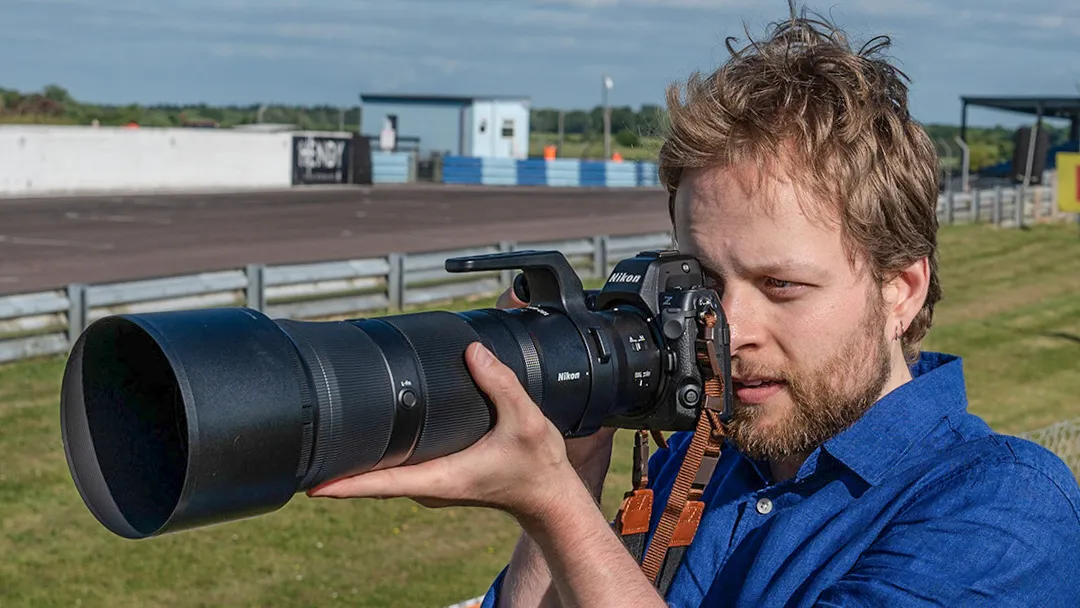
The Nikon Z 180-600mm f/5.6-6.3 VR is a lovely lens to shoot with, delivering gorgeous image quality and a slick, internal zoom design.
But while the internal zoom does provide a more premium feel, it does mean that this lens will take up plenty of space in your kit bag. So much so that even a standard bag may struggle to accommodate this lens while it’s attached to a camera.
You get 5.5 stops of Vibration Reduction (Nikon’s proprietary optical stabilization) and customizable function buttons, as well as some decent weather sealing. It doesn’t boast the greatest tripod collar and foot, though, with the latter being rather small and uncomfortable when used as a handle, but this is easily replaced if it bothers you enough (I’ve kept mine).
And while the f/5.6-6.3 aperture range might seem a bit slow, with some cunning subject positioning it’s not hard to blur the background – especially as you’ll likely spend most of your time at the telephoto end anyway.
Overall, the Nikon Z 180-600mm f/5.6-6.3 VR represents just as good value and delivers just as good a performance three years after its release. I’d recommend it to anyone.
You might also like...
Two years with the Nikon Z 180-600mm f/5.6-6.3 VR: Still a wildlife or sports enthusiast’s dream lens. I chose the Nikon Z 180-600mm for its value and reach, but my chiropractor would recommend the Z 100-400mm. And here are the best lenses for bird photography.

