
The best cameras for wildlife photography will save your hide (perhaps literally, if you're in a portable hide!) when you're trying to get amazing animal shots. I've used these cameras all over the world, from photo safaris in Zimbabwe to elephant sanctuaries in Thailand to birding in my backyard – so I've definitely put them to the test!
Birds and animals are some of the most challenging subjects, so picking the very best camera for wildlife photography is critical. My personal pick is the Canon EOS R5 Mark II; it boasts the best autofocus on this list, along with phenomenal photo and video quality, plus the all-important weather-sealing (you don't see animals running indoors when it rains!).
However, this shouldn't be a genre exclusively for premium pro cameras. So I've included an all-in-one bridge camera and an affordable amateur model so that everyone can enjoy photographing animals. And if you want a camera to check on the wildlife in your backyard, check out the best trail cameras!

I've enjoyed animal photography for years and have taken photos all over the world, both at zoos and sanctuaries as well as documenting them in the wild. I'm also lucky enough to live near the world's first drive-through safari park, along with some fantastic bird sanctuaries, so I've spent plenty of time testing the best cameras for wildlife photography… along with some that weren't quite up to the task!
The best camera for wildlife photography
Why you can trust Digital Camera World Our expert reviewers spend hours testing and comparing products and services so you can choose the best for you. Find out how we test.
Best beginner camera for wildlife photography

✅ You want ultimate reach: The 24-600mm focal range is impossible to replicate on an interchangeable lens camera!
✅ You want a built-in lens and decent image quality: the RX10 V has a much bigger sensor than other bridge cameras
❌ You want to blow up your images: The sensor is smaller than with mirrorless and DSLR cameras and that doesn't play well with big prints.
❌ You want a choice of lenses: The long lens is good for most wildlife shots, but you can't change it
🔎 Sony RX10 V This is the best camera with a built-in lens as it offers a much bigger sensor than rival cameras that offer a similar telephoto zoom range
When photograping wildlife, the one thing I always want is more reach… unless I'm using this bridge camera! It boasts an integrated lens with an unbelievable 24-600mm zoom range, which absolutely transforms your shooting ability.
Usually I have to take two bodies and two different lenses, one to cover close range (usually a 24-70mm) and another to cover distance (the longest I have, which is 150-600mm). But the RX10 V covers all that in the one camera.
The RX10 V is a hefty DSLR-like camera, certainly, but it's a lot lighter and less cumbersome than lugging around two cameras and lenses – and again, I get a vastly increased focal range.
Without having to swap anything, I can zoom from an animal a few feet away from me all the way to an animal grazing on the horizon. It's an absolute revelation!
The secret to this camera is its 1-inch stacked sensor. While smaller than full-frame alternatives, its crop factor significantly amplifies your lens reach to bring distant wildlife closer. The compromise is slightly lower image quality and limited low-light performance compared to interchangeable lens cameras, meaning you cannot blow shots up for massive prints.
However, the 20.1MP photos remain highly impressive. The real magic for wildlife tracking is its blistering 30fps continuous shooting, paired with robust autofocus and subject detection inherited from Sony's Alpha range to lock onto fast-moving animals. It is also a versatile video tool, capturing crisp, oversampled 4K 60p or 240p super-slow-motion for dramatic nature clips.
The main trade-offs are its bulky all-in-one body and a permanent lens. While it carries a premium price tag, buying separate mirrorless lenses to match this massive zoom range could cost thousands more, making it exceptional value for nature photographers.
Read our full Sony RX10 V review
Speed |
With a burst rate of 30fps is offers a brilliant start for beginners |
5 / 5 |
Features |
Its massive 24-600mm lens is a major draw to this camera |
5 / 5 |
Value |
It is by far the most expensive bridge camera around - but it also gives by far the best image quality |
4 / 5 |
Best affordable camera for wildlife photography

✅ You need speed: The R10's boasts continuous shooting speeds that are faster than the flagship Canon EOS R3!
✅ You want "longer lenses": The APS-C sensor will make the effective focal length of any lens 1.6x longer!
❌ You shoot in bad conditions: Since there is no weather sealing, shooting in moist or dusty conditions is a no-no.
❌ You want safety: With only one slot, if something happens to your memory card you will lose all your shots.
🔎 Canon EOS R10 Great image quality, fantastic autofocus, fast burst shooting and a sensor that makes all your lenses longer – this is fantastic bang for your buck. ★★★★½
If you're on a budget, but still want the power and versatility of an interchangeable lens system, I don't think you can get a better camera than the Canon EOS R10. You get pro-grade burst speeds and pro-grade autofocus in a camera that, in the US and UK, is under a grand – it's truly incredible value.
While other cameras on this list trump its burst modes, it's worth noting that its 23fps electronic / 15fps mechanical continuous shooting is faster than the flagship Canon EOS R3! Of course the buffer depth isn't the same, but still – wow.
Likewise, the autofocus system in this camera – Dual Pixel CMOS AF II – is the same one you'll find in the R3 (and the next camera on this list, the R5). With its subject detection algorithms, Canon's AF is simply unbeatable for wildlife; I've photographed animals all over the world, and I've never used a system this good.
The R10 also offers gorgeous (albeit cropped) 4K 60p, or uncropped 30p oversampled from 6K, along with FullHD in 120p for true slow-motion. So it's great for capturing video, particularly with its fully articulating touchscreen.
Of course, with the low cost comes a couple of compromises: namely the lack of any in-body image stabilization and no weather sealing. However, it has everything else going for it – and it's an excellent way to get started in Canon's fantastic ecosystem of RF lenses (which also enables you to use EF lenses, with an optional adapter).
Read my full Canon EOS R10 review
Speed |
23fps on its electronic shutter means you will certainly capture the action |
4 / 5 |
Features |
With 24MP stills and Phenomenal autofocus this is perfect for wildlife |
5 / 5 |
Value |
With its super AF and 24MP stills its a great price for enthusiasts |
4.5 / 5 |
Best Canon camera for wildlife photography

✅ You need the best autofocus: I've used every wildlife camera out there, and nothing is more accurate!
✅ You want resolution: You can capture 45MP stills (actually up to 180MP!) and 8K video in amazing quality.
❌ You primarily want to shoot 8K video: The upscaling and denoising features are fab, but fiddly.
❌ You're on a budget: It packs virtually every piece of top tech that Canon has – so it comes with a high price.
🔎 Canon EOS R5 Mark II Amazing AF, incredible resolution, superb stabilization, dual cards, weather sealing… the best wildlife camera you can buy for stills photography. ★★★★★
I was a day one buyer of the original Canon EOS R5, but the Mark II tops it in every possible way. Simply put, this is the best camera I have ever used – especially for wildlife photography.
It simply doesn't miss a beat, sticking to subjects like glue so all you need to do is keep them in the frame. I am amazed every time I use this camera at just how spookily good the AF is – the Nikon Z8 / Z9 and Sony A9 III have each let me down, but the R5 Mark II never has. It's algorithm autofocus in in a league of its own.
The 45MP stills are crisp and clean, and can be rattled off at up to 30fps – more than enough to keep up with even the twitchiest animals. Thanks to the R5 Mark II's AI-powered neural net image processing, you can even upscale your images to 180MP in-camera.
For wildlife photography, this is absolutely huge. All those times your when your lens wasn't quite long enough? When you had that incredible shot of a bird, but it was so tiny that when you cropped in your image was only a few megabytes in size?
Well, with in-camera upscaling, you can crop way into an image and blow it back up to its original 45MP resolution. Or, if you've got a frame-filling shot, blow it up to 180MP for extreme detail – all without losing any image quality whatsoever. It's truly mindblowing.
In-body image stabilization (IBIS) offers up to 8.5 stops of compensation, which is perfect for shooting on long lenses where camera shake can be a factor.
If you shoot video, the R5 can capture glorious 8K 60p – and if you want a handy hack when trying to photograph tricky subjects, you can film them in 8K and then extract a crystal clear 36MP still image from your footage via the in-camera Movie Frame Grab!
Throw in weather sealing, dual memory card slots (one SD and one superfast CFexpress Type B), some of the most advanced lenses in the industry and the ability to use Canon's vast catalog of DSLR glass (with a separate adapter), and you've got a camera whose only drawback is the price tag.
Read my full Canon EOS R5 Mark II review
Speed |
20fps via its electric shutter is great , but not the best on the list |
3.5 / 5 |
Features |
Massive 45MP sensor and 8K video means you can capture stunning wildlife visuals |
5 / 5 |
Value |
Pricey to most, but for 8K video and 45MP, it's good value |
4.5 / 5 |
Best Nikon camera for wildlife photography

✅ Resolution is important: With 45.7MP photos and 8K 60p video, this camera delivers all the detail you need.
✅ You want a "pro" body: A built-in vertical grip and a bigger battery can handle bigger lenses and longer shooting.
❌ You want full fat 120fps: The Z9 can shoot at 120fps, but only in JPEG at 11MP (unlike the A9 III's full res shots).
❌ You want a flippy screen: The 4-axis tilt screen is cool, but not as useful as a fully articulating screen.
🔎 Nikon Z9 The Swiss Army Knife that can take on any task, the Z9 is also one of only two current mirrorless cameras to feature the pro grip and bigger battery. ★★★★½
There's one thing that every interchangeable lens camera on this list has in common: a small body. However, when you're shooting wildlife photography, you're often using physically longer and heavier lenses – and those don't balance ideally on small bodies. This is when you need a camera with a professional form factor, featuring an integrated vertical grip.
This extra heft not only makes it easier to balance big lenses, it also duplicates the shutter and exposure control dials in the vertical position – enabling seamless shooting when you spin the camera around to portrait orientation. On top of that, the grip supports a larger and higher-capacity battery so you can shoot for longer when out in the field.
Size advantages aside, I think the Z9 is the best camera that Nikon has ever made. Its 45.7MP sensor delivers great-quality stills, and its stacked design also offers incredible speed – you can shoot all the way up to 120fps, though unlike the A9 III you can only capture 11MP JPEGs (but you can shoot RAW + JPEG at 20fps)
The 8K 60p video is unreal, with huge recording times, and while the autofocus is a step below Canon's it is still awesome for animal photography. You also have the advantage of being able to use Nikon's extensive range of F-mount lenses, via an optional adapter.
I believe that the larger grip and bigger battery makes this a superior wildlife camera to the Nikon Z8, which is otherwise almost identical in terms of specs. However, the Z8 is newer, smaller and cheaper – so if size isn't important to you, that may be the best option.
Read my full Nikon Z9 review
Speed |
120fps for 11MP, or 30fps full res |
4.5 / 5 |
Features |
45MP stills, 8K video and pro grip body make this pro-grade camera a tank |
5 / 5 |
Value |
It's very well priced when you consider how much the Sony A9 III costs, but this is a massive leap from prosumer to pro-grade |
4 / 5 |
Best Fujifilm camera for wildlife photography

✅ You want to shoot JPEGs: Fujifilm cameras are known for exceptional color science, perfect for JPEG shooting.
✅ You like bird photography: The excellent autofocus with Subject Recognition is particularly good for bird-in-flight images.
❌ You want full frame: The Fujifilm X-H2S uses a smaller APS-C sensor, though many users will argue it has long stopped mattering.
❌ You want lots of tele lenses to choose from: While things have improved, the Fujifilm X system is still fairly limited on telephotos.
🔎 Fujifilm X-H2S This camera earned big plaudits in DCW's testing, and its hyper-sophisticated autofocus system can intelligently recognise animals and birds. Highly recommended ★★★★★
For a time, Fujifilm's mirrorless range was lacking a real speedster of a camera that could step up in the wildlife game – and its selection of telephoto zooms was pretty poor. Both things have happily changed in recent years, and the Fujifilm X-H2S has come flying out of the gates with some seriously impressive wildlife-shooting credentials.
Its 40MP full-resolution RAW burst rate meets and exceeds that of more expensive professional cameras like the Nikon Z9. The trick lies in the stacked sensor design, which enables much faster readout speeds and blackout-free continuous shooting, so your viewfinder experience isn't compromised. There's a generous buffer, too – when you shoot in JPEG, you can easily rattle off more than a 1000 frames before the camera starts to complain. To handle such volumes of data, the X-H2S boasts CFexpress Type B and SD UHS-II card slots.
What really stands out here though is the autofocus. The Fujifilm X-H2S boasts deep-learning subject-recognition autofocus, which is hardly exceptional in this day and age, but the Animal and Bird modes both really work well. For bird-in-flight images, this camera does an impressively consistent job of achieving sharp frames, and you really should see a solid hit rate.
The telephoto lens situation for Fujifilm X is also much better than it was. Long lenses like the Fujinon XF150-600mm F5.6-8 R LM OIS WR have changed the game for wildlife photography on Fujifilm cameras.
This camera comes recommended by my colleague Lauren Scott, who gave it the full five stars in her X-H2S review, describing it as 'terrifically powerful' for those who want professional-level speeds without the bulk and expense of a full-frame system camera. Fujifilm's legendarily excellent color science means it's also a great one for those who'd rather not spend too much time in editing – the out-of-camera JPEGs already look pretty great.
Read our full Fujifilm X-H2S review
Speed |
Up to 40fps full-res with electronic shutter |
4.5/5 |
Features |
Gorgeous image quality, 6.2K video, subject-recognition AF |
4.5/5 |
Value |
It's definitely expensive for APS-C, but you get a lot for your money. |
4/5 |
Best Micro Four Thirds camera for wildlife photography

✅ You want a hardy outdoor camera: With IP53 weatherproofing, this is the most outdoor-ready mirrorless camera you can get.
✅ You want lightweight telephoto lenses: With the 2x crop factor of MFT, suddenly a 100mm lens is a 200mm lens, giving you much greater reach.
❌ You also want to shoot video: The OM-1 Mark II certainly isn't bad for video, but its true strengths are elsewhere – the Lumix G9 II is better.
❌ You want to make large prints: The native resolution of 20.4MP is going to restrict how large you can print your images.
🔎 OM System OM-1 Mark II Let go of lazy narratives about Micro Four Thirds being inferior, and learn the love the OM-1 Mark II for what it is – one of the most fully featured wildlife cameras on the market. ★★★★★
I have long held the contention that Micro Four Thirds is underrated as a system. Photographers will love to tell you that it's simply inferior to the glory of full frame, that the smaller sensor size can't hope to compete. Well, having used the OM System OM-1 Mark II extensively and compared it to its full-frame rivals, I can tell you that this perception needs to die and stay dead. This is one of the best cameras ever made, especially for wildlife photography – a fact that is not in spite of its Micro Four Thirds designation, but partly because of it.
For a start, the small sensor size may turn some people off, but our lab testing revealed no real dynamic range difference between the OM-1 Mark II and its larger-sensor rivals – in fact, the OM-1 Mark II edged them out slightly. And the thing about the smaller sensor is that it incurs a 2x crop factor on your lenses, meaning that their effective focal length is doubled. Mount a 100-400mm lens to the OM-1 Mark II and suddenly you've got 200-800mm at your disposal, for about half the weight and cost it'd take to do the same in full frame.
And then there's also the fact that this camera is just brilliant. Subject-recognition autofocus – check. A super-fast burst-shooting speed – check, to the tune of 120fps with locked focus, or 50fps with continuous focus. This camera can just hang onto subjects like you wouldn't believe, particularly birds, and gives you so many opportunities to nail the shot even with fast-moving subjects.
There's also the weatherproofing. Since the regeneration of the Olympus imaging brand into OM System, the new cameras and lenses that have come out have boasted some of the best weatherproofing in the business, and the OM-1 Mark II is no exception. With an IP53 weatherproof rating, it can keep on shooting in basically any conditions no matter how inclement.
I love, love, love this camera. For wildlife, it's a stakes-raiser and a game-changer all in one, and any prospective wildlife shooter would be doing themselves a real disservice by refusing to consider it out of some antiquated notions about MFT sensors.
Read my full OM System OM-1 Mark II review
Speed |
Though 120fps is the headline, you'll realistically use 50fps – still plenty! |
5/5 |
Features |
IP53 weather-sealing, subject recognition – though resolution is low |
4.5/5 |
Price |
Terrific value considering what you get |
4.5/5 |
Best DSLR camera for wildlife photography
✅ You want the best battery: DSLRs simply obliterate mirrorless cameras when it comes to battery life!
✅ You want an affordable system: Used F-mount lenses have plummeted in price on the used market, meaning you’ll save a packet on great glass.
❌ You need top notch AF: Canon's first-gen Dual Pixel AF is good, but lacks the subject detection of the second gen.
❌ You want video: Uncropped 4K / 30p is great for a DSLR, but if you’re serious about video, a hybrid mirrorless is the way to go.
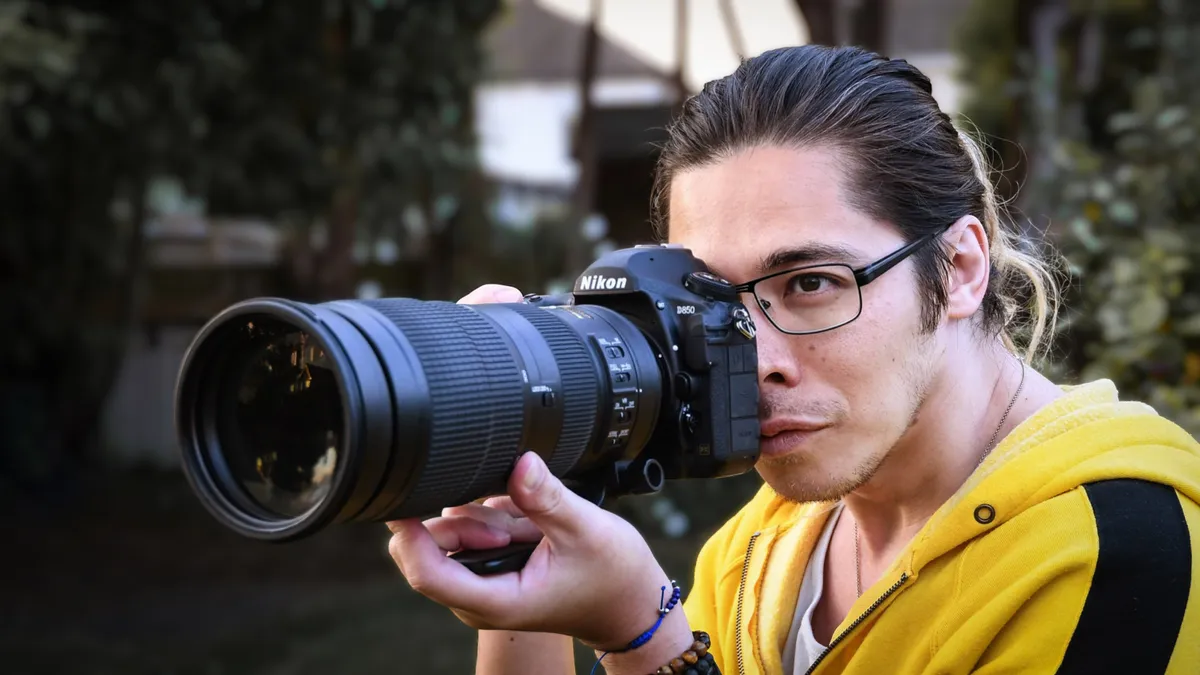
🔎 Nikon D850 A great choice for photographers who want a premium, high-resolution, full-frame camera, and access to cheaper DSLR-era lenses. ★★★★★
With DSLR cameras getting discontinued left, right, and center, the pool of bodies to choose from is growing ever increasingly smaller. But even so, the Nikon D850 has always been high on my list. It doesn’t boast the raw speed of the flagship Nikon D6, but it’s also a fraction of the price. And while you won’t get mirrorless mod cons like subject detection, its autofocus is still fast, accurate, and formidable in the right hands.
The D850’s full-frame, 47-MP CMOS sensor produces detail-rich and vibrant imagery, with its high resolution also leaving plenty of room for cropping – essential when capturing faraway subjects. It’s also extremely durable and extensively weather sealed, so it’ll weather dusty and damp environments as you search for your quarry.
The camera also grants you access to Nikon’s extensive range of F-mount glass, providing a near unprecedented collection of telephoto and super-telephoto lenses. You also get 4K / 30p (uncropped) video, which is decent for a DSLR. What isn't the D850’s strong point is its 7fps burst speeds, although this can be boosted to a much more respectable 9fps via the MB-D18 battery pack. Still, if you’re a photography-focused content creator looking for a great-value and solid wildlife setup, this is quite simply one of the best DSLRs ever made.
Read our full Nikon D850 review
Speed |
9fps is very respectable for a high-resolution DSLR, but you’ll need to invest in the battery grip. |
4 / 5 |
Features |
47MP, uncropped 4K, a respectable AF system, and dual XQD/CFexpress and SD card slots. Those are some serious specs for a DSLR. |
4.5 / 5 |
Value |
Its RRP is still steep, but the D850 is frequently reduced. You can also find an absolute bargain on the used market. |
4 / 5 |
How to choose
When you're looking for the best camera for wildlife photography, there are several things to consider. One of the main factors is fast, efficient autofocus. A surprising number of wildlife subjects are pretty stationary, but being able to focus quickly on a subject that's moving unpredictably is crucial.
Also important is a fast burst mode. Being able to shoot a lot of images continuously is desirable no matter what kind of wildlife you're photographing. Animals rarely stay still and may exhibit the behaviors you want to capture for just fractions of a second.
Related to this is buffer depth, which refers to how many continuous shots a camera can capturing without stopping. A bigger buffer means more shots, which means a longer burst, which means a greater chance of capturing the moment you want. The speed of your media is key here, too, so make sure to use the best memory cards.
I would say that the most important consideration of all, though, is lens selection. This isn't a consideration with bridge cameras, which have integrated lenses featuring zoom ranges that standard cameras can only dream of – making them clear winners in the most crucial category.
For interchangeable lens camera bodies, you need to add your own – so you want a good range to choose from! Depending on what you shoot, you're probably going to need the reach of a telephoto lens in particular. Take a look at the best lenses for bird photography and wildlife.
How we test cameras

First and foremost, I take every camera I review into the real world to shoting in real conditions! You can only evaluate animal autofocus by photographing animals, so that's what I do. Whether it's a safari in Africa, a domestic safari park, or photographing animals for my personal portfolio or client work, I test everything from focus accuracy and handling to burst rates and buffer depths to ease of use and video overheating.
After that, I pass the kit on to our lab manager Ben Andrews for detailed lab testing. He tests camera resolution, dynamic range, and noise under scientifically controlled conditions using two key testing tools: Imatest Master and DxO Analyzer. These enable us to evaluate:
1. Resolution (ISO-12233): We use a resolution chart based on ISO-12233 from Applied Image inc to indicate the limit of the camera’s vertical resolution at the centre of the frame. The higher the value, the better the detail resolution.
2. Dynamic range (DxO Analyzer): This is a measure of a camera’s ability to capture detail in the highlights and shadows. We use DxO’s transmissive chart, which enables us to test a dynamic range of 13.3 stops.
3. Noise (DxO Analyzer): We use the dynamic range transmissive chart to analyze the signal-to-noise ratio for RAW and JPG files at every sensitivity setting using DxO Analyzer. A higher value means the signal is cleaner.
Lab tests
See the Signal-to-Noise ratio, Dynamic range, and Resolution for the seven cameras in the guide. Note that the lab tests for the Sony RX10 are currently for the Mark IV version, not the new Mark V version.
| Timestamp (ISO) | Sony RX10 IV () | Canon EOS R10 () | Canon EOS R5 II () | Nikon Z 9 () | Fuji X-H2S () | Olympus OM-D E-M1 II () | Nikon D850 () |
|---|---|---|---|---|---|---|---|
| 1 | 41.01 | 42.62 | 41.46 | 38.93 | 43.87 | N/A | 41.42 |
| 2 | 37.48 | 39.84 | 38.03 | 36.12 | 41.62 | 38.5 | 38.38 |
| 3 | 34.13 | 37.38 | 36.5 | 32.9 | 37.67 | 36.45 | 34.34 |
| 4 | 30.35 | 33.43 | 34.29 | 30.56 | 35.13 | 35.26 | 31.48 |
| 5 | 27.12 | 29.77 | 31.05 | 29.79 | 32.67 | 32.59 | 28.12 |
| 6 | 22.82 | 26.25 | 27.51 | 26.4 | 29.95 | 30.24 | 25.06 |
| 7 | 20.89 | 23.33 | 24.01 | 24.79 | 26.93 | 28.06 | 22.63 |
| 8 | 17.42 | 20.49 | 21.39 | 20.83 | 23.88 | 26.24 | 19.74 |
| 9 | N/A | 17 | 17.89 | 18.56 | 21.11 | 24.85 | 16.39 |
| Timestamp (ISO) | Sony RX10 IV () | Canon EOS R10 () | Canon EOS R5 II () | Nikon Z 9 () | Fuji X-H2S () | Olympus OM-D E-M1 II () | Nikon D850 () |
|---|---|---|---|---|---|---|---|
| 1 | 11.39 | 12.12 | 12.3 | 11.9 | 12.07 | N/A | 12.23 |
| 2 | 11.39 | 12.35 | 12.31 | 11.9 | 12.49 | 10.85 | 12.22 |
| 3 | 11.06 | 12.05 | 12.01 | 11.11 | 12.2 | 10.93 | 11.96 |
| 4 | 10.45 | 11 | 12.12 | 11.94 | 12.2 | 10.73 | 11.87 |
| 5 | 9.44 | 9.76 | 11.16 | 11.95 | 12.15 | 10.88 | 10.4 |
| 6 | 8.54 | 8.48 | 9.95 | 10.66 | 11.34 | 10.54 | 9.76 |
| 7 | 7.29 | 7.77 | 8.95 | 9.66 | 9.98 | 10.44 | 9.02 |
| 8 | 6.27 | 6.74 | 7.98 | 8.55 | 8.94 | 9.6 | N/A |
| 9 | N/A | 5.83 | 7.01 | 7.27 | 8.46 | 8.78 | N/A |
| Timestamp (ISO) | Sony RX10 IV () | Canon EOS R10 () | Canon EOS R5 II () | Nikon Z 9 () | Fuji X-H2S () | Olympus OM-D E-M1 II () | Nikon D850 () |
|---|---|---|---|---|---|---|---|
| 1 | 24 | 26 | 39 | 38 | N/A | N/A | N/A |
| 2 | 24 | 26 | 39 | 38 | 28 | 40 | N/A |
| 3 | 24 | 26 | 39 | 38 | 28 | 38 | N/A |
| 4 | 24 | 26 | 39 | 38 | 28 | 38 | N/A |
| 5 | 22 | 26 | 39 | 38 | 26 | 38 | N/A |
| 6 | 22 | 26 | 38 | 36 | 26 | 26 | 40 |
| 7 | 20 | 24 | 38 | 34 | 26 | 26 | N/A |
| 8 | 18 | 20 | 35 | 32 | 24 | 24 | N/A |
| 9 | N/A | 18 | 32 | 28 | N/A | 20 | N/A |

FAQs
What is the best camera for a beginner wildlife photographer?
Assuming that a beginner wants to shoot somewhere like a zoo or safari park, a great place to start is with one of the best bridge cameras. These all-in-one systems have built-in lenses, and enormous zoom ranges that enable you to shoot from long distance or close up. They're simple to use and deliver good results.

How many megapixels do I need for wildlife photography?
There is no set amount – it all depends on your skill level and what you intend to do with your wildlife photographs.
Obviously, more megapixels is better; the more pixels you have, the more detail will be in your photographs when your subject fills the frame. On top of that, if you don't have a long enough lens to make your subject fill the frame, you also have more megapixels to crop in without losing image quality.
At the same time, professional wildlife photographers shoot successfully on cameras with 20MP! There is no substitute for having the right lenses, shooting skilfully, and most importantly knowing your subject and making sure you're in the right place at the right time.
What is the difference between a trail camera and a wildlife camera?
A trail camera is an unmanned camera (sometimes called a "camera trap") that you set up in a location to capture images remotely. It can be triggered by things like motion or body heat. A wildlife camera, in general, is any kind of camera used to manually photograph wildlife.
What is the best camera for beginner wildlife photography?
I have recommended the Nikon P1100 above, as I think it offers everything a beginner could need: unbeatable focal range, ease of use, image stabilization, 4K video, and an all-in-one package – the lens is built in, so you don't need to buy anything else.
If you're looking for an interchangeable lens camera, I would probably point to the Canon EOS R10 (for affordability) or the Canon EOS R7 (for its image stabilization that makes steady shots much easier).

Take a look at these wildlife photography tips to get the best out of your camera and lenses. If you're serious about shooting in the field, check out the best portable hides and camouflage gear. And be aware of these common wildlife photography mistakes!
Today's prices compared

