
The f/2.8 zoom is often considered the standard for a high-quality lens – and that type of lens makes up half of Japan’s top ten lenses. But the number one lens? It’s actually a five-year-old telephoto that sacrifices aperture for a low price: The Canon RF 100-400mm f/5.6-8 IS USM.
The data comes from Kitamura Camera, a Japanese retailer in Japan that recently ranked its top-selling interchangeable lenses for September 2026. Half of that list is occupied by zooms that have an f/2.8 aperture, along with two f/1.8 primes and one teleconverter.
But two lenses buck that bright trend. The Canon RF 100-400mm in first place uses a narrower variable aperture in order to create a beginner optic that fits in more price points – and is also more compact. The result is a lens with big reach that more beginners can afford.
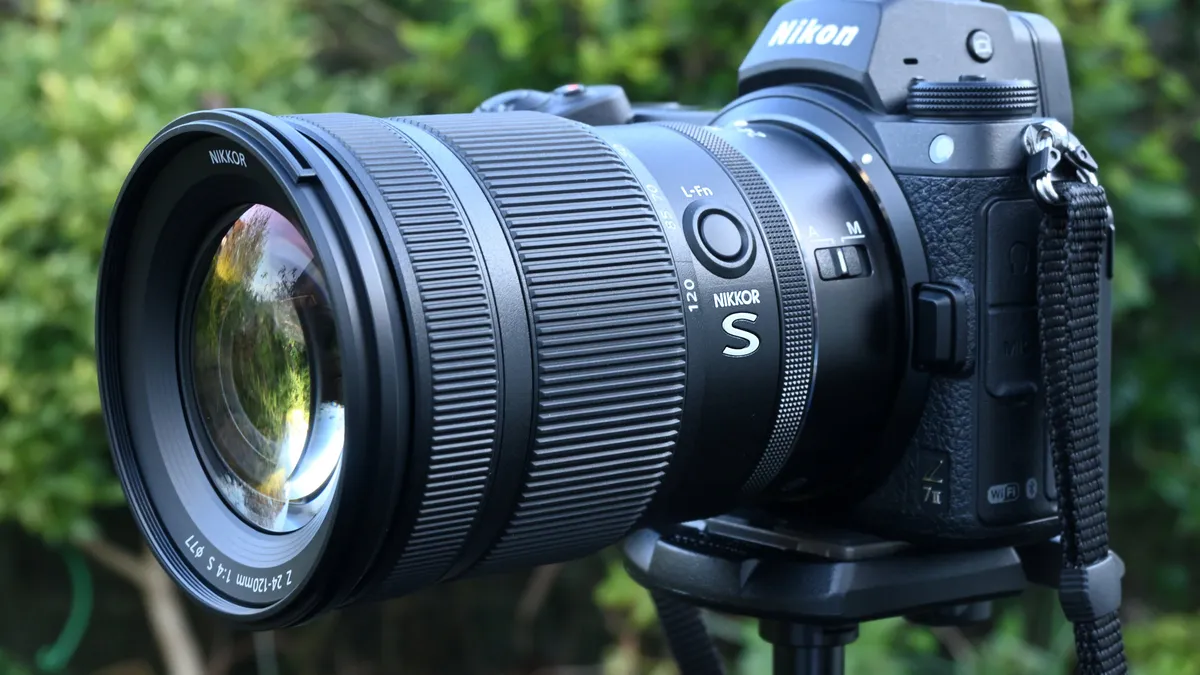
The other zoom that doesn’t shoot at f/2.8 trades a slightly narrower aperture for a lens with a massive zoom range. The Nikon Z 24-120mm f/4 S still has a constant aperture, but trades the f/2.8 for an f/4 in order to go beyond the usual 24-70mm and hit a telephoto 105mm on the long end.
But while an affordable zoom may take the top spot, the most dominant type of lens on the trends list is the f/2.8 zoom – a list that includes more affordable third-party choices as well as first-party optics. Those bright zooms also share another distinguishing feature: most of them are built to be compact and lightweight.
The most popular lenses in Japan, according to Kitamura Camera, are:
- Canon RF 100-400mm f/5.6-8 IS USM
- Sigma 18-50mm f/2.8 DC DN Contemporary (Sony E-Mount)
- Fujifilm XF 16-55mm f/2.8 R LM WR II
- Sigma 28-70mm F/2.8 DG DN Contemporary (Sony E-Mount)
- Nikon Z 24-120mm f/4 S
- Sony 2x Teleconverter
- Sigma 20-60mm f/2.8-4 DG Contemporary
- Canon RF 50mm f/1.8 STM
- Canon RF 28-70mm f/2.8 IS STM
- OM System M. Zuiko Digital 17mm f/1.8 II
Most of those f/2.8 zooms are built with size in mind. The Sigma 18-50mm f/2.8 DC DN Contemporary – which has made multiple appearances on Kitamura’s trends list – is built for APS-C sensors and weighs just 290g.

Fujifilm’s 16-55mm f/2.8 is the second-generation version, and the biggest change is that it cuts out quite a bit of weight compared to the earlier lens.
The Sigma 28-70mm f/2.8 on the list is a full-frame for Sony E as well as L-Mount that takes 4mm off the wide end compared to the more standard 24-70mm, but does so in order to reduce the size.
The Sigma 20-60mm f/2.8-4 is the only f/2.8 zoom that isn’t a constant aperture, instead hitting f/4 at 60mm. But it’s also built with size in mind, at just 3.5 inches / 88mm long.
Canon’s most popular f/2.8 zoom in Japan isn’t the more standard pro 24-70mm, but the 28-70mm that’s both lighter and more affordable than the more typical focal length.

Just two prime lenses sit on the list – a nifty fifty for Canon’s mirrorless system and a Micro Four Thirds 17mm. OM System hasn’t popped up on Kitamura’s top lenses list for the last two months, but the PEN F was the second best-selling camera there last month – the compact 17mm could be riding on the success of the new compact, retro camera body.
The inclusion of a teleconverter on the list feels a bit unusual, but recent reports suggest that the use of these lens extenders is on the rise.
You may also like
Take a look at the best lenses for travel, or the best standard zooms.

