





Mirrorless might rule the roost, but the best full-frame DSLRs are still incredibly capable cameras – and they're still very worthy of consideration. Indeed, there are a lot of working pros still using and making money with their DSLRs – and if professionals are still happy with these cameras, they're good enough for everyone else!
It's more than just pros, too, as a lot of photographers still prefer shooting with a DSLR – and there are plenty of good reasons, as you can see in our DSLR vs mirrorless cameras guide.
I don't think anyone would argue that the best full-frame DSLRs are more rugged and reliable, with a more "pure" optical viewfinder, with way better battery life and a fully mature ecosystem of lenses and accessories – unlike mirrorless systems, which still have some glaring gaps in their lineups!
And of course, the physically larger sensor size gives you numerous advantages over smaller-sensor systems – namely better image quality, superior low light performance and the ability to render a shallower depth of field, for greater subject separation and those cinematic blurry backgrounds.
Much as I love DSLRs, there aren't as many manufacturers these days – now that Pentax has discontinued its current lineup, the best full-frame DSLRs available today are made by Canon and Nikon. Here's my guide to the top options right now for amateurs, enthusiasts and pros…

I've been lucky enough to use and own some of the best full frame DSLRs ever made, including all the cameras by the big brands over the past decade – and I still have a couple on my shelf to this day! I've tried and tested them for both professional commissions and personal projects, so I'm excited to share my insight into the best on the market right now.
The best full frame DSLRs
Why you can trust Digital Camera World Our expert reviewers spend hours testing and comparing products and services so you can choose the best for you. Find out how we test.
Best all-rounder

Sample images


✅ You want a classic Canon: the Mark IV comes from a long line of pro DSLRs, and has inherited sensible controls and menus from its predecessors. It'll be familiar to most Canon users, even those upgrading.
✅ You shoot a bit of everything: this is a bit of a goldilocks camera, in that it's quite good everywhere but doesn't excel in one. If you shoot a range of subjects, it's well-specced for generalists.
❌ You want full 4K footage: The 5D Mark IV offers 4K video but at a big 1.64x crop. This is disappointing compared to modern mirrorless cameras at half the price.
❌ You're after an exciting design: DSLRs have shared similar designs for decades. If you're after smooth lines and a striking style, look to Fujifilm and Leica for that.
The Canon EOS 5D Mark IV is what you'd consider an old camera, having been released in September 2016. It isn't the highest-resolution DSLR in this guide or the one with the fastest autofocus system. It doesn't even have an articulating screen.
However, it offers a blend of advanced specs for professionals, like a 30MP CMOS sensor and 4K video recording. Live view autofocus is also excellent, thanks to Canon's Dual Pixel CMOS AF system. And you can't argue with the fact that the 5D is still considered the workhorse of choice for enthusiasts, weekend warriors and professionals alike.
The Canon EOS 5D Mark III was one of my favorite all-rounder DSLRs ever, and the Mark IV builds on its successes. Its fully weather-sealed body is designed to withstand harsh shooting conditions – great for landscapes and travel work – and the 3.2-inch touchscreen enables you speed through Canon's menus and change most settings on the fly.
There’s WiFi, NFC and even GPS for greater connectivity, particularly for sending images to the Canon app for sharing. The biggest problem for the EOS 5D Mark IV is the Nikon D850 (below), which is better in many respects, and almost the same price. The 5D Mark IV has the same 61-point AF system as the Canon EOS-1DX Mark II, but it lags behind the blistering subject acquisition speed that the 1DX Mark III can achieve.
The 5D Mark IV is far from the best 4K camera or DSLR, thanks to a heavy crop factor and the somewhat inefficient Motion JPEG format, but it still produces serviceable 4K 30p video along with FullHD recording at 60fps – though stills are definitely this camera's strong point.
Image quality is undeniably fantastic when you pair the 5D Mark IV with Canon's L-Series lenses. If you shoot a bit of everything or want a full-frame DSLR with the best balance of price and specs, the 5D Mark IV is the ideal model.
Read our full Canon EOS 5D Mark IV review

Lab results |
Score |
Rating |
|---|---|---|
Resolution (ISO 200) |
32/60 |
★★★★ |
Dynamic range (ISO 200) |
12.71 EV |
★★★★★ |
Noise (ISO 200) |
41.13 decibels |
★★★★★ |
Final thoughts
The Canon EOS 5D Mark IV remains one of the most well-rounded full-frame DSLRs available, offering a compelling mix of image quality, performance, and reliability. Its 30.4MP sensor delivers excellent detail and dynamic range, while the Dual Pixel CMOS AF system ensures fast, accurate autofocus in both stills and video. The 61-point viewfinder AF and 7fps burst shooting make it suitable for a range of genres, from portraiture to action.
Its robust, weather-sealed body and long battery life add to its appeal for professionals who need dependable gear in demanding conditions. Even with the rise of mirrorless cameras, the 5D Mark IV stands out for its ergonomic handling, classic optical viewfinder experience, and consistent results, making it a modern classic and a top choice for those who prefer a DSLR.
Best entry-level full frame DSLR

Sample images


✅ You're on a budget: If you want an affordable full-frame DSLR, the 6D Mark II is the lowest price point on this list thanks to it being a discontinued (but still fairly well stocked) model.
✅ You're still learning: The camera is a great "beginner" full-frame camera. It doesn't overwhelm you with tech you don't need, but you do get useful features like WiFi, NFC and Bluetooth.
❌ You're a content creator: the Full HD video resolution on offer here is limited, and way behind what most mid-priced mirrorless cameras can now achieve.
❌You want the latest AF tech: the 6D Mark II has been superseded by the R6 and R6 Mark II mirrorless models. It's slower and less agile than both cameras by comparison.
The Canon EOS 6D Mark II has been discontinued but, because it's still on sale at several big retailers, I've kept it on this list. For enthusiasts turning pro or hobbyists who want a small full-frame DSLR, it offers some great specs.
This camera was my daily driver for a number of years, and I really loved using it as a hybrid camera for stills and video – even though it lacks 4K and is limited to FullHD 60p, which is quite limiting in today's world for anything more than short-form social media.
Still, it remains a great performer for photography with a 26.2MP sensor that delivers well-balanced, dynamic images, with Dual Pixel CMOS AF that can deliver fast phase-detection autofocus in Live View mode.
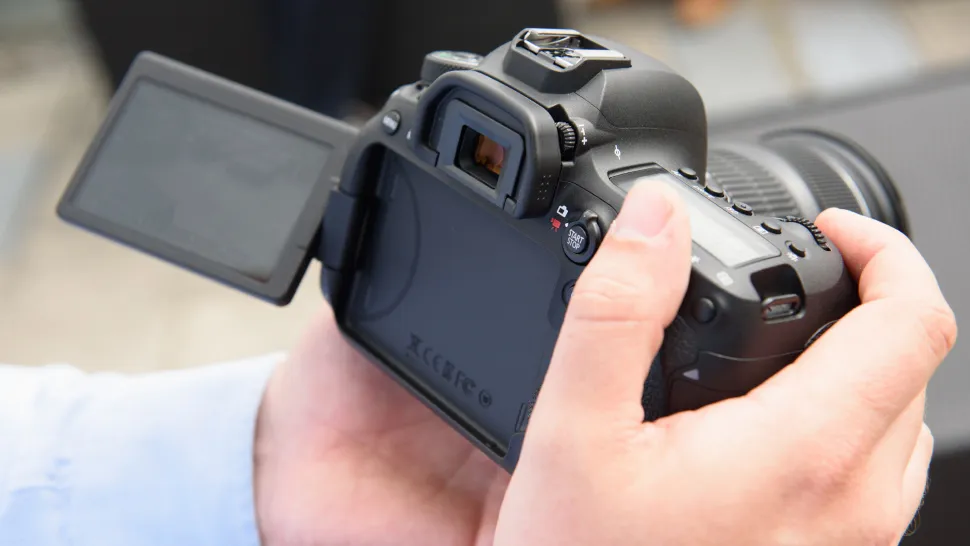
Handling-wise, the fully articulated touchscreen looks great from any angle and is fantastic for high- and low-angle shots, both vertically and horizontally, whether you're shooting stills or video.
I always loved the 6-series DSLRs and they remain a great place to start your full-fat photography. If you're an enthusiast who isn't interested in shooting video and you're looking for your next sensibly-priced full-frame DSLR, the 6D Mark II continues the lineage of great all-rounders.
Read our full Canon EOS 6D Mark II review
Lab results |
Score |
Rating |
|---|---|---|
Resolution (ISO 200) |
28/60 |
★★★ |
Dynamic range (ISO 200) |
11.68 EV |
★★★★ |
Noise (ISO 200) |
43.59 decibels |
★★★★★ |
Final thoughts
The Canon EOS 6D Mark II is an excellent entry-level full-frame DSLR that combines solid image quality with user-friendly features. Its 26.2MP sensor delivers sharp results with good low-light performance, and the Dual Pixel CMOS AF ensures smooth autofocus in live view and video.
The 45-point AF system, fully articulating touchscreen, and built-in WiFi, GPS and Bluetooth make it a versatile and accessible choice for enthusiasts. While it lacks 4K video and some advanced features, its lightweight build and intuitive handling make it a dependable option for those moving up from APS-C cameras.
Best full frame DSLR for enthusiasts

Sample images


✅ You can't afford the D850: the D780 sits below the more expensive D850, for photographers who don't need the mega-high resolution, but need an all-rounder.
✅ You've owned Nikon DSLRs before: if you prefer the way a DSLR handles or have a collection of F mount lenses already, the D780 is one of the best full frame DSLRs Nikon has made.
❌ You need a fast buffer: the two card slots allow you to shoot up to 68 Raw files or 100 JPEGs continuously. This isn't bad, but it's nowhere near the D6 or EOS-1D X Mark III.
❌ You want a vlogging screen: the D750's tilting screen is still useful for composing at low angles, but a fully articulating screen would have been better for video pieces to camera.
The Nikon D780 was one of the last DSLRs that Nikon released, but it remains one of the best enthusiast models. With uncropped 4K video, 12fps continuous shooting and a host of small but valuable improvements like USB-C charging, the D780 is ideal if you want a full-frame sensor and access to the huge range of Nikon F-mount lenses (but don't want to pay a fortune).
While it doesn't break any new ground, the D780 combines a long list of desirable qualities in a well-made, versatile and affordable camera. The resolution is good enough, the burst shooting is better than you’d expect and the wide ISO range can cope with low light excellently.
The D780 handles well, too. It inherits the ergonomic design and handling of Nikon's classic DSLRs, featuring a comfortable grip, intuitive controls and a tilting touchscreen LCD, making it user-friendly for photographers transitioning from other Nikon models or upgrading from entry-level DSLRs.
I always found the D780 a pleasure to use and handle, with a grip that's comfortable to use for long periods. Interestingly, the camera borrows a similar Live View AF system from the mirrorless Nikon Z6 and Z7, which means that live view previews are just as good on the LCD screen as through the optical viewfinder.
Again, DSLRs will limit serious videography but the D780 offers flexible 4K 30p and FullHD 120p, with focus peaking and zebras to enhance the overall experience and help you check your footage.
Having dual card slots adds versatility for photographers who want RAWs and JPEGs on separate cards, or who want redundancy important events. To my mind, the D780 delivers far beyond its price tag for stills and video shooters.
Read our full Nikon D780 review

Lab results |
Score |
Rating |
|---|---|---|
Resolution (ISO 200) |
28/60 |
★★★ |
Dynamic range (ISO 200) |
12.12 EV |
★★★★★ |
Noise (ISO 200) |
41.5 decibels |
★★★★★ |
Final thoughts
The Nikon D780 is a versatile full-frame camera that combines classic DSLR handling with modern mirrorless features. Its 24.5MP BSI sensor delivers excellent image quality and low-light performance, while the hybrid autofocus system offers fast, accurate focusing in live view, complemented by a reliable 51-point AF system through the viewfinder.
With uncropped 4K video, long battery life, dual card slots, and a weather-sealed body, it’s built for serious work across a variety of shooting scenarios. For photographers who want DSLR ergonomics with up-to-date performance, the D780 stands out as a smart and capable choice.
Best full frame DSLR for professionals

Sample images


✅ You shoot fast targets: autofocus is arguably the best of any Nikon DSLR, and the 14 fps continuous shooting speed means fewer missed opportunities.
✅ You need speedy transfers: with gigabit ethernet supporting 1000BASE-T, GPS and 5GHz WiFi built-in, the D6 can send images to picture editors or libraries rapidly.
❌ You're not wedded to a DSLR: if you’re not already invested in the Nikon system or a DSLR, you might experience better performance from the Sony A9 II.
❌ You shoot video: the D6 is let down by poor video performance overall, both for resolution and live view focusing, which is erratic at best.
If you're a professional photographer shooting mostly stills and you already own a lot of Nikon lenses, the D6 is a very good choice. This workhorse tank of a camera is built solidly, which means you can throw it around on outdoor shoots without worrying about causing damage.
It's certainly not portable (1,450kg with a battery and two CFexpress cards) or affordable, but it'll last years and it's an absolute monster for fast-paced professional work like sports and wildlife.
With 105 cross-type autofocus points, the Nikon D6 is geared toward capturing fast action. I've given it great workouts with things like basketball and birding, and the autofocus provides the sort of intelligent tracking and acquisition you need in split-second moments. Even when the view of a subject is interrupted, the D6 is intelligent enough to keep or catch up.
Eye AF is available in 3D tracking and Auto AF area modes, with an extra 17 customizable group area AF choices to make subject acquisition even more accurate. And if you need to send shots to clients rapidly, the D6 has built-in 5GHz WiFi, GPS and gigabit ethernet – that kind of pro connectivity goes beyond the majority of models in this guide, except perhaps the mighty Canon EOS-1D X Mark III.
While the D6 offers 4K video resolution, video focusing leaves something to be desired and the fixed touchscreen offers little versatility for content creation or interesting angles. But then, video is really just a Brucie bonus on one of the best professional cameras for sports shooters.
It boasts a monstrous (for DSLRs) 14fps continuous burst rate, with an ISO Range up to 102,400 (Expandable to 3,280,000!) for exceptional low light performance in stadiums, racetracks and anywhere else you’d want to challenge this epic DSLR.
Read our full Nikon D6 review

Lab results |
Score |
Rating |
|---|---|---|
Resolution (ISO 200) |
26/60 |
★★★★ |
Dynamic range (ISO 200) |
11 EV |
★★★ |
Noise (ISO 200) |
45 decibels |
★★★★ |
Final thoughts
The Nikon D6 is a professional-grade DSLR built for speed and reliability. Its 20.8MP sensor delivers excellent low-light performance, while the 105-point autofocus system ensures fast, precise tracking.
With 14fps continuous shooting, dual CFexpress card slots( or XQD), and robust weather sealing, the D6 excels in demanding environments. Designed for sports, news and wildlife photographers, it remains a top choice for those prioritizing speed, durability, and consistent performance.
Best full frame DSLR for resolution
Sample images


✅ You want high-resolution: If you're looking to make fine art and large format prints from your images, the D850's 45.7MP resolution and dynamic range is sure to impress.
✅ You want to angle the screen: Unlike the Canon's 5DS/R high-res camera, the touchscreen here is tiltable. This brings it in line with modern camera design and makes it easier to angle creative shots.
❌ You shoot pro video: there are better Nikon cameras for video. The Nikon Z7 II matches the D850's resolution, but offers N-Log and HDR (HLG) movie output to give you more flexibility with your footage.
❌ You want speedy editing: with great resolution comes great file size. Images are around 50MB with lossless 14-bit compression, which could strain older PCs when editing.
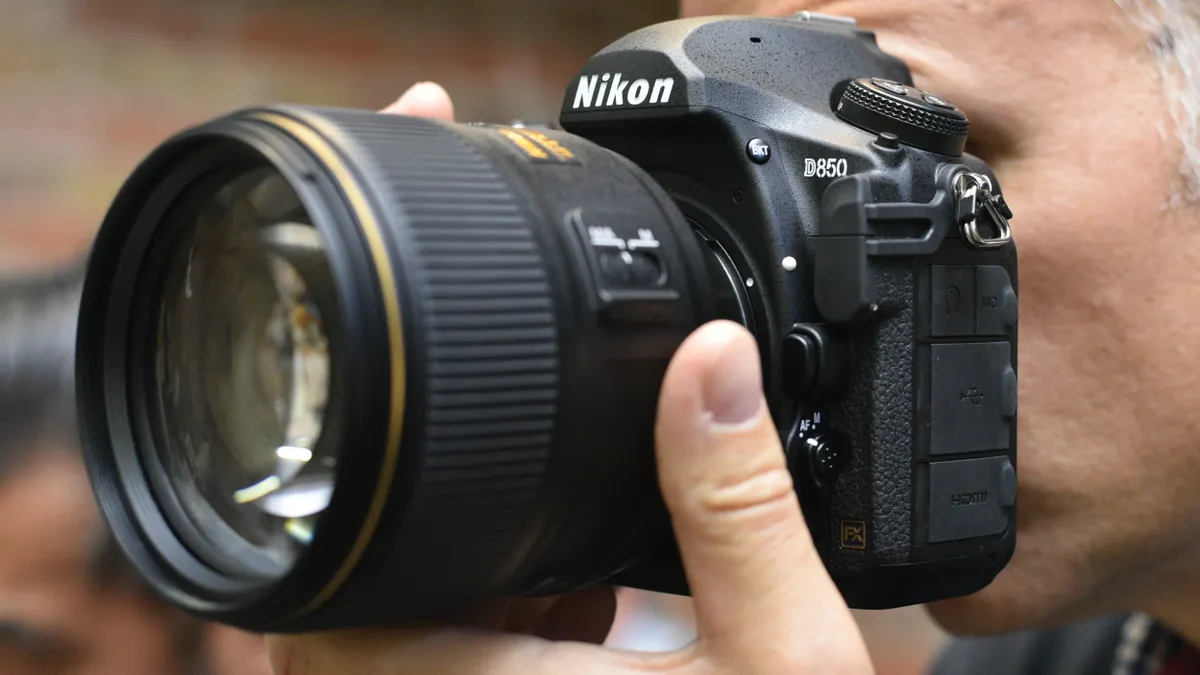
The Nikon D850 made a real impact upon release, balancing both high-resolution imagery and speed and sensitivity in its specs list. Its 45.7MP sensor, 7fps burst shooting and 153-point AF system made it an incredibly versatile combination for wildlife, portraits or fine-art work – and it still delivers today.
The buffer capacity of 51 uncompressed 14-bit RAW files is impressive, even though it's only achievable with a multi-power battery pack. Either way, it makes this a very capable sports DSLR, too.
The D850's battery is fantastic even by DSLR standards. I regularly got more than 1,800 shots out of a single charge, which is about triple the amount I get from my advanced mirrorless camera.
Although the D850 isn't as big or heavy as a sports camera like the Nikon D6 or Canon EOS-1D X III, it’s still a big camera – especially when fitted with a professional zoom lens. It has two fast card slots – one for CFexpress / XQD cards, one for UHS-II SD cards – giving you the choice of premium-priced memory if you want to upgrade from your drawer full of SDs.
To continue a familiar refrain, DSLRs aren't best suited to video, particularly the D850 with its contrast-based autofocus in live view mode, though it does offer uncropped 4K if you need it.
When you factor in its build quality and all the customization you need, you can see just how much the D850 appeals to a landscape photographer, wedding or event shooter. It's a versatile and incredibly high-quality DSLR – it's just not built for traveling light.
Read our full Nikon D850 review

Lab results |
Score |
Rating |
|---|---|---|
Resolution (ISO 200) |
42/60 |
★★★★★ |
Dynamic range (ISO 200) |
12.22 EV |
★★★★★ |
Noise (ISO 200) |
38.38 decibels |
★★★★ |
Final thoughts
The Nikon D850 is a powerhouse full-frame DSLR that excels in both image quality and performance. Its 45.7MP sensor delivers incredible detail and dynamic range, making it ideal for high-resolution work like landscapes, studio photography, and commercial shoots. The 153-point autofocus system provides fast and accurate focusing, while 7fps continuous shooting caters to action photography.
The D850 also offers 4K video, impressive battery life, and a robust, weather-sealed body that can handle tough environments. With a perfect balance of resolution, speed, and versatility, the D850 remains a top choice for professionals demanding outstanding performance in every aspect of their work.
Best full frame DSLR for video

Sample images


✅ You need a hybrid: It's possible to record RAW and MP4 video simultaneously to two separate memory cards, which is a revelation for pros who shoot both stills and video for clients.
✅ AF is all-important: Eye and face detection on this camera is impeccable, and the deep-learning algorithms can track subjects even through goggles or helmets.
❌ Resolution is important: As a rapid-fire camera, the 1D X Mark III favors speed over filesize with a modest 20.1MP resolution.
❌ You need the fastest Wi-Fi: if you're going to be transferring images via WiFi, 2.4Ghz is supported but for 5Ghz you need a separate module.
Mirrorless cameras are the undisputed kings of video but, if you want a powerhouse DSLR that can crank out the best footage possible, Canon's flagship mirrored body is the way to go.
It's first and foremost a sports and professional camera, with an industry-best (for DSLRs) 16fps top speed for continuous shooting via the electronic shutter or 20fps with the electronic. And its top-tier weather sealing mean it's a genuine any-environment performer.
When it comes to video, while it lacks any kind of tilting or articulating screen, it packs the best video resolution of any DSLR in this guide, offering uncropped 12-bit 4K 60p footage that extends to 5.5K RAW. Arm it with one of the best DSLR gimbals and you'll have an exceptional pro rig.
The standout features that sets it apart from other DSLRs are the deep learning autofocus, offering the kind of algorithmic AF that you might expect of a mirrorless camera, and the Smart Controller that makes joysticks look prehistoric when it comes to navigating focus points. These mirrorless-style trappings come in a rugged body, but you also get an optical viewfinder and exceptional battery life.
The autofocus is affected by whether you use the optical viewfinder or Live View. Through the viewfinder, there are fewer AF points, lower resolution and you don’t get eye detection. In Live View, though, the Dual Pixel CMOS AF sensor and Digic X processor combine for subtle focus shifting and eye detection.
While mirrorless options are definitely the best cameras for video, the 1D X Mark III towers above the competition when it comes to DSLRs.
Read our full Canon EOS-1D X Mark III review

Lab results |
Score |
Rating |
|---|---|---|
Resolution (ISO 200) |
26/60 |
★★★ |
Dynamic range (ISO 200) |
12.5 EV |
★★★★★ |
Noise (ISO 200) |
42.14 decibels |
★★★★★ |
Final thoughts
The Canon EOS-1D X Mark III is a top-tier DSLR built for professional photographers demanding speed and reliability. Its 20.1MP sensor delivers excellent image quality, while the 191-point autofocus system ensures fast, accurate tracking.
With 16fps continuous shooting through the viewfinder, 20fps in live view, and robust video features, it excels in sports, action, and wildlife photography. Its weather-sealed body, long battery life, and dual CFexpress card slots make it durable in harsh conditions, making it the ideal tool for high-performance needs.
How to choose the best full frame DSLR
Choosing the best full-frame DSLR means taking a close look at your needs, budget, and shooting style. Full-frame cameras typically come with a higher price tag compared to crop-sensor models, so if you're working with a limited budget, start by exploring the entry-level options in this guide.
One of the key factors to consider is resolution—the number of megapixels. A high-resolution sensor is great if you plan to make large prints or need the flexibility to crop your images without losing detail. However, keep in mind that higher megapixel counts mean larger file sizes, which will take up more space on your memory cards and slow down your editing workflow.
The camera's autofocus system is another critical feature, especially for tracking subjects in motion. While phase-detection AF systems have traditionally been better for action, sports, or wildlife, contrast-detection AF works well for stationary subjects like landscapes. That said, many brands now integrate advanced autofocus technologies. For instance, Canon’s Dual Pixel CMOS AF is designed to enhance autofocus speed and accuracy for both stills and video—but you’ll typically find it in higher-end full-frame DSLRs.
When it comes to brands, Canon and Nikon dominate the DSLR market, with Pentax holding a smaller niche. Both Canon and Nikon offer expansive ecosystems of lenses and accessories, so if you’re already invested in one brand, it’s often more cost-effective and practical to stick with it as you upgrade.
While comparing specs is essential, there’s no substitute for real-world insights. Be sure to check out our in-depth reviews to understand how these cameras perform in everyday use. With the right information, you’ll be able to make an informed decision and find the best full-frame DSLR to match your photography goals.
Is a full frame DSLR better?
Full-frame DSLRs offer better image quality than crop sensor cameras, especially in low light, and give you a shallower depth of field and background blur for creative applications like portraiture.
They also give you a wider field of view with landscapes and architectural photography. For pros or serious enthusiasts who want the best image quality and more creative control, full frame DSLRs are an excellent choice. However (as I've noted below) they also tend to be more expensive, heavier, and chunkier.
What is the disadvantage of full frame camera?
The obvious disadvantage of full frame cameras is that they cost more than crop sensor cameras, and that can put them out of the price range of many photographers. Full frame lenses come at a premium price, too, because of their higher build and image quality.
Full frame cameras are usually thought of as being heavy and bulky, which isn't what you want when travelling. They're generally bigger, to accommodate the larger sensor, while the extra weight comes from materials like magnesium alloy being used over plastic to make the camera more robust in adverse shooting conditions.
How we test the best full frame DSLRs
Wondering how we test the full-frame DSLR cameras for inclusion in this buying guide? All models, regardless of brand, undergo comprehensive testing in real-world shooting scenarios as well as controlled lab conditions. These rigorous evaluations, combined with user feedback, shape our buying guide coverage recommendations for full-frame DSLR cameras.
Our expert reviewers will carry out shoots to test the camera's intended purpose, such as testing high-speed capabilities on fast-moving subjects or high-resolution capabilities on detailed scenes. They'll use the camera extensively over days or even weeks to provide helpful insights into everyday performance, user experience, handling, and ultimately, how well the camera does what it was designed to.
Inside our testing lab, we measure resolution, dynamic range and signal-to-noise ratio. Resolution is measured using ISO resolution charts, dynamic range is measured using DxO Analyzer test equipment and DxO Analyzer is also used for noise analysis across the camera's ISO range.
Find out more about how we test and review at Digital Camera World.
Lab results
Compare prices

