
Drones sat still for a little bit, if we're honest. It wasn't their fault. It was inevitable. The rules took hold.
The same thing happened to cars, and it wasn't a bad thing. Cars look more similar than they did in the past, but you'd much rather be in a modern car with a crumple frame and other safety features should the worst happen.
But, in 2025, drone tech seemed to change again – although not always for the better. The aviation authorities of the world started to bite, and, for the most part, the results were helpful but not extremely exciting. The most common things drone users have had to face are weight limits and distance limits, as well as the requirement that they retain a direct line of sight on their drones. In most cases, more exams and qualifications (for more time and money) will negate these.
Still, the reality is always that a drone which weighs under 250g / 8.82oz is the easier choice, and that makes a lot of sense because something weighing that much can do a lot less damage to someone, even moving at speed. That, after all, is why this weight was chosen. Because at the kinds of speeds drones of this kind of mass fly, about 30mph, the likely kinetic energy in a collision with a person will be a bit below 25 joules, and thus very unlikely to break a bone.
So it was all getting a bit samey (again) in 2025
DJI and a few others had worked out how to make not only drones for the 250g weight limits, but that weight category had started to split into sub-categories.
No bad thing, of course. It is great that a Potensic Atom 2 or a DJI Mini 4K can deliver a capable camera for creatives at a lower cost, while a powerful drone like the DJI Mini 5 Pro manage to pack in more capabilities, in fact delivering professional-grade, all while keeping operators inside the safety rules.
Choice of spend is very useful, of course, but it was actually in lower weights where the more visual change had been lingering from 2024.

Follow-me drones were still finding their feet
Innovation was around if you knew where to look, of course. The HoverAir X1 Pro Max – which heralded the start of 2025 – was not the first drone of its type, but what it did show was that this tech (drones that could follow their users using just AI, not remote controls) could now be taken seriously.
HoverAir did this with the ability to capture 8K video, which, in truth, isn't much use to anyone except for the purposes of digital cropping, but it was certainly attention-grabbing and helped keep the spotlight where they wanted it.
DJI had already shown it could play in this field too, with the DJI Neo, but didn't let 2025 finish without delivering a sequel – at least in China and Europe.

DJI's ongoing troubles in America reach zero day
In what seems a lot like a brilliant bit of planning by lobbyists working for American drone companies, a piece of legislation tacked onto an essential government spending bill last year gave DJI a year to be 'let off' by a government agency with a simple review.
None stepped up and did the work because (I suspect) in the present political climate, none wanted to be seen to be doing anything as 'unpatriotic' as allowing Americans to buy cheap drones from China – no matter how many American companies and agencies use DJI drones.
The upshot is that the DJI models – drones and other gear – that are legal now are likely to be the only devices available in American stores for a while, while the rest of the world laughs and buys more modern equipment. But in the end, it was not just DJI drones that got banned – all new non-American drones will no longer get FCC approval – which will severely limit the choice for US pilots, and dramatically drive up costs.
A whole new type of drone arrives: the 360 drone
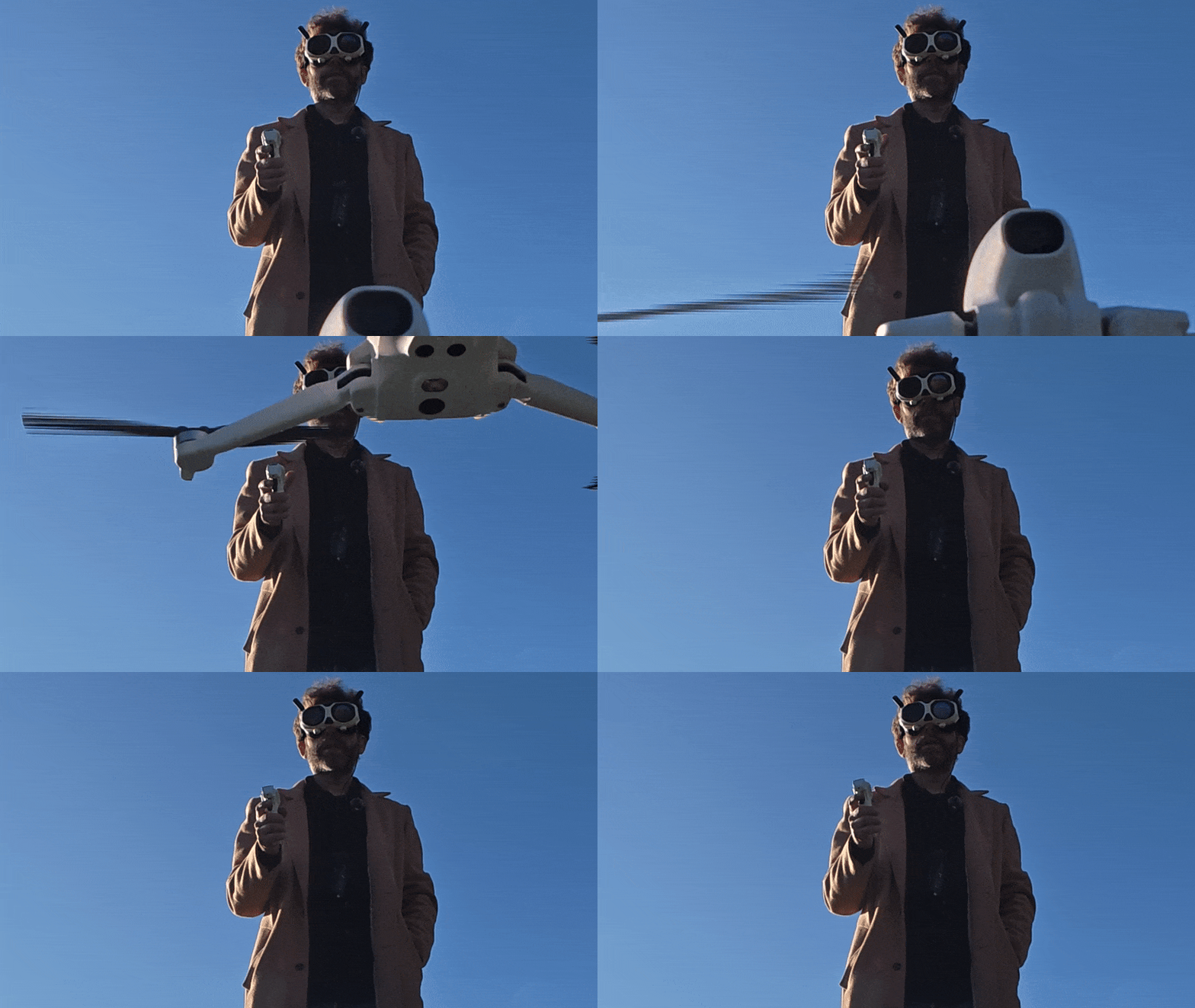
So, as I mentioned, 2025 didn't see much change to the existing product categories – just refinement to follow-me drones. That was until December, when the highly anticipated Antigravity A1 was launched, a world-first 360 drone and the first drone from an all-new company.
One of Antigravity's key investors is Insta360, the company behind several of the best 360 cameras, so – surprise, surprise – the main thing that made it new is the fact that it dispensed with a camera gimbal and used a 360-degree camera system.
That seems to have led to a number of other fascinating design requirements in the product's development, some of which I was lucky enough to learn about at an early pre-release event for drone media nerds like me.

One of these is that the drone has powered landing legs to keep out of the way of its lower lens. The 'camera' is not the two lenses you see on the front – those are collision sensors. The dark circle just below the front at the lowest physical point is capturing half of the sphere of 360-vision.
The other big design choice is how the pilot can experience this. That is FPV goggles. Presumably, other less fluid possibilities – like a tap-and-drag screen – might have been cheaper to build, but, at least for their first try, the team at Antigravity clearly decided that a premium bundle was the way to go.
Other highlights
This was also the year of the DJI Mavic 4 Pro, which delivers 6K video (6016 x 3384px). This, again, was not released in the USA at the same time as other territories because – even though the ban was yet to be implemented – some US customs officials were getting a little over-zealous about Chinese products or the DJI brand.
It is now generally possible to access the drone in the USA as well as other markets, though, proving that sometimes things can just take a little time, but the land of the free (trade) is definitely no longer true for American filmmakers.
The other thing the Mavic 4 did, alongside continually impressive incremental improvement, was deliver a rotating lens system that could be used to capture all kinds of unusual shots. First, the idea of turning the camera 90 degrees or using social media seemed to have taken hold (though that happened first on the Mini 3 Pro), but now all kinds of filmmaking creativity are being considered in the design of the gimbals.
Tech just keeps getting better
Drone batteries for the consumer and prosumer market are generally based on Lithium, and density has continued to improve over time, as models like the Mavic 4 with a flight time in excess of 45 minutes show, or the fact that half an hour is the norm for 250g drones.
Anti-terrorist tech?
An interesting new feature on the Antigravity A1 is the arrival of a system to detect additional weight on the drone – payload detection – and refuse to fly.
This could be to help ensure motors aren't burned out, but can also be seen as a way of a consumer company making sure its technology isn't used nefariously, and is something we might expect to see more of as companies battle to show regulators that drones are safe for consumers and not a risk.
BVLOS and commercial
Not something we cover a lot at DCW, because it's not really an area for creatives, but the industry itself is investing more and more in drone use Beyond Visual Line of Sight (BVLOS).
What this means for users like us, focused on video and photography, is that the money in the market will increasingly be shifting toward this kind of thing, where emergency drones, delivery drones and perhaps even flying taxis will exist within a few years.
This is already true, as I saw at drone trade shows this year, where tech that could charge drones magnetically, just like your phone (but a LOT bigger) was on display.
In 2026, the future of the drone market will be as much about how we share the airspace, with more rules being developed by aviation agencies for drones to share their locations (which will draw power).
It will also be a year where the rest of the world watches America now that it has banned DJI and all other foreign-made drones for political, not technical reasons. What will the fallout be? It'll be fascinating to find out – the rest of the world will want to know just how far behind the USA will become, and how fast.
You may also like
Browse the best drones for photography or the best drones for beginners.

