
How many trillions of words have been written about the latest autofocus technologies, how they change everything overnight, how the impossible has become possible, how you can track a gnat flying through a forest at 60 frames per second?
Autofocus has become a frontier for photography, a showcase of the mysteries and magic of artificial intelligence, a window on a high-speed world we’ve barely glimpsed before, a revolution in image-making freed from technical limitations. And, of course, a way to sell wave after wave of new cameras.
True – autofocus technology is especially important if you're looking for the best cameras for sports photography or you're investing in any of the best portrait lenses, which excel at wide-open shooting styles, bokeh and background blur.

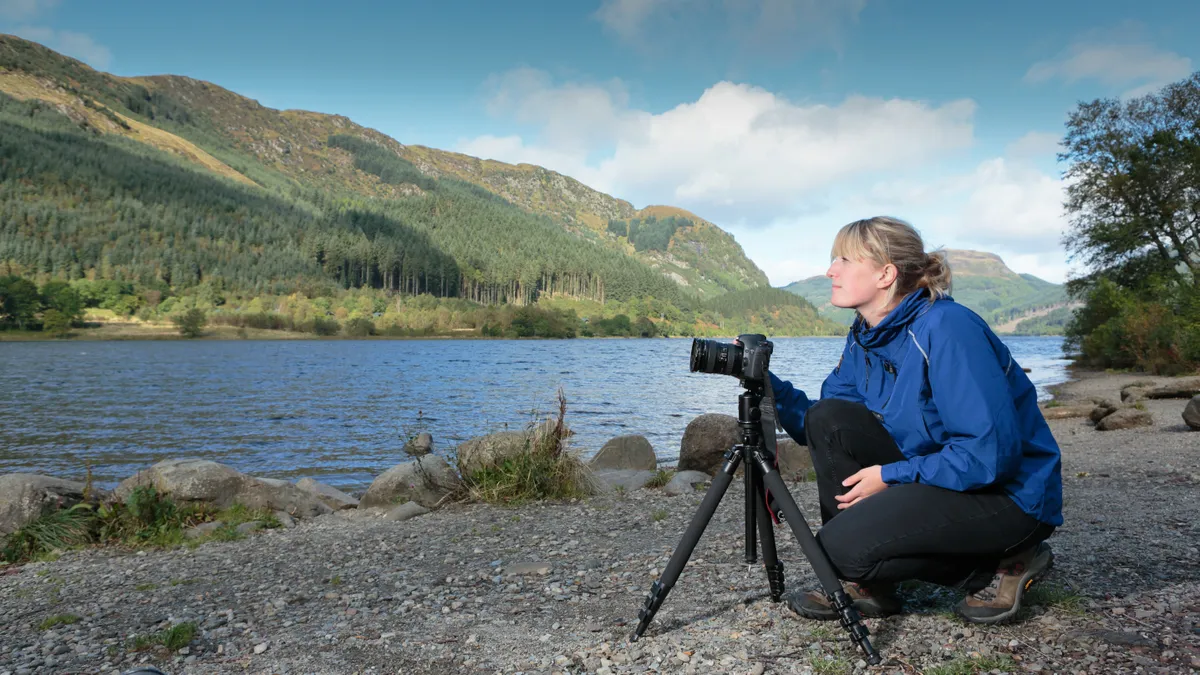
But – news flash – autofocus ain’t all that. It makes photography quicker and easier and more reliable in many areas, and is essential in some, but it also takes away a lot of control.
Yes, you can use focus-hold buttons, you can employ the classic focus and reframe technique, you can swap focus patterns between full-area subject detection, zone AF, spot AF, expanding spot AF and so on. But very often you end up in the same place – having to override what the camera was going to do because it’s not quite right.
Manual focus is a lot like manual exposure. There comes a point where the effort you expend getting the camera to do the right thing means you might just as well do it yourself. And that’s not the only thing…
Autofocus vs depth of field

Autofocus systems have no understanding of depth of field, zone focusing or hyperfocal distance. They focus on one thing and don’t care about the rest. Autofocus has made photography way easier and more accessible for a generation of photographers, but it’s also pushed aside a whole raft of traditional focusing skills. You want these back, right?
Of course you do – and manual focus is the way to do it. Yes, it takes a bit longer. Yes, it’s not as accurate. No, you wouldn’t want to use it with a fast prime lens wide open with a subject that won’t stay still. But it’s not an all-or-nothing decision.
You don’t have to swap completely from automatic control to manual. There will be times when you need the speed and ease of autofocus, where trying to do it manually will mean you miss the shot. But it works both ways.
There will also be times when you’re fiddling around with autoexposure or autofocus settings when manual control would just be simpler and more consistent.
AF vs manual focus? It depends on the context
From time to time, I shoot macro photography or close-up product shots. Autofocus is a nuisance here because I have to manually select a focus point on the subject with a joystick or a touchscreen, when I could have switched to manual focus and done it by eye in far less time. And if my camera is on a tripod and the subject hasn’t moved, the focus won’t change for the next shot – or the one after that.

And yet if I’m using focus stacking techniques to get more depth of field (very common in macro photography), I want autofocus because my camera’s stacking mode will make all the adjustments and shoot all the frames for me.
Landscapes are a particularly interesting point. If you want to focus on a foreground object and blur the background, autofocus is fine. But if you want to use the old-school hyperfocal distance method to get everything sharp from infinity right to the foreground, autofocus won’t help you.
Here, you need to set the correct lens aperture and focus on a point between the foreground and the background – and that’s just as easy to do manually as it is to try to persuade the camera to focus on some arbitrary point in the middle distance.
Astrophotography is another instance. Cameras like the OM System OM-1 Mark II have special Starry Sky AF modes, but most will struggle to focus on distant celestial objects – so you might just have to step in and do it yourself.
I’ve also used plenty of cameras that struggle with small, bright light sources and can’t really focus on sunsets or even contre-jour portraits. And a constant battle with every camera is the way that the AF point moves when your framing moves.
So you can either spend precious time getting your camera to focus on what you want it to, or just flick the MF switch on the lens or the camera and do it yourself.
How much AF accuracy do you REALLY need, anyway?
We’re conditioned to believe that pinpoint AF accuracy is fundamental to modern photography. So, is focusing by eye enough? Very often it is. In street photography, for example, you’re probably shooting at f/8 or thereabouts, where there’s plenty of depth of field to cover slight focusing errors anyway. The same applies to landscapes.
With most cameras, the viewfinder shows the scene with the lens wide open, so any focus shifts look quite obvious – but then the actual photo is taken with the lens stopped down to a smaller aperture.

If you want to spend longer on getting the focus exactly right, a lot of cameras come with manual focus aids in the form of on-screen magnifiers. These are good for precise work when you’ve got a bit of time, but I’m not convinced you need this for most regular photography.
I grew up using SLRs and optical viewfinders, where you use a kind of see-saw focusing technique to decide when the image looks sharpest – it’s like a human version of contrast AF! The fact is, though, that modern mirrorless EVFs are sharper – and it’s easier than it ever was to judge sharp focus visually.
I should mention focus peaking. This outlines sharply focused objects in a contrasting color and was developed for use in video. Cameras often offer focus peaking for stills photography, too. My advice? Skip it. It’s not accurate and it can kid you that things are sharp when they’re not. Just use your eyes.
It’s probably not practical to use manual focus for everything, but it’s worth the effort of learning manual focus techniques in situations where you can afford to experiment. It becomes surprisingly quick, almost a reflex, if you practice it enough, and it helps to restore those classic, forgotten zone focus and hyperfocal focusing techniques that used to be a part of every photographer’s skill set.
Just try it. After all the complexities of focus modes, focus points, zone / area AF, subject-recognition, release-priority options, and customizable focus case scenarios, simply look through the viewfinder and turn the focus ring until the thing you want in focus is sharp. You might find yourself thinking, OMG, it was that simple all along!
You might also like...
Want more photography tips? This is why your ‘smart’ camera is actually making you a worse photographer. If you're looking for a new camera (or maybe your first serious camera), check out the best camera for beginners and the best mirrorless cameras.

