
Nikon is one of the most iconic camera brands in existence, with well over 100 years of history under its belt, and I've been using Nikon gear for years, particularly in my previous role as editor of Nikon-specific magazine N-Photo, where I've tested, used, or owned every Nikon Z-series mirrorless ever made, as well as a fair number of DSLRs.
This rundown zeroes in on Nikon's newest Nikon Z-series mirrorless cameras, like the top-of-the-range Nikon Z9, groundbreaking Nikon Z8, enthusiast-level Nikon Z6 III, brilliant-value Nikon Z5 II, and videocentric Nikon ZR full-frame cameras. More casual photographers and vloggers can save cash with a crop-sensor Nikon, including the brilliant Nikon Z50 II and cut-price Nikon Z30 (if you don't mind the lack of a viewfinder). Fans of retro styling are well catered for, too, with the achingly cool Nikon Zf and Nikon Zfc (depending on your preference for an FX or DX sensor). But I have also included what I would argue is the finest DSLR ever made by anyone: the mighty Nikon D850, and for all-in-one enthusiasts, there's the Nikon Coolpix P1100 bridge camera.
With so many models to choose from, it's a bit of a minefield picking the best camera for your needs, but don't despair, I'm here to help! My guide splits the top Nikon cameras into the best cameras for every user, so without further ado, let's uncover the perfect Nikon for you!

Adam is Guides Editor at Digital Camera World, and has several years of experience as a photography journalist, most notably as editor of Nikon bible N-Photo magazine. An undisputed Nikon know-all, he has put his unrivaled knowledge into practice, testing and reviewing Nikon cameras for this guide.
The best Nikon camera
Why you can trust Digital Camera World Our expert reviewers spend hours testing and comparing products and services so you can choose the best for you. Find out how we test.
The best Nikon camera overall
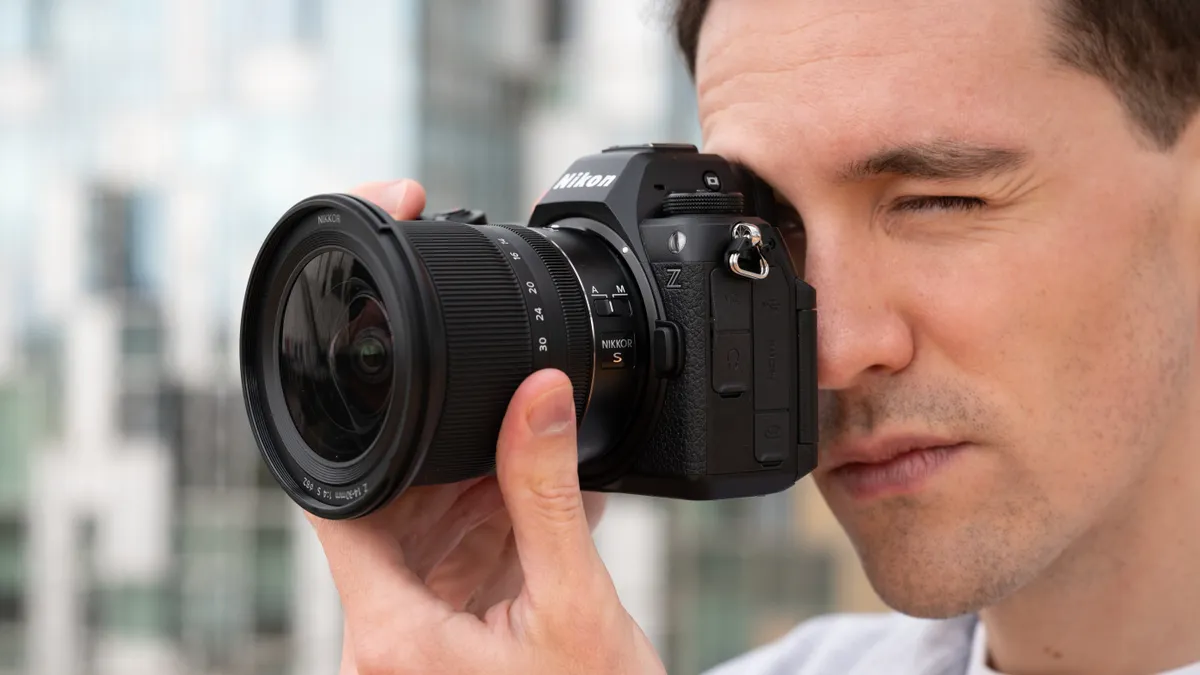
This latest in the Z6 line boasts a partially stacked sensor that has a readout speed of around 3.5x as fast as the previous-generation camera. While that’s not quite fast enough to warrant a completely shutter-free design, it does enable shooting speeds of up to 120fps (admittedly JPEG only and DX-cropped), and this camera has the highest-res EVF of any Nikon, at 5.76 million dots (versus 3.69 million in most other models).
The 24.5MP sensor may only sound like a small step up from the 20.9MP of Nikon’s APS-C-sensor mirrorless models, but in combination with the much larger full-frame sensor area, it delivers a big leap in image quality, especially in low light. If you're into vlogging and filmmaking, not just stills, this is the Nikon to get.
Don’t discount the older Nikon Z6 II either, which is a terrific all-round camera with excellent build quality, design, and in-body stabilization, and it’s available at a very good price.
Read more: Nikon Z6 III review
The best value Nikon camera
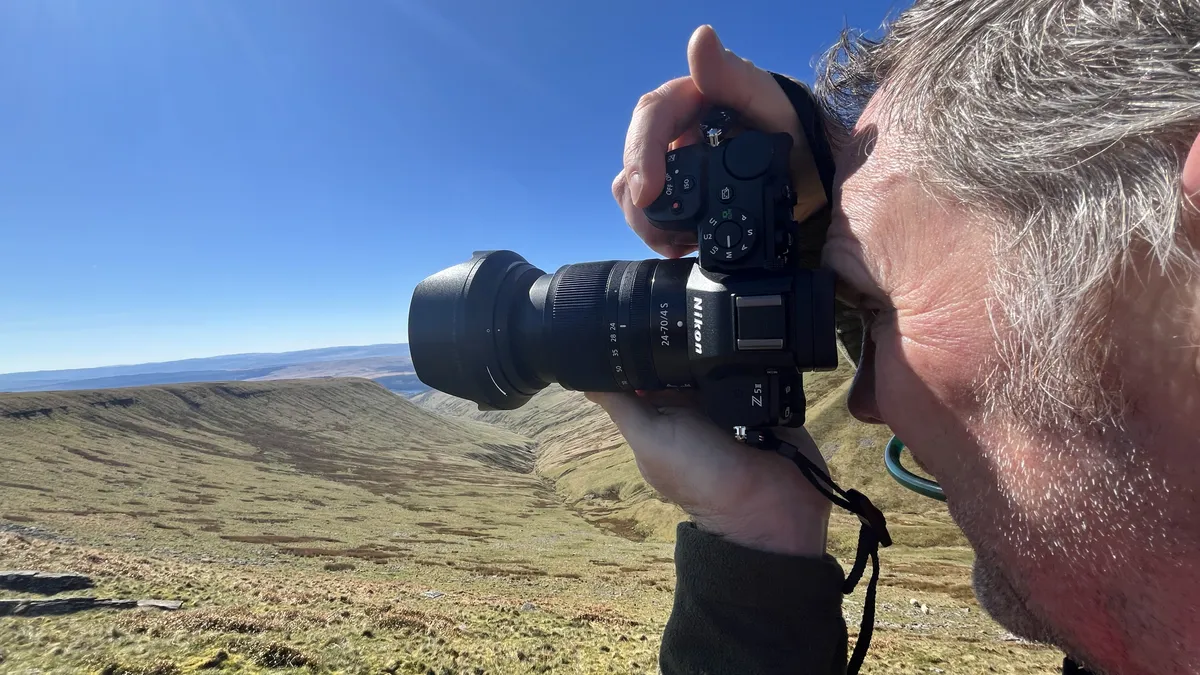
The Nikon Z5 II inherits much of the top-end tech from cameras higher up the range and packages it into an affordable body, including intelligent subject recognition and advanced autofocus, yet is positioned as Nikon's entry-level full-frame mirrorless model, succeeding the original Z5.
It boasts a 24.5MP sensor, can shoot at 30fps (JPEG) and 14fps (RAW), and has advanced autofocus and subject detection inherited from flagship models. It can autofocus in near-darkness (-10EV) and offers up to 7.5 stops of in-body image stabilization (IBIS). The camera includes a vari-angle touchscreen LCD, dual SD card slots, and a user-friendly control layout, with the addition of a Picture Control button for easy access to image processing settings.
Performance is enhanced by the Expeed 7 processor, enabling accurate subject recognition for humans, animals, and vehicles. Its autofocus system uses 299 AF points, and the Focus Point VR feature maximizes stabilization around the active focus point. The Z5 II also supports the Nikon Imaging Cloud service for automatic image uploads and firmware updates.
For video, the Z5 II supports 4K 60p (with a 1.5x crop) and Full HD 120p, with options for N-Raw output and 10-bit N-Log profiles. Additional video features include a 'Product review' mode for vloggers and a high-res digital zoom. All in all, it offers absolutely cracking value, and is in a completely different league from the original Nikon Z5. That said, if you don't need the cutting-edge specs, you may well be able to pick up older camera for a bargain price as stocks are sold off.
Read more: Nikon Z5 II review
The best Nikon camera for pros and high-end enthusiasts
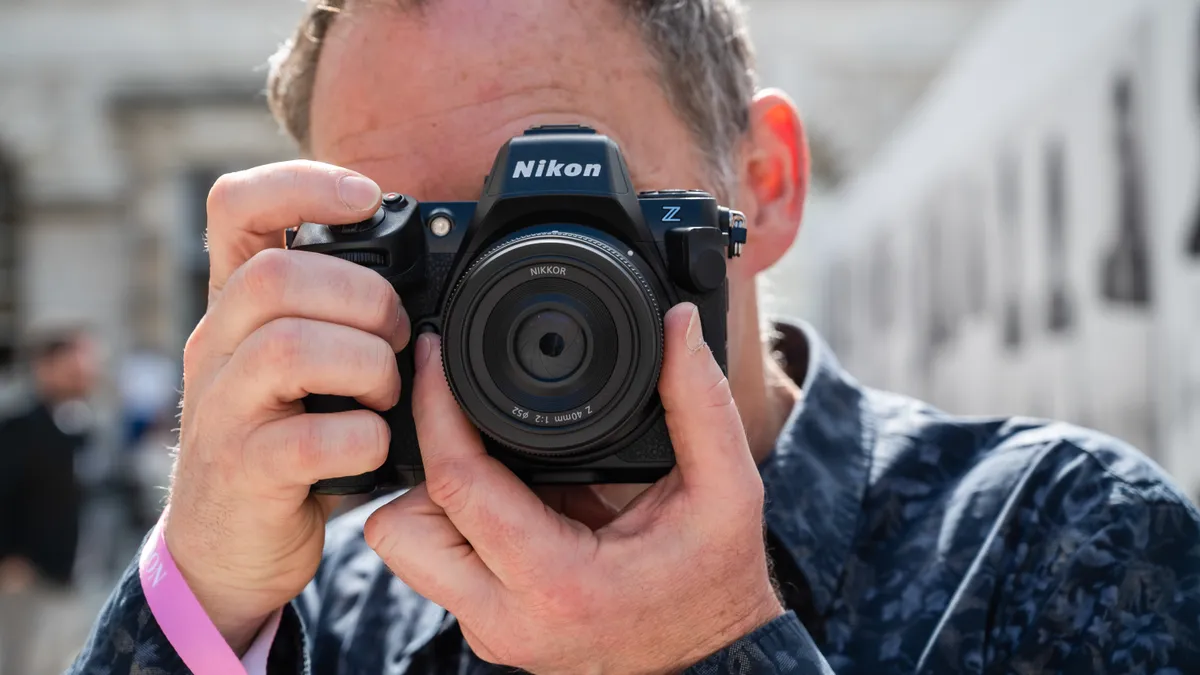
The Z8 is being pushed by Nikon as "a baby Z9", with an almost identical feature set. The only real difference right now is that it has a more compact body (without the Z9's "pro" vertical grip and bigger battery) and it costs over a grand less. There is the option of adding a grip, too, should you need to carry an extra battery and have vertical control buttons
It's capable of 8K 60p video recording or 8K 30p with an enormous 2-hour record limit. Nikon decided to remove the mechanical shutter completely, which means the camera is capable of 120fps continuous shooting and has a max shutter speed of 1/32000 sec, which makes it perfect for sport and bird photography.
The ferocious autofocus is capable of ten kinds of recognition: human eyes, faces, heads, and upper bodies; animal eyes, heads, and bodies; and cars, aircraft, planes, trains, and motorbikes.
Overall, though, there is literally nothing this camera can't do: it gives you speed, resolution, ruggedness, and video capability in one. And it's cheaper than the Z9.
Read more: Nikon Z8 review
The best Nikon camera for style
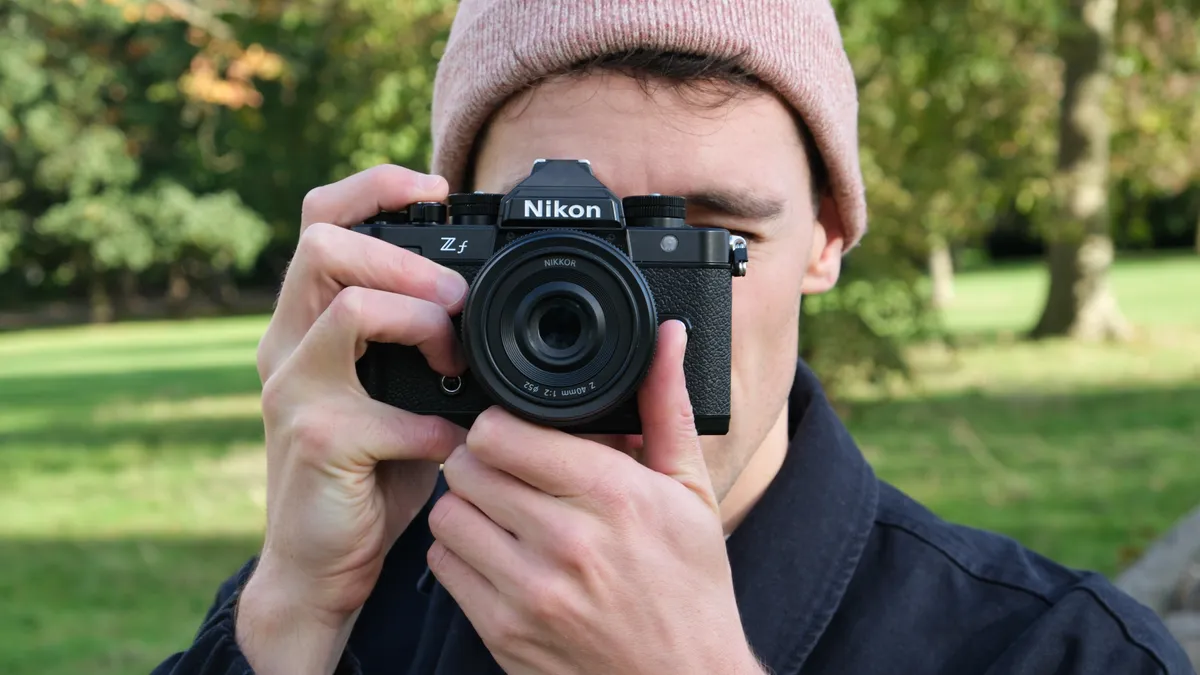
Don't let its vintage looks deceive you, the Nikon Zf is a fantastic modern digital camera. With its 25MP full-frame sensor and Nikon's cutting-edge Expeed 7 processor, the Zf offers excellent autofocus and subject tracking, as well as solid 4K video performance.
I really love the Nikon Zf for its retro design, which is sure to immediately win over any vintage camera enthusiasts. From the moment I laid my hands on this camera, it stirred up a wave of nostalgia for the bygone days of shooting film. The Zf body has a fantastic build quality with more substantial and robust brass dials, and a weighty feel reminiscent of the iconic Nikon FM2 that served as its inspiration.
There is a lack of own-brand Nikon vintage-style lenses natively for the Z mount, which limits you to modern-looking Nikon lenses, or old Nikon lenses via a mount adapter, which spoils the aesthetic somewhat. However, this shortfall is made up for by many third-party lens makers, offering lenses with manual aperture rings, suiting the Zf perfectly.
Read more: Nikon Zf review
The best entry-level Nikon camera

The Nikon Z50 II is a much smaller camera than Nikon's full-frame 'Z' models, but it clearly shares the same design DNA. Despite its small size, this second-generation model in the Z50 line has an improved grip and external controls, with a direct-access Picture Control button that’s exclusive to this camera. Its EVF is also twice as bright as its predecessor.
It shares the same Expeed 7 processor as cameras higher up the range, which enables the incredibly advanced subject detection of the Z9, and combined with the 1.5x effective focal length enabled by the APS-C sensor makes it particularly ideal for sport and wildlife photographers on a budget. It does lack the IBIS of the full-frame models, but many of the Z-series lenses designed for DX cameras have built-in VR to compensate, including the small-but-beautifully-formed Z 16-50mm f/3.5-6.3 VR kit lens.
Best of all, the Z50 II is a terrific value, especially when bought as a twin-lens kit. This is a great-value camera for both beginners and enthusiasts.
Read more: Nikon Z50 II review
The best Nikon video camera

The Nikon ZR is essentially a Z6 III in a video-friendly form factor. A rectangular slab with no electronic viewfinder, you instead get a big and bright 4-inch touchscreen rear monitor that dominates the back of the camera, suiting the needs of videographers. It's also the world's first camera to offer 32-bit float audio internally, a feat partially made possible due to its fanless (and weather-sealed) design. It can record 6K video at 60p, 4K at 120p, and Full HD at 240p.
But it's the inclusion of Red Color Science that sets it apart from the rest of the Z-series range, as well as other competing videocentric cameras. An especially developed R3D NE raw video codec enables footage to be mixed and matched with Red's film studio cinema cameras, and Red-developed LUTs enable cinematic movies straight out of the camera.
What's more, this first 'Z Cinema' camera comes at an extremely competitive price, seriously undercutting competing cameras from the likes of Canon and Sony. For anyone looking to get into videography seriously but without spending a serious amount of money, this is the answer.
Read more: Nikon ZR review
The best Nikon camera for sports
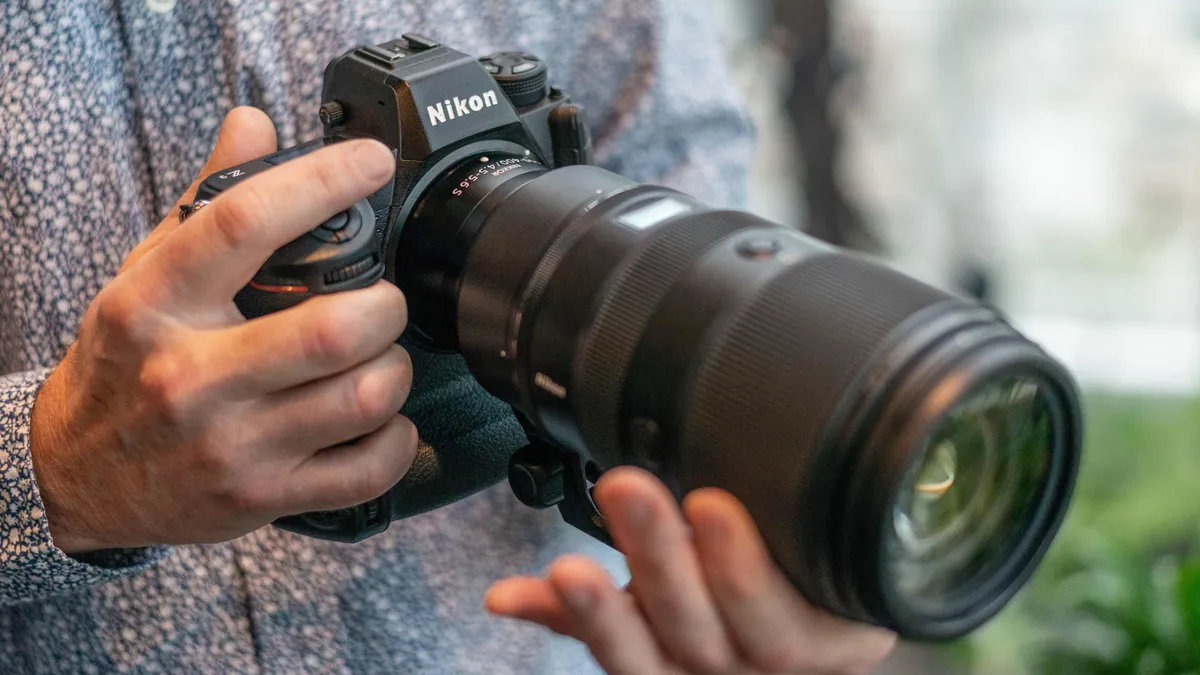
The Nikon Z9 stands out as one of Nikon’s most advanced cameras, and it's designed with professional photographers in mind. As the flagship mirrorless model, it features a robust 45.7MP full-frame sensor and offers both exceptional still image quality and 8K video recording at 60p. The Z9’s stacked sensor allows for extremely fast readout speeds, enabling continuous shooting at up to 120fps in JPEG (albeit with reduced resolution at 11MP), making it perfect for high-speed action and wildlife photography.
One of the key innovations of the Z9 is the absence of a mechanical shutter, replaced entirely with an electronic shutter, offering shutter speeds up to 1/32,000 sec. Combined with the deep learning autofocus system, which excels at detecting and tracking subjects from people to animals, this camera is a powerful tool for any professional setting. However, while the autofocus is strong, it may not quite match the precision found in Canon's or Sony's systems. For video enthusiasts, the Z9 delivers impressive 8K footage, with an option for longer recording times without overheating – an area where many competitors struggle.
This camera’s ergonomics are also top-tier, with a fully weather-sealed body, integrated vertical grip, and a substantial battery, making it ideal for long shoots and working in challenging environments. On the downside, the Z9’s screen isn’t fully articulating, which may be a limitation for those needing flexible angles for certain shots. But if you're after a compact alternative with similar capabilities, the Nikon Z8 might be worth considering, as it offers nearly identical specs in a smaller, more affordable package.
However, the Nikon Z9 is a powerhouse for professional photographers, particularly those working in fields like sports, wildlife, and high-end videography, delivering a combination of speed, quality, and ruggedness that is hard to beat at this level.
Read more: Nikon Z9 review
The best Nikon camera for enthusiasts

The Nikon Z fc stands out as a fantastic blend of modern features and retro styling, making it one of the more interesting mirrorless options on the market. This camera’s design is clearly inspired by Nikon's vintage models, particularly the FM2, and is bound to appeal to photographers who appreciate a nostalgic aesthetic. However, it’s not all about looks – the Z fc delivers in performance as well.
Equipped with a 20.9MP APS-C sensor, the Z fc produces excellent image quality, comparable to its sibling, the Nikon Z50. It shares the same EXPEED 6 processor and an 11fps burst mode, making it quite versatile for everyday photography needs. Where the Z fc really shines is in its fully articulating screen, which adds a layer of flexibility for vlogging or creative shooting angles, a feature that sets it apart from the Z50’s tilt-only display.
What I love most about the Nikon Z fc is how Nikon has seamlessly integrated modern technology with a classic feel. Whether you're just getting started in photography or you're a seasoned pro looking for something different, the Z fc offers plenty of charm while still delivering solid performance.
The camera is available in a black or silver body with a wide range of color detailing options, and for the truly artistic, there's a range of Heralbony limited-edition cameras, with four bold graphic designs. Ultimately, the Z fc is perfect for those who value aesthetics alongside capability, but it might not be the most practical option for heavy-duty work.
Read more: Nikon Z fc review
The best Nikon camera for vlogging

The Nikon Z30 is an impressive entry-level mirrorless camera specifically designed for vloggers and content creators. It features a 20.9MP APS-C sensor and offers uncropped 4K video recording, making it a versatile tool for both video and stills. One of the camera's standout features is its compact and lightweight body, weighing just 350g, which is perfect for those who need portability without sacrificing quality.
For vloggers, the Z30 excels thanks to its fully articulating 3-inch touchscreen, which allows for easy framing, especially in selfie mode. It also includes built-in stereo mics and a 3.5mm microphone port, ensuring you have options for improved audio quality. However, it lacks a headphone socket, which some creators might miss for audio monitoring during shoots.
While it's optimized for video, the Z30 still holds its own in photography, offering up to 11fps continuous shooting. However, it does lack an electronic viewfinder (EVF) and in-body image stabilization, which may be limiting for those looking to use it primarily for stills or in low-light conditions.
For creators looking for a budget-friendly option with solid video capabilities, the Nikon Z30 is a compelling choice. It provides high-quality video and audio features in a portable package, although it may not satisfy those seeking advanced stills photography tools or stabilization options.
Read more: Nikon Z30 review
The best Nikon DSLR camera
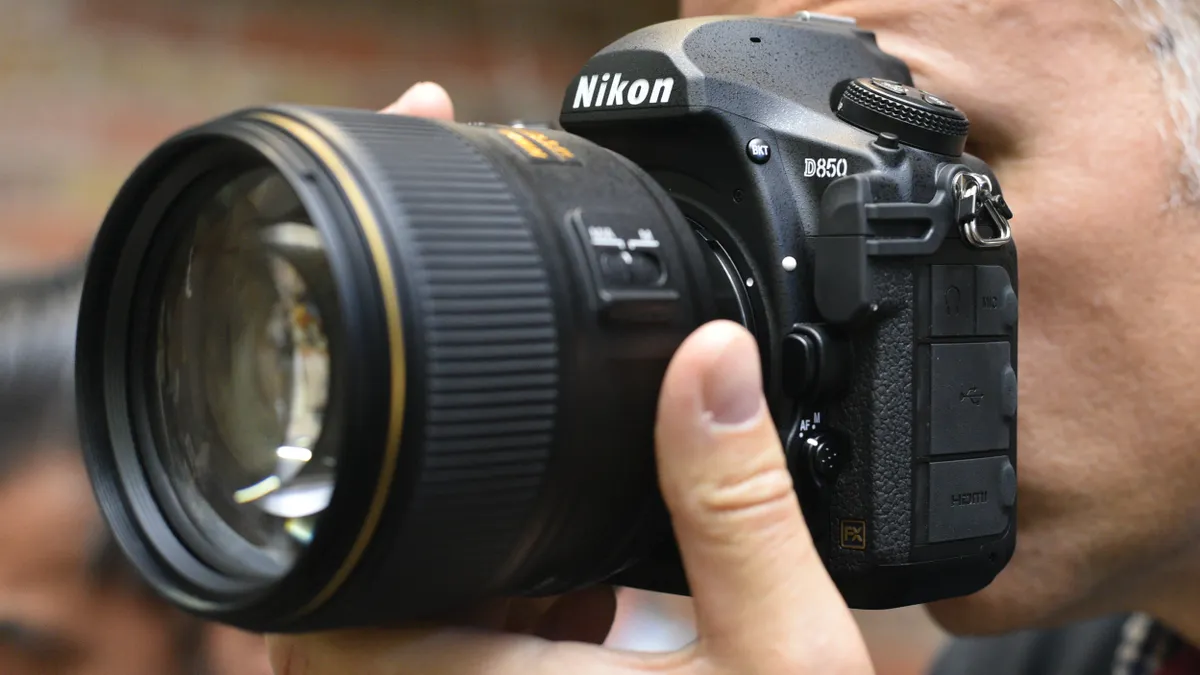
Mirrorless camera fans will often complain about the size and weight of DSLRs, and they have a point. The Nikon D850 is a big bruiser of a camera compared to the Nikon Z models.
But this size works in your favor if you're shooting with big, heavy lenses, and most pro lenses are big and heavy! This is a handling factor that many mirrorless users don't take into account. Being a DSLR, the D850 has a bright, clear optical viewfinder that many photographers still prefer over a digital display, no matter how good the latter.
The D850's 45.7-megapixel sensor produces superb image quality, yet it still maintains a shooting speed of 7 frames per second, or 9 frames per second with the optional battery grip.
Even without the grip, the D850 has an amazing battery life of 1840 shots – far more than any mirrorless rivals – and it comes with two memory card slots; one for an XQD/CFexpress card and one for regular SD/SDHC/SDXC.
Read more: Nikon D850 review
The best Nikon bridge camera

The Nikon Coolpix P1100 is a bridge camera with a fixed, non-interchangeable lens. That said, it's a monster: its 125x optical zoom is equivalent to 24-3000mm in full-frame terms. It has a 16MP 1/2.3-inch CMOS sensor, an ISO range of 100 to 6400, and can shoot 4K UHD video at 30p. The camera features a 0.39-inch EVF with 2,359k dots, a 3.2-inch articulating LCD screen, and supports RAW quality mode.
The 24-3000mm optical zoom comprises 17 elements in 12 groups, including ED and Super ED elements for clarity and color accuracy, and is backed by effective optical image stabilization that provides sharp images, even at 3000mm. Handling is comfortable, with a chunky handgrip. The camera has a motorized zoom mechanism, a customizable control ring, and a snap-back zoom button. Autofocus is quick in good lighting but struggles in low-contrast situations.
The P1100 is effectively a minor revamp of the preceding Nikon Coolpix P1000, and the only differences of note are an upgraded USB-C connection and a couple of enhanced shooting modes. The Bird-Watching mode now includes options for spot, normal, and wide autofocus areas, and a new Fireworks scene mode has been added.
Read more: Nikon Coolpix P1100 review
How we test Nikon cameras
In our tests, we put Nikon cameras through their paces in both real-world situations and controlled lab environments. We assess different Nikon cameras based on their intended purpose. For powerful cameras like the Nikon Z9, we expect to push the specs as far as they will go, while with entry-level cameras like the Nikon Z50 II, we temper our expectations more to their intended casual and enthusiast user.
We start with our detailed lab assessments to gauge resolution, dynamic range, and signal-to-noise ratio. To measure resolution, we employ ISO resolution charts, while the DxO Analyzer test gear helps assess dynamic range and noise across the camera's ISO spectrum.
In addition to lab analysis, our reviewers take these cameras out into the field, capturing diverse subjects in varied conditions. Their firsthand experiences provide valuable insights into the camera's usability, handling, and their personal take on image and video quality.
We then combine these real-world trials with our lab findings to choose the best products for our guides.
Find out more about how we test and review on Digital Camera World.
Comparisons and Lab Results
Here, I take a look at the lab testing data from our reviews of all the Nikon cameras in the list – with the exception of the Nikon D850, which we reviewed prior to our current lab testing regime.
You can see a clear separation in resolution between the Nikon Z8 and Z9, with their more megapixel-packed full-frame sensors providing the best resolution, so if absolute clarity and sharpness are key to your work, then these models perform best.
But that's not the whole story. The greater megapixel count of these sensors means that each individual pixel (or photosite) is smaller, so these cameras are some of the lower performers on my list when it comes to dynamic range and noise. So if you shoot a lot in low light, then this might be a consideration; you will get a little less noise from a Nikon Z6 III or Nikon Zf.
Use the dropdown menu to select between Resolution, Dynamic Range, and Signal to Noise Ratio
| Timestamp (ISO) | Nikon Z6 III () | Nikon Z5 II () | Nikon Z f () | Nikon Z8 () | Nikon Z50 II () | Nikon ZR () | Nikon Z9 () | Nikon Z fc () | Nikon Z30 () | Nikon P1100 () |
|---|---|---|---|---|---|---|---|---|---|---|
| 1 | 28 | 28 | 28 | 38 | 24 | 26 | 38 | 26 | 24 | 18 |
| 2 | 28 | 28 | 28 | 38 | 24 | 26 | 38 | 26 | 24 | 18 |
| 3 | 28 | 28 | 28 | 38 | 24 | 26 | 38 | 26 | 24 | 18 |
| 4 | 28 | 28 | 28 | 38 | 24 | 26 | 38 | 24 | 24 | 16 |
| 5 | 28 | 28 | 28 | 38 | 24 | 26 | 38 | 24 | 24 | 14 |
| 6 | 26 | 26 | 28 | 38 | 22 | 26 | 36 | 22 | 22 | 12 |
| 7 | 26 | 26 | 28 | 38 | 20 | 26 | 34 | 20 | 22 | 10 |
| 8 | 24 | 26 | 26 | 35 | 18 | 26 | 32 | 20 | 22 | N/A |
| 9 | 22 | 24 | 24 | 31 | 16 | 24 | 28 | 18 | 20 | N/A |

How to choose the best Nikon camera
Choosing the best Nikon camera depends on what you plan to use it for. Consider factors like your skill level, budget, and specific photography needs. For beginners, entry-level models like the Nikon Z50 II offer a balance of quality and affordability. If you're a seasoned photographer or want more advanced features, models like the Nikon Z6 III or Nikon Z8 are professional options with impressive capabilities.
When picking a camera, think carefully about the type of photography you'll be doing. For portraits or landscapes, you might prioritize high resolution with a megapixel-packed sensor. Action shots might require a faster burst rate and speedy autofocus. For vlogging or video, look for cameras with reliable autofocus, subject tracking, and at least 4K video quality.
Consider the lenses, too. Nikon has an extensive range, so compatibility with the lenses you need is crucial. Be aware, though, that Nikon Z and F lenses are not interchangeable, but if you have Nikon F DSLR lenses already, you can still use them on a new Z mirrorless camera by buying a separate FTZ adapter.
Additionally, check out the reviews in our guide here to get a good understanding of our experiences using the camera, combined with data from our lab tests and its performance in real-world situations.
Is Canon or Nikon better?
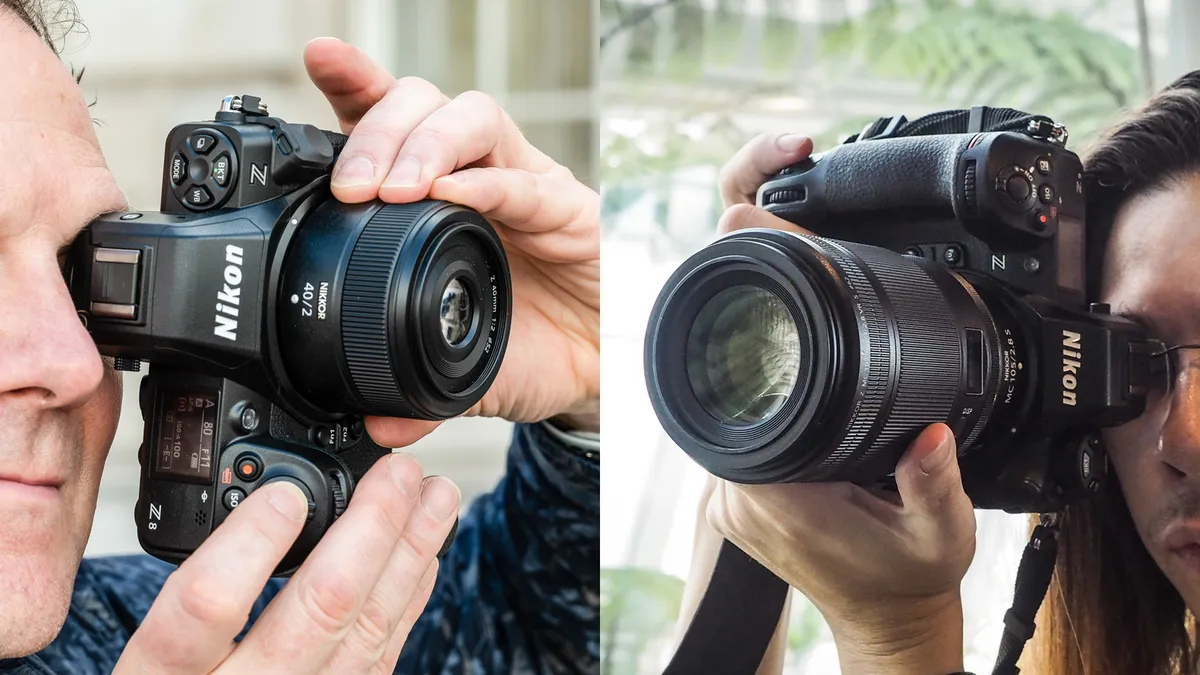
The boring answer is neither camera brand is 'better' than the other, and both produce exceptional images. The real deciding factor is your personal preference when it comes down to handling, with each brand having its own camera body style, button layout, and menu system. I personally find the Nikon control layout and menu system to be the more intuitive, and I've used both Canons and Nikons extensively.
Can I use Nikon F lenses on Nikon Z cameras?
Yes – with an adapter. Nikon makes an adapter, or there are a lot of quality third-party options, that will allow you to mount any Nikon F lens designed for DSLR cameras on its newer Nikon Z mirrorless cameras. Most regular adapters should allow full electronic control of the lens and not affect image quality in any way.

