Digital Camera World Verdict
The iPhone 18 Pro Max is an exceptionally capable phone, and I still think it offers the most consistently excellent video experience you can get from a smartphone. Its photos might not reach the same heights as the best Chinese flagships, particularly when it comes to long-range zoom and sheer sensor quality, but I trust the iPhone to give me a usable image almost every time I press the shutter, while its color consistency between lenses remains excellent. Apple has finally added more manual camera controls, but the headline variable aperture hasn't convinced me that it makes a meaningful difference for most photography. If you have an iPhone 17 Pro Max, there is very little here that should tempt you into upgrading, but anyone coming from an older iPhone will find this the most polished iPhone yet.
Reasons to buy
- +
Outstanding video quality
- +
Consistently reliable photography
- +
Phenomenal performance
- +
Excellent battery life
Reasons to avoid
- -
Variable aperture adds little
- -
Long-range zoom trails rivals
- -
Camera Control remains fiddly
- -
Not really worth the upgrade from 17 Pro Max
Why you can trust Digital Camera World Our expert reviewers spend hours testing and comparing products and services so you can choose the best for you. Find out how we test.
The iPhone 18 Pro Max arrives as Apple's yearly update to its best camera phone formula, sitting alongside the smaller but identically equipped iPhone 18 Pro, and arriving just before the company takes a swing at the folding form factor with the forthcoming iPhone Duo.
The headline upgrades are centered around its new A20 Pro processor, improved battery life, a smaller Dynamic Island, and, most importantly for Digital Camera World readers, new Photographic Styles alongside a variable-aperture 48MP main camera.
The iPhone 17 Pro Max was already one of the best camera phones available, and some of the best video capabilities of any smartphone – in fact, it has been our benchmark in guides such as the best phone for video recording. But with both significant software and hardware changes this year, can Apple's latest still retain its crown?
Specifications
Processor |
Apple A20 Pro, 6-core CPU, 7-core GPU, Dual 16-core Neural Engine |
RAM / Storage |
12GB RAM; 256GB / 512GB / 1TB / 2TB |
Display |
6.9-inch Super Retina XDR OLED, 2868 x 1320, 460ppi, adaptive 120Hz |
Main camera |
48MP, 24mm equivalent, f/1.48-f/4 variable aperture, sensor-shift OIS, 1/1.28-inch sensor |
Telephoto camera |
48MP, 100mm equivalent (4x), f/2.8, 3D sensor-shift OIS, 1/2.55-inch sensor |
Ultrawide camera |
48MP, 13mm equivalent, f/2.2, 1/2.55-inch sensor |
Front camera |
18MP Center Stage, f/1.9, autofocus |
Video |
Up to 4K Dolby Vision 120fps; ProRes up to 4K 120fps with external recording; ProRes RAW; Apple Log 2 |
Battery & charging |
5,391mAh UK/EU (reported); 25W MagSafe/Qi2 wireless |
Operating system |
iOS 27 |
Dimensions |
163.4 x 78.0 x 8.75mm / 6.43 x 3.07 x 0.34in |
Weight |
249g / 0.55lb |
Price & Availability
The iPhone 18 Pro Max starts at $1,299 / £1,299 / €1,599 / AU$2,299 for 256GB, with 512GB, 1TB and 2TB versions also available, although, as ever, Apple's storage upgrades come at a significant premium.
iPhones were already expensive phones, and Apple has added $100 to the launch price compared with the equivalent iPhone 17 Pro Max. But this isn't entirely down to Apple; thanks to the ongoing memory shortage, there have been price rises across top devices this year.
Google's Pixel 11 Pro XL and Samsung's Galaxy S26 Ultra also launched this year at $1,299 for 256GB (although the latter contains more camera hardware for that price), but Apple is firmly amongst mainstream flagship pricing rather than being an outlier on its own.
But do I think anyone with an iPhone 17 Pro Max should upgrade? The biggest photographic change is the variable-aperture main camera, and as I'll get into below, I don't find that nearly useful or exciting enough to justify spending another $1,299. But if you are coming from older iPhone models, then there is a lot more value to be found.
Design
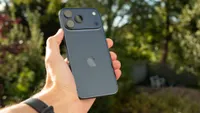
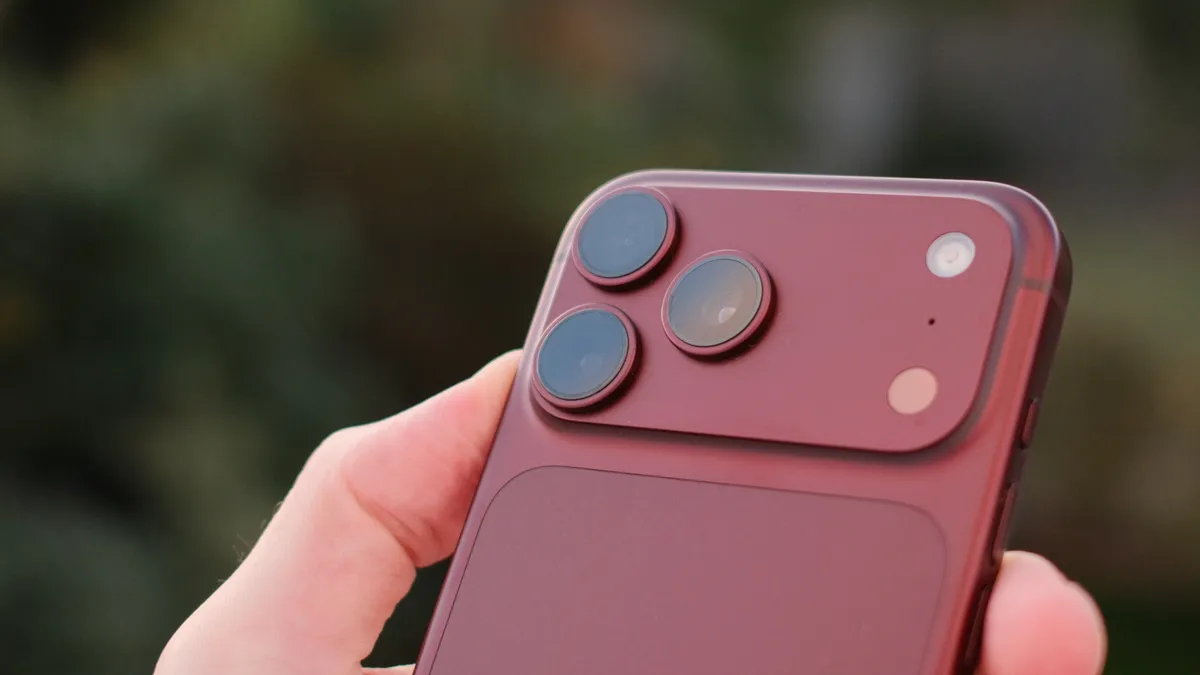
If you put the silver iPhone 18 Pro Max next to last year's model, you might struggle to tell which is which. Apple has kept almost exactly the same design, right down to the dimensions – so much so that iPhone 17 Pro Max cases even fit the new phone. Not that I am disappointed; I liked the iPhone 17 Pro Max design, and I still like it here.
The colors have changed, with Burgundy replacing Cosmic Orange as the headline option, alongside Glacier (a light metallic blue), Silver and Black. I like the burgundy, but I don't love it. It isn't remotely as in-your-face as last year's Cosmic Orange, which some people will no doubt appreciate, but as the signature color for this generation, it feels a little underwhelming. I actually prefer Glacier and Silver, although in some lighting they are perhaps a little too close together in tone, while black is there for anyone who wants to play it safe.

Apple has also stuck with an aluminum unibody rather than returning to titanium, accompanied by Ceramic Shield 2 and an IP68 water- and dust-resistance rating. I have some reservations about that decision after living with my iPhone 17 Pro for the last year, which has picked up a fairly impressive collection of scratches and nicks across its frame and rear panel.
The body measures 163.4 x 78 x 8.75mm and weighs 249g, which is up from 233g for the previous Pro Max.
The physical controls haven't changed either, including the Camera Control button, which I continue to dislike, not just on the iPhone but also on its many Chinese copycats. I find the combination of presses and swipes fiddly enough that it is almost always easier for me to simply use the controls on screen. I also press it accidentally all the time. I am waiting for Apple to find the "courage" to take this one away.
However, I do really like the Action button, and I find it is considerably more useful for quick functions that actually suit how you use your phone.


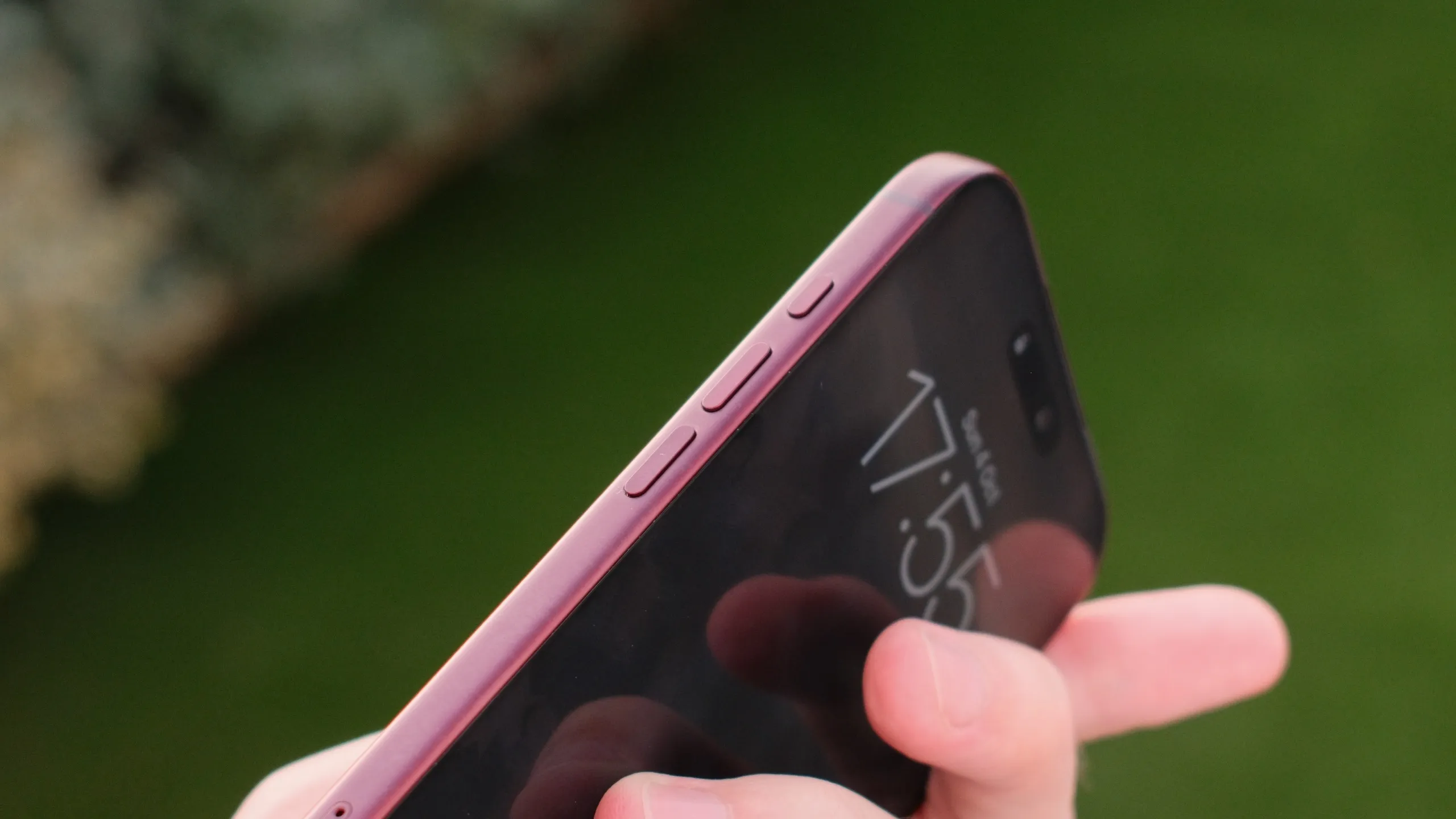


The screen is fundamentally very similar to last year's. It is a 6.9-inch 2868 x 1320 Super Retina XDR OLED with ProMotion up to 120Hz, a 3,000-nit rated outdoor peak brightness and Apple's new anti-reflective coating. There have been changes behind the scenes to improve battery efficiency with new LTPO+ tech, while the most visible difference is the Dynamic Island, which is around 35% narrower after Apple moved part of the Face ID hardware beneath the display.
I have also seen discussions online around the screen looking worse than the one on the 17 Pro Max, but having compared the two side by side, I can't really spot any meaningful difference in quality.
Camera Performance
Apple's rear camera system remains built around three 48MP cameras covering 13mm, 24mm, and 100mm equivalent focal lengths, with 2x and 8x options generated from sensor crops.
The big change is that the main camera adds a physical six-blade variable aperture with f/1.48, f/1.8, f/2.8, and f/4 settings.
Variable aperture is intriguing, as the concept of buying a mirrorless camera without a physical aperture is laughable. However, on a phone, I just remain unconvinced by it.
I have used similar systems on phones from Xiaomi and Huawei with even larger sensors and didn't think they lived up to the hype there either. On a sensor this small, the majority of everyday photographs simply don't show enough difference in depth of field between aperture settings for me to care.
You really only start to see it when focusing close to a subject. That makes it potentially useful for close portraits with the main camera, although I don't personally think 24mm is an ideal focal length for close-up portraits in the first place. I just really struggled to find any practical uses for the variable aperture when I was out shooting. If I wasn't testing the phone for review, I don't think I would ever use it.

f/1.48
Image credit: Gareth Bevan / Digital Camera World

f/4
Image credit: Gareth Bevan / Digital Camera World

At this distance, f/1.48 doesn't show much difference from the f/4 image.
Image credit: Gareth Bevan / Digital Camera World

Captured at f/4, and there is not much difference to see.
Image credit: Gareth Bevan / Digital Camera World
Computational photography has also removed some of the reasons I might otherwise want a physical aperture on a phone. Portrait modes are now incredibly good at faking shallow depth of field, while computational long-exposure and light-trail modes mean I don't need to stop a lens down to force a longer shutter speed.
I also don't love how Apple handles the manual aperture selection. Apple has finally added proper Pro Controls for aperture, shutter speed, white balance, and a histogram to its Camera app, which is a welcome move, but getting to the aperture controls still feels more buried in menus and more complicated than it needs to be.
The more useful part of the new aperture is actually the fact that the main camera can now open to f/1.48, compared with f/1.78 on the previous generation, allowing more light to reach the sensor. That is a tangible benefit for low-light shooting, even if it isn't as exciting as watching physical aperture blades move.

f/1.48
Image credit: Gareth Bevan / Digital Camera World

f/4
Image credit: Gareth Bevan / Digital Camera World
For outright image quality, while I don't think the iPhone 18 Pro Max takes the best photographs you can get from a phone, where Apple continues to excel is reliability. Some rival phones can look absolutely spectacular when everything falls into place, but I have more confidence in the iPhone that whatever I point it at will come back as a usable photograph. Colors are generally accurate and true to life, exposure is extremely dependable even in awkward or harshly lit scenes, and there is excellent consistency when moving between cameras.
Chinese manufacturers have pushed much harder on camera hardware, with larger sensors, higher-resolution telephoto cameras, and collaborations with established imaging brands for camera processing. The Xiaomi 17 Ultra, for example, combines a 1-inch-type main sensor with Leica tuning and a 200MP telephoto camera, and it can simply extract more quality than the iPhone, but I don't love Xiaomi's processing every single time. There is a lot to be said for the "iPhone look".


The 4x telephoto is particularly good, and the 8x crop still holds up remarkably well without an immediately obvious collapse in quality.
But beyond that, Apple starts to fall behind. Digital zoom tops out at 40x, and Apple's processing at extreme zoom levels isn't in the same league as the AI-assisted systems offered by Google, Samsung, and the Chinese manufacturers.

1x
Image credit: Gareth Bevan / Digital Camera World

~20x
Image credit: Gareth Bevan / Digital Camera World

1x
Image credit: Gareth Bevan / Digital Camera World

40x
Image credit: Gareth Bevan / Digital Camera World
The ultrawide is also very good overall, although I have noticed more muddiness in harsh lighting than I get from the main or telephoto cameras, with dynamic range seeming a little less convincing. If I start pixel peeping, it isn't as crisp as the other lenses either, although at normal viewing sizes it looks perfectly good.
Macro remains one of my biggest frustrations because the iPhone still switches to the ultrawide camera for close focusing rather than embracing tele-macro. I really do not like the perspective that ultrawide gives close-up subjects, and if macro is something you take seriously on an iPhone, I would invest in an accessory such as Moment's 75mm Macro lens for a more natural working distance and perspective.


The big software feature for Apple's camera this year is Photographic Styles, its answer to the growing demand for more stylized images straight out of camera – think Fujifilm film simulations. Most of Apple's presets are very good; a few wander a little too much into obvious "filter" territory, but if you are bored of the standard iPhone look, there is a lot to experiment with here.
Apple has expanded the system with additional tone, saturation, texture, and grain controls, and you can create some very cool results. This isn't quite as in-depth as LUTs or even Fujifilm's system, but there is a lot of promise if you're willing to play around enough with the settings.
However, if you are after the most "film-inspired' looks, then there are still plenty of third-party apps I prefer.
Video has always been one of Apple's strongest suits, and I think the iPhone 18 Pro Max is still top of the pile.
Standard iPhone video is beautifully balanced, with accurate colors, very dependable exposure, and excellent matching when switching between lenses, something a surprising number of otherwise brilliant camera phones still struggle with. Apple's HDR processing can be heavy, but I rarely find it aggressive enough to ruin the image.
Stabilization is also the best I have used on a phone. And more serious filmmakers get a frankly ridiculous range of options, including 4K 120fps Dolby Vision, ProRes, ProRes RAW, Apple Log 2, genlock, and 4K 120fps ProRes recording directly to external storage.
My only real complaint is that the standard Camera app still doesn't give creators enough control over settings. If you want to get properly involved, you can switch to Final Cut Camera or Blackmagic Camera, both of which reveal just how powerful the iPhone can be as a filmmaking tool, but they introduce a fairly steep learning curve (and an additional app). I would love it if Apple had a revamped Pro mode where controls were just more in reach.
Apple has also fitted four studio-quality microphones this year. I am not sure how many serious creators are relying on their phone's internal microphones when wireless systems are so easy to carry, but if you leave your mic kit at home, it is certainly useful to know the built-in option is more capable.
Phone Performance
Apple has been difficult to beat for outright smartphone performance since it began designing its own processors, and the A20 Pro keeps that advantage intact. Built on a 2nm process, it combines a six-core CPU, seven-core GPU, and dual 16-core Neural Engine, while Apple claims up to 40% more GPU performance than the A19 Pro.
My Geekbench 6 results put the iPhone 18 Pro Max at 4,653 for single-core and 12,511 for multi-core performance. For comparison, the Samsung Galaxy S26 Ultra scored 3,659 and 11,305, respectively, so Apple still holds a small advantage, although Qualcomm does have a new chip since the last Galaxy.
Numbers aside, the phone feels incredibly quick. Everything from day-to-day navigation to editing and exporting video happens almost instantly, and I can scrub through huge video files without stuttering. There is already far more processing power here than the majority of owners are likely to need, but photographers and filmmakers working with large RAW files, 4K video, and increasingly demanding AI tools can actually make some use of the headroom.

Battery life has improved too. In my normal mix of web browsing, streaming, messaging, and photography, I get around a day and a half before needing to charge. Particularly impressive is Apple's much smaller cell is competing remarkably well with Chinese manufacturers that are putting enormous silicon-carbon batteries into their flagship phones.
There hasn't been much change to Apple OS. iOS 27 continues to refine Apple's Liquid Glass interface, which is probably sensible as it's been a pretty divisive visual change. Apple doesn't publish an exact number of guaranteed OS updates for the iPhone, but its historic support is among the longest in the industry, so I have very few concerns about the 18 Pro Max remaining useful for years.
The biggest new software push is, inevitably, AI. Siri's AI (or Apple Intelligence) is more capable and uses more on-device processing alongside Apple's Private Cloud Compute, while Photos gets tools including Spatial Reframing, Extend, and a more powerful Clean Up function.
There are also some interesting developments around image authenticity. Apple's new Reference Image feature can record data alongside a photograph, allowing an original reference to be compared with edited versions. Apple is also adding support for Google's SynthID later this year so AI-generated or AI-edited images can carry an invisible watermark. All of which should help in the fightback against AI-slop.
Final Verdict
The iPhone 18 Pro Max is a fine update; it's Apple refining an already very good phone. Not all the additions, I think, are worthwhile, but none of them detract from an incredible device.
For photography, there are phones I would choose ahead of it if image quality were my greatest concern, and Apple's headline variable aperture hasn't changed photography nearly as much as the marketing would suggest. Yet there is a lot to be said for how dependable the iPhone is. I can pull it from my pocket, snap away, and the photos will just look good. It remains a very capable everyday camera even if it isn't the outright stills champion.
But for video, I think it is still the phone to beat. The consistency between lenses, excellent stabilization, accurate color, and huge choice of professional codecs and formats make it my first choice for recording on a phone.
However, I just wouldn't upgrade from an iPhone 17 Pro Max for it, as the 17 is already just such a good phone, and I don't feel the 18 Pro Max adds quite enough. But for anyone coming from an older model, the iPhone 18 Pro Max remains one of the best camera phones you can buy right now.
Design ★★★★½ |
The design barely changes, but it remains beautifully made, although the aluminum durability and Camera Control key still bother me. |
Camera Performance ★★★★½ |
Reliable stills and class-leading video make this a superb camera phone, although variable aperture doesn't do a lot and long-range zoom fails to trouble the best rivals. |
Phone Performance ★★★★★ |
A20 Pro is phenomenally fast, battery life is excellent and iOS is polished and now, a bit smarter. |
Value ★★★★☆ |
It offers an enormous amount of capability, but the higher price and minimal gains over the 17 Pro Max make the upgrade proposition difficult. |
Overall |
★★★★½ |
Alternatives