Digital Camera World Verdict
The Xiaomi 17 Ultra delivers one of the best camera systems I’ve used on a phone, with a superb 1-inch sensor, excellent night performance, and Leica profiles that give images a real filmic character. It’s also blisteringly fast, handling demanding edits with ease. However, lens-to-lens color inconsistencies, a mechanically clever but modest zoom range, and slightly weaker macro hold it back from being the complete package.
Reasons to buy
- +
Big 1-inch and 1/1.4-inch sensors
- +
Performance from all three cameras is excellent
- +
Beautiful Leica color profiles produce filmic images
- +
Super-fast charging, even on PD outlets
Reasons to avoid
- -
Inconsistencies between the main and telephoto lenses
- -
Macro focus not as close as previous model
- -
Mechanical zoom range feels modest in practice
- -
Battery life decent, not exceptional
Why you can trust Digital Camera World Our expert reviewers spend hours testing and comparing products and services so you can choose the best for you. Find out how we test.
The Xiaomi 17 Ultra is Xiaomi’s latest statement piece in mobile photography. Co-engineered again with Leica, the 17 Ultra builds on the company’s Ultra-series momentum from the excellent Xiaomi 15 Ultra, but pushes even harder into “phone as camera” territory.
The 17 Ultra still sees Xiaomi continue pursuing 1-inch sensors in phones, with a new 1-inch Light Fusion 1050L sensor utilizing new tech for even better HDR. But the headline-grabbing news is Xiaomi combining the two separate telephoto cameras on the 15 Ultra into a single new 200MP telephoto camera featuring a 75-100mm mechanical optical zoom. Whilst we have seen this used on a few niche Sony Xperia phones, it's the first attempt by Xiaomi, and perhaps signals the start of a new chapter in the Ultra phone wars.
However, this lens comes with trade-offs. The mechanical zoom system, while technically fascinating, doesn’t dramatically expand range over the 15 Ultra’s two telephoto lenses, despite taking up the same physical space, and macro performance also suffers from a longer minimum focus distance than last time around.
The Xiaomi 15 Ultra was not only one of the best camera phones of last year, but came so close to being my perfect compact camera replacement. Xiaomi has taken some bold steps with the 17 Ultra, but has tweaked the formula too much, or has it finally built a phone that truly feels like it could replace your everyday carry?

Specifications
Processor |
Snapdragon 8 Elite Gen 5 |
RAM/Storage |
16GB+512GB / 16GB+1TB |
Screen |
6.9-in OLED, 2608 x 1200, 1–120Hz LTPO, 3500 nits peak |
Main Camera |
50MP, 23mm, ƒ/1.67, 1-inch Light Fusion 1050L, OIS |
Ultrawide Camera |
50MP, 14mm, ƒ/2.2, 1/2.75", 115° FOV |
Telephoto Camera |
200MP, 75–100mm mechanical zoom, ƒ/2.39–2.96, 1/1.4", OIS, 30cm macro |
Front Camera |
50MP, 21mm, ƒ/2.2 |
Video |
Up to 8K 30p; 4K 120p Dolby Vision; 4K 120p Log |
Battery & Charging |
6000mAh; 90W wired; 50W wireless |
Operating System |
Xiaomi HyperOS 3 (based on Android 16) |
Size |
162.9 x 77.6 x 8.29mm |
Weight |
218.4g (Black/White), 219g (Starlit Green) |
Price & Availability
Launching at £1,299 / €1,499 for the 16GB+256GB version and £1,499 for the 16GB+1TB version. Given the hardware on offer – a 1-inch sensor, mechanical zoom system, 200MP telephoto, 6000mAh battery, and Snapdragon 8 Elite Gen 5 – the price is obviously very premium, but it feels justified for anyone who cares about their photography.
There are cheaper options for performance – look no further than the speedy OnePlus 15 – but compared to flagship rivals like the Galaxy S26 Ultra or iPhone 17 Pro Max, Xiaomi offers the far more adventurous camera hardware for serious photographers.
Its real competition is from the wave of Chinese Ultra phones we're expecting in the next few months, with last year's Oppo Find X8 Ultra and Vivo X200 Ultra giving Xiaomi its closest challenge – although it remains to be seen if sequels to those phones will be released globally, where currently the Xiaomi 17 Ultra has a huge advantage in availability.
Design
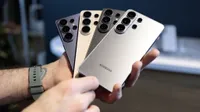
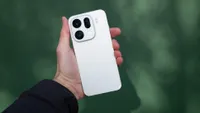
The Xiaomi 17 Ultra is available in a traditional Black or White, as well as 17 Ultra’s hero color – Starlit Green – which is the version I tested. While I was a little unsure how I felt about the color from press images, in person, I actually kind of love it. The mineral-like finish gives it a subtle sparkle, and it is nowhere near as attention-grabbing or in-your-face as I expected it to be. It's playful, a bit different from everything else out there right now, and it's not bright orange.
Even with the new mechanical zoom camera, the weight is still very modest at 219g, shaving around 10g off the heaviest version of the 15 Ultra. This puts it a few grams lighter than the iPhone 17 Pro Max or Pixel 10 Pro XL and on par with the Samsung S25 Ultra. None of these are light phones, but I’m willing to put up with that for the camera hardware. The weight also feels more balanced than the previous version of the phone, and holding both the 17 Ultra, to me it feels less top-heavy than last time out.

That said, the camera island remains huge, even though Xiaomi has dropped one lens compared to the previous Ultra; the new mechanical zoom lens takes up so much internal space that the island maintains both the same width and protrusion from the rear panel. The large camera island is also a magnet for fingerprints; my fingers just naturally kept coming to rest on the glass when handling the phone, which led to a lot of wiping off grease before I could shoot.
The new zoom has also pushed wide and ultra-wide modules lower, almost touching the bottom edge of the camera island, and I did occasionally get my finger in the frame of the ultrawide lens when shooting quickly.
With Xiaomi clearly comfortable borrowing from Apple’s design lead with the rest of the Xiaomi 17 series, I actually would have preferred it if the 17 Ultra debuted its own “plateau” style camera bar and shifted the cameras up into the top left of the phone as much as physically possible.
Unlike the Xiaomi 15 Ultra by Leica or Leica Leitzphone, the “standard” version of the 17 Ultra does not include the rotating lens ring around the camera module. There is an optional Photography Kit available in a Pro version with tactile zoom and exposure compensation controls, and a Lite version with just a two-stage shutter button. I didn’t have one to test at the time of publication, but the previous generation’s kit made the phone feel like a true compact camera, and I suspect/hope the same will be true here.


The buttons around the side are as you’d expect – power and volume. Xiaomi has mixed things up a little here and split the volume rocker into separate circular up and down buttons with engraved markings. It looks distinctive enough from other similar designs, and the two buttons do provide better tactile separation.
Thankfully, Xiaomi has resisted following along with the industry and adding a dedicated camera control button. It’s something I rarely, if ever, use on other devices, and I just do not see the point of it when on-screen controls are so much easier. However, I do wish there were an action button on the left side like Apple or Oppo offers for access to a quick setting.
The 17 Ultra should be relatively robust; it's IP68 dust and water-resistant, and Xiaomi Shield Glass 3.0 protects the display. There is also a factory-installed screen protector already on the display (although in my experience, these can’t take much of a beating), and a clear hard-plastic case in the box. The case feels a little cheap considering this isn’t a cheap phone, but when a lot of phones don’t include any case at all, beggars can’t be choosers.

Screen
One of my biggest complaints about last year’s model was the curved display. Some people love them, but I have just never been a fan. I’m pleased to say Xiaomi has gone flat this time – and, well, obviously, I much prefer it. The flat screen gives the 17 Ultra a much sleeker look, and I prefer the feel of it in the hand.
The 6.9-inch HyperRGB OLED display is excellent. It’s sharp with a 2608 x 1200 resolution, and smooth with a 1-120Hz refresh rate, which is also LPTO, so it can hit anywhere in that range depending on the screen content. The screen can get incredibly bright outdoors; it’s rated up to 3500 nits. Colors look fantastic. There are two primary color modes – Original Color Pro, which is the default, and Vivid for a little bit more saturation. The default is slightly warm to my eyes, but the screen color temperature can be easily adjusted in the settings.
Camera Performance
- Main camera: 50MP, 23mm, ƒ/1.67, 1-inch Light Fusion 1050L, OIS
- Telephoto camera: 200MP, 75–100mm mechanical zoom, ƒ/2.39–2.96, 1/1.4", OIS, 30cm macro
- Ultrawide camera: 50MP, 14mm, ƒ/2.2, 1/2.75", 115° FOV
Main lens
Xiaomi remains in an increasingly exclusive group of manufacturers still championing 1-inch sensors in phones. The 17 Ultra is built around a 50MP 1-inch Light Fusion 1050L sensor with an f/1.67 aperture and OIS. As a photographer, you’ll have a hard job convincing me that bigger sensors aren’t just better, and in practice, this one is outstanding.
Shooting at 1x, the sheer amount of detail is extraordinary. Zooming into images reveals texture in brickwork, foliage, and fabric that most smartphones just can’t compete with. Even when using the 2x in-sensor zoom, there is no noticeable drop in optical quality.


Xiaomi is debuting its LOFIC HDR technology, which physically increases full-well capacity by capturing overflow charge – a word salad which essentially means it lets in more light than before. You can see it in action, particularly at night.
Low light in general is impressive. The combination of that large sensor, Leica’s optical design, and Xiaomi’s processing means shadows retain depth while highlights don’t blow out as easily. The phone also isn’t afraid of contrast, which I love. Night shots feel more atmospheric, rather than being artificially flattened by overzealous HDR like so many other phones, which gives images a more authentic, photographic character.


Telephoto lens
The 17 Ultra has switched from two telephoto lenses to one, which, on paper, seems like a major downgrade, but the new 200MP telephoto is technically one of the most interesting lenses I’ve used on a phone.
It covers a 75–100mm equivalent range with a mechanical optical zoom system, meaning you can switch between classic portrait focal lengths – 75mm, 85mm, 90mm, 100mm – without relying on digital cropping. The lens also supports up to 400mm (17.2x) optical-quality in-sensor zoom thanks to its massive 200MP resolution. From an engineering perspective, it’s impressive.
However, the mechanical zoom is more technically impressive than it is transformative. A 25mm shift within the mid-telephoto range simply isn’t really a huge compositional leap. It’s clever, and I appreciate the engineering achievement of using the large 1/1.4” sensor over a wider focal range, but it’s not something that dramatically changes how I shoot day-to-day. I found myself settling into the 3.2x focal length, and if I needed to get closer, more often than not, just bypassed the 4.7x straight to a longer focal length. It was rare that jumping from 75mm to 85mm or 100mm really made much of a difference to how I composed a shot.


All that said, this is still one of the best telephoto cameras I have ever used on a smartphone. Image quality from this telephoto is excellent. Detail is crisp, and subject separation at those mid-telephoto focal lengths is natural and flattering. Portraits at 75mm and 100mm in particular have a really beautiful compression that isolates subjects cleanly from the background.
Thanks to the lens stretching up to 100mm (4.7x), and that 200MP sensor, you can crop in up to 400mm, or four times from the sensor without theoretically losing any quality (that 17.2x zoom marketing figure is from the main sensor). The in-sensor zoom is really very good; it retains so much detail, but with some more complex scenes, more noticeable sharpening comes into play.
Beyond 400mm, AI assistance steps in. It's good, but not class-leading. Xiaomi’s approach feels more restrained than some rivals. It enhances edges and clarity based on what it can recognize, rather than aggressively inventing detail with generative stunts. The trade-off is that images can just look slightly over-sharpened at extreme zoom levels, but they avoid the uncanny, painterly artifacts that plague some competitors.
Macro
Macro is handled via the telephoto (down to 30cm) and the ultra-wide (down to 5cm). Quality is still excellent – sharp, contrasty, and detailed – but there is a small regression compared to the previous 50MP 3x setup, which allowed closer focusing. The mechanical zoom system limits how close you can get with the telephoto. It’s not a deal-breaker, but if you love shooting tiny details at very close distances, you’ll notice it.


Ultrawide
The 50MP ultrawide (14mm equivalent, 115° field of view) is one of the best I’ve used. It’s pretty sharp across most of the frame, with well-controlled distortion and decent edge detail, although corners are a little weak. It also allows moderate cropping before images begin to fall apart – something not all ultra-wides can claim. It’s a rare ultrawide lens that doesn’t feel like an afterthought, and even rarer one that I actually want to use.


Performance
Consistency is my biggest gripe with the Xiaomi 17 Ultra. Color consistency between lenses is largely good, but certainly not flawless. White balance remains steady most of the time, though I did notice far too frequent shifts between the main and telephoto lenses, particularly in blue skies. The telephoto also tends toward a slightly harsher, more contrasty rendering, while the main lens produces softer, more faded tones. It’s subtle, but if you’re switching lenses mid-shoot, you’ll see it.


Despite some inconsistencies, what truly sets the 17 Ultra’s camera apart, though, are their character. Much of that character comes from the Leica color profiles, which, like Fujifilm’s super-popular film simulations, add a more photographic look to otherwise boring JPEGs with minimal effort.
You can shoot in Leica Vibrant or Leica Authentic. Vibrant is more of the “standard” choice; it has bolder colors and is a more faithful representation of the scene. But I couldn’t stop using Leica Authentic. It’s slightly under-saturated, with a mild vignette and cinematic contrast, and it produces a convincing Leica-camera-like look. There are also Leica-developed filters for black-and-white and more filmic looks, and they’re genuinely good.
I’ve tried out a lot of filters on different phone cameras over the years, but I still find Xiaomi/Leica’s feel the most genuine. If you are just looking for natural basic snaps, then a Pixel or iPhone might be the better option, but if you are a photographer who cares about the style, tone, and emotion of your images, I think no one does this better than Xiaomi right now.

Image depth of field is also very nicely handled, and is some of the most camera-like I’ve seen yet. I don’t know if this is down to the larger 1-inch and 1/1.4-inch sensors or Xiaomi’s computational rendering being spot on, but images can look like they’ve come from a larger sensor dedicated camera, with a depth of field in some scenes that feels genuinely optical.
Overall, the 17 Ultra may not always produce the most clinically perfect images in every scenario. But stylistically, it is delivering some of my favorite photos right now.
Phone Performance
The Xiaomi 17 Ultra is powered by Qualcomm’s latest Snapdragon 8 Elite Gen 5 Mobile Platform, built on a 3nm process, paired here with 16GB of LPDDR5X RAM and either 512GB or 1TB of UFS 4.1 storage. On paper, that’s about as flagship as it gets right now.
In day-to-day use, the 17 Ultra is very quick. Apps open instantly, multitasking is smooth, and I never once saw it pause, even in more heavy-duty apps like Lightroom or CapCut.
Speaking of which, my usual test of exporting 100 DNG files in Lightroom took roughly 30 seconds, which is as fast as any other top phone I’ve tested. My 10-minute 4K video edit in CapCut rendered in just under three minutes, which is the kind of time I want to see if I’m leaning into the 17 Ultra’s 4K 120p Log footage. Scrubbing through 4K 120p footage on the display felt fluid and responsive, with no dropped frames or stuttering during playback.
My Geekbench results landed at 3,560 for single-core and 10,512 for multi-core. That’s right in line with other Snapdragon 8 Elite devices I’ve tested this year. Compared directly, it essentially matched the OnePlus 15 and Honor Magic 8 Pro, and it outperforms the Oppo Find X9 Pro’s MediaTek Dimensity 9500 in multi-core workloads.
| Row 0 - Cell 0 | Xiaomi 17 Ultra (Snapdragon 8 Elite Gen 5) |
OnePlus 15 (Snapdragon 8 Elite Gen 5) |
Oppo X9 Pro (Mediatek Dimensity 9500) |
GeekBench 6 CPU (Single Core) |
3560 |
3527 |
3077 |
GeekBench 6 CPU (Multi Core) |
10512 |
10848 |
8929 |
3DMark Wildlife Extreme (High) |
Row 3 - Cell 1 | 5354 |
7214 |
3DMark Wildlife Extreme (Low) |
Row 4 - Cell 1 | 5328 |
3957 |
Battery life comes courtesy of a 6,000mAh Xiaomi Surge Battery, which, on paper, sounds generous – although it is a significant reduction from the Chinese 17 Ultra. I'm still not sure why the global version is lumbered with a smaller capacity cell when other manufacturers seem to have no issues selling large battery models here.
In practice, I found it good, but not exceptional. I consistently got through a full day of heavy use – including shooting, editing, social uploads, and a fair bit of video playback – but I didn’t stretch to two days the way I have with some recent rivals. Considering the size of the cell and Xiaomi’s claim of improved energy density with 16% silicon content, I was quietly hoping for a bit more longevity.
Charging, however, is excellent. The 17 Ultra supports 90W wired HyperCharge and 50W wireless charging. But even with standard PD charging, I saw impressive speeds: 15 minutes took me from 0% to 40%, and 30 minutes pushed it to 69%. Even if the overall endurance isn’t class-leading, knowing I can get to almost half full with a quick 15-minute charge is anxiety-relieving.
On the software side, the 17 Ultra runs Xiaomi HyperOS 3 on top of Android 16. Functionally, it’s fast, stable, and easy to navigate. There is some pre-installed bloatware outside of Xiaomi’s own suite of apps, which is irritating on a premium phone.
There are also a few little frustrations throughout the OS. Home screen grid options are limited, jumping awkwardly from 4x6 straight to 5x9, with no middle ground. I found the limited options for adjusting on-screen UI element size beyond basic text scaling frustrating. There’s no option for a unified notification and control center, which feels unnecessarily restrictive. And you can’t uninstall apps directly from the home screen. All a little nit-picky, but it adds friction.


Where HyperOS 3 does shine is in its integrated photo editing tools. Xiaomi’s gallery app offers a Lightroom-rivaling level of editing options for adjusting tone, colours, or details, and the interface is really simple to use. Xiaomi’s HyperAI tools are also built into the app, including options like object eraser, generative expand, and reflection removal. These tools aren’t the best I have used on a phone, but do a decent job, especially on simpler backgrounds. I found the generative AI had a little more trouble than other brands with matching the exact texture of a photo, with the generations being noticeably blockier in resolution, but without pinching in, it is harder to notice.
One AI feature I genuinely loved, though, is the gallery’s AI bokeh effect. It applies a more convincing shallow depth-of-field look to existing images than the portrait mode alone, and in some cases, it genuinely mimics a larger sensor look. For quick social-ready edits, it’s addictively good.


Verdict
The Xiaomi 17 Ultra has some of the best cameras I’ve ever used on a phone. The 1-inch sensor produces hugely detailed images with controlled highlights, especially at night, where the phone shines (not a pun). The overall look of images feels genuinely photographic. I love the Leica-tuned profiles that give images a professional tone that, to my eye, stands out from almost every other flagship right now.
But it’s not flawless. The mechanical 75–100mm zoom is technically clever, yet in real use, I didn’t find the 25mm range enough to be transformative. I also noticed too much inconsistent color and white balance between the main and telephoto lenses to consider the camera system truly reliable. Macro has also taken a hit; it's still good, just not as detailed as before.
Performance-wise, it’s lightning fast thanks to the Snapdragon 8 Elite Gen 5, and editing even 4K 120p footage feels effortless. Battery life is solid but not exceptional from the 6,000mAh cell, though super-fast charging (even on PD) helps. HyperOS 3 works well enough, but it’s not my favorite Android skin.
Design ★★★★½ |
It looks and feels premium, and I quite like the Starlit Green finish, although the camera bump is still very large. Excellent quality screen, now with flat edges. |
Camera Performance ★★★★½ |
The camera quality is outstanding, and the Leica tones make it feel more like a real camera, but lens inconsistencies really frustrate me. |
Phone Performance ★★★★½ |
It’s incredibly fast and great for editing, though battery life is a little disappointing, and HyperOS could still use a little polishing. |
Value ★★★★½ |
Pricey, but I think it earns its price for photographers, but if you're not that bothered about cameras, you can get flagship specs for less. |
Overall |
★★★★☆ |
Alternatives