Digital Camera World Verdict
The Vivo X500 Pro Max is one of the most capable camera phones available, featuring exceptional image quality, an outstanding 200MP telephoto camera, and video features that make it a compelling alternative to the latest iPhone. It offers superb sharpness and color consistency across cameras, detailed macro capabilities, and flexible optional telephoto lenses. Its 4K 240p video and stabilization are equally impressive. However, Vivo's image processing can feel over-processed, while the new LOFIC main sensor is not as decisive of an upgrade as I hoped for. The professional video tools are strong, but the included LUTs are underwhelming. However, it remains one of the best camera phones currently available for photographers and videographers.
Reasons to buy
- +
Outstanding telephoto and macro photography
- +
4K 240p video is actually usable
- +
Superb stabilization
- +
Versatile telephoto accessories
Reasons to avoid
- -
Photo processing could feel more natural
- -
Underwhelming video LUTs
- -
Large camera bump
Why you can trust Digital Camera World Our expert reviewers spend hours testing and comparing products and services so you can choose the best for you. Find out how we test.
Vivo has been making some of the most impressive camera phones around for several years, and its partnership with Zeiss has helped establish the company as one of the major players in mobile photography. Its phones might not have quite the same recognition as Apple's iPhone or Samsung's Galaxy S series in Western markets, but when it comes to cameras, Vivo is competing with the very best.
The Vivo X500 Pro Max is the newest flagship in the company's X500 series, sitting above the smaller X500 Pro and offering a more ambitious camera setup, larger display, and bigger battery. It also arrives just a few months after the Vivo X300 Ultra, a phone I rated extremely highly for its camera and video capabilities, so the Pro Max has some pretty big shoes to fill.

Interestingly, Vivo has taken a slightly different approach with this model. Rather than the X300 Ultra's unusual 35mm main camera with a 200MP sensor, the X500 Pro Max switches to a more conventional 24mm main camera with a new 50MP Sony LOFIC sensor designed to improve dynamic range. There is still a 200MP telephoto camera, alongside a 50MP ultrawide, and the whole system continues to benefit from Zeiss optics and Vivo's increasingly sophisticated computational photography.
Video is also a major focus, with 4K recording at up to 240fps, new Log recording capabilities, and improved subject tracking designed to challenge the best phones for video recording.
But with competition from Apple, Oppo, and Xiaomi stronger than ever, is Vivo doing enough to make this one of the best camera phones you can buy?
Specifications
Processor |
MediaTek Dimensity 9600 Pro |
RAM / Storage |
12GB RAM; 256GB / 512GB / 1TB storage |
Display |
6.85-inch LTPO AMOLED, 3168 x 1440, 1–144Hz, 507ppi |
Main camera |
50MP Sony LYTIA L910, 24mm equivalent, 1/1.28-inch, f/1.57, 3° OIS |
Telephoto camera |
200MP Samsung HP0, 85mm equivalent, 1/1.4-inch, f/2.67, OIS, CIPA 7.0 |
Ultrawide camera |
50MP Samsung JN5, 15mm equivalent, 1/2.75-inch, f/2.0, AF |
Front camera |
50MP Samsung JN1, 20mm equivalent, 1/2.76-inch, f/2.0, AF |
Video |
4K up to 240fps, Pro Log video, Dolby Vision HDR |
Battery & Charging |
7,800mAh global specification / 6,750mAh European version; 90W wired, 40W wireless |
Operating System |
OriginOS 7, based on Android 17 |
Dimensions |
163.32 x 76.82 x 8.12mm (6.43 x 3.02 x 0.32 inches); black version 7.95mm (0.31 inches) thick |
Weight |
229g (0.50 lb); black version 225g (0.50 lb) |
Price & Availability
The X300 Ultra launched in Europe for an eye-watering €1,999, and while I loved almost everything about that phone's camera capabilities, its price made it incredibly difficult to recommend over alternatives from Oppo and Xiaomi.
Although the official European price wasn't available at lauch, I am expecting the X500 Pro Max to be another premium device. Although there is a lot of camera technology here for the money, it's still hard to justify this phone over similarly specced rivals that undercut the Vivo – and over just buying a dedicated camera.
Design
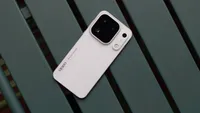
The Vivo X500 Pro Max is a really nice-looking phone, and in terms of build quality, there isn't much I can fault. It feels solid and exceptionally well made, with a premium finish that gives it the sort of feel I would expect from an expensive flagship device.
The overall design is relatively understated, especially in the gray model I have been testing, but that isn't necessarily a bad thing. I rather like the simplicity, although anyone who prefers something a little more adventurous might find it underwhelming.
Vivo offers the X500 Pro Max in Moonlit Black, Sunny White, Starry Gray, and Sunset Orange (depending on the market), with the gray, white, and orange models featuring a subtle two-tone finish. There is also a very slight sparkle in the material that catches the light, giving the phone a bit more visual interest than you might initially expect.
I think Vivo has done a good job balancing a minimalist aesthetic with some small details that make the phone look more premium, but if you're someone who loves the bold Cosmic Orange iPhone, this probably isn't going to be the phone to get you excited about its design.
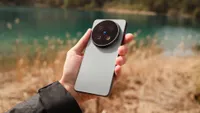
The biggest visual feature is, unsurprisingly, the enormous circular camera bump on the back. Unfortunately, the camera bump is one area where I think the design could be improved. Unlike some phones that taper the edges of their camera modules, Vivo's has a relatively abrupt edge that can catch on things when I slide it into my pocket or take it out.

As it is lower than the cameras on Samsung, Google, or Apple flagships, I frequently found my fingers creeping into the shot or leaving fingerprints on the camera lenses while holding it. It is an unfortunate compromise of squeezing such substantial camera hardware into something that still needs to function as a reasonably slim smartphone.
The phone itself measures 163.32 x 76.82mm and is just over 8mm thick, weighing 229g in the gray, white, and orange finishes. The black version is marginally thinner and lighter, at 7.95mm and 225g.
These are fairly typical dimensions for a large flagship phone, and despite the size of the camera system, the phone is comfortable enough to hold. However, anyone wanting something more compact might be better served by the smaller X500 Pro, which has a 6.36-inch display, although this comes at the expense of the Pro Max's superior telephoto hardware.

Vivo has also equipped the phone with IP68 and IP69 dust and water resistance, providing protection against immersion and high-pressure water jets under specified conditions. The display is protected by Armor Glass, while the camera lenses feature a hard anti-reflective coating intended to reduce reflections and improve durability.
When it comes to physical controls, I am very pleased that Vivo hasn't followed the trend of adding a dedicated camera button. I have never particularly liked these buttons, and on most phones I find myself ignoring them entirely in favor of simply tapping the screen.
I would much rather have a customizable button that can perform several different functions, and thankfully Vivo has included an Action Key. This is something I find genuinely useful, whether it is set to launch a particular feature or quickly access a frequently used tool, and I would love to see more Android phones take this approach.
Display
Vivo has equipped the X500 Pro Max with a completely flat 6.85-inch Zeiss Master Color AMOLED screen, offering a 3168 x 1440 resolution, a variable refresh rate of up to 144Hz, and a claimed peak brightness of 4,400 nits under specific conditions.
In everyday use, it is a lovely display. Everything looks incredibly sharp, colors are vibrant without appearing excessively saturated, and the screen gets bright enough that I haven't had any trouble seeing what I am shooting or reviewing my images outdoors.

For a phone aimed so heavily at photographers and videographers, color accuracy is particularly important, and I have been impressed by how natural photos look on the display. I don't want a screen that makes everything look artificially beautiful only for images to appear completely different when I view them on my computer, and Vivo has struck a good balance here.
There are also several eye-comfort features, including high-frequency dimming and adaptive brightness and color adjustments, which should make the screen more comfortable for longer editing sessions.
Camera Performance
The cameras are obviously the main reason to consider the Vivo X500 Pro Max, and after spending time with the phone, I have been hugely impressed by what Vivo has managed to achieve, even if there are a few areas where I think the company could still improve.
The phone has three rear cameras, covering 15mm, 24mm, and 85mm equivalent focal lengths. These are all supported by Vivo's image processing and Zeiss color science, while the telephoto camera can also be paired with optional optical extenders for substantially longer focal lengths.

Overall, photo quality is excellent. Images are exceptionally sharp, with plenty of detail, and the colors are some of the most natural I have seen from a phone. There is still enough saturation to give images some pop, but Vivo generally avoids the overly vivid rendering that can make certain smartphone photos look unrealistic.
I also found the color and white balance consistency between the main and telephoto cameras particularly impressive. Moving between focal lengths doesn't result in the sort of sudden shifts in color temperature or contrast that I still occasionally see on rival phones, and this makes the whole system feel more cohesive.

However, my biggest complaint from the X300 Ultra remains. Vivo's processing is still just a little too aggressive for my taste, particularly when it comes to sharpening and HDR. Photos often look fantastic at first glance, but look a little closer, and there is sometimes an artificial crispness to fine details, while the HDR processing can lift shadows a bit further than I would like. I personally prefer more natural contrast, with deeper shadows and a slightly less processed appearance.
Low-light photography is similar. The phone captures a considerable amount of detail in darker scenes without constantly resorting to long exposures, although once again, I occasionally found myself wanting to reduce exposure to stop the camera from brightening everything quite so much.

Vivo does offer a Raw Lighting mode that tones down some of this processing, and I think it makes a welcome difference, although I would like it to go further. There is also a Zeiss Natural Color mode, which helps produce a more natural overall image.
Nevertheless, I still think Xiaomi's Leica Authentic profile and Oppo's Hasselblad processing offer slightly more convincing alternatives for photographers who want images that look a little closer to those taken with a conventional camera.
I also experienced occasional autofocus issues when switching between lenses, where the camera would briefly become completely defocused for several seconds before recovering. This wasn't something I encountered to the same degree on previous Vivo phones, so I suspect it could be improved through a future software update. It is a relatively minor annoyance in an otherwise excellent camera system.
Main Camera
The main camera is a 50MP Sony LYTIA L910 with a 1/1.28-inch sensor, f/1.57 aperture, and 24mm equivalent focal length. It also features Vivo's impressive 3-degree gimbal-grade optical image stabilization.
The move back to 24mm is a change from the X300 Ultra, which used a 35mm main lens with a 200MP sensor. I actually enjoyed shooting with the longer focal length on the Ultra, as it offered a slightly more natural perspective, but the 24mm lens is unquestionably more versatile as an everyday camera. I find it particularly useful when shooting indoors, photographing architecture, or simply trying to fit more into the frame without switching to the ultrawide.


Image quality is excellent, with very good sharpness, attractive colors, and a generally well-balanced exposure. However, when compared with the X300 Ultra's 200MP main camera, the lower resolution does become apparent when looking closely at very fine details.
Complex textures such as leaves, tree branches, and certain surfaces don't always retain quite as much detail, particularly when cropping heavily into an image. It is not something that will make much difference to many photographers, but the extra resolution of a 200MP camera can be useful.


The headline feature of the new sensor is its LOFIC technology. LOFIC (Lateral Overflow Integration Capacitor) acts like a tiny overflow bucket for each camera pixel, catching excess light so bright spots, like streetlights or sunny skies, don't wash out into solid white. Vivo claims it offers up to 17 stops of dynamic range.
In ordinary photography, though, I don't think the improvements are particularly dramatic. The X500 Pro Max does an excellent job of capturing high-contrast scenes, retaining plenty of information in highlights and shadows, but I wasn't convinced that it was substantially better than the X300 Ultra.

Blown out skies are a little too common still even with the LOFIC sensor
Image credit: Gareth Bevan / Digital Camera World

Sometimes it makes the sky take on a weird cyan hue
Image credit: Gareth Bevan / Digital Camera World
LOFIC tech has impressed me before, and I think the Xiaomi 17 Ultra's one-inch LOFIC sensor alongside its Leica processing does a better job of preserving highlights with rich shadows. I also think Oppo's DeepPix technology produces convincing results in some particularly challenging scenes, retaining more natural contrast while protecting details in bright areas.
The X500 Pro Max is really good at HDR photography, but I don't think the new sensor has quite delivered the enormous leap in natural HDR quality that I expected.
Telephoto Camera
The telephoto camera is arguably the star of the show. Vivo uses the same 200MP HP0 sensor with a 1/1.4-inch format and an 85mm equivalent lens, supported by optical stabilization from the X300 Ultra which I was so impressed with.


Images are packed with detail, sharpness is outstanding, and the 85mm focal length is wonderfully versatile for portraits, details, and photographing subjects at a distance. The 200MP resolution also allows the phone to crop into the sensor for longer equivalent focal lengths without immediately sacrificing too much quality.
However, there are limits. Up until around 10x zoom, quality is really good, with forgivable levels of artificial sharpening, but go further, and the phone starts relying heavily on computational zoom and AI enhancement; fine textures can begin to look unnaturally sharpened or smoothed. This is particularly noticeable with foliage, hair, and other complex details.

Image credit: Gareth Bevan / Digital Camera World

Image credit: Gareth Bevan / Digital Camera World

Image credit: Gareth Bevan / Digital Camera World
Ultra Wide and Macro
The 50MP ultrawide camera also produces very good results, with sharp images, good color consistency, and a useful 15mm equivalent field of view.
I used to absolutely hate ultrawide cameras on phones, as they often felt like an afterthought, with noticeably worse sensors and image quality compared with the main camera. However, the technology has improved dramatically in recent years, and the X500 Pro Max is a good example of how far these cameras have come.
That said, the ultrawide is one area where the X300 Ultra has a clear advantage on paper, with its much larger 1/1.28-inch sensor compared with the 1/2.75-inch sensor used here, but for everyday wide-angle photography, it still produces very pleasing results.

Where the Vivo really excels is macro photography. The telephoto camera can capture incredibly tiny details, producing some genuinely outstanding close-up images that are among the best I have taken with a phone.
I love the longer working distance of a telephoto macro camera compared with ultrawide macro systems, as it makes it much easier to photograph subjects without getting ridiculously close or casting a shadow over them.
My only frustration is that I would like a little more control over the depth of field. Vivo offers computational effects that can simulate different looks, but I would love more focus stacking options for precise control over exactly how much of the subject is in focus, particularly when shooting very small objects.

Telephoto accessories
Vivo continues to offer some of the most interesting accessories available for smartphone photography, particularly its Zeiss telephoto extenders.
The X500 Pro Max is compatible with both the 200mm equivalent telephoto extender and the larger 400mm equivalent extender, allowing the phone to achieve focal lengths that would be difficult to match with built-in smartphone cameras alone.
Optical quality is outstanding, with excellent detail and impressive stabilization, even at substantial focal lengths. They make the phone feel much closer to a modular camera system than a conventional smartphone, and for anyone interested in wildlife, concerts, or photographing distant subjects, they open up some genuinely useful possibilities.
Beyond the optical range, the phone still applies considerable processing to its digital zoom, so I wouldn't expect miraculous results at every magnification, but the actual optics are excellent.
One of the biggest positives is how well integrated the telephoto extenders are into the camera experience. Vivo supports them across a wide range of camera modes, including professional shooting options, whereas some rival systems are frustratingly restrictive about when their add-on lenses can be used.
Sample Images


Video Performance
Video is where the Vivo X500 Pro Max really comes into its own, and having been such a big fan of the X300 Ultra's video capabilities, I had high expectations for this phone.
Thankfully, Vivo has delivered. The video quality is excellent, with beautifully sharp footage, natural-looking colors, and superb stabilization. I would comfortably put it alongside the iPhone 18 Pro Max when it comes to overall video quality, although the two phones take slightly different approaches to how footage looks.
I find the Vivo's rendering a little more natural than Apple's default video output, with less aggressive HDR and slightly more restrained color. The iPhone's footage arguably has more immediate visual impact, but I often prefer the more realistic look of the Vivo. Of course, that comes down to personal preference, and both phones are capable of producing fantastic results.
The headline feature is 4K video recording at up to 240fps, which is a pretty outrageous specification for a smartphone. What is more impressive, though, is that it is actually usable. I expected the footage to look heavily compromised compared with standard 4K 30p or 60p video, but while there is some additional sharpening, the quality holds up remarkably well.
There are limitations, as the mode needs plenty of light to achieve the best results. In darker conditions, fine details start to disappear, and contrast deteriorates noticeably, so this isn't something I would use for every situation. However, for shooting action, movement, or anything that benefits from dramatic slow motion, having 4K 240p in your pocket is a fantastic creative tool.
Stabilization is equally impressive. Standard video stabilization is excellent, producing wonderfully smooth handheld footage, while the enhanced stabilization mode takes things even further. I have been genuinely impressed by how steady the footage looks when moving around, although the enhanced mode is unfortunately limited to 2.7K resolution, which is a compromise if you want to maintain a full 4K workflow.

Vivo's Pro Video mode is another strong point, offering extensive manual controls and Log recording for anyone who wants more control over their footage in post-production. The new Log profile is designed to take advantage of the main sensor's claimed 17-stop dynamic range, and this gives videographers more flexibility when working with challenging lighting conditions.
However, I am less convinced by Vivo's included LUTs. The standard SDR LUT looks washed out, with a lack of contrast, while the HDR LUT is desaturated, introduces some unusual color shifts, and has a noticeable green tint. Neither is particularly attractive straight out of the box, and I would much rather grade the Log footage myself.
Thankfully, Vivo allows custom LUTs to be imported, so there is plenty of scope to get the look you want, although I think the default options should be better on a phone that puts so much emphasis on professional video.
Phone Performance
The Vivo X500 Pro Max is powered by MediaTek's Dimensity 9600 Pro processor, replacing the Qualcomm Snapdragon chip used in the X300 Ultra.
This is MediaTek's most powerful smartphone processor, built on a 2nm manufacturing process, and it is designed to compete directly with Qualcomm's latest Snapdragon chips and Apple's high-end A-series processors.
In everyday use, the X500 Pro Max feels incredibly fast. Apps open almost instantly, animations are smooth, and multitasking is effortless, even when jumping between demanding photography and video applications. It has more than enough processing power to handle high-resolution images, extensive computational photography, and demanding video recording without feeling sluggish.
I didn't notice any meaningful performance problems during normal use, and while the Dimensity 9600 Pro is undoubtedly a very capable chip, I think we are now at the point where differences between flagship processors are becoming increasingly difficult to notice outside benchmarks and particularly demanding workloads.
Software
Vivo's OriginOS 7 is a decent Android interface. It looks good, feels exceptionally smooth, and is generally very easy to navigate, with plenty of customization options. The interface feels modern and polished, and I like that Vivo has retained its own visual identity rather than simply trying to copy either Google or Apple.
However, there are still several small annoyances that prevent it from feeling quite as refined as I would like. For example, there are plenty of customization options, but you still can't install your own system fonts, and Vivo's theme store displays prices in Chinese renminbi rather than my local currency.

There is also some unwanted bloatware. Although the situation is hardly unique to Vivo, I still find it frustrating that an expensive flagship phone comes with apps and services I don't particularly want. Vivo's V-Store and proprietary browser are among the apps that I couldn't fully remove, and while this isn't going to ruin anyone's experience, I think it makes the software feel a little less premium.
AI editing
The Vivo X500 Pro Max includes an extensive collection of AI photo editing features, ranging from the usual object removal and reflection removal tools to detail enhancement and generative image expansion.
For relatively simple edits, these tools can be very useful. Removing a distracting person from the background of a photograph or cleaning up an unwanted reflection can be done quickly, often with convincing results.
However, I think Vivo's AI features work best when you ask them to make relatively small changes to an existing image. Larger edits, particularly substantial image expansions or the removal of large objects, are much less consistent. The phone often generates new textures that don't quite match the detail in the surrounding photograph, and occasionally introduces objects or details that simply weren't there.

I find this particularly noticeable because the actual cameras are so good. When a photo contains beautifully rendered fine detail, the softer, less convincing textures generated by AI become quite obvious.
For quick edits destined for social media, many people probably won't notice or care, but I wouldn't rely on these tools for anything where maintaining photographic accuracy is important.
I also think there is a wider question about how much generative editing we really want in photography, but at least Vivo gives users the option to use these tools rather than forcing them into the normal camera experience.


Battery life
The Vivo X500 Pro Max has a large BlueVolt battery, rated at 7,800mAh in Asia, although European units come with a smaller 6,750mAh capacity.
In my testing, battery life was excellent. With moderate everyday use, I could comfortably get between one and two days out of the phone before needing to recharge. When using the phone more heavily for photography and video, I still managed a full day without needing to reach for a charger, which is particularly impressive considering how demanding some of its camera features can be.
Of course, recording extended periods of 4K 240p video or spending hours editing high-resolution files will drain the battery more quickly, but for most photographers, there is plenty of power here for a full day out shooting.
The X500 Pro Max also supports 90W wired charging and 40W wireless charging, allowing it to be topped up quickly with compatible charging equipment.
Final Verdict
The Vivo X500 Pro Max is another excellent camera phone from Vivo. I am particularly impressed by the telephoto camera, which produces detailed images and some of the best macro photography I have seen on a smartphone. The main and ultrawide cameras are also excellent, with attractive, natural colors and generally consistent results across the different focal lengths.
However, I do think Vivo's image processing still needs a little refining. Photos can look a little too processed, and despite the new LOFIC sensor, I am not convinced it made a substantial difference to the natural dynamic range of photos.
Video is where the X500 Pro Max really makes its strongest case. The ability to shoot genuinely useful 4K 240p footage is incredible, while stabilization, manual controls, and Log recording make this one of the most versatile video phones available. I do wish Vivo would improve its supplied LUTs, which right now are pretty dreadful, but for anyone willing to spend time grading footage, there is an enormous amount of creative potential here.
Ultimately, the X500 Pro Max is a fantastic camera phone that I would happily recommend, especially to anyone who prioritizes video, zoom photography, or macro. It doesn't necessarily surpass the X300 Ultra in every area, especially when it comes to main and ultrawide camera hardware, but it offers a slightly different approach that makes it an equally compelling choice for serious smartphone photographers.
Design ★★★★½ |
Lovely display and premium finish, although the large, untapered camera bump can be frustrating in everyday use. |
Camera Performance ★★★★½ |
Outstanding telephoto and macro photography, 4K 240p video, and superb stabilization, although Vivo's photo processing and included LUTs need refining. |
Phone Performance ★★★★½ |
Exceptionally fast and smooth, with excellent battery life and useful editing tools, although OriginOS still has some unnecessary bloatware. |
Value ★★★½☆ |
Amazing camera system with serious creative capabilities, although its premium positioning and additional accessory costs make it a significant investment. |
Overall |
★★★★½ |
Alternatives