Digital Camera World Verdict
The Oppo Find X10 Pro Max continues the company's run of producing some of my favorite camera phones, and its extraordinary triple-200MP camera system delivers consistently excellent photographs, with beautifully balanced colors, exceptional detail, and some of the most natural image processing you'll find on a smartphone. Hasselblad Master Mode remains my favorite way to shoot with a phone, although I'm frustrated that Oppo has brought back its irritating teleconverter mounting system without addressing the biggest complaints from last year. But the updated design, excellent display, seriously impressive battery life, and slick software make this a fantastic flagship beyond photography. However, the price is substantially higher than previous Oppo phones; the hardware is there, but when going up against the big three, can Oppo command these prices?
Reasons to buy
- +
Outstanding quality triple 200MP cameras
- +
Hasselblad Master Mode takes some of the best "camera-like" images on a phone
- +
Two-day battery endurance
Reasons to avoid
- -
Skittish video autofocus
- -
Teleconverter mounting system is frustrating
- -
No built-in Qi2 magnetic charging
- -
Limited teleconverter shooting modes
Why you can trust Digital Camera World Our expert reviewers spend hours testing and comparing products and services so you can choose the best for you. Find out how we test.
Oppo has become my favorite smartphone manufacturer over the past few years when it comes to photography. While Apple, Samsung, and Google continue to dominate the conversation around the best camera phones, Oppo has quietly been producing some of the most capable camera hardware on the market, backed up by a partnership with Hasselblad.
The Oppo Find X9 Pro and Find X9 Ultra were two of my favorite photography phones of the past 12 months, so I have been keenly awaiting the Find X10 Pro Max. Though, I do wish Oppo could have found a slightly more original name than Pro Max, which has become the default designation for seemingly every phone manufacturer this year.
The X10 Pro Max's headline this year is an industry-first triple-200MP camera system, with a new Samsung sensor for the main camera and a massive resolution increase for the ultrawide. Oppo has also introduced a new image processing engine designed to produce more natural-looking photos, alongside an updated Hasselblad teleconverter accessory.
With the iPhone 18 Pro Max continuing to set the standard for smartphone video, and incredible photography-focused phones coming out of China from the likes of Vivo and Xiaomi, the Find X10 Pro Max is entering an incredibly competitive market. So, can Oppo continue to distinguish itself from the competition, or have we reached a point where the differences between generations are becoming increasingly difficult to spot?
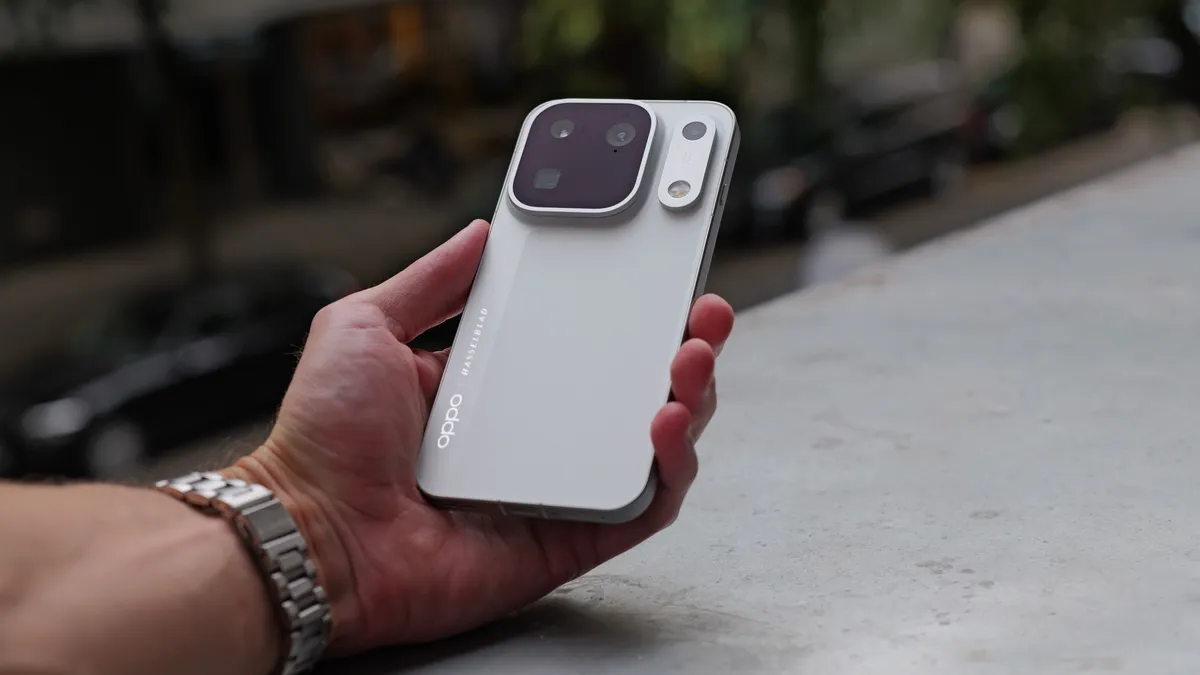
Specifications
Processor |
MediaTek Dimensity 9600 Pro, 2nm |
RAM / Storage |
12GB / 512GB (EU); 12GB or 16GB / 512GB (other markets) |
Display |
6.78-inch LTPO AMOLED, 2772 x 1272, 450ppi, 1–120Hz adaptive, up to 144Hz in supported apps |
Main camera |
200MP Samsung ISOCELL HPC, 24mm equivalent, 1/1.3-inch sensor, f/1.5, OIS |
Telephoto camera |
200MP Samsung ISOCELL HP5, 70mm equivalent (3x), 1/1.56-inch sensor, f/2.1, OIS |
Ultrawide camera |
200MP Samsung ISOCELL HP5, 13mm equivalent, 1/1.56-inch sensor, f/2.2, autofocus |
Front camera |
50MP Samsung ISOCELL JN5, 18mm equivalent, 1/2.75-inch sensor, f/2.0, autofocus |
Video |
Up to 8K 30fps or 4K 120fps across all three rear cameras |
Battery |
8,000mAh (global); 7,150mAh (EU) |
Charging |
80W wired, 50W wireless, reverse wireless charging |
Operating system |
ColorOS 17 based on Android 17 |
Dimensions |
161.32 x 76.57 x 8.40mm (6.35 x 3.01 x 0.33 inches) |
Weight |
EU: 226g white / 228g gray; other markets: 233g white / 235g gray |
Price & Availability
With no deals, the Oppo Find X10 Pro 12GB+512GB costs £1,499 / €1,799. Which is considerably more expensive than the previous generation. There have been price rises across the board this generation as the ongoing memory crisis hits everyone, and unsurprisingly Oppo isn't excluded, but this is quite a substantial leap for the benefit of those three 200MP sensors.
Although, this is no more than the iPhone 18 Pro Max when configured with 512GB of storage, and is slightly more than a 512GB Samsung Galaxy S26+. But I think the biggest challenge facing Oppo isn't necessarily convincing people that its cameras are good enough, but convincing them to move away from brands and ecosystems they already know, which is a mountain to climb without undercutting rivals on cost.
However, buying directly from Oppo might mean you don't pay that headline amount. Trade-ins can reduce the price significantly, and for Oppo upgraders, Oppo is offering a £250 trade-in bonus for Oppo and OnePlus devices (plus an additional £100 before Oct 28). At the current advertised trade-in price for an Oppo X9 Pro (up to £390), plus the £350 bonus, it can actually reduce the price of the X10 Pro Max to around £759, which is more reasonable.
Oppo is also giving away a free gift at launch. You can choose from either the Hasselblad telephoto adapter, Oppo X3 watch, or Oppo Pad 5, any of which sweetens the deal, even if it doesn't reduce the initial outlay.
Design
After a pretty major revamp last year, Oppo has further built upon the design introduced with the Find X9 Pro, its a good looking phone, but mostly I am just glad it hasn't become another Apple clone.
Last year's move away from the large central camera circle to a smaller square camera island in the top corner made the phone look considerably tidier, while also keeping the lenses away from where my fingers naturally rest when holding the device. The X10 Pro Max camera housing now adds an additional smaller island alongside it, accommodating the flash and Oppo's dedicated True Color Camera. The result is effectively a double camera bump.
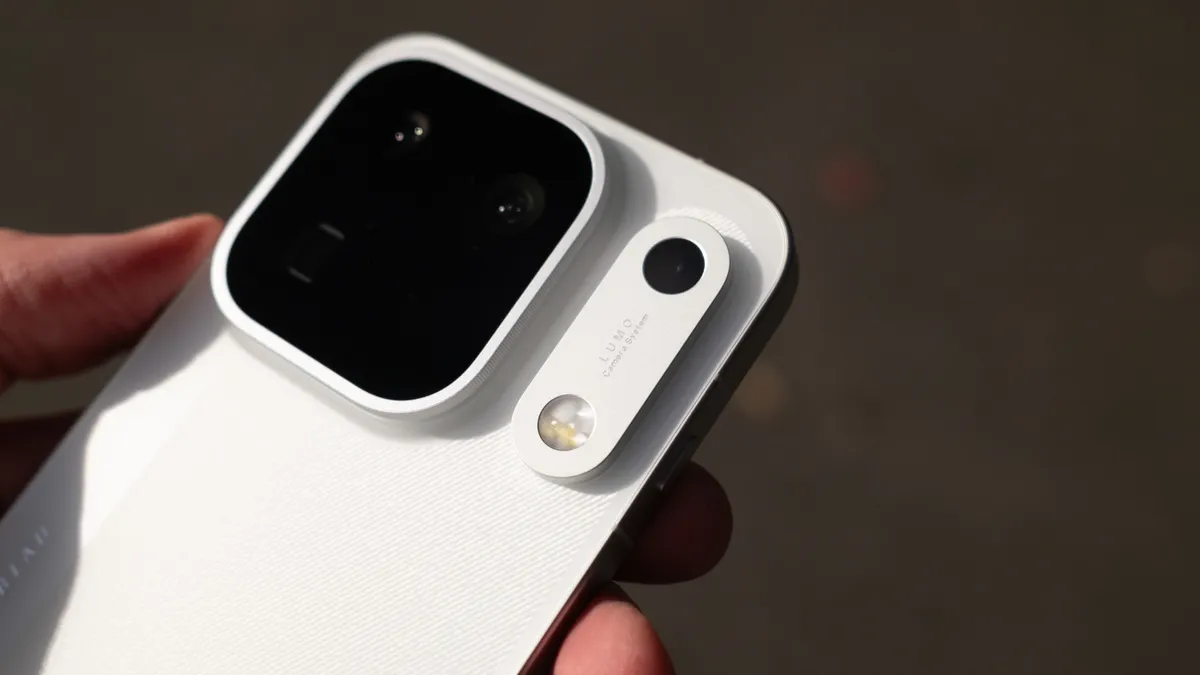
The camera islands might not be to everyone's taste, and they might make finding a protective case a little trickier. Some of Oppo's official cases don't bother to go between the islands, but the included silicone case and the telephoto adapter case both do a good job of following the contours of both camera bumps.
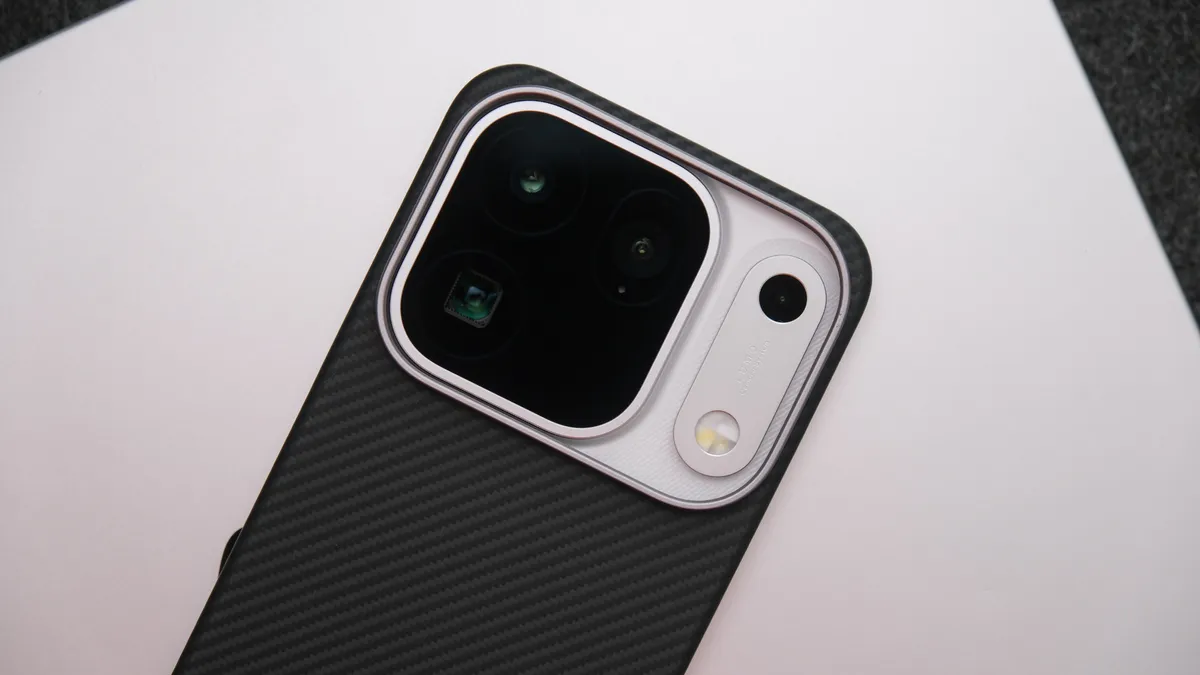
I have been testing the Luna White version, which is my favorite of the two available finishes (the other being Titanium Grey). The attention to detail is excellent, from the small engraving on the secondary island to the silver knurled metallic camera bump with a subtle orange accent. The back combines different visual textures for a camera-inspired look, although I wish the textures were tactile as well.
The construction feels good; there is a matte aluminum frame and textured glass back that feel reassuringly premium in the hand, and the phone has IP66, IP68, and IP69 ratings for dust and water resistance, while Oppo also claims improved drop durability thanks to Crystal Guard Glass on the front and back.
Despite the camera hardware and substantial battery, the Find X10 Pro Max has not become dramatically heavier than its predecessor. The international Luna White model weighs 233g, around 9g more than the Find X9 Pro, although the European version is lighter at 226g due to a smaller battery. At 8.4mm thick, it is a substantial device, but not unusually so compared with other flagship phones, and I have found it perfectly comfortable to carry and use.

Oppo has also finally removed the dedicated camera control button found on the previous generation, which I am personally pleased about. I have never found these touch-sensitive camera controls especially useful, whether on an Oppo or an iPhone. I certainly won't miss it.
The customizable Snap Key remains on the left-hand side, however, and this is a button I genuinely like. I have mine configured to quickly turn on Do Not Disturb mode, but it can also launch the camera, open AI Mind Space, activate the flashlight, or perform various other functions. Being able to choose what the button does makes it considerably more useful.
One feature I am really disappointed to see missing once again is built-in Qi2 magnetic charging. Oppo supports very fast 50W AIRVOOC wireless charging (only with a compatible charger), and magnetic charging is possible using a compatible case, but I have accumulated a selection of Qi2 accessories that I would really like to use directly with the phone. Oppo says integrating magnets would require compromises to the battery capacity, but personally, I would happily trade a little of the ginormous battery capacity for built-in magnetic charging.
Display
The Find X10 Pro Max has a 6.78-inch LTPO AMOLED display with a 2772 x 1272 resolution, which works out to a very sharp 450ppi. It also features impressively slim 1.15mm symmetrical bezels and a completely flat panel. It also supports a wider BT.2020 color gamut, with Oppo claiming 95% coverage, alongside 10-bit color depth and Dolby Vision.
I have very little to complain about here. The screen is bright, beautifully sharp, and extremely colorful, with excellent viewing angles that make it great for reviewing photos and video on the move. Oppo quotes a peak brightness of 3,600 nits, while the adaptive refresh rate runs up to 120Hz in normal use and can reach 144Hz in supported apps and games.

There are plenty of controls for adjusting the display, including softer or more vivid color profiles and manual color temperature adjustments, which I particularly appreciate for being able to tune the screen so photographs look more consistent between my phone and MacBook.
Oppo has also included a fairly comprehensive selection of eye-care features, including 3,840Hz PWM dimming, blue light reduction, and a minimum brightness of just one nit. There is even an AI-powered eye-care system that can suggest viewing distances and remind you to blink, although that might be a little more assistance than I personally need from my phone.
Camera Performance
I've praised Oppo's camera systems a lot over the past few years, and the Find X10 Pro Max gives me plenty more reasons to continue doing so. This is an outstanding photography phone, with three genuinely excellent cameras producing some of the sharpest, most detailed, and most consistent images I have taken on a smartphone.
The headline hardware upgrade is the triple-200MP camera system, with a new 1/1.3-inch Samsung ISOCELL HPC sensor for the 24mm main camera, alongside two 1/1.56-inch ISOCELL HP5 sensors for the 13mm ultrawide and 70mm periscope telephoto. The latter retains the 3x focal length of the previous generation, while the high-resolution sensor can also crop to 6x while retaining 50MP of resolution.
These are impressively substantial sensors, especially for the ultrawide, which has historically been the weak link in many smartphone camera systems. All three cameras are capable of producing excellent results.


In the standard Photo mode, images are sharp and clear, with well-balanced exposure and colors.
Oppo has also made improvements to its LUMO True Image Engine, aided by a dedicated 24-channel True Color Camera that analyzes the colors in a scene to improve white balance and color reproduction.
The sharpening and HDR have been toned down to look more natural. Images aren't quite as "camera-like" as photos shot using Hasselblad Master Mode (which we'll get into in a second), but they have the photos look nowhere near as intensely processed as the previous generation, or indeed other brands, but it really hasn't affected the X10's ability to get a good shot even in challenging situations.
I have been particularly impressed by the consistency between the lenses. Switching from the main camera to the ultrawide or telephoto barely changes the overall appearance of the scene, which is something even the best smartphones still can struggle with.
Hasselblad Master Mode
I really cannot overstate how much I like Oppo's Hasselblad Master Mode, and it remains the main reason I now regularly choose an Oppo phone as my personal device. The results are some of the most "camera-like" photographs you can capture on a smartphone.
While the standard camera mode is really toned down this year, occasionally it still produces images that are a little too sharp or HDR for my tastes, but Master Mode takes an even more restrained approach to processing. Contrast looks more natural, colors are true-to-life, and fine details keep their texture without the artificial sharpening applied.
I think only the Xiaomi-Leica partnership comes close to producing this kind of authentic, less-processed look straight out of a phone.


Master Mode is also the place to go for manual shooting controls, and it supports high-resolution JPEG and RAW capture. Frustratingly, though, you still can't save a JPEG and RAW file simultaneously, which would be a hugely useful addition for photographers who want an immediately shareable image alongside a file for more extensive editing later – and it's something most other phones and cameras can do.
Looks, macro, and camera assistant
Oppo has expanded its collection of photographic presets, with 18 looks available through its LUMO Color Palette. There are some genuinely good options here, and I especially like Bold B&W, inspired by Kodak TX400, and Primrose, which has something of a Kodak Portra-inspired appearance.
The presets can also be customized, making them much more useful and personalizable. Although the customization is moderate, it would be great to be able to tweak the S-curve or individual colors.
Also, almost criminally, there is still no way to add film grain. Having several filters designed to recreate film without the ability to add grain feels like a glaring omission.
There is also no option to rearrange the filters or hide them, which means I have to swipe through a ridiculous number (seriously, 11 swipes) every time I want to use the Bold B&W look, which is often frustrating enough to just not use them. Luckily, you can just shoot in standard mode and apply these filters in the gallery app, but it's not the same as shooting for the strengths of a particular filter in the moment.

Image credit: Gareth Bevan / Digital Camera World

Image credit: Gareth Bevan / Digital Camera World

Image credit: Gareth Bevan / Digital Camera World

Image credit: Gareth Bevan / Digital Camera World

Image credit: Gareth Bevan / Digital Camera World

Image credit: Gareth Bevan / Digital Camera World
Macro photography is outstanding, with really nice natural-looking depth of field and a surprising amount of fine detail.
The ultrawide lens can focus as close as 4cm, but I much prefer using the telephoto camera, which offers telemacro and a much more flattering perspective. It also allows me to keep a little distance from the subject so as to not cast a shadow or block out light, which is very beneficial for sensors this size.
You can even shoot macro images at 6x thanks to the in-sensor crop from the 200MP resolution still producing a huge amount of detail.


There is also a kind of automated focus-stacking option for macro photography, which can extend the depth of field beyond what would normally be possible. It works reasonably well, although I did notice occasional faint lines of blur across the frame where the software hadn't managed to combine the images perfectly.

You can see some banding on the full size image
Image credit: Gareth Bevan / Digital Camera World

But it is more obvious when zooming in
Image credit: Gareth Bevan / Digital Camera World
Oppo also has an AI-powered composition guide called LUMO Framing, which analyzes the scene and suggests ways to improve your framing. It actually works reasonably well, and I found myself not necessarily disagreeing with its suggestions, although I do think it takes some of the originality and enjoyment out of photography when the phone starts telling you exactly how to compose every photograph.
Hasselblad teleconverter
Oppo has once again released a Hasselblad teleconverter accessory for the X10 Pro Max, which extends the built-in 3x telephoto camera to approximately 10x optical magnification or 20x with in-sensor cropping.
The new version is essentially the same concept as the teleconverter available for the Find X9 Pro, although Oppo has updated the exterior to better complement the silver/white finish of the X10 Pro Max. It now has a silver metal body with orange accents, accompanied by a matching silver tripod foot.
The build quality is excellent, with solid metal construction that feels substantial without being excessively heavy. However, the silver finish also seems rather susceptible to scuffs, and I managed to mark mine quite a lot during just a few weeks of testing.

Unfortunately, Oppo appears to have ignored almost all the criticism of its mounting system from last year, which is disappointing.
The teleconverter attaches to a special mount built into a case, which has a small sliding cover that moves over the camera array. This cover allows the external lens to be attached, but it also obstructs the other cameras, meaning you must constantly remove or replace it whenever you want to switch back to normal shooting.
It is an awkward solution, made worse by the fact that the little cover can be potentially lost quite easily, rendering the already expensive teleconverter accessory useless until you buy a replacement.
Vivo, Honor, and even Oppo itself with the Find X9 Ultra have already demonstrated teleconverter mounting systems with cutouts that leave the other cameras accessible, so I really don't understand why Oppo hasn't adopted the same approach here.

There are other restrictions too. The teleconverter can only be used in its dedicated camera mode, meaning it isn't compatible with Hasselblad Master Mode, Night mode, long exposures, slow motion, or Pro Video mode. Not being able to use my preferred shooting mode is a particularly frustrating limitation, especially if I want to mix video shot in Pro mode and with footage from the teleconverter, which have noticeably different looks. Other rival phone brands do let you use their teleconverters in nearly any camera mode, so Oppo is behind the curve here.
The X10 tele is also incompatible with the teleconverter developed for the Find X9 Ultra – if you were thinking of picking one up for its superior focal length. Both phones have different sensor sizes and flange distance, although given that interchangeable-lens camera manufacturers have been accommodating different sensor sizes with shared lens mounts for decades, I don't believe this is an insurmountable engineering problem.
All this said, the actual optics are outstanding. Considering underneath its still a phone with a phone-sized sensor, image quality is incredible and there is a suprising amount of really nice depth of field. At 10x and 20x sharpness is very good, Oppo's new LUMO engine applies a little artificial sharpening, but not so much that it looks over-processed (although again, I would love to use this lens in Master Mode). At 40x AI has kicked in and you can see a bit more of that processing in play as its sharpend up and texture is smoothened out a little.


Video performance
Overall, Oppo's video capabilities are very technically impressive. All three rear cameras can now record 8K at 30fps or 4K at 120fps, while the new Pro Video mode includes O-Log2 recording, support for custom LUTs, and professional manual controls. Oppo has also introduced Open Gate recording across all three rear cameras, allowing the sensor area and reframe footage into different aspect ratios during editing.
Open Gate is a particularly welcome addition, although it is only accessible through Pro Video mode, which means you have to work within that mode's image profiles. It would have been great to see this in the regular video mode as well, as I frequently just want to shoot clean, simple video without worrying about settings.
Electronic enhanced stabilization is also unavailable when shooting Open Gate, leaving only the optical stabilization. Lots of brands don't support this, so it's not unexpected, but Panasonic has managed to provide both EIS and Open Gate in its cameras, so I am holding out hope this could be possible on Oppo phones in the future.
Oppo has also partnered with Blackmagic to optimize the Blackmagic Camera app for the Find X10 series, including support for professional controls, O-Log2, and Open Gate. Although this isn't available at launch, it is currently scheduled for November.
In the regular video mode, footage from the X10 Pro Max is really nice. I mostly shot at 4K30, and it is incredibly sharp at the optical focal lengths of all three cameras; colors are punchy but not oversaturated, and there is a good HDR balance, keeping details in both the highlights and shadows without the highs being searingly bright.
I would prefer my video to be more contrasty; the default video processing raises shadows more than I would like. You can't manually tweak colors and contrast in normal mode; you can apply Oppo's presets, but this limits video to 1080p.
However, there is also Pro Mode, which by default gives footage a much more, well, pro look to it. In both the standard SDR and HDR settings, I found colors are more true-to-life, although much more muted than in normal video (but this can easily be changed in post). Contrast is also much better; it allows shadows to be dark, and there is just more richness in the footage.
You also get full manual control if you want to attach an ND filter to get a 180º shutter angle. I think Oppo is also missing a trick in not making ND filters that slide onto its Hasselblad camera case. It would be a much more elegant solution than clipping a 67mm circular filter over the phone.
There is also O-Log2, and should you wish to import your own LUTs, you can, or there are SDR and HDR pre-loaded, which give really nice results and should take advantage of the full dynamic range of the sensor, although I do struggle to see any significant differences between the HDR setting and O-Log with the HLG LUT.
One area I did find the X10 struggled with a little was skin tones. In different modes, my skin tone would shift a bit. In normal video, I was always a little red, while Pro SDR mode was more accurate, but HDR washed me out. With the true-color camera, I hoped this would be a little more consistent.

In normal video mode, it makes my skin redder than in reality
Image credit: Gareth Bevan / Digital Camera World

In pro mode, my hand is a more accurate color
Image credit: Gareth Bevan / Digital Camera World
Autofocus is good; it's incredibly quick, and it can lock onto people. However, it can be quite skittish. It's really not confident about holding focus, often twitching at the slightest movement. I could manually lock focus, but that only really works when the subject (or me) isn't moving. I really wish there was an Oppo version of deep tracking as you find on a DJI Osmo Pocket, or I could set a specific focus area like with a digital camera.
Optical image stabilization is generally good for holding a static shot, although I found it a bit stiff and jerky when trying to pan smoothly, and it can't keep up with heavy movement. But there is also enhanced stabilization, which comes at a slight crop, but produces very smooth footage and it predicts movement well.
I did notice some jello-like distortion when trying to shoot at longer focal lengths handheld with the stabilization. This is particularly obvious with the teleconverter lens attached, which I would probably try to avoid if possible when shooting serious footage, but for more casual shots the telephoto adapter stabilization is incredibly impressive.
Phone Performance
The Find X10 Pro Max is powered by MediaTek's flagship Dimensity 9600 Pro processor, built on TSMC's new 2nm process, and it is an absolute powerhouse in everyday use. Moving between demanding apps, processing high-resolution photographs, editing video, and working through the usual day-to-day tasks has been completely effortless.
Oppo doesn't make full use of every headline capability of the Dimensity 9600 Pro, as the phone lacks the chipset's 4K 240fps video recording ability, but this is hardly a dealbreaker, as I am sure it would have caused compromises with the phones 200MP sensor – which I'd rather have.
Battery life and charging
Like its predecessor, battery life is one of the Find X10 Pro Max's biggest strengths, and I continue to be impressed by how much endurance Oppo manages to squeeze into its designs.
Battery capacity does vary depending on the market, with the international model receiving an enormous 8,000mAh silicon-carbon battery, while European models are limited to 7,150mAh. The latter is actually smaller than the 7,500mAh battery found in last year's Find X9 Pro.
In my own testing (I have the 8,000mAh version), with normal usage, I can get two days between charges, while even on days spent heavily photographing and filming, I am easily getting a full day, which just gives the freedom from constantly worrying about finding somewhere to charge my phone.

Charging is fast, with support for 80W SUPERVOOC wired charging and 50W AIRVOOC wireless charging, with the right SUPERVOOC chargers. Oppo also supports up to 55W USB Power Delivery with compatible third-party chargers.
Software and editing
Oppo's ColorOS 17, built on Android 17, has had a bit of a glow-up, quite literally. There are some new glowing and translucent interface elements that clearly take inspiration from Apple's Liquid Glass design. Oppo does give you some control over these appearances, including the ability to reduce transparency and tone down or turn off some of the visual effects.
I really like how ColorOS looks; it also manages to strike a good balance between offering some customization and remaining simple to navigate. One small change I particularly appreciate is that the Google Search bar has moved to the bottom of the home screen, removing some of the awkward wasted space that previously surrounded the page indicators.
Oppo's built-in photos app is also excellent, with comprehensive adjustments for color, exposure, and lighting, alongside an increasingly extensive range of AI-powered tools.
There are familiar options such as AI Eraser, generative expansion, AI Unblur, and reflection removal. Some are more effective than others. The reflection removal tool is probably my most used, it manages to just tone down unwanted reflections from windows and other reflective surfaces convincingly without using a lot of gen-AI to invent detail that wasn't there.


Before
Image credit: Gareth Bevan / Digital Camera World

After
Image credit: Gareth Bevan / Digital Camera World
The generative AI tools remain a little more hit-and-miss. They can produce perfectly passable results when used sparingly. Below then asked to just remove a couple of smalll people from a shot, I don't think you could tell any AI has been used.

Image credit: Gareth Bevan / Digital Camera World

Image credit: Gareth Bevan / Digital Camera World
However, it has its limits if you ask it to erase larger areas. Looking closely often reveals repeating textures, unnatural patterns, and details that don't match the original photograph. Generative expansion is especially vulnerable to these issues.

Image credit: Gareth Bevan / Digital Camera World

Image credit: Gareth Bevan / Digital Camera World

Image credit: Gareth Bevan / Digital Camera World
Final Verdict
The Oppo Find X10 Pro Max continues Oppo's run of producing some of the best camera phones on the market, and when it comes to still photography, there are very few smartphones I would rather have in my pocket.
The new triple-200MP camera system is outstanding, but the resolutions aren't necessarily what makes it great. What I appreciate most is the way Oppo processes images, especially using Hasselblad Master Mode, which strips away so much of the artificial processing that continues to make smartphone photographs look like smartphone photographs. Although I have a love/hate relationship with the Hasselblad teleconverter, which optically is a fantastic accessory undermined by an unnecessarily awkward mounting system and too many software limitations.
The biggest issue is the price. The X10 Pro Max is an expensive phone. It is not more expensive than Apple's or Samsung's similarly specced phones, and it's camera hardware supasses both, but
Design ★★★★½ |
A great looking flagship an excellent display, and superb build quality, although the lack of native Qi2 charging disappoints, as does the telephoto mounting system. |
Camera Performance ★★★★½ |
Outstanding still photographs across three excellent cameras, with gorgeous natural processing, although video isn't quite at that same level of perfection. |
Phone Performance ★★★★★ |
Fast everyday performance, polished software, excellent photo editing tools, and some of the best battery endurance I've experienced. |
Value ★★★★☆ |
A very expensive phone, but justified by the hardware on offer. However it's a big amount to drop on a challenger brand – but deals at launch make it easier to swallow. |
Overall |
★★★★½ |
Alternatives