Digital Camera World Verdict
The Xiaomi 18 Pro Max is one of my favorite camera phones of the year, with excellent image quality, some gorgeous Leica color profiles, and incredible macro photography. However, its biggest selling point is undoubtedly the rear screen, which makes taking selfies and recording vlogs using the far superior rear cameras remarkably easy. I genuinely think this is one of the best phones available for anyone who regularly photographs or films themselves. There are a few compromises, though. The ultrawide camera is noticeably weaker than the other two, video isn't quite as sophisticated as some rivals, and Xiaomi's HyperOS still has work to do against the competition. But despite these frustrations, there is a lot to like here if photography is your priority.
Reasons to buy
- +
Beautiful Leica camera profiles
- +
Excellent main and telephoto cameras
- +
Rear screen transforms selfies and vlogging
- +
Outstanding macro photography
Reasons to avoid
- -
HyperOS remains frustrating
- -
Ultrawide camera is the weakest link
- -
Rear screen currently has limited everyday functionality
Why you can trust Digital Camera World Our expert reviewers spend hours testing and comparing products and services so you can choose the best for you. Find out how we test.
Xiaomi has been making some of my favorite camera phones for the past few years, and a big reason for that is its partnership with Leica. While most smartphone manufacturers continue to prioritize increasingly bright, sharp, and heavily processed photographs, Xiaomi has been pushing a more traditional photographic aesthetic, with results that can look remarkably close to those from a dedicated camera.
For the Xiaomi 18 Pro and 18 Pro Max, the company is combining its latest Leica camera technology with one of the more unusual smartphone design trends: a screen on the back of the phone.
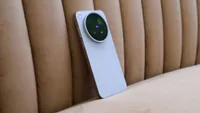
Both phones feature an AMOLED display integrated into the rear camera island, allowing you to check notifications, control music, and, more interestingly for photographers, use the main cameras to take selfies or record vlogs while previewing yourself.

The two models share almost identical camera systems, including a 200MP main camera, a 200MP periscope telephoto, and a 50MP ultrawide. The main difference is that the larger Pro Max gets a more advanced main sensor with LOFIC HDR technology, alongside a larger battery and a faster processor.
I have been testing the Xiaomi 18 Pro Max, so my impressions of camera quality, handling, and battery life are based on the larger model. The smaller Pro offers much of the same hardware in a more compact body.
With phones like the Oppo Find X10 Pro Max and Vivo X500 Pro Max setting an incredibly high standard for smartphone photography, Xiaomi has some serious competition. But could that unusual second screen be enough to set it apart?
Specifications
Specification |
Xiaomi 18 Pro |
Xiaomi 18 Pro Max |
|---|---|---|
Processor |
Snapdragon 8 Elite Gen 6, 2nm |
Snapdragon 8 Elite Extreme Gen 6, 2nm |
RAM / Storage |
12GB / 256GB, 512GB |
12GB / 256GB, 512GB; 16GB / 1TB |
Display |
6.4-inch LTPO AMOLED, 2436 x 1120, ~419ppi, 1–120Hz |
6.9-inch LTPO AMOLED, 2624 x 1208, ~419ppi, 1–120Hz |
Rear display |
2.7-inch AMOLED, 912 x 596, 400ppi, 1–120Hz |
2.9-inch AMOLED, 976 x 596, 400ppi, 1–120Hz |
Main camera |
200MP Light Fusion 960, 23mm equivalent, 1/1.28-inch, f/1.67, OIS |
200MP Light Fusion 960L, 23mm equivalent, 1/1.28-inch, f/1.67, OIS, LOFIC |
Telephoto camera |
200MP Samsung HP5, 75mm equivalent (3.2x), 1/1.56-inch, f/2.4, 2μm binned pixels, OIS |
200MP Samsung HP5, 75mm equivalent (3.2x), 1/1.56-inch, f/2.4, 2μm binned pixels, OIS |
Ultrawide camera |
50MP, 17mm equivalent, f/2.4 |
50MP, 17mm equivalent, f/2.4 |
Front camera |
50MP, 21mm equivalent, f/2.2, autofocus |
50MP, 21mm equivalent, f/2.2, autofocus |
Video |
Up to 8K 30fps, 4K 120fps, 10-bit Log |
Up to 8K 30fps, 4K 120fps, 10-bit Log |
Battery |
6,000mAh |
7,050mAh |
Charging |
90W wired, 50W wireless |
100W wired, 50W wireless |
Operating system |
Xiaomi HyperOS 4 |
Xiaomi HyperOS 4 |
Dimensions |
151.8 x 72 x 8.46mm (5.98 x 2.83 x 0.33in) |
163.39 x 77.6 x 8.39mm (6.43 x 3.06 x 0.33in) |
Weight |
198g (0.44lb) |
229g (0.50lb) |
Price & Availability
The standard Pro comes in two configurations with 12GB of RAM and either 256GB or 512GB of storage, while the Pro Max adds a top-end model with 16GB of RAM and 1TB of storage.
The Pro starts at €1,399, while the Pro Max starts at €1,599. Both phones are entering an exceptionally competitive flagship market, but they manage to marginally undercut the equivalent iPhone Pro (€1,479) and Pro Max (€1,629), and come in considerably less than the Oppo X10 Pro / Pro Max (€1,499/€1,799) with its three 200MP cameras. You can pick up a Google Pixel 11 Pro or Pro XL for €1099/€1,299) or a Samsung Galaxy S26 or S26+ for €1,119/€1,369.
Design
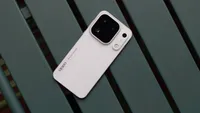
There is really only one place to start with the Xiaomi 18 Pro series, and that is the camera island dominating the upper portion of the phone's rear. It's home to two of the cameras and a secondary AMOLED display, which is easily the most distinctive design feature.

Naturally, the camera island is going to draw comparisons to Apple's latest iPhones, although there are only so many ways to arrange cameras on the back of a rectangular slab, and Xiaomi has done enough to make its design interesting in its own right.
I have been testing the Velvet Red Pro Max, which I absolutely love. It's a much more appealing shade of red than the burgundy color seen on recent iPhones, with a slightly textured matte finish that makes it look and feel a little different. There are also Black, White, and Cosmic Blue options – the latter of which has a sparkly finish similar to the green Xiaomi 17 Ultra.
Despite the substantial camera island and the additional screen, the Pro Max doesn't feel overly top-heavy. Its gently tapered sides make it surprisingly comfortable to hold, and I haven't found the finish especially slippery. At 229g, it is certainly a substantial phone, but not unusually heavy for a flagship with this much camera hardware and two screens.
The smaller 18 Pro weighs 198g and measures just 72mm across, making it a considerably more compact alternative without sacrificing sensor sizes.
Both phones are IP68-rated for dust and water resistance, with Xiaomi Shield Glass 3.0 protecting the main display and Gorilla Glass Victus 2 covering the rear screen.

The only real frustration with the design is the positioning of the ultrawide camera. While the two main cameras sit inside the raised island, Xiaomi has positioned the ultrawide underneath it, next to the flash.
Unfortunately, this puts the lens exactly where my fingers naturally sit when holding the phone, and even if I try to shift my index finger, the field of view of the ultrawide still often caught a little bit of it. I don't think I've managed to take an ultrawide photo without having to consciously change my grip to get my fingers well out of the shot. It's a surprisingly annoying oversight on an otherwise brilliantly designed phone.
The rear screen
My feelings about the rear screen are a little mixed, at least when it comes to general smartphone functions. It's genuinely useful for checking notifications when your phone is face down on a table, controlling music, or seeing information without turning the phone around. However, I don't think Xiaomi has done quite enough with it yet.
You can see notifications as they arrive, but you can't browse through all your notifications or send quick replies in the way you might on a smartwatch. There are currently no apps that directly use this screen; it seems like a perfect opportunity for Uber to show you your ride details, or Google Maps to show heads-up directions. I feel there is a lot more Xiaomi (and partners) could do here to make the rear screen genuinely useful throughout the day.

The fun part of the new screen is that there is a new AI feature that allows you to create simple apps for the rear display just by describing what you want. These are largely limited to self-contained games and utilities, such as Snake, virtual pets, and counters, as they can't interact with other apps or online services. It's fun to experiment with, although I think its usefulness remains pretty limited for now until it gets more permissions.

Where the screen really comes into its own is photography – selfies and vlogging with the rear cameras – which I'll get to in the next section.
Main display and Privacy Display
The front display is good. The Pro Max has a 6.9-inch AMOLED panel, while the Pro offers a more compact 6.4-inch screen. Both have incredibly slim, symmetrical bezels and resolutions that work out to around 419ppi.
The screen on my Pro Max is bright, sharp, and colorful, and I've had no trouble viewing or editing photographs outdoors. Though Xiaomi seems to be pushing display sharpness to the point where some text and apps don't appear to be rendered at quite the same level of clarity as other displays, everything has a crispness to it, like when you turn the sharpening on a monitor or TV too high.

One interesting addition is Privacy Display, which uses dedicated pixels to limit the viewing angles of the screen, which in theory makes it harder for someone sitting next to you to read what you're doing.
I really like this idea, and it's something I would be happy to see on every phone. Unfortunately, Xiaomi's implementation isn't quite as effective as Samsung's on the Galaxy S26 Ultra.
I could still clearly make out much of the Xiaomi's display when looking at it from the side, whereas Samsung's screen becomes considerably harder to see. However, when viewed straight on, I could barely tell whether Privacy Display was enabled, while Samsung's screen takes on a noticeably different appearance, but I'd rather take the more effective implementation.
Finally, Xiaomi has added a customizable AI Button to the side. Despite the name, this is really more of a general-purpose action button, with options for Do Not Disturb, Privacy Display, translation, voice notes, and several other functions. I set mine up for Do Not Disturb, although I wish Xiaomi offered a few more choices than its half-dozen options.

Camera Performance
I really love the photos from the Xiaomi 18 Pro Max. Xiaomi's partnership with Leica remains one of my favorites in the smartphone industry, and the Xiaomi 18 Pro Max produces some of the most camera-like photographs I have seen from a phone.
In fact, I think only Oppo's Hasselblad cameras consistently challenge Xiaomi when it comes to creating photographs that look more like images from my mirrorless camera than the heavily processed output we have become accustomed to from smartphones.
Both phones feature a 200MP main camera with a 1/1.28-inch sensor, alongside a 200MP telephoto with a 1/1.56-inch sensor and a 50MP ultrawide with an undisclosed sensor size (which likely means small).
The Pro Max's main camera uses the newer Light Fusion 960L sensor, which includes LOFIC technology to improve dynamic range, particularly in scenes with very bright highlights. The standard Pro uses the Light Fusion 960 without LOFIC capability.

The best phone for selfies?
For selfie lovers and vloggers, the biggest reason to buy a Xiaomi 18 Pro Max for photos or video is that rear screen. Being able to see yourself while shooting with the main camera makes an enormous difference, and it completely changes the experience of taking selfies and recording vlogs.

You can swipe between Photo, Portrait, Video, and Photo Booth modes directly from the rear display, adjust beauty settings, and see your composition in real time. The screen isn't quite large enough to check every small detail, but it's more than sufficient for ensuring your framing is right, everyone is in the shot, and you're actually looking at the camera.
There are a few limitations. While you can switch between the main and ultrawide cameras, zooming to 3.2x doesn't actually activate the telephoto, instead cropping into the main camera. This isn't much of a loss for selfies, however, as even at arm's length, 3.2x is far too tight to fit my whole face into the frame.

Image credit: Gareth Bevan / Digital Camera World

Image credit: Gareth Bevan / Digital Camera World
You can also enable the rear display while shooting using the main front screen, allowing your subject to see how they're being framed.
I genuinely think this is the best selfie and vlogging phone available. It's substantially more convenient than using a separate Bluetooth screen attached to the back of the phone, as we have seen with accessories like Oppo's Bubble. If you regularly record yourself for YouTube, TikTok, Instagram, or just want better photographs of yourself and your friends, the rear display is far more than a gimmick.

Main, telephoto, and ultrawide cameras
The main camera is excellent. It contains the same-sized 1/1.28-inch sensor found in most of this year's Pro flagships. Photographs are beautifully sharp, but crucially, they don't look oversharpened. Xiaomi has avoided the aggressive digital sharpening that continues to frustrate me on many smartphones, and fine details retain a much more natural appearance when zooming in.


In lower light, the results are still very good, although I've noticed the Xiaomi relies on longer exposures more readily than some rivals. This makes it easier to introduce motion blur if you're not holding the phone steady, particularly when photographing moving subjects. However, once the image has been processed, Xiaomi does an excellent job of retaining detail and controlling noise without smoothing everything out.


The 75mm telephoto camera is similarly impressive, its got a 1/1.56-inch sensor, which again matches some of the best camera phones this years, and its 200MP sensor provides plenty of resolution for cropping. The native 3.2x focal length is useful for portraits and isolating details, while Xiaomi also offers high-resolution in-sensor zoom modes at 6.4x and beyond.
Low-light performance follows much the same pattern as the main camera, with good final image quality but longer exposures that make keeping everything sharp a little more challenging.


Unfortunately, the ultrawide is noticeably the weakest camera of the three. It is only a 17mm focal length (or 0.7x zoom), which is narrower than ultrawides on other Pro/Pro Max phones this year, and isn't a huge difference from the 23mm focal length of the main sensor.
In good lighting, photographs are perfectly usable, but they're visibly softer than those from the main and telephoto cameras. Xiaomi also relies on considerably more processing to improve the final images, the difference between the image as soon as it's taken and it a few seconds after processing is substantial.
Low-light performance is also unconvincing. I can't officially find what sensor size the ultrawide camera uses, but it really struggles in low light, with really extended exposure times and a considerable loss of fine detail. With not much focal length between it and the main camera, when the light drops, I would just avoid going ultrawide.


Macro
Macro is one area where Xiaomi really excels. You can take close-up photographs using either the ultrawide or telephoto camera, although I would choose the telephoto every time.
The longer focal length creates a much more flattering perspective, with better compression and natural background blur. It also allows you to keep a little distance from your subject, which means you're less likely to cast a shadow over whatever you're photographing.


The amount of detail is incredible. I've been able to capture individual water droplets on a feather and tiny grains of cinnamon with an impressive level of sharpness.
My only criticism is that the depth of field can be extremely shallow, and I would love Xiaomi to include an automatic focus-stacking option to expand the area in focus. Other brands have already experimented with this, and it feels like a natural addition to a phone with such good macro capabilities.
Color profiles
There are three main color profiles, and each produces a noticeably different look.
The new Original mode is the most neutral of the three; it's the only one not developed with Leica, but it offers accurate colors, mid-saturation, and nicely balanced contrast. It's probably the most useful option for everyday neutral photography.
Previously, Leica Vibrant was Xiaomi's default look, and while it's great if you want bright colors that pop on social media, it is also the brightest with the highest contrast.

However, if there is one camera profile that sells this phone to me, it's Leica Authentic. This remains my favorite stylized look from any smartphone camera. It tones down colors, adds contrast, and introduces a subtle vignette that gives photographs a character missing from most phone photography.
It's not suitable for every situation; it's a bit moody, and it can make some scenes look really dull, but when Leica Authentic works, the results can be gorgeous.
Essential Moment and filters
Xiaomi has also introduced a new camera feature called Essential Moment, which uses AI modelling of three classic photographic looks to recreate the character of those images.
There are three styles: a B&W film emulation, a mode to replicate the look of a CCD sensor, and the oxymoron "Modern Vintage", which is inspired by CMOS camera sensors – which is basically every sensor in the last 10-20 years, rather than one look I could specifically pinpoint.

I actually quite like the results, although I'm not convinced any of them believably resemble the cameras they're supposed to emulate.
The black-and-white mode is easily my favorite, with slightly blown highlights and a natural-looking grain that gives photographs a convincing film-inspired appearance. In rainy Paris, where I was testing, this mode really helped create more dynamic shots against the dreary overcast skies, and I found myself repeatedly going back to it as I just really enjoy the look.


I didn't find the CMOS-inspired mode especially all that different from Leica Authentic. It tweaks the colors slightly and tones down the highlights, but looking through my camera roll, I can't tell which sample photos I actually shot in this mode.
The CCD mode makes photographs warmer without recreating the genuinely poor, low-fidelity image quality of early digital cameras. Everything is still sharp and detailed, which rather misses the point of recreating a 1990s digicam. Personally, I wish Xiaomi had gone much, much further with the grunge.
There are also plenty of excellent filters within the standard camera app, including positive and negative film looks and Leica black-and-white presets; you can adjust the parameters of these filters to get exactly the look you want, and there are also options to add film grain to perfect the film look.


Video
The main and telephoto cameras can record up to 4K at 120fps or 8K at 30fps, but the ultrawide is limited to 4K at 60fps. That puts Xiaomi slightly behind phones like the Oppo Find X10 Pro Max, which supports 4K 120fps across all three rear cameras, and the Vivo X500 Pro Max, which goes as far as 4K 240fps on its main camera.
However, the standard video modes produce clean, well-balanced footage with good colors, and for everyday video recording, I have very few complaints.
There is also a Pro Video mode with 10-bit Log recording and support for importing LUTs. Xiaomi supplies a Rec.709 LUT that grades the footage back to something approaching the standard camera look, while Log gives you considerably more flexibility to adjust colors and exposure in post-production. However, unlike some competing professional video modes, you can't burn your chosen LUT into the footage while recording, although you can apply it afterward within Xiaomi's Gallery app.
I also think Xiaomi's video looks more like conventional smartphone footage than the results from Oppo or Honor's new ARRI-powered camera system. Both of those brands take a more restrained approach to sharpening and HDR in their professional recording modes, creating footage that is easier to match with a dedicated mirrorless camera.
Phone Performance
The Xiaomi 18 Pro Max is powered by Qualcomm's Snapdragon 8 Elite Extreme Gen 6, while the smaller Pro uses the standard Snapdragon 8 Elite Gen 6. Both chips are built on a 2nm process, with the Extreme version offering additional performance.
In everyday use, the Pro Max is incredibly quick. I haven't encountered any meaningful slowdowns, even when editing high-resolution photographs or working with demanding video files.
My biggest frustration, however, remains with parts of Xiaomi's operating system. HyperOS 4 is the best version of Xiaomi's software yet; however, it is simply not as seamless to use as some of the other Android interfaces, particularly Oppo's ColorOS or Google's version of Android on the Pixel.

There are still far too many little quirks that make the experience unnecessarily frustrating. For example, you can't uninstall apps directly from the home screen, the home-screen grid options remain oddly restrictive, and Xiaomi continues to force you to use separate notification and Control Center panels rather than giving you the option to combine them. None of these issues is individually disastrous, but together they make HyperOS feel less polished than its rivals.
I also encountered a few software bugs during testing, although my review unit was running pre-release software, so some of these may be addressed in future updates.
However, there are also some things HyperOS gets very right. Customization is excellent, with lots of options for changing fonts, wallpapers, lock screens, and home-screen folder layouts. There are also AI-powered tools for creating additional personalized backgrounds.
Photo editing
One area where Xiaomi absolutely excels is its Gallery app, which remains one of my favorite built-in photo editors on any smartphone.
There are extensive adjustments for exposure, contrast, color, and lighting, including individual HSL controls and curves. For most everyday edits, I don't feel the need to open Lightroom or another editing app. There is also a large selection of filters, along with the most customizable film grain I have found directly in a phone's photo app.

Xiaomi has also included a comprehensive suite of AI editing tools, including Object Eraser, Reflection Removal, and Generative Expand.
Battery life
The global Pro Max has a large 7,050mAh silicon-carbon battery, while the smaller Pro has a 6,000mAh capacity. On paper, those are excellent specifications, but I don't think Xiaomi is getting quite as much endurance from its battery as some competitors.
In my testing, the 18 Pro Max comfortably lasted a full day of normal use, including plenty of photography and video recording, but I rarely had much left over.
That's only marginally better than what I get from my Pixel 11 Pro XL, with its smaller battery, but is considerably behind the Oppo Find X10 Pro Max, which I can regularly stretch to almost two days between charges.
It's certainly not bad battery life, but given the capacity, I had hoped for a little more.

Final Verdict
Xiaomi has created one of my favorite camera phones of the year. The photos are excellent – Leica Authentic and the new Essentials Modes are producing some of my favorite smartphone images, while the new Original profile offers a more neutral alternative, but still with a lot of the phone-esque look toned way down. But while the dual-200MP camera system is impressive, the ultrawide doesn't quite keep up.
However, I've seen plenty of smartphones experiment with secondary display accessories, but the Xiaomi 18 Pro Max is the first where I would seriously consider choosing the phone specifically because of it. For selfies and vlogging, being able to use the main camera while seeing yourself makes an enormous difference.
There are minor frustrations elsewhere. HyperOS still isn't my favorite Android interface, battery endurance isn't hugely impressive, and I wish Xiaomi had gone further with its professional video features.
However, the Pro Max's rear screen offers something genuinely different in an increasingly crowded flagship market. While the Oppo X10 Pro Max might still be my preferred all-around photography phone, Xiaomi makes a compelling argument for anyone who spends as much time in front of the camera as behind it.
Design ★★★★½ |
Distinctive dual display design thats actually useful, although the ultrawide placement is frustrating. |
Camera Performance ★★★★½ |
Beautiful Leica image processing, excellent main and telephoto cameras, and arguably the most useful rear-screen selfie system available, although the ultrawide trails rivals. |
Phone Performance ★★★★½ |
Outstanding processing power and excellent photo-editing tools, let down by some HyperOS frustrations and battery life that doesn't go as far as others. |
Value ★★★★☆ |
Expensive phones, but still competitive with rival Pro/Pro Max devices. |
Overall |
★★★★½ |
Alternatives