





While Artemis II astronauts will rely on the latest spaceflight technology, they won’t rely on the latest camera technology. The first crewed mission around the moon since 1972 is set to launch no earlier than April of this year, and will be armed, not with a state-of-the-art mirrorless camera, but an aging DSLR. The news was revealed by mission commander, Reid Wiseman, during a Facebook post that the crew would be relying upon the Nikon D5.
Nikon announced in 2024 that it had entered into a Space Act agreement with NASA for Artemis mission support, but that was for its flagship mirrorless, the Nikon Z9. And indeed, the Nikon Z9 has since proven its worth on the International Space Station. So why is the Nikon D5 the preferred option for a trip around the moon?
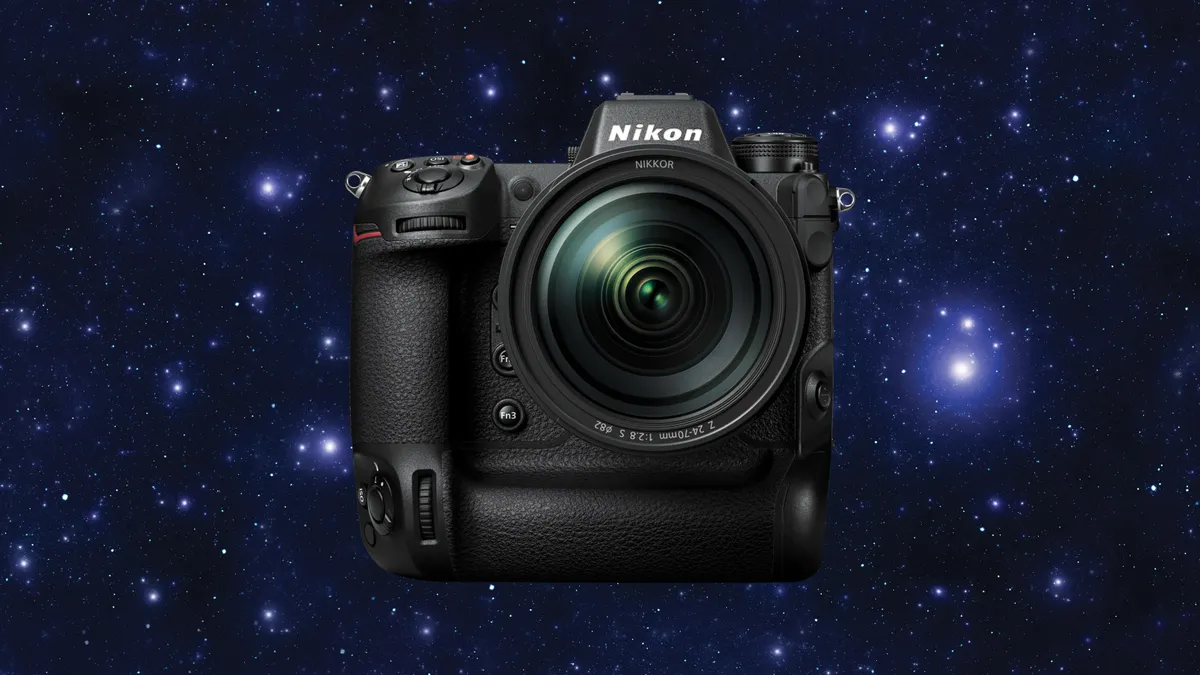
Nasa told PetaPixel: “future Artemis missions will incorporate next-generation camera systems currently undergoing spaceflight qualifications.”
I can only assume that means the Nikon Z9 simply hasn’t been cleared for extended space flight and therefore won’t be available in time for the fast-approaching Artemis II window, which was supposed to be no earlier than March 6.
However, as I write this article, the Artemis II moon rocket is in the process of being removed from its launch complex at the Kennedy Space Center and returned to its hangar, following a helium-system issue that has delayed its launch.
Sending a camera into space isn’t exactly a walk in the park, and with the Artemis mission’s ultimate goal of landing on the moon no sooner than 2028 (via Artemis III), Nikon will be working with NASA to ensure that its cameras can withstand the ride. According to Nikon, cameras on the moon have to weather vast temperature changes and cosmic radiation, requiring component redesigns. This isn’t a trip to the ISS, cameras have to remain operational an incredible 238,000 miles away from Earth, requiring a plethora of tests and simulations.

It’s hard to believe that the D5 was launched a decade ago, in 2016. It’s a pro-grade, full-frame DSLR that’s built around a 20.8-MP CMOS sensor and runs via Nikon’s Expeed 5 image processor. The D5’s most notable spec is its huge ISO range 100 to 102,400, which can be expanded to an equivalent ISO3,280,000.
As such, it was known as a low-light monster and is still an incredible low-light camera. It also boasts exceedingly good autofocus for a DSLR, thanks to its, then, all-new 153-point AF system. As with any older DSLR, it’s not a great video camera, but can still capture 4K / 30p (1.5x crop).
But perhaps the Nikon D5’s biggest attribute, especially for space flight, is that it’s an absolute tank. It’s an absolute hunk of camera that’s as rugged as they come, and also boasts a formidable battery life that’s officially rated for 3,780 shots.
Nikon has enjoyed a long history working with NASA. The Nikon Photomic FTN was the first Nikon to go into space, as part of 1971’s Apollo 15. Since then, various Nikon cameras have accompanied astronauts, largely on the ISS, from the Nikon D1 to the Nikon D850.
You might also like...
Into space photography? Here are the best cameras for astrophotography. If you're starting out in the world of astro, here's how to photograph the moon. And for more NASA-related news, NASA satellite data and aerial imagery played a huge role in reintroducing descendants of extinct species of giant tortoise back to Galápagos Islands.

