Digital Camera World Verdict
The Magic 8 Pro is another solid flagship from Honor, improving on the previous iteration with a superior telephoto, solid image stabilization, and one of the cleanest night-shooting camera phones I’ve ever used. Despite not having the biggest cell on a current flagship, battery life is excellent, and the phone looks and feels great in the hand. However, a few minor but nagging drawbacks just hold the phone back from greatness, with some aggressive processing, inconsistent HDR, and poor video stop it from competing for my personal camera phone of the year.
Reasons to buy
- +
Outstanding night photography and stabilisation
- +
Excellent telephoto and macro performance
- +
Superb battery life and extremely fast charging
Reasons to avoid
- -
Weak video with odd limits
- -
Sharpening can be aggressive
- -
Large camera island attracts fingerprints
Why you can trust Digital Camera World Our expert reviewers spend hours testing and comparing products and services so you can choose the best for you. Find out how we test.
Honor has spent the past few years reshaping its flagship phone into both a photography and AI juggernaut. But while last year, the headline features were all about AI-powered camera improvements, this time around, it's back to basics, with hardware again the star of the show.
The Magic 8 Pro joins the 200MP sensor club, with the telephoto camera getting not just a resolution upgrade, but also features the first CIPA-rated optical stabilisation system on a phone. These come alongside the latest Snapdragon Elite chip, and a bigger silicon-carbon battery with absurdly fast charging.
Of course, AI is still a huge influence, and Honor has built new AI color-matching tools, AI editing features, and system-wide smart functions that aim to make the Magic 8 Pro feel more productive.
I’ve been using the Magic 8 Pro as my daily phone – shooting in daylight, night, macro, zoom, video, and everything in between – and it's clear that Honor has created a phone deserving of the flagship moniker.
The Magic 8 Pro is positioned directly against some of the best camera phones available today – the Pixel 10 Pro XL, iPhone 17 Pro Max, Vivo X300 Pro, and Oppo Find X9 Pro – but how does it compare?

Honor Magic 8 Pro: Specifications
Price (Launch) |
£1,099 |
Colors |
Sunrise Gold, Sky Cyan, Black |
Processor |
Snapdragon 8 Elite Gen 5 |
RAM |
12GB |
Storage |
512GB |
Screen |
6.71", 1256x2808px, OLED, 1-120Hz, LTPO, up to 6000 nits |
Main Camera |
50MP, f/1.6, 1/1.3", CIPA-rated 5.5-stop OIS |
Ultrawide Camera |
50MP, f/2, 122° |
Telephoto Camera |
200MP, f/2.6, 1/1.4", 3.7x optical zoom, CIPA-rated 5.5-stop OIS |
Front Camera |
50MP, f/2.0, 3D Depth Camera |
Video |
Up to 4K 120p |
Battery & Charging |
6270mAh, 100W wired, 80W wireless |
OS |
MagicOS 10, based on Android 16 |
Size (HWD) |
161.15 x 75 x 8.4 mm |
Weight |
213g |
Honor Magic 8 Pro: Price
This is another Chinese phone that won't see a release in the US, but in the UK, the Magic 8 Pro lands at £1,099 for the 12GB+512GB version. This puts it squarely in the middle flagship territory, but it feels very competitive, matching the Oppo Find X9 Pro’s price while undercutting the Pixel 10 Pro XL (although the Pixel is heavily discounted often) and iPhone 17 Pro Max – and it does so while offering more storage as standard.
Would I call it reasonable? I do think it’s fairly priced for the hardware you’re getting, especially if your main considerations are more about battery life and telephoto photography.
Honor Magic 8 Pro: Design
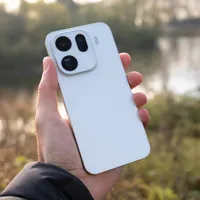
The Magic 8 Pro has the premium style and solid build quality to belong at the top of Honor’s lineup. My review unit was the Sunrise Gold version with a slightly metallic sheen, although it often looked more silver than gold, depending on the light. The phone is also available in Sky Cyan or Black.
Where last year's model has sort of an oil-slick gloss to it, this year's finish is more subtle, with a single uniform color. I did prefer the finish to last year's a little more; it just had a bit more uniqueness to it, but this time around, it's still a classy design. The matte brushed metal frame feels solid and premium, and the phone sits comfortably in the hand despite its size, with a slight taper to the rear.
Honor has bucked the square trend of 2025 and stuck to a rounded camera island. In a year where it seems more manufacturers are suddenly obsessed with squared-off, iPhone-inspired camera bars, the circular bump might almost become distinctive again.
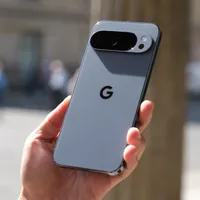
However, the more central and larger camera island creates a more tangible everyday problem – my finger constantly strayed over the lenses while using the phone. The result is an endless battle with greasy fingerprints on the glass. It did make me appreciate why so many brands have moved their camera modules into the corner or top; it’s simply more ergonomic, and my fingers rarely touch the glass of my Pixel or iPhone.

The overall design hasn’t really changed all that much from last year, which, on one hand, the Magic 7 Pro already looked good and felt great in the hand, so Honor hasn’t fixed what wasn’t broken. However, it is marginally disappointing that this thousand-dollar flagship phone doesn’t visually scream "new generation" in the way some rivals do.
Around the edges, you’ll find the usual power and volume buttons. There are also dual SIM slots, with the option to use an eSIM instead of the second physical SIM – a small but welcome touch for travellers and work-phone users.
A new addition to the right-hand side of the frame is a dedicated AI button. This is a shortcut to access a number of the Honor AI features built into the phone, like AI suggestions based on on-screen content, or a quick way to change settings with your voice. Although it is quick, you are limited to one setting at a time, and it is just faster and easier to use Google's Gemini assistant baked into the OS to do the same tasks.
You can also use this AI button as a camera button. In theory, I love the idea of a tactile hardware camera making a comeback, and I love accessories like the Oppo Hasselblad teleconverter or Xiaomi’s camera case. But in practice, I didn’t find Honor’s implementation of the camera key particularly useful.
I have the same criticisms for every camera button from Apple to Oppo. The button has limited functionality in portrait orientation, and sits too low for my thumb to reach naturally anyway. I rarely ever shoot in landscape, and even in landscape, the zoom is finicky to use, and it's much quicker to tap on the screen. Sometimes the things Apple does aren't good and don't need to be copied.
A lot of what the camera button does can already be done more quickly by double-tapping the power button or using the volume rocker to fire the shutter. It’s an idea that I think simply doesn’t earn its space on the side of the phone yet. I am happy to be proved wrong, but brands still need to figure out a way to make me want to use this button.
Screen
The display is undeniably beautiful. It’s a 6.71-inch LTPO OLED panel running at up to 120Hz, with a sharp 1256 x 2808-pixel resolution and full 100% DCI-P3 wide colour coverage. Brightness is also impressive, pushing up to a claimed 6,000 nits. It’s rich, contrasty, and color-accurate enough that I felt comfortable using it for both photo and video editing – something I don’t say lightly about phone screens.
Honor’s continued commitment to curved edges is more of a disappointment. Although this is the shallowest curve they’ve used yet, but flat screens, in my humble opinion, just look and feel better. And judging the industry widely ditching the curved screen, a lot of people seem to agree – I hope Honor joins the new status quo next year.
Honor has also gone all-in on eye-comfort tech. Alongside 4320Hz PWM dimming, there’s Circular Polarized Display 2.0, chip-level AI Defocus Display, dynamic dimming, a Circadian Night Display, and even motion sickness relief and natural tone modes built in. While I can’t scientifically measure eye strain, I did find the Magic 8 Pro comfortable over extended periods.
Honor Magic 8 Pro: Camera Performance
Honor gives you three main colour profiles for the camera – Natural, Vibrant, and “Authentic”, the first two fairly self-explanatory, while the "Authentic " profile tries to mimic the colors and contrast of street photography with limited success; my photos were mostly just excessively vignetted.
I mostly shot in the natural profile, which provides a good balance of vibrance and contrast. Although either by design or due to a bug, the camera kept reverting back to the vibrant profile, which was a little irritating.
- 200MP Ultra Night Telephoto Camera (f/2.6, 1/1.4'', 3.7X optical zoom, OIS, CIPA 5.5)
- 50MP Ultra Night Main Camera (f/1.6, 1/1.3'', OIS, 4-in-1 2.4μm large pixel output CIPA 5.5)
- 50MP Ultra Wide Camera (f/2.0, 122° wide angle, 2.5cm HD Macro Photography)
Alongside these are a selection of film-style looks, which aren’t based on any specific film stocks, and they feel more like early-Instagram filters than genuine film simulations. They’re fun to play with, but I wouldn’t want all my photos looking like that.
However, I love this idea and want Honor to take it further. I shouldn't say this as a photographer, but I hate editing. I have bought Fujifilm cameras just for the film simulations and recipes so I can use JPEGs straight from the camera. If Honor could build this out into a tool to create fine-tuned custom profiles based on genuine-looking film stocks, this could be a real winning feature.


Or perhaps the answer lies with Honor's AI Magic Color. This is a new feature that allows you to sample the colour style of one photo and apply it to another. You can also apply this style to any new images you take with the camera. Effectively, this tool lets you “borrow” the looks of your favorite creators and replicate them in your own images.
In practice, the results showed some promise. I managed to transform a boring street scene with a Wes Anderson-inspired color palette (see below), but this was sometimes a little inconsistent, producing strange color shifts between different scenes.
Overall, I have mixed feelings; it's a great tool for casual photographers with no editing knowledge to instantly grade photos, which I am sure is the intent, but for professionals, it demonstrates AI's continued march on what was years of built-up knowledge and experience and a marketable skill, and will surely lead to photography becoming more homogenised.

Putting my AI quibbles aside for now and getting back to the task at hand – how do the Magic 8 Pro's cameras actually perform?
When it comes to image quality, the Magic 8 Pro is excellent – dynamic range is strong, colors are generally accurate, and detail is great from all three cameras. However, stylistically, it's not all perfect. I still find Honor’s photos are lacking a little x-factor. Honor’s processing can be overly aggressive, oversharpening is far too common, HDR can flatten scenes too much, and bright blue skies are often exaggerated.
Out of the three cameras, the main wide camera and telephoto cameras are the best performers. Zoom performance is a highlight. Results up to around 230mm are genuinely outstanding, and I would be very comfortable using images up to 340mm (10x) on social media. Detail holds up remarkably well, and I was especially impressed by even minute details like hair and feathers.
You can zoom all the way up to 100x using AI processing, with the AI kicking in after around 10x. The highest ranges inevitably show smoothing and artificial sharpening, with photos taking on a distinct AI-generated look from around 30x onwards. Honor leans harder into generative AI than other brands, where Google or Samsung tries to clean up an image, Honor is happier to let the AI run riot and reinvent images a little, which can produce some pretty quirky results, and honestly, it's not for me.


Macro photography is handled by both the telephoto and ultrawide lenses, but the telephoto is almost always the better choice as it delivers a far more flattering perspective. There isn't any separate macro mode or toggle; the camera just jumps in and out of macro focusing depending on distance, which speeds up the process.
Macro performance is outstanding, producing excellent sharpness in focused areas, although it again suffers a little bit from strong digital sharpening. The only weaknesses here are a slightly softer peripheral sharpness and a depth-of-field fall-off, which can be abrupt. I found it often cut off insects' legs or antennae despite them being on the same focal plane. It would be great to have a bit more control over in-focus areas either in the moment or in editing, similar to portrait blur.


Night photography – especially with the telephoto lens – is where I found the Magic 8 Pro really shines. Low-light images are very clean, with little visible noise, yet still retaining a good level of detail. Honor’s optical image stabilisation is genuinely remarkable – I captured sharp handheld shots on a moving boat, with the telephoto lens, at night with barely any motion blur at all. The company claims a CIPA-rated 5.5-stop OIS system, and based on real-world use, I’m inclined to believe it.
Unsurprisingly, the ultrawide camera is the weakest of the three. It's respectable in good light, with decent detail and colour, but its low-light performance drops off much more sharply than the other lenses, especially when you start cropping into images, with detail quickly being lost to processing.


Video is the Magic 8 Pro’s biggest missed opportunity. On paper, it ticks a lot of boxes: 4K at 120fps, HDR, Pro mode, and CIPA-rated stabilization all sound impressive – but video quality lacks the polish and consistency I’d expect from a flagship camera.
Colors from the Magic 8’s video can be washed out, there are occasionally inconsistencies in lighting, HDR can look flat, and low light performance isn’t up to the phone’s night photography skills. Video quality is fine, but overall quality is lacking compared to the gold standard of the iPhone or, indeed, Vivo (Android’s best video).
There are also a few slightly baffling quirks. For some reason, I couldn't find a way to use 4K/120p in the Pro video mode despite it being supported in the normal video mode, and I also couldn't combine 4K120p with HDR in any mode – a feature that is available on rival devices. The end result is a video system that feels a little restricted and one that lags behind the competition for hybrid content creators.


Portrait mode is very good on the Magic 8 Pro. Honor has continued its partnership with Parisian photo studio Harcourt for tuning, and faces are rendered with pleasing detail, with skin tones generally looking natural. Edge detection, while not the best I've used, I still found it to be reliable, with hair and finer details handled well. Subject separation and bokeh balls look pretty good, although it doesn't have the creative flair of Vivo's selectable Zeiss lens bokeh.
Honor Magic 8 Pro: Phone Performance
Powered by the latest Snapdragon 8 Elite Gen 5, the Magic 8 Pro never once felt short on performance. Whether I was editing photos, trimming video clips, or jumping between multiple apps, the phone handled everything effortlessly.
However, for most users, primarily content creators and photographers likely reading this review, it certainly isn’t night and day between this chip and the prior generation (or even vastly underpowered options like the Tensor G5 in the Pixel 10). Unless you’re a hardcore gamer, you’re unlikely to notice, so I wouldn’t base too much of your purchase decision around this chipset.
However, the efficiencies of this new chip are a huge boon to battery life. Although the Magic 8 Pro’s 6270mAh silicon-carbon battery can’t quite match the whopping 7,500mAh found in the Oppo Find X9 Pro or 7,200mAh in the OnePlus 15, I consistently got well over a full day of real-world use, even on heavier shooting days. Standby time is excellent too – I’ve had it last for several days while sitting idle on Wi-Fi.

When it does run low, charging is impressive. You can plug it in for 100W wired charging with compatible chargers. I got from 0-50% in around 25 minutes, and full in around an hour. Up to 80W wireless charging is also supported, with the right charging kit (which, unfortunately, I don’t have access to to test).
This super-fast wireless charging does mean this is another Android flagship with no Qi2 magnetic support in the style of Apple’s MagSafe or Google’s PixelSnap ecosystem, so you’ll need to rely on a case. I appreciate that Honor has probably put a lot of R&D into achieving an 80W wireless charge speed, but I’d still take a lower 25W speed with compatibility with MagSafe accessories any day.
The Magic 8 Pro comes with the latest version of Honor’s OS – MagicOS 10, which clearly takes some inspiration from Apple's latest Liquid Glass aesthetic. It’s not my favourite Android skin visually; that said, it’s smooth, stable, and easy to live with, and I never encountered any performance hiccups or stability issues during daily use.
Magic Capsule is Honor’s take on Apple’s Dynamic Island (one of my favourite iPhone features). It works surprisingly well here, providing genuinely useful shortcuts and live activity information. Gesture controls using the dual front cameras are neat, although I had to force myself to use them rather than it ever coming naturally.
Honor also includes a wide range of AI features – some of which feel gimmicky, but others that genuinely add value. Honor has jumped on the AI screenshot bandwagon with AI Memories Space, which uses AI to analyze screen grabs and pull out useful information. It is useful, but I wish there were tighter integration with ChatGPT or Gemini, as my preferred AI tools.
In the Photos app, Honor includes an AI Eraser, Upscale, Cutout, and Outpainting (generative expand) tools, along with an image-to-video generator. That last feature is limited to five-second clips and doesn’t use the latest Imagen models, but it’s still a fun addition.

Honor’s AI editing tools are decent. I had the most success with AI outpainting, which did a pretty believable job recreating scenes that weren’t too complex. However, the AI eraser tool came unstuck quite frequently when removing people from images, with the filled-in areas sometimes coming out absolutely wild.
The AI beauty filters are also on the extreme side, with skin-smoothing looking unbelievable and skin lightening an issue in auto mode, although you can tweak all the settings. I could definitely find some use out of these AI tools, but Google, Samsung, and Oppo/OnePlus right now are still more consistent.
Lastly, a shout-out to the built-in Honor Clip video editor is one of the better mobile editors I’ve used (it’s essentially a CapCut clone), but it made quick social-media edits far easier than I expected without having to pay for another app.

Honor Magic 8 Pro: Verdict
The Honor Magic 8 Pro is a camera phone that gets so many of the fundamentals brilliantly right. Its CIPA-rated stabilisation and 200MP telephoto deliver some of the best night photos I’ve taken on a smartphone, while the increased resolution gives even more detail to telephoto and macro shots, and is a clear improvement over the prior model. Battery life is excellent, charging is lightning fast, the screen is beautiful, and with the latest Snapdragon processor, day-to-day performance flies.
But it’s also a phone that doesn’t quite get out of its own way. Image processing is not my favorite among the best camera phones. Images too often suffer from aggressive sharpening and HDR. And despite headline 4K/120p specs, the video is not as good as the class leaders, and feels oddly restricted compared to the flexibility offered by rivals.
If your priority is night photography and telephoto reach (with the added bonus of all-day endurance for long days of shooting), then the Magic8 Pro is an excellent choice. But it just falls short of being the most refined all-round camera phone you can buy.
Design ★★★★☆ |
Attractive and premium, if maybe too similar looking to last year's model. However, I am not a fan of the curved screen, and the central camera island does pick up fingerprints. |
Camera Performance ★★★★☆ |
Telephoto camera is great, and a worthwhile upgrade on the Magic 7 Pro. Image stabilization is solid, and night photography is a winner. However, occasional heavy processing and HDR wobbles can spoil the party. |
Phone Performance ★★★★½ |
Speedy processing, and backed by excellent (although not class leading) battery life and charging speeds. Honor's AI editing tools are also a little hit and miss. |
Value ★★★★½ |
Fairly priced for a premium flagship with good cameras, generous storage and great battery life. |
Overall |
★★★★☆ |
Alternatives