
Landscape photography is one of the most accessible forms of shooting. So long as you can get yourself to a local park or woodland, you can capture great landscape photos.
You don’t need thousands of dollars worth of expensive photography equipment, either. Plenty of landscape photographers have built formidable portfolios with a camera, a single lens and a sturdy tripod. Maybe add in a filter or two and you’re set for life.
You can capture great landscapes with almost any camera. But if you’re really serious about landscape photography, you will probably gravitate towards a high-resolution full-frame body. And the Nikon Z7 II is a last-generation mirrorless camera that's a diamond in the rough for landscapes.
Pro body, enthusiast price point

This isn’t a beginner recommendation, it’s an enthusiast-to-pro recommendation. After all, the Z7 II was essentially the brand’s unofficial flagship until the Nikon Z9 came out.
It launched for around $2999 / £2,999 back in 2020 and with no Nikon Z7 III to replace it (yet…), it’s only recently that the price has dropped significantly. At the time of writing, I can see the Z7 II for as little as $2,196 / £1,699 – and on the used market, MPB is selling the camera from $1,229 / £954.
That’s a very good price indeed for a high-resolution, full-frame mirrorless camera. The downside of the Nikon Z7 II for modern photographers is that it isn’t the fastest camera in the world.
The last-gen autofocus is no match for Nikon’s current-gen AF system, present on cameras such as the Nikon Z8 and Nikon Z6 III. Burst speeds max out at 10fps and while it can capture 4K / 60p footage, it applies a slight crop.
But here’s the thing. Landscape photographers don’t need class-leading AF systems. They don’t need lightning burst speeds. And they don’t need pro-grade video features. What they need is a robust, reliable body that’s capable of capturing gorgeous imagery.
And the Nikon Z7 II is just that. It’s extensively weather-sealed for the rigors of outdoor photography, boasts a robust magnesium-alloy chassis and a supremely good-quality 45.7MP sensor that can deliver images akin to the mighty Nikon D850. That’s almost everything a landscape photographer could need.
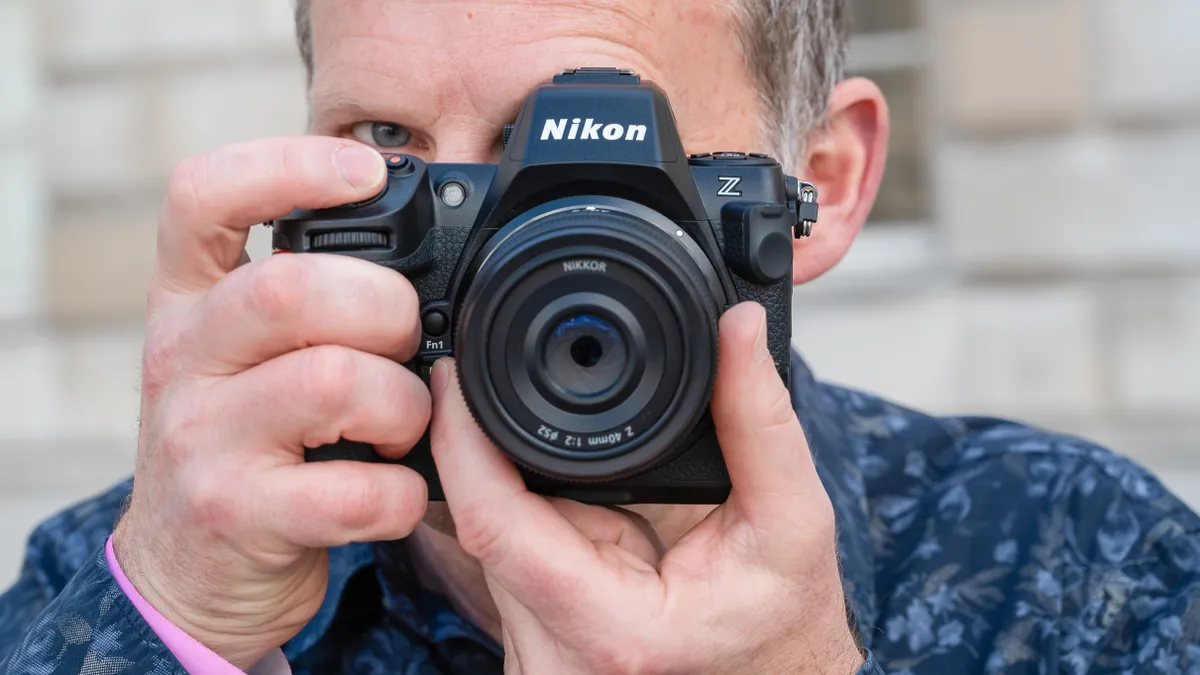
The only mod con that the Nikon Z7 II doesn’t have, which is present on newer Nikon cameras such as the Z8 and Nikon Zf, is pixel shift shooting.
This moves the sensor in tiny increments to capture massive multi-shot images that can be stitched together to form mammoth 96MP+ (the Z8 can hit 180MP) photographs. This is a useful tool for a landscape photographer, but far from essential.
I actually considered the Nikon Z7 II before I purchased a Z8. At the time, the price difference between the two cameras wasn’t huge and since I photograph sports and wildlife, the Z8 won out. But now, with Nikon Z7 II prices having plummeted, I could have gone the other way.
Ultimately, the Nikon Z7 II might be over half a decade old, but it’s still a fantastic choice for landscape photographers. It’s great value, robust and most importantly capable of capturing gorgeous images.
You might also like...
Check out the best Nikon cameras and the best Nikon Z lenses. For updates from the imaging industry, here's the latest camera news.

