
The Nikon D810 is trending on Google, which is slightly surprising in that it’s usually the Nikon D800 or Nikon D850 that gets all the attention. And I’m partially guilty in that I’ve written loads about those DSLR camera classics, but comparatively little about the Nikon D810. The problem is that it was a rather unremarkable entry into the D8XX series because it was essentially the Nikon D800 2.0.
It fixed a major problem and added a few small but decent upgrades, but the D800 (however flawed) remains the ground-breaking camera. The Nikon D850, then, was the proper follow-up and is considered by many, myself included, the greatest DSLR of all time. So, the poor old D810 is often forgotten about, but the thing is, it was actually an incredible camera. Let's explore why...
Nikon D800 vs Nikon D810

Let’s start with what the Nikon D810 fixed. The D800 / D800E was marred by a pretty catastrophic problem that reminds me a little of the high-profile ‘Red Ring of Death’ that plagued Microsoft’s Xbox 360 games console. Some early units featured an autofocus bug that affected left-sided AF points, reducing their accuracy. Nikon was able to fix the offending cameras, as well as the production line, but the problem stuck with the D800 and is still talked about regarding used models today.
And while the D810 wasn’t a huge advancement from the D800, Nikon did imbue it with a few spec upgrades. You might assume that both cameras’ 36.3-MP sensors are identical, but the D810 actually featured a new sensor with no anti-aliasing filter. It also had an upgraded EXPEED 4 image processor and a lower base ISO of ISO64 instead of the D800’s ISO100. This included a wider native ISO range of 64-12,800 as opposed to the D800’s 100-6,400 and a broader expanded ISO range of ISO32-51,200, up from ISO50-25,600.
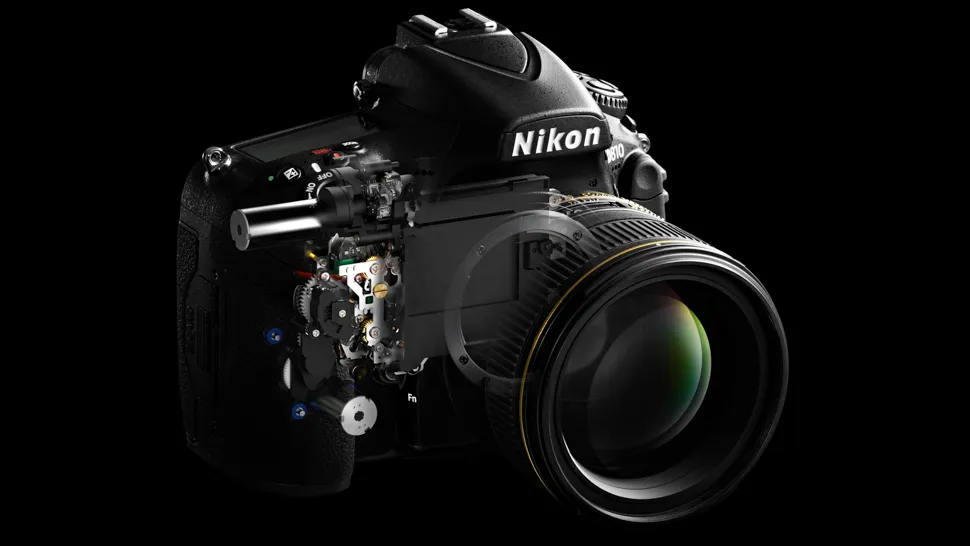
The Nikon D810 also received a boost in burst speeds, delivering up to 5fps (up from 4fps) and maxing out at 7fps (up from 6fps) with the MB-D12 battery grip. It also introduced Group-Area AF to the series and provided marginally better video, thanks to its ability to shoot full HD up to 60p instead of 30p. There were other marginal upgrades, including an increased rear LCD resolution, but those are the main differences.
I myself still use my Nikon D800 on occasions, and I’ve never had any problems with it. However, I am guilty of often overlooking the Nikon D810, and while it doesn't occupy the same ground-breaking place in Nikon’s history as the Nikon D800, it is the better camera. You can pick used Nikon D810s up from as little as $449 / £384 from MPB at the time of writing and while it’s over a decade old, there’s still a little life in this old DSLR yet.
You might also like...
This 18-year-old DSLR is trending: Can the Nikon D700 really be a feasible buy for budget photographers in 2026? DSLR cameras are picture-making machines; mirrorless cameras are picture-making computers. Sometimes I just want to go back. Nikon F100: If you’re serious about film photography but light on budget, this is as close as you’ll get to an F6 without the mammoth price tag.

