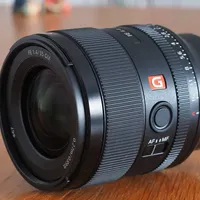
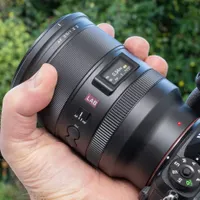
Digital Camera World Verdict
The Sigma 35mm f/1.2 DG II Art brings a real turn of speed to one of my favorite focal lengths among prime lenses. More compact and lightweight than its predecessor, the Mark II is more easily manageable and has terrific handling characteristics, giving easy access to sumptuous image quality and superb all-round performance. It’s pretty to pricey to buy but that’s only to be expected for such a fast lens.
Reasons to buy
- +
Super-fast f/1.2 aperture
- +
Smaller and lighter
- +
Fabulous image quality
- +
High-end handling
Reasons to avoid
- -
Limited mount options
- -
Pretty pricey
Why you can trust Digital Camera World Our expert reviewers spend hours testing and comparing products and services so you can choose the best for you. Find out how we test.
Sigma is a properly historic brand. It was founded all the way back in 1961, its legendary Aizu factory in Fukushima, Japan being built in 1973. Unlike most other Japanese photographic brands, Sigma still makes all of its lenses in Japan, at the same location. The ‘Global Vision’ line-up was launched in 2012, with all subsequent lenses being divided into Art, Contemporary and Sports categories.
The Sigma 35mm f/1.2 DG II Art that I’m reviewing here is the embodiment of what Sigma Art line lenses are all about – uncompromising design that puts premium image quality for creative expression front and center. Even so, the Mark II shaves 30% off the weight and 20% off the physical length of its predecessor, which was launched six years earlier, making it more manageable and easier to live with. And despite the downsizing, there’s a raft of improvements that help the lens earn a place as one of the best 35mm lenses on the market, at least for Sony E-mount and various brands of L-mount mirrorless cameras.

Sigma 35mm f/1.2 DG II Art: Specifications
Mount options |
Sony E (FE), L-mount |
Lens construction |
17 elements in 13 groups |
Angle of view |
63.4 degrees |
Diaphragm blades |
11 |
Minimum aperture |
f/16 |
Minimum focus distance |
28cm / 11.1in |
Maximum magnification |
0.19x |
Filter size |
72mm |
Dimensions |
81x112mm / 3.2x4.5in |
Weight |
745g / 26.3oz |
Sigma 35mm f/1.2 DG II Art: Price
More speed equals more money, whether you’re talking racecars or camera lenses. One of the main claims to fame of the Sigma 35mm f/1.2 DG II Art is its super-fast aperture rating, which equates to wider-diameter glass to suck in more light. As a direct consequence of this, as well as the lens’s pro-grade handling characteristics and build quality, the sigma commands a substantial selling price of around $1,549 / £1,299 / AU$3,099.
Even so, the Sigma is less expensive to buy than the ‘slower’ Sony FE 35mm f/1.4 G Master, which lists for $1,598 / £1,429 / AU$2,449. On the other hand, and as I’d expect, it’s pricier than the Chinese Viltrox AF 35mm f/1.2 LAB at $999 / £869 / AU$1,649, the Viltrox being available in Nikon Z as well as Sony E mount options, and competing on level terms for aperture rating.
Sigma 35mm f/1.2 DG II Art: Design & Handling
Despite its downsized design, the Sigma 35mm f/1.2 DG II Art has a reassuring heft to it, weighing in at a substantial 745g / 26.3oz. That’s mainly due to the lens incorporating no less than 17 elements, arranged in 13 groups. The fast f/1.2 aperture rating also demands wide-diameter glass elements towards the front, so it’s no mean feat that the Mark II has a smaller filter attachment thread of 72mm, compared with 82mm for the original lens.
Getting back to those optical elements, the line-up includes four aspherical elements which help to optimize image quality while shrinking the physical dimensions, and an SLD (Special Low Dispersion) element. The aim is to enhance sharpness and clarity while minimizing both axial and lateral chromatic aberrations, and reducing sagittal coma flare. The optical design also seeks to optimize the quality of bokeh, which is further enhanced when stopping down a little thanks to a particularly well-rounded 11-blade aperture diaphragm.

Autofocus is also revamped in the Mark II. A new floating focus design features not one but two of Sigma’s HLA (High-response Linear Actuator) motors, driving two separate groups of lens elements. As well as a speed increase, the new system also helps to minimize focus breathing when shooting video – more on that later.

One of my bugbears is the lack of an autofocus / manual focus switch in some modern lens designs. I resent being forced to wrestle with camera menu systems to make the change, when I want to swap between focus modes in a hurry. I’m happy that the Sigma features an AF/MF switch on the side of the barrel, along with a customizable function button. The action of the button can be assigned to various tasks, depending on the Sony or L-mount camera body that you’re using it with, but I’d typically use it for autofocus-hold.
My only minor complaint is that there’s no secondary function button on the top of the lens, which would have enabled more natural access in portrait orientation (upright) shooting.

Getting back to video capture, most photographers nowadays at least dabble in video even if they’re not ‘hybrid’ content creators. The lens takes this into account, not only by suppressing focus breathing (as I’ve already mentioned) but by featuring a click/de-click switch for the aperture ring. The de-click mode enables smooth and silent aperture adjustments when shooting video.

The aperture ring itself is clearly marked and enables either smooth adjustments or changes in one-third click steps through the aperture range of f/1.2 to f/16. The latter enables greater precision and is generally preferred when shooting stills. Either way, the aperture control ring works with ergonomic simplicity, and is ideal when switching your camera to Aperture-priority or Manual shooting modes.

I’m really pleased that Sigma has included a switch for locking the aperture ring in its Auto position, ideal for shooting in Program or Shutter-priority modes, or any other time you want to control the aperture from the camera body. It can be a real shot-saver, avoiding the risk of accidentally nudging the aperture ring away from its Auto position to a really narrow aperture. I’m routinely amazed that the switch isn’t featured on more lenses that have aperture control rings.

No self-respecting lens comes without a hood, so it’s perhaps surprising that the likes of Canon and Nikon still sell hoods separately as ‘optional extras’ for many of their low-budget lenses. The Sigma comes complete with a high-quality hood that has a ridged surface on its interior and a locking button on its exterior. The petal-shaped profile makes it very effective.

As usual, the hood has a bayonet-fit design and can be reversed on the lens to enable compact stowage. In its forward-facing position, it doesn’t add unduly to the overall length of the lens.

Most Sigma lenses have high-quality and extremely durable coated brass mounting plates and this one’s no exception. In line with most recent Sigma designs, the mounting plate comes complete with gold-plated electronic contacts and a rubber weather-seal gasket to minimize the ingress of dust and moisture.

Sigma 35mm f/1.2 DG II Art: Performance
I found that autofocus was both very fast and consistently accurate, throughout my testing of the lens. For close-ups, the f/1.2 aperture enables a very tight depth of field, so the accuracy and reliability of autofocus becomes critical. Even so, a tight depth of field doesn’t suit every shooting scenario and for general shots at medium to narrow aperture settings, I found sharpness to be exceptional, right out to the extreme edges and corners of the image frame.

Shooting at medium and narrow apertures is all well and good but there’s no point in buying a ‘fast’ lens if you’re not going to make use of its bright, wide apertures. The Mark II builds on the quality of the original version, delivering excellent sharpness and clarity when shooting wide-open at f/1.2. Meanwhile, the quality of bokeh is soft and dreamy, and chromatic aberrations are effectively suppressed.

One thing that often takes a hit in super-fast lenses is edge/corner sharpness at very wide apertures. Again, the Sigma scores highly here, making it useful if you want to use wide apertures to maintain usably quick shutter speeds under very low lighting, instead of just for isolating subjects by blurring the background with a tight depth of field.

Sigma 35mm f/1.2 DG II Art: Sample Images
The following gallery starts with a mix of outdoor shots taken on a sunny morning in the gardens of the Bishop’s Palace in the English city of Wells, in early spring. From there, I moved on to Wells Cathedral to shoot some architectural interiors.


Sigma 35mm f/1.2 DG II Art: Lab Results
We run a range of lab tests under controlled conditions, using the Imatest Master testing suite. Photos of test charts are taken across the range of apertures and zooms (where available), then analyzed for sharpness, distortion and chromatic aberrations.
We use Imatest SFR (spatial frequency response) charts and analysis software to plot lens resolution at the center of the image frame, corners and mid-point distances, across the range of aperture settings and, with zoom lenses, at four different focal lengths. The tests also measure distortion and color fringing (chromatic aberration).
Sharpness:

Center sharpness is superb at all apertures, even wide open at f/1.2. Corner sharpness isn't quite so remarkable when shooting our close-range test chart, but stop down to f/5.6 and sharpness is great across the entire frame.
Fringing:

Fringing stays well below visible levels, even in the corners of frame, regardless of aperture.
Distortion: -0.12
The lens is essentially distortion free - an impressive result.
Sigma 35mm f/1.2 DG II Art: Verdict
My only real criticism of the original edition of this Sigma lens was that it was a bit on the big and heavy side, especially for street photography where the 35mm focal length is ideal. The replacement Sigma 35mm f/1.2 DG II Art is better in every way. It’s a relatively downsized delight that takes some of the weight off, while image quality and overall performance are improved to exceptional levels.
Handling is equally impressive and while the Mark II certainly isn’t a cheap lens, it’s excellent value for money. All in all, it’s a terrific buy for Sony E-mount and other makes of L-mount cameras, if you feel the need for speed.
Features ★★★★★ |
Top features include a super-fast f/1.2 aperture, a dual HLA-based autofocus system and plenty of handling exotica. |
Design ★★★★★ |
The design cuts down on the size and weight of the previous edition, while including an aperture control ring with click/de-click and locking switches, plus a customizable function button. |
Performance ★★★★★ |
Fast and consistently accurate autofocus reinforces the inherent image quality of the lens, which is outstanding in all respects. |
Value ★★★★½ |
The Sigma is great value for such a pro-grade and super-fast f/1.2 prime lens, taking its features, design and performance into account. |

Alternatives