Digital Camera World Verdict
The Xiaomi 17T Pro isn't a huge upgrade over last year's Xiaomi 15T Pro. It has a bigger battery, a faster chip, and not a lot else. That said, the Xiaomi 15T Pro was already a superb phone, and this one's even better. It's not the most exciting launch, but it's still one of the best camera phones in its class.
Reasons to buy
- +
Huge battery and speedy charging
- +
High-end look and feel
- +
Solid camera performance
- +
Top-notch performance
Reasons to avoid
- -
Not a big upgrade over the 15T Pro
- -
Ultrawide camera could be improved
- -
Some bloat pre-installed
Why you can trust Digital Camera World Our expert reviewers spend hours testing and comparing products and services so you can choose the best for you. Find out how we test.
There are countless impressive phones at almost every price point, but in 2025, the Xiaomi 15T Pro managed to stand out from the pack. It offered features that were almost unheard of in the sub-flagship/upper mid-range category, like an excellent 5x telephoto camera, 4K120 recording, and Log at up to 4K60.
Now, after only about 8 months, its successor has landed. I had such a good time with the previous model, I had my hopes up, but at least on the surface, the Xiaomi 17T Pro doesn't look much different.
However, dig a little deeper and you'll find that this phone has a much bigger battery, faster charging, and a newer, quicker processor - as well as some new software features. Is that enough to remain one of the best camera phones in 2026? I've been using it for the past week to find out.
Specifications
Price
|
€899
|
Screen |
6.83-inch 144Hz OLED 2772 x 1280 |
CPU |
MediaTek Dimensity 9500 |
RAM / Storage |
12GB RAM, 512GB / 1TB storage |
Wide Main Camera |
23mm 50MP f/1.67 |
Ultra Wide Camera |
15mm 12MP f/2.2 |
Telephoto Camera |
115mm 50MP f/3 |
Front Camera |
32MP f/2.2 |
Video |
Up to 8K30 / 4K120 |
Battery |
7000 mAh |
Operating System |
Hyper OS 3 (Android 16) |
Size (HWD) |
162.2 x 77.5 x 8.25 mm |
Weight |
219g |
Price
The Xiaomi 17T Pro is launching in Europe and the UK, at the time of writing I only have the Euro price, which will be €899 for the 12GB RAM and 512GB storage configuration. Which is €100 more than last year, but with global supply chain shortages, it is hardly a surprise. I'd expect similar price rises in the UK.
That said, the Xiaomi 17T Pro still manages to undercut many flagship rivals, with near enough flagship specs that most people won't even notice what you're missing out on on top end devices.
Design & Handling
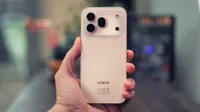
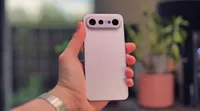
As I hinted at earlier, the Xiaomi 17T Pro looks very similar to the 15T Pro. It's the same size and shape, and the only major difference is the lack of a bevelled edge around the camera island. This time around, though, we get some slightly flashier colours.
The phone is available in Black, Deep Violet, and Deep Blue options, and I have the latter in for review. It's a really nice shade of navy blue that looks almost metallic. It's very similar to the finish on the blue Samsung Galaxy Z Fold 7, and I was a big fan of that one, too.


The 17T Pro looks and feels like a top-tier flagship, with colour-matched aluminium sides and a matte glass-fibre back that doesn't attract fingerprints and smudges. It's weighty and dense, and the boxy corners give off an iPhone-like vibe.
It's a pretty big phone, not too dissimilar to the iPhone 17 Pro Max or Google Pixel 10 Pro XL. It's nothing unusual if you're used to carrying a flagship handset, but if you have smaller hands, it could feel a bit unwieldy.
The Xiaomi 17T Pro comes with a basic matte-black TPU case in the box, so you can keep it protected from the get-go, and it also has a plastic screen protector installed as standard. It's also IP68 certified, so it'll handle a heavy rain shower or a dunk in fresh water without issue.
The screen is completely flat, and it has slim symmetrical bezels on all sides. The specs are identical to last year's model, but that was already an impressive screen, so I have no real complaints about it.

It's an OLED panel with a zippy 144Hz refresh rate, but it's not LTPO, so it'll only dip down to 30Hz to conserve battery life rather than 1Hz. On the other hand, I was impressed that it can dim as low as 1 nit, which makes a big difference when you need to check your phone in the middle of the night.
If you're concerned about eye health, you're going to love this display. It supports DC dimming and carries TUV Rheinland certifications for Low Blue Light, Flicker Free, Circadian Friendliness, and Intelligent Eye Care. In theory, it'll keep your eyes feeling fresh for longer, but I'm not particularly sensitive to such things, so I can't say I noticed a massive difference.

Camera Performance
The camera hardware on the Xiaomi 17T Pro matches that of the 15T Pro. This means you get a 50MP f/1.67 main camera with a 1/1.3-inch sensor, a 50MP f/3.0 5x telephoto, and a slightly less impressive 12MP f/2.2 ultrawide. Around the front, there's a 32MP punch-hole selfie camera.
It's a very impressive camera system overall, but it shares the same shortcomings as the previous generation, so I'll get those out of the way first. The ultrawide lacks autofocus, so it's no use for close-up shots, and the smaller low-resolution sensor isn't very good when the light gets low. The selfie camera also lacks autofocus, and while it's decent, it's not likely to wow you.


When it comes to the main and telephoto cameras, though, it's a different story. The 1/1.3-inch main sensor is the largest you'll find in this price category, and it even matches the base model flagship, the Xiaomi 17. It's excellent in all lighting conditions, and it can produce some lovely natural bokeh when you get a little closer.


The 5x telephoto is also a rarity, with most rivals opting for a 3x lens. This longer focal length helps with long-range zoom and creates a lot of compression, which looks stunning in close-up shots.


I wouldn't say it has macro capabilities, but it can get a lot closer than you might expect; it's able to focus just 30 cm away from the lens. And if you combine that with some digital zoom, you can get in pretty tight. If you want to do this, though, you'll need to turn off the automatic lens switching in the camera settings, as Xiaomi is a little over-enthusiastic about switching back to the main lens.

Image credit: Luke Baker / Digital Camera World

Image credit: Luke Baker / Digital Camera World
This phone benefits from Xiaomi's partnership with Leica, which means you get a lot of the same awesome picture profiles as the 17 Ultra. As ever, the film simulations and bokeh styles in portrait mode make taking Instagrammable pics as easy as can be.


What's new with this model is a feature called Leica Live Moment, which basically works like Apple's Live Photos. The difference is that it supports all the picture styles, you can use it in portrait mode, and there are some exclusive Leica watermarks to go along with it.
I'm not a massive fan of this shooting style; I prefer my photos to be photos and my videos to be videos. However, I do see the appeal. The best part is that you can go through the short video clip and choose a different frame if you didn't click at the opportune time, but you also get the ability to share short looping or boomerang-style clips.

Honestly, there's not much new stuff to get excited about here, but regardless, the Xiaomi 17T Pro still stands out as having one of the most impressive camera systems in its class. I was impressed with the results in almost every situation.
Arguably, it's the video features that really set this phone apart. It can shoot in Log at up to 4K60 on the main and telephoto cameras, or 4K30 on the ultrawide. You can even import and apply your own LUTs.
It can also shoot 8K30 and 4K120, but only on the main lens, and not in Log. This is an impressive array of pro video features for a phone of this class, and it easily outshines similarly priced rivals like the Honor 600 Pro and Vivo X300 FE.
Phone Performance
The Xiaomi 17T Pro is powered by the MediaTek Dimensity 9500, the same flagship chip that's found in phones like the Oppo Find X9 Pro. It comes with 12GB of RAM and either 512GB or 1TB of storage. The 9500 doesn't quite match Qualcomm's latest in raw gaming performance, but it's still super powerful, and likely more than most people will ever need.
I played a few hours of NTE, a beautiful-looking open-world title that makes even the most powerful phones struggle. I wasn't able to max out the settings, but on the balanced preset, I got a solid 60 fps throughout.


The frame of the phone gets quite warm after a while, but that's not a bad thing, as it means the cooling system is doing its job effectively. If you use the included case or a grip-style controller, it'll keep the heat away from your palms. But even without that, it never gets too uncomfortable.
Of course, outside of gaming, the performance is top-notch, and the phone feels quick even under heavy multitasking.
The software is Hyper OS 3, Xiaomi's custom version of Android 16. There aren't too many surprises here; it has essentially the same look and features as Xiaomi's flagship phones and most Poco phones, too.


There's an obvious Apple influence with some of the styling choices. For example, Xiaomi has its own version of Dynamic Island, some lock screen themes have oversized clocks and depth effects, and the quick settings shade looks very familiar, too. Personally, I'm alright with that; it looks good, and all the features work as they should.
There's also plenty of AI features to play about with, and Google's Gemini and Circle to Search are enabled as standard.

Overall, I had a good time with Hyper OS 3. The only thing that detracts from the experience is that there's a bit of bloatware to clean up when you first set up the phone. It's not a crazy amount, it'll only take a few minutes to uninstall the unwanted apps, but it's a hassle that you might not have to endure on similarly priced mobiles.
The super-sized battery is one of the defining features of the Xiaomi 17T Pro. It has a 7000 mAh pack, the largest in any Xiaomi phone to date, and as you'd expect, the battery life is very impressive. With my typical use, the phone would easily get me through the day, and usually a second morning before I was reaching for the charger.
It's not a bad showing, but the Honor 600 Pro has a significantly smaller battery, and it lasted me longer than this. Perhaps Xiaomi needs to do some more software optimisation. In all fairness, most of my testing was done well ahead of the launch, so there's plenty of opportunity for it to improve further.

As it stands, it's very easy to live with, and part of the reason for that is the extremely quick charging. You get a 100W wall adapter included in the box, and it takes the phone from completely dead to well over 50% charged in half an hour. It also supports wireless charging at up to 50W, but you'll need a suitably powerful official Xiaomi charger to reach that speed.
Verdict
The Xiaomi 17T Pro is a great all-rounder. The cameras are excellent, it's powerful, it looks and feels premium, and it comes at a lower cost than most flagship devices. The only problem is that it's very similar to last year's 15T Pro.
If you own the older model, there's not really any reason to upgrade, unless your battery keeps dying prematurely. And if you're a savvy shopper, opting for the older model, or the frequently discounted base model Xiaomi 17, might make more sense.
That said, if you're looking for a phone in this price range, the Xiaomi 17T Pro still stands out as one of the best options. It has a more versatile camera system and better video features than its closest competitors, the Honor 600 Pro or Vivo X300 FE, and it rivals them in performance, too.
So, while it might not be the most exciting update, the Xiaomi 17T Pro remains competitive in 2026. I had a great time using it, especially the 5x telephoto, which continues to surprise me with its excellent results.
Alternatives