Digital Camera World Verdict
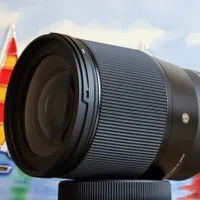
I like that the Sigma 15mm f/1.4 DC | C is just a little slip of a thing. Ideal for walkabout and travel photography, it combines a generous viewing angle with a cut-down, compact and lightweight yet robust build. Indeed, it weighs next to nothing despite having a fast f/1.4 aperture. It feels as good as it looks with good handling characteristics, coupled with strong all-round performance.
Pros
- +
Compact and lightweight
- +
Good all-round performance
- +
Fast f/1.4 aperture
- +
Aperture control ring
Cons
- -
No click/de-click switch
- -
No AF/MF focus mode switch
- -
Relatively limited mount options
Why you can trust Digital Camera World Our expert reviewers spend hours testing and comparing products and services so you can choose the best for you. Find out how we test.
Excuse me while I hit the rewind button for a moment… It’s October 2019 and I’m enjoying some very happy days reviewing the Sigma 16mm f/1.4 DC DN | C with a Canon EOS M50 camera. A variety of other APS-C format versions of this lens were available at the time, as well a Micro Four Thirds option. Further down the line, the supporting cast grew, spreading the joy to a grand range of L-mount, Sony E, Canon EF-M and RF-S, Fujifilm X, Nikon Z DX and Micro Four Thirds mount options. That covers most of the mirrorless crop-sensor bases and then some.
I was so impressed with the Sigma 16mm at the time that I gave it a 5-star rating and one of our coveted gold awards. Even so, it wasn’t entirely perfect, as it lacked any weather-seals and it wasn’t particularly compact or lightweight, which was only to be expected from a fast f/1.4 prime at the time. Enter the new replacement.
The Sigma 15mm that I’m reviewing here shaves a millimeter off the focal length to give a slightly wider perspective, while shedding 50% of the weight and 30% of the physical length, compared with the previous lens. It also features a more weather-resistant construction. In short, it’s wider (in the best possible way), smaller, more manageable and tougher. What’s not to love? Well, the mount options are comparatively restricted, at least at launch in early 2026, but it aims to be one of the best wide-angle lenses for Canon RF-S, Fujifilm X and Sony E mount mirrorless cameras.

Sigma 15mm f/1.4 DC | C: Specifications
Mount options |
Canon RF-S, Fujifilm X, Sony E |
Lens construction |
13 elements in 11 groups |
Angle of view |
86.9 degrees (83.6 Canon) |
Diaphragm blades |
9 |
Minimum aperture |
f/16 |
Minimum focus distance |
0.18m |
Maximum magnification |
0.13x |
Filter size |
58mm |
Dimensions |
64x65mm / 2.5x2.6in (approx) |
Weight |
220g / 7.8oz |
Sigma 15mm f/1.4 DC | C: Price
The price tag on this new Sigma lens weighs in at $579 / £449 (cost TBA in other regions). That compares fairly favorably with the lower asking price of $539/£389/AU$629 for the older Sigma 16mm f/1.4 DC DN | C, which has the same aperture rating, is bigger and lacks an aperture control ring, feeling a bit more basic in its handling characteristics.
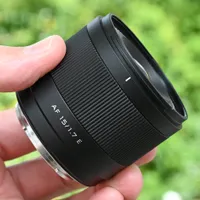
I’d expect Chinese lenses to be more competitively priced than Japanese contenders and sure enough, the APS-C format Viltrox AF 15mm f/1.7 Air that’s half an f/stop slower than the Sigma comes in at a particularly budget-friendly $239/£229/AU$370. Suffice it to say that the Sigma isn’t a ‘cheap lens’ but it’s attractively priced nonetheless.
Sigma 15mm f/1.4 DC | C: Design & Handling
The last Sigma 15mm f/1.4 lens that I tested was the Sigma 15mm F1.4 DG DN Diagonal Fisheye | Art, which is a different kettle of fish entirely. The fisheye is comparatively huge and very expensive, especially by fisheye standards, and caters to full-frame cameras. Then again, f/1.4 fisheyes are a real rarity. This 15mm ‘Contemporary’ downsized delight matches its bigger sibling for aperture rating, but is a regular rectilinear wide-angle lens, rather than a curvilinear fisheye.
It bears repeating that the lens is very much more compact and lightweight than Sigma’s previous 16mm f/1.4 APS-C format prime, more befitting slimline mirrorless cameras. I’m very much put in mind of Viltrox Air lenses, including the Viltrox AF 15mm f/1.7 Air APS-C format lens which has the same focal length but a slightly slower aperture and more basic handling characteristics, with no aperture control ring. Even so, it seems that Sigma is fighting back against inexpensive Chinese lenses, while still basing its design and manufacture in Japan (Aizu, to be precise). There are very few ‘Japanese’ camera companies that can still say that nowadays. Indeed, the Nikon Z 180-600mm lens that I reviewed a while ago was made in China.

In keeping with the downsized design, the lens has a modest 58mm filter thread at the front, which is pretty small for a wide-angle lens with a fast f/1.4 aperture rating. Getting further into the innards of the lens, three double-sided aspherical help to reduce the size and weight to a minimum, while also boosting image quality. They’re supplemented by three SLD (Special Low Dispersion) elements to enhance clarity while minimizing color fringing, along with one top-grade FLD (Fluorite Low Dispersion) element.

Along with optical quality, consistent sharpness in practical terms for most of us depends on the accuracy of the autofocus system. The Sigma features a now-common linear stepping motor to drive autofocus, which is both agile for stills and smooth for videography, operating in near-silence. To suit the burgeoning ranks of ‘content creators’, the lens is designed with more than a passing not to videography, featuring fast and effective autofocus tracking, as well as minimal focus breathing so that the angle of view remains constant during changes in focus distance.

Further good news for shooting video as well as stills is that the lens features a dedicated aperture control ring. This has an Auto position at the narrow end, while the full range between f/1.4 and f/16 is catered to in one-third f/stop click steps. That’s all well and good as far as it goes, but there’s no locking switch to avoid unwanted nudging when in the Auto position, and there’s no de-click option for smooth and silent aperture adjustment when shooting video. To be fair, the compact nature of the lens limits the space for any switches anyway.

To guard against ghosting and flare, the lens is designed with input from Sigma’s ‘advanced simulation technology’ to optimize clarity and contrast when shooting against the light. This is further enhanced by an effective petal-shaped hood that’s supplied with the lens (rather than being sold as an optional extra).

As is almost always the case, the hood has a bayonet-fit design and can be reversed to save space when stowing the lens. With the hood in its forward-facing mode, ready for action, you can still easily fit and remove the lens cap, thanks to its spring-loaded pinch-style mechanism.

Many lightweight lenses from the likes of Canon, Nikon and others have plastic rather than metal mounting plates. They should be sufficiently sturdy and robust but don’t exactly inspire confidence. Typical of Sigma lenses, this one has a ‘proper’ metal mounting plate and it also features a rubber weather-seal that runs around its circumference. Sigma doesn’t claim that the lens is comprehensively weather-sealed, but does say that it has a ‘dust- and splash-resistant structure’. Suffice it to say you should be safe enough shooting in the drizzle but Sigma says you shouldn’t allow large amounts of water to splash on the lens, as this may cause a major malfunction and render the lens unrepairable. There, you have been warned!

Sigma 15mm f/1.4 DC | C: Performance
I always think there’s little point in buying a fast lens if its performance is lackluster at its widest aperture setting. I’m happy in this instance that the Sigma delivers impressive clarity and very good sharpness even wide-open at f/1.4, at least across most of the image frame. As I’d expect, you need to stop down a little to enhance sharpness towards the edges and corners of the image frame, ideally to between f/4 and f/11. At f/16, there’s a drop-off in sharpness due to the usual phenomenon of diffraction at narrow apertures.

A main upside of an f/1.4 lens is that enables a tight depth of field for isolating subjects within a scene by blurring the background. Despite the wide-angle nature of this particular little beast, the Sigma does enable a tight depth of field for close-ups, and the quality of bokeh is pleasantly smooth. The need for consistently accurate autofocus also comes to the fore when shooting close-ups at wide apertures and the Sigma does very well in this respect as well. Naturally, another bonus of the fast aperture is that you can maintain quick shutter speeds for freezing motion, under dim lighting conditions, without needing to bump up your camera’s ISO too much.

Another plus point is that both axial and lateral chromatic aberrations are kept on a tight leash. Indeed, there’s negligible color fringing even with automatic in-camera correction disabled. I can’t say the same about barrel distortion, which relies heavily on in-camera correction. That’s entirely usual for modern wide-angle lenses for mirrorless cameras, especially those that are designed to be compact and lightweight. In a nutshell, I found that I could get away without using automatic correction for distortion with the older Sigma 16mm f/1.4 DC DN | C lens, but correction is essential with this 15mm lens.

Sigma 15mm f/1.4 DC | C: Sample Images
The following gallery of example images was shot in and around the floating harbor at Bristol Docks in the south west of England. Weather conditions were mixed, with intermittent sunshine and clouds. I used a variety of wide and medium apertures to show the relative qualities of the lens for bokeh and for edge-to-edge sharpness.


Sigma 15mm f/1.4 DC | C: Lab Results
We run a range of lab tests under controlled conditions, using the Imatest Master testing suite. Photos of test charts are taken across the range of apertures and zooms (where available), then analyzed for sharpness, distortion and chromatic aberrations.
We use Imatest SFR (spatial frequency response) charts and analysis software to plot lens resolution at the center of the image frame, corners and mid-point distances, across the range of aperture settings and, with zoom lenses, at four different focal lengths. The tests also measure distortion and color fringing (chromatic aberration).
Sharpness:

Levels of sharpness across most of the image frame are very good, straight out of the traps at the widest aperture of f/1.4. As I’d expect, it pays to narrow the aperture by at least a couple of f/stops to f/2.8 for edge/corner-sharpness to come on song, and it’s better still in the aperture range between f/4 and f/11.
Fringing:

Both lateral and axial (or longitudinal) chromatic aberrations are very negligible. The latter is often referred to as ‘bokeh fringing’, as it’s mostly a problem with fast lenses at or near their widest aperture settings. The Sigma does very well to keep these aberrations to a minimum.
Distortion: -6.18
There’s heavy barrel distortion, much more so than with Sigma’s older 16mm f/1.4 APS-C format lens. That’s more the norm than the exception nowadays, with compact wide-angle lenses designed for mirrorless cameras. Either way, it’s easily taken care of with automatic in-camera correction.
Sigma 15mm f/1.4 DC | C: Verdict
I need a reason to splash out on a prime lens for my APS-C format mirrorless cameras, rather than using the kit zoom lenses that came with them for pretty much anything and everything. The Sigma 15mm f/1.4 DC | C actually gives me two viable reasons. First up, it gives a much more noticeably wide-angle perspective than a typical kit zoom that only shrinks to a minimum 18mm focal length. Secondly, it has a much faster aperture rating, ideal for gaining a tight depth of field for close-ups and maintaining quick shutter speeds under dim lighting.
What I don’t really want is a supplemental lens that’s big and heavy to carry around. The Sigma wins out on all fronts, being compact, lightweight and having a fast f/1.4 aperture. Handling is excellent, although the aperture control ring doesn’t have a de-click option, and the lens’s image quality and all-round performance are highly impressive. It’s a keeper.
Features ★★★★½ |
Despite its compact and lightweight nature, the lens features a dedicated aperture control ring, although it lacks AF/MF and click/de-click switches. |
Design ★★★★½ |
The design successfully manages to squeeze a quart into t a pint pot. The lens is refreshingly compact and light, ideal for walkabout and travel photography. |
Performance ★★★★½ |
The Sigma is impressively sharp with very good clarity and color rendition, along with tight control over most aberrations, although it requires automatic distortion correction. |
Value ★★★★☆ |
It’s competitively priced for a lens that’s made in Japan rather than China, and good value for money. |

Alternatives