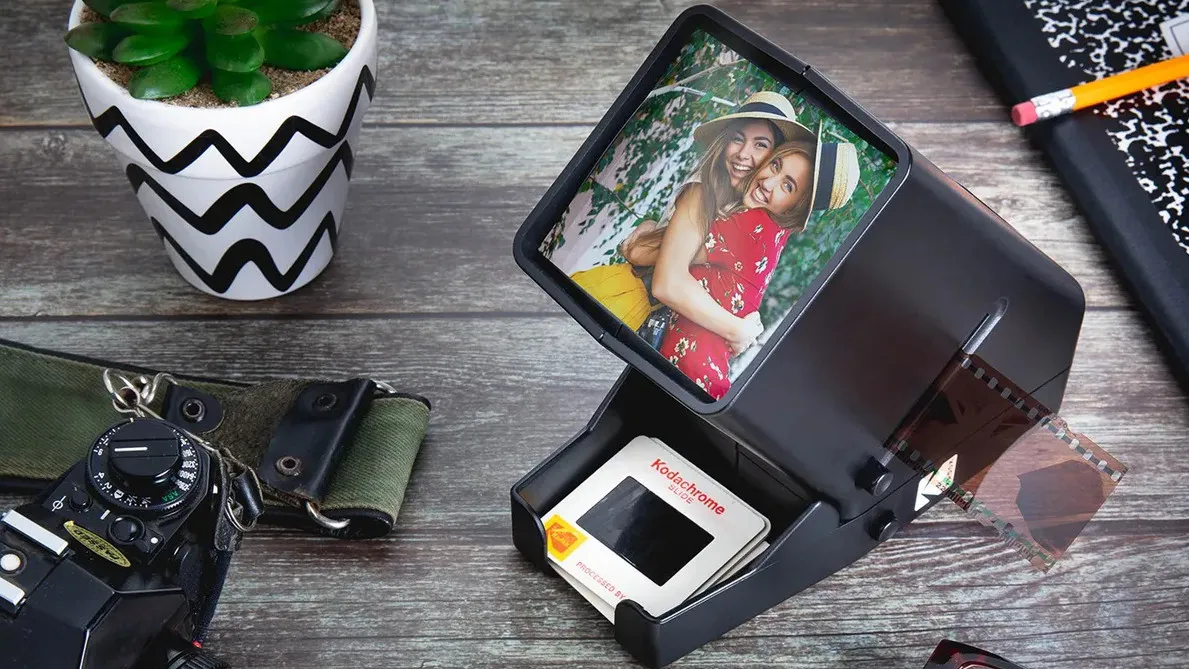
Slide viewers have moved on considerably from the large, awkward projectors many of us remember. There is no longer any need to drag a heavy machine out of storage simply to look through a few slides, as modern viewers are typically smaller, lighter, and much easier to use. Many are also battery-powered, making it possible to view slides and transparencies without being tied to a mains socket.
Some of the latest models can do far more than simply illuminate a slide. Certain viewers include basic digitising features that let you capture a copy using your smartphone, while others can connect directly to a computer via USB. Flexible power options are also increasingly common, with some models capable of running from batteries, USB or mains power depending on where you are using them.
A dedicated slide viewer can be incredibly useful, whether you have recently rediscovered a box of 35mm slides in the loft or have started shooting film and want a quick way to inspect your results. The right viewer makes it easy to check colour, sharpness and composition without having to set up a traditional projector or begin scanning everything immediately.
There are other ways to inspect film, of course. Lightboxes and handheld loupes remain popular for quickly examining negatives and transparencies, while a dedicated film scanner is a better option if your main aim is to digitise a larger collection. If that is what you need, our guide to the best film scanners is worth a look.
For this guide, however, I have selected eight of the best slide viewers currently available. Each has been chosen for its own particular strengths, with options ranging from simple viewers for family slides to more advanced models suited to inspecting film and creating quick digital copies.

Gavin has over 30 years’ experience of writing about photography and television. He is currently the editor of British Photographic Industry News, and previously served as editor of Which Digital Camera and deputy editor of Total Digital Photography. With his wealth of knowledge, Gavin is well placed to recognize great camera deals and recommend the best products in Digital Camera World’s buying guides.
The best slide viewers in 2026
Why you can trust Digital Camera World Our expert reviewers spend hours testing and comparing products and services so you can choose the best for you. Find out how we test.
Best budget slide viewer

When you think of 35mm slide film, you think of Kodachrome – so it makes sense that there exists a Kodak branded slide viewer and negative viewer combined. This angled desktop device is both battery operated and features a daylight-aping backlit LED display, with a 3x magnifying glass provided so you can really pore over the details of your shots.
Operation is straightforward: whereas the slides are slid into the device top-down, a second slot at the side is provided for inserting strips of negative, complete with quick release button for when you’re ready to slide in the next strip. Unsurprisingly, the four AA batteries required to power the device, slotted into the base, are extra, as is a power cable should you want to plug it into the mains, but neither is a deal breaker at this price point.
Overall, this is a simple, practical and affordable device from the most recognizable name in old school film photography.
See our full Kodak 35mm Slide Viewer review
Best slide viewer with screen

Rather than a magnifier, this slide viewer features its own five-inch LCD screen, which lets you view, edit and scan film slides and negatives. It can also convert them into handy-to-share JPEG digital files, thanks to 14MP sensor.
While not a professional-grade film scanner by any means, if operated as a standalone device, either 14MP or interpolated 22MP files can be saved directly to SD card (though you’ll need to provide your own card). More usefully, a USB cable for connection to your computer and HMDI cable for hooking it up to a TV set are provided out of the box, as are adapters for differing film formats, including 35mm, 126 and even 110 film, plus a cleaning brush to avoid dust intruding.
However, if you want to power the device via the mains rather than utilizing your computer’s USB port or USB-equipped power bank, you’ll have to shell out extra for a mains adapter as one isn’t included out of the box.
See our full Kodak Slide N Scan review
Best compact slide viewer

Kaiser is known for its broad range of photographic accessories, so it’s no surprise that it also offers options when it comes to 35mm slide viewing, including lightboxes. Like the inexpensive Kodak alternative, this compact viewer offers 3x magnification, is powered by a pair of optional yet essential AA batteries and, uniquely, features a fold out prop that allows for a more comfortable viewing angle when set down on a desktop.
The viewing area here is a compact, yet sufficiently large, 2x2-inches. Like the old school slide viewers people owned in the 1970s or 80s, the bulb in this device is activated by inserting a 35mm slide in the available top slot, and simply pressing down on it. There’s not much to this device and equally little it seems that can go wrong. An easy to use and affordable solution then; all you have to do is stump up extra for the batteries required.
See our full Kaiser Diascop Mini 3 review
Best lightbox slide viewer

A lightbox is a traditional way that professionals used to review their slides and negatives. And this slimline version offers an acrylic panel and LED light source for slide and negative viewing. It also acts as a portable scanner, in conjunction with your smartphone and SlideScan or FilmBox apps. In short, you're getting practicality, portability and value for money in spades, as long as you’re not expecting professional grade results.
Strips of film and slides can be placed side by side or in rows on the device to be viewed or ‘scanned’ simultaneously. Although there is an option for mains power, portability is offered by the fact that six optional AAAs can also be inserted, though this of course adds to the weight.
The viewing area is again a very compact 5x4-inches, but on the plus side this has allowed for the set up to stay very portable and lightweight. The lamp life of the LED is said to be a generous 10,000 hours, while a leather effect carry case is provided out of the box.
See our full Rybozen Ultra-Thin Portable Slide Viewer review
• See more options in our Best lightbox for photographers & artists guide.
Best simple slide viewer

An incandescent light is at the heart of this boxy viewer designed for tabletop viewing that allows users to stack and view up to 36 slides, while claiming to offer easy push-pull operation. The square format view screen resembling a standard definition TV set of old goes slightly further than others here in offering 4x magnification, but enthusiast photographers wanting more in the way of detail may prefer a lightbox and a handheld magnifying glass or loupe instead.
It’s compatible with both 35mm and all 2x2-inch (5x5cm) slides, but is battery operated only, with no mains power lead provided out of the box. Like the majority of its rivals, the batteries required also need to be purchased as an optional extra.
Best handheld slide viewer

This Photolux branded ‘SV2’ handheld LED illuminated device, also alternatively known as the Zuma Z-SV2 in the States, is another option for viewing 35mm slides that is as simple as they come. Offering a so-so 2x magnification, it’s powered by two AA batteries. You slide your 35mm slide for viewing into a vacant slot at the top, which activates the built-in daylight white LED light source and… that’s essentially it.
Unusually, the 2x AA batteries required for the light are actually included here. Extremely lightweight at just 196g and compact too, with a viewing screen size of 5.5x4.5cm, this basic yet supremely portable viewer would be ideal for casually browsing slides when feet up on the sofa.
See our full Photolux SV-2 review
Best smartphone slide scanner

This is a low-tech, left-field solution for viewing your slides. This is a cardboard, collapsible device that is designed to help you digitize your transparencies and negatives using the camera on your smartphone. A free downloadable app helps you with the process.
For something that looks like a cardboard box, it seems a bit expensive; but more robust film scanners cost significantly more. It is not a quick way of viewing boxes of old slides mind. Sold under the Kodak brand in the US, but found as the PictoScanner in Europe.
See our full Kodak Mobile Film Scanner review
How to choose the best slide viewer
When choosing a slide viewer, the first thing to consider is exactly what you want to use it for. Some models are designed purely for viewing slides, while others add extra features such as basic scanning or the ability to photograph film with a smartphone. If you simply want a quick and easy way to look through an old collection, a straightforward viewer may be all you need, but anyone hoping to create digital copies should look for a model with some form of digitising support.
Magnification is another important factor. A 35mm slide is relatively small, so viewing it comfortably without any enlargement can be difficult. A good slide viewer should provide enough magnification to let you assess composition, colour and general image quality clearly, while more powerful models can make it easier to check fine detail, focus and sharpness.
The lighting system is just as important, as an evenly illuminated slide is much easier to inspect. Most viewers use a built-in light source and require either batteries or an external power connection. Depending on the model, this might mean AAA, AA or C batteries, and these are not always supplied in the box, so it is worth checking before you buy.
Some newer slide viewers can instead be powered or recharged through USB-C or micro USB. This can be a much more convenient option if you would rather avoid disposable batteries, particularly if you plan to use the viewer regularly or take it with you when travelling.
How we test slide viewers
When testing slide viewers, we begin with the most important step: loading a selection of slides and seeing how each model performs in real-world use. We assess image magnification, overall viewing quality and how easy the viewer is to set up and start using.
During longer testing sessions, we also consider battery life to understand how practical each viewer is beyond a quick look through a handful of frames. If a model offers additional features, such as digital scanning, we test those carefully too, looking at both the quality of the scans and how simple, intuitive and useful the process feels in everyday use.
You can read more about how we test and review photographic accessories at Digital Camera World.
Read more
Best film scanners
Best scanner for documents and photographs
Best VHS to DVD converters
Best film cameras
Best 35mm film
Best video projectors
Best projection screens
