
Disposable cameras offer a wonderfully simple way to rediscover the charm of analogue photography. There are no menus, complicated settings or endless retakes to think about; you simply point, press the shutter and enjoy the moment. They are ideal for weddings, parties, festivals and weekend trips, where their uncomplicated design encourages people to take photographs without worrying about whether every image is technically perfect.
Much of their appeal comes from not seeing the results straight away. You have to wait until the film is developed, and that delay makes the whole experience feel more deliberate and rewarding. With only a limited number of frames available, each photograph matters, while the final prints often feel more personal than images left sitting on a phone.
Those photographs can be pinned to a wall, added to a scrapbook or passed around among friends, giving them a physical quality that digital images often lack. The unpredictable colours, grain and occasional imperfections are all part of the experience, and they help give disposable-camera photographs their distinctive character.
Despite the name, disposable cameras are not always as wasteful as they might sound. Some manufacturers operate recycling schemes that recover camera bodies and reuse certain components, helping to reduce unnecessary waste. Modern models are also generally reliable and robust, making them an easy, affordable, and enjoyable way to experience film photography.

For nearly 20 years, Sebastian’s work has been published internationally. Drawn to film and traditional formats, he now spends his spare time shooting street scenes and everyday moments in black and white - most often on film, using his trusted Leica M2 or Leica M-E.
The best disposable cameras
Why you can trust Digital Camera World Our expert reviewers spend hours testing and comparing products and services so you can choose the best for you. Find out how we test.
Best disposable color camera
✅You want a classic Kodak colour film with that warm, nostalgic look.
✅You want an easy, no-fuss way to shoot film anywhere.
❌You want more than 27 exposures per roll
❌You want better low-light performance without heavy flash use.
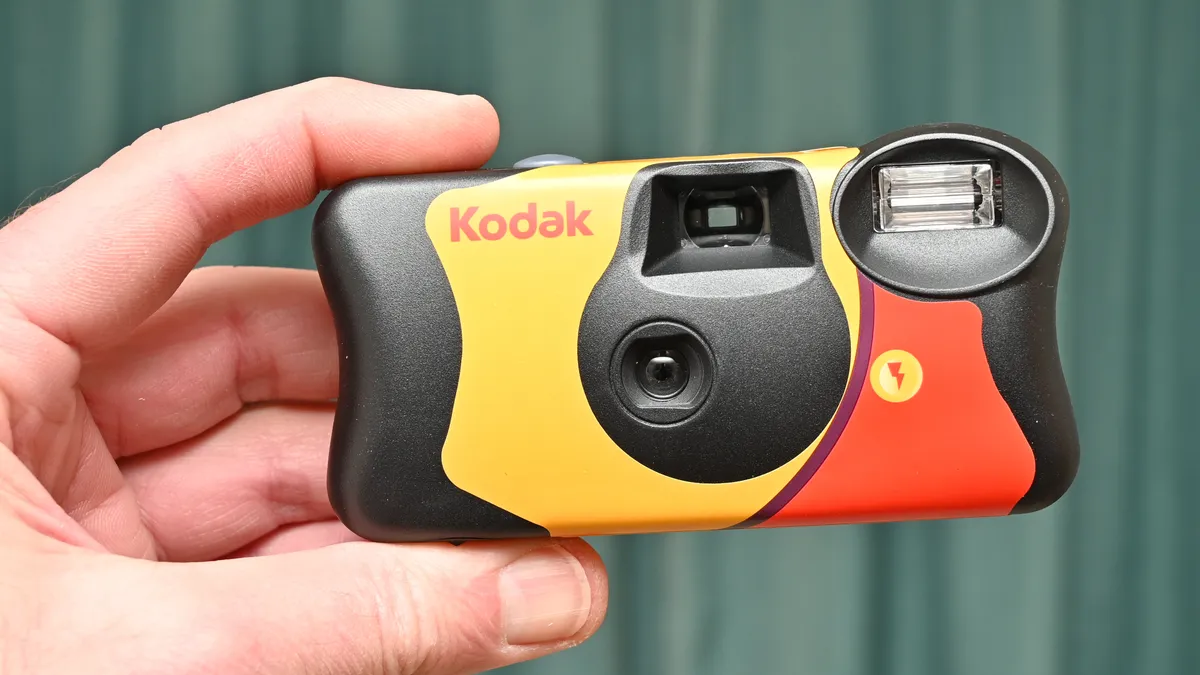
This vibrant disposable camera not only catches the eye with its bright colors but also elevates the standard 27 exposures to a generous 39, all captured on Kodak Kodacolor film. The built-in flash extends its functionality with a versatile 4ft to 10ft range.
Encased in durable plastic, this camera is designed to endure a few bumps and knocks, making it a reliable companion. It's as if the saying "can't go wrong" was tailor-made for cameras of this caliber.
While 27-exposure versions are available, opting for the "27+12" (39-exposure) variant often proves to be the more economical choice.
Read our full Kodak Funsaver review
You can also buy Kodak Funsaver cameras in bulk packs and save even more money! The cameras can be found in bulk packs of 5 or 10, which makes them great for weddings or parties. You can find the best deals below.
Best classic disposable B&W camera

✅You want that timeless Tri-X 400 grain and contrast straight out of camera.
✅You want a camera that delivers striking results in varied lighting.
❌You want a camera that delivers striking results in varied lighting.
❌You want control over settings - this is pure point-and-shoot.
Kodak's Tri-X 400 stands as a legendary monochrome film, celebrated for its era-defining dramatic and contrasty aesthetic. Its allure has captured the hearts of countless photographers.
Excitingly, Tri-X is now accessible in a single-use camera, presenting a compelling entry point for those eager to explore the realm of analog photography.
This convenient package not only includes 27 shots of the iconic Tri-X but also features what Kodak proudly describes as the most potent flash ever incorporated into a disposable camera.
This formidable flash seamlessly complements the high-key drama inherent in the Tri-X film stock, elevating your photographic experience to new heights.
Read more: Kodak Tri-X 400 Single-Use Camera review
Best waterproof disposable film camera

✅You want a rugged, sealed design that’s worry-free to carry anywhere.
✅You want to shoot film while swimming, snorkelling, or adventuring.
❌You want to go deep - it's only waterproof up to 15 metres
❌You want low-light performance - this camera lacks a flash.
This eye-catching device boasts generously sized controls, ensuring that even the younger members of your family can effortlessly navigate its functions.
Dive into the depths of creativity with its waterproof capability, allowing you to capture the wonders beneath the waves at depths of up to 50 feet (15m).
Armed with Kodak Ultra Max 800 film, this camera promises clear and vivid images underwater. While it skips the flash for aquatic adventures, it's perfect for outdoor and daylight photography.
Equipped with a sunscreen and scratch-resistant lens, the film is securely housed within a robust and shock-proof shell, making it the ideal companion for your vacation escapades.
Read our full Kodak Sport Single-Use Camera review
Best budget B&W disposable camera

✅You want rich, punchy black and white images with classic HP5 grain
✅You want a fun, no-pressure way to shoot timeless monochrome frames
❌You want control over focus or exposure - this keeps it simple.
❌You want colour - this one’s strictly black and white
The Harman single-use black & white film camera boasts a surprisingly vibrant finish, adding a touch of color to its simplicity.
The convenience of being pre-loaded with film and a battery means you can start capturing moments right out of the box, making it a fun and accessible choice for casual snapshots.
However, it falls behind in image quality compared to even budget-friendly mobile phones available today.
Despite this, the camera finds its niche for those aiming to recreate an authentic snapshot reminiscent of bygone decades.
Read our full Ilford HP5 Plus B&W Single Use Camera review
Best single use camera for creativity

✅You want to reuse your camera by reloading new rolls
✅You want a playful, lo-fi aesthetic straight out of the camera.
❌You want a quiet shutter - this one clicks loud and proud.
❌You want pro-level performance - this is more about fun than finesse.
Lomography takes pride in its commitment to crafting unique films that infuse a distinctive retro aesthetic into your photographic endeavors. The camera in question is equipped with a roll of LomoChrome Metropolis, a film intentionally designed to yield moody, subdued shots.
The resulting effect mirrors the captivating visuals often associated with Eastern European films from the Cold War era - where colors may appear slightly askew, yet contribute to endowing your photography with a distinctive artistic flair.
Unlocking even more creative possibilities, this camera comes with three filter gels that can be seamlessly placed over the flash, enabling you to impart an even more unconventional color palette to your portraits.
What sets this camera apart is its versatility; not only can you replace the film at your discretion, but you also have the flexibility to swap out the battery, rendering it a reusable tool for your photographic endeavors.
Imagine the possibilities - each time you load a fresh 35mm film, you have the freedom to explore and experiment with a wide array of visual styles.
Read our full Lomography Simple Use Color Negative review
Best reloadable B&W camera

✅You want a true film experience without committing to an expensive setup.
✅You want to experiment with different 35mm film stocks.
❌You want full manual controls - this camera offers only the basics.
❌You want perfect exposures every time - there’s no metering here.
To capture the nostalgic essence of black & white photographs from a bygone era, the Harman Reusable 35mm Film Camera proves to be an excellent choice.
What sets it apart is its inclusion of two rolls of 36-exposure Kentmere Pan ISO 400 black & white film, perfectly complementing the camera's performance.
Delving into the realm of the lo-fi aesthetic, this camera boasts a multitude of features that make it a compelling option for enthusiasts seeking to recreate the timeless charm of vintage snapshots.
Read our full Harman Reusable 35mm Film Camera review
Best reloadable camera for any film

✅You want a fun, stylish way to shoot 35mm film again and again.
✅You want a compact, lightweight body that’s easy to carry anywhere.
❌You want premium build quality - this is a plastic-bodied camera.
❌You want ultra-sharp images - expect soft focus and lo-fi charm.
I appreciate the extensive range of color options that Kodak provides for this camera, catering to a diverse array of tastes and moods.
The versatility in color choices adds a personal touch to the photography experience. Additionally, opting for a reloadable camera over a single-use one seems like a prudent choice in terms of value for money, despite the initial need to purchase film separately. The camera exhibits commendable build quality and handling, offering a satisfying user experience.
However, it's worth noting that, akin to other budget-friendly disposable or reloadable film cameras, the outright image quality may resemble something deemed 'passable' from an era long past.
This characteristic may evoke a sense of nostalgia for those who appreciate the vintage aesthetic, but it's essential to manage expectations regarding contemporary image standards.
Read our full Kodak M35 Reloadable Film Camera review
How to choose the best disposable camera
When choosing a disposable camera, one of the most important things to consider is the film inside, particularly its ISO rating. Film rated at ISO 400 or above is generally the most versatile option, as it can cope with a mixture of bright outdoor conditions and lower indoor light. Slower film can produce attractive results, but it usually performs best in strong daylight and offers less flexibility when conditions begin to change.
A built-in flash is essential if you expect to take photographs indoors, at parties or after dark. Disposable-camera lenses have relatively small apertures, so they need plenty of light to produce a usable image. Remember that the flash will only illuminate subjects within a limited distance, so it is best suited to people and objects positioned reasonably close to the camera.
Simplicity is another major part of the appeal, as disposable cameras should be easy for almost anyone to pick up and use. When buying them for a wedding, party or other celebration, you may also want to consider how they look. Some models have more decorative designs that can complement a table setting or event theme, while others favour a more traditional appearance.
There are plenty of inexpensive, lesser-known options available, but established film brands such as Kodak and Fujifilm are often the safer choice. Their experience producing film generally results in more predictable colours, exposure and overall image quality, which can be particularly important when you only have one opportunity to capture an occasion.
Finally, compare the number of exposures included and remember to account for processing costs. A 36-exposure camera may offer better value per photograph, while a 24 or 27-exposure model can be more manageable for a shorter event. Developing, scanning, and printing the film will add to the overall expense, so consider the complete cost rather than judging each camera solely by its purchase price.
Are disposable cameras worth it?
The best disposable cameras offer a fun, affordable and wonderfully simple way to enjoy analogue photography. These easy-to-use point-and-shoot cameras are ideal for weddings, parties and other social occasions, whether you are taking photographs yourself or handing them out to guests as memorable party favours. Many are also available in convenient multipacks, making them a practical choice for larger celebrations.
How we test disposable cameras
To recommend the best disposable cameras, we put each one through a rigorous testing process to evaluate functionality and image quality. Our goal is to assess the build quality, lens performance, and the characteristics of the film included in each camera.
We conduct mechanical tests to examine key components like the winding mechanism, shutter, and flash, ensuring durability, reliability, and smooth operation. Electrical components, including the battery and flash, are also tested to confirm proper firing and synchronization with the shutter.
Image quality is evaluated in various lighting conditions to assess exposure accuracy, sharpness, and overall performance. We test flash output for range and consistency, ensuring it provides adequate illumination. Additionally, we check for any light leaks that could compromise image quality.

