
When Honor first teased the Robot Phone last October, most people assumed it was either a concept that would never ship or clever CGI. At CES 2026, journalists finally saw a physical prototype, and the consensus is clear: this thing is real, and this could change the game for a lot of people.
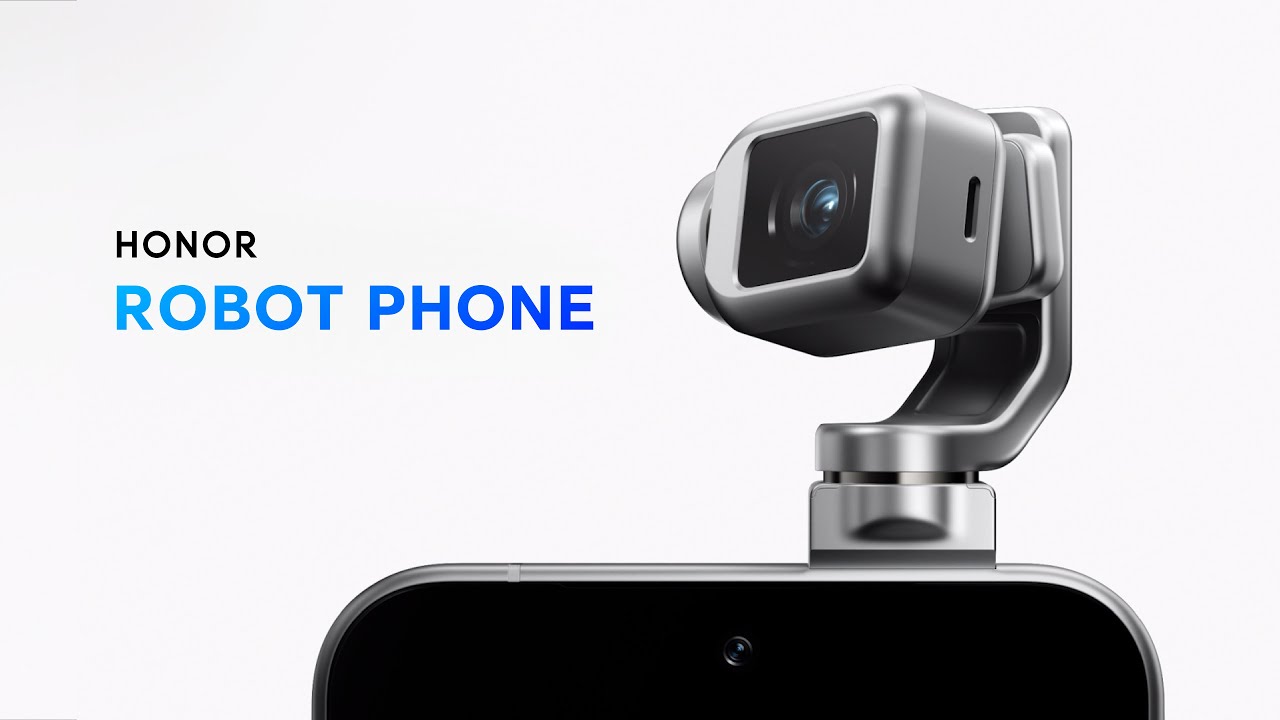
The Robot Phone looks relatively normal at first glance, aside from a chunky camera module. But press a button, and a protective panel slides aside to reveal a three-axis gimbal with a camera that extends from the phone's body.
Think of it as having a DJI Osmo Pocket 3 built into your phone. The gimbal camera can rotate, tilt, and track subjects autonomously while providing professional-grade stabilization. For anyone who's ever lugged a gimbal through an airport or tried to set up a tripod on uneven ground, the appeal is clear. This is a stabilization kit that lives in your pocket and requires no assembly, balancing, or extra batteries.
How it works
The gimbal tracks moving subjects automatically, transforming content creation. Set the phone down, walk away and the camera follows you. No assistant needed, no fixed angle, no expensive tracking equipment. For anyone who creates video content, this could eliminate several pieces of kit.
The stabilization works in any orientation. Hold the phone normally, and the gimbal compensates for shake. Set it face-down on a surface, and the gimbal extends upward, automatically leveling itself. Honor suggests this enables features like star tracking for astrophotography.

Anyone familiar with DJI's Pocket series of pocket gimbal cameras will recognize the concept. The Pocket 3's been hugely successful as a standalone gimbal camera for vloggers and content creators. Now Honor has essentially taken that three-axis stabilization technology and made it small enough to fit inside a smartphone camera bump.
In practical terms, this could be a huge boost for content makers. With a DJI Pocket, you're carrying a separate device with its own screen, battery and storage. But with the Robot Phone, the gimbal shares the phone's processor, display and cellular connection. That should make it easier to livestream directly, edit immediately and share without transferring files.
Where we are now
Admittedly, the prototypes shown at CES weren't operational – the gimbal had to be moved manually. But the mechanism works, and the engineering is clearly functional rather than aspirational. Seeing the camera extend and retract smoothly, then disappear almost flush with the phone's body, has convinced sceptics that Honor has solved the fundamental challenges.
The phone also houses two additional fixed cameras alongside the gimbal, likely covering wide and telephoto focal lengths. These operate like standard smartphone cameras for everyday photography, while the gimbal camera handles stabilized video and tracking shots.
The trade-off for all this technology? Thickness. The Robot Phone has a substantial camera bump and won't be competing in the ultra-thin category. But for photographers and content creators, that's a reasonable compromise. If Honor can deliver on the promise of professional stabilization in a pocketable device, they may have created something genuinely useful rather than merely novel. Whether it tempts iPhone users away remains to be seen, but it certainly offers capabilities Apple hasn't even attempted.
Honor will fully reveal the Robot Phone at Mobile World Congress in Barcelona this March, where journalists will be able to handle working units. Full specifications, including sensor details and battery life, will be announced then.
The device will initially launch only in China, though this suggests Honor is testing the concept in its home market first. Watch this space as we bring you all the latest news on this intriguing phone as it happens.

