




Digital Camera World Verdict
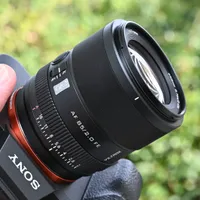
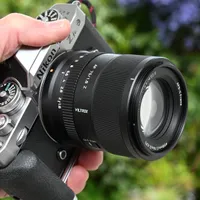
The Viltrox AF 90mm f/2.2 Evo gives me an ‘effective’ 135mm focal length on the APS-C cameras for which it’s designed, which I feel is ideal for tight head shots and head-and-shoulders portraiture. The Nikon Z and Sony E mount versions boast a wealth of handling extras, although the Fujifilm X version is a little more basic. Either way, this lens delivers superb image quality and all-round performance and has sturdy build quality, all at a bargain price.
Reasons to buy
- +
Excellent image quality
- +
Good handling characteristics
- +
‘Effective’ 135mm focal length
- +
Robust, quality construction
Reasons to avoid
- -
Lacks an aperture ring lock
- -
Fujifilm X-mount edition has relatively basic handling
Why you can trust Digital Camera World Our expert reviewers spend hours testing and comparing products and services so you can choose the best for you. Find out how we test.
I’ve been enjoying Viltrox lenses for four years and counting, having originally bought a set of four f/1.4 Viltrox primes for my Nikon Z fc camera back in 2022. The 13mm, 23mm, 33mm and 56mm lenses in question are old news now, but still do me proud. More recent offerings have been divided into four main product lines, comprising low-budget Air lenses, top-grade Pro and Lab lenses and next-generation Evo lenses, the last of these representing the latest line-up from the Chinese manufacturer.
The first Evo lens out of the gene pool was the full-frame compatible Viltrox AF 85mm f/2.0 Evo, followed by the similarly full-frame Viltrox AF 35mm f/1.8 Evo and Viltrox AF 55mm f/1.8 Evo, all three being available in Nikon Z and Sony E mount options. Despite the different focal lengths, the look and feel of these lenses is virtually identical, being extremely similar in size and weight and having exactly the same handling characteristics and 58mm filter thread.
There are now two APC-C format Evo lenses, comprising the 90mm that I’m reviewing here and a 75mm f/1.8 lens. They follow suit with pretty much the exact same size and weight as the full-frame trio, the same handling characteristics and the same filter thread.

Okay, I’ll revise my last statement. The Nikon Z and Sony E mount versions of the APS-C lenses have the same handling layout as their full-frame counterparts. The Fujifilm X editions have a more streamlined layout, as I’ll come to later. Either way, the new Evo lenses aren’t the only APS-C gig in town for portraiture fans. There’s also the ultra-lightweight, cut-price Viltrox AF 56mm f/1.7 Air and the super-speedy Viltrox AF 56mm f/1.2 Pro to consider, both of which give a classic 85mm ‘effective’ focal length, or thereabouts. But if you fancy a longer focal length, the 90mm Evo aims to be one of the best portrait lenses, especially if you’re after great quality without spending over the odds.
Viltrox AF 90mm f/2.2 Evo: Specifications
Mount options |
Fujifilm X, Nikon Z, Sony E |
Lens construction |
10 elements in 8 groups |
Angle of view |
18.6 degrees |
Diaphragm blades |
9 |
Minimum aperture |
f/16 |
Minimum focus distance |
0.74m |
Maximum magnification |
0.14x |
Filter size |
58mm |
Dimensions |
69x78mm / 2.7x3.1" |
Weight |
345g / 12.2oz |
Viltrox AF 90mm f/2.2 Evo: Price
The Viltrox AF 90mm f/2.2 Evo has the look and feel of a seriously up-market prime lens, making the launch price of $369 / £359 (AU$TBA) look extremely competitive. I’m well used to Viltrox delivering great value for money and, to give a little perspective, previous Evo lenses include the Viltrox AF 85mm f/2.0 Evo at $275 / £265 / AU$449, the Viltrox AF 35mm f/1.8 Evo at $395 / £385 / AU$529 and the Viltrox AF 55mm f/1.8 Evo at $370 / £359 / AU$519, all of these three being full-frame compatible rather than APS-C format.
And there’s more. The low-budget Viltrox AF 56mm f/1.7 Air is relatively basic and ultra-lightweight, priced at $179 / £139 / AU$282, while the super-fast, top-end Viltrox AF 56mm f/1.2 Pro comes in at $580 / £530 / AU$889. Long story short, the new AF 90mm Evo looks very good value for a classy prime lens.
Viltrox AF 90mm f/2.2 Evo: Design & Handling
It bears repeating that the 90mm f/2.2 Evo lens is designed specifically for APS-C format cameras and isn’t full-frame compatible, unless you use your full-frame camera in crop mode. Even if you have a Nikon or Sony APS-C format camera, it’s tempting to use the full-frame Viltrox AF 85mm f/2.0 Evo, as it costs less to buy and is a third of an f/stop faster. The 90mm lens is therefore maybe of greater interest to Fujifilm shooters, as the full-frame Evo lenses aren’t available in X-mount versions.

Let’s talk glass. The lens features 10 elements in 8 groups, complete with two ED (Extra-low Dispersion) elements and two HRi (High Refractive index) elements. The optical design and addition of specialist glass seek to deliver excellent clarity and color rendition, along with the minimum of unwanted aberrations. A further boost is on hand from HD Nano multi-layer coatings to minimize ghosting and flare.

The Nikon Z and Sony E mount editions of the lens win out for handling extras. Onboard controls include an AF/MF focus mode switch and a customizable function button. The focus mode switch saves any faffing around in camera menus when you want to switch focusing modes. You can typically assign the function button to various different tasks via in-camera menus, but AF-hold is often the top choice. The focus mode switch and function button are omitted in the Fujifilm X mount version of the lens, which has a relatively straightforward layout of controls.

A feature that’s common to all three mount options of the lens is the dedicated aperture control ring. It’s only marked in full f/stop increments rather than having intermediate one-third f/stop markings, but still has click steps at one-third f/stop increments. This is generally favored for stills photography, but the Nikon Z and Sony E mount editions boast a click/de-click switch, enabling silent and stepless aperture transitions when shooting video. Again, this is lacking in the Fujifilm X mount version.

One thing that’s absent from all editions of the lens is a locking switch for the A (Auto) position on the aperture control ring. I’d have liked that to be included, just to avoid any accidental nudging of the ring from its ‘A’ position to a narrow aperture setting, when controlling the aperture from the host camera body.

The autofocus system is based on a linear stepping motor, which is par for the course with modern lenses designed for mirrorless cameras. Typical of the breed, it enables swift yet near-silent autofocus operation, and the motor is also called upon when applying manual focus adjustments.

Evo lenses feel solid and robust, and this one is no exception. The relatively compact and lightweight build certainly doesn’t come at the expense of flimsy build quality. Multiple weather-seals are incorporated and the controls all work with smooth precision.

Unlike some budget-conscious lenses from certain camera manufacturers, this one comes complete with a hood, as do nearly all other Viltrox lenses. Off the top of my head, the only one that doesn’t is the super-skinny Viltrox AF 28mm f/4.5 pancake lens. The 90mm actually uses the same PL-122A circular-profile hood that’s also supplied with the 75mm Evo lens. As I’d expect, it has the usual bayonet-fit coupling and can be reversed on the lens so you can stow it away in smaller spaces.

Viltrox AF 90mm f/2.2 Evo: Performance
A vital factor when choosing any APS-C format lens, not just of the wide-angle variety, is that you take the crop factor or ‘focal length multiplier’ into account. The 1.5x conversion factor gives the Viltrox AF 90mm f/2.2 Evo a classic 135mm ‘effective’ focal length in full-frame terms. I’ve been using 135mm lenses on full-frame film cameras for tight head shots and for head-and-shoulders portraiture for the last 50 years, since the film cameras of my youth. I really like that the focal length enables a very natural and comfortable working distance and a flattering look due to the slight compression in perspective. Ultimately, it’s a key plus point for the performance of this lens.

The focal length and widest available aperture of f/2.2 combine to enable a tight depth of field. Again, in the context of portraiture, as well as for still life photography, it’s ideal for isolating subjects within a scene by blurring fussy backgrounds. Also, you can literally make people stand out from the crowd. The lens delivers excellent performance in this respect, combining scintillating sharpness where you want it, even when shooting wide-open at f/1.8, with beautifully soft and dreamy bokeh where you don’t. There’s a well-rounded 9-blade aperture diaphragm that helps to maintain the quality of bokeh when stopping down a little.

I keep a phrenology head in my studio, which scared the living daylights out of my dog when he first saw it, dismembered and sitting on the shelf. A more useful application of the head is that it works well for testing portrait lenses. Shooting it against a backdrop of detailed garden plants and hedging reveals levels of sharpness, the quality of bokeh and any signs of axial chromatic aberration. The last of these is a phenomenon also known as ‘bokeh fringing’, which can be problematic with fast lenses at their widest aperture. It gives rise to color fringing around high-contrast transitions just in front of and behind the plane of focus, like the black lines and writing on the head’s white porcelain surface. The following gallery includes shots taken at all main aperture steps from f/2.2 to f/5.6.


Viltrox AF 90mm f/2.2 Evo: Sample Images
The following gallery of sample images was shot at the Bishop’s Palace and Gardens in the English city of Wells, both indoors and outdoors. I majored on wide aperture settings, which is the principle advantage of this lens compared with a zoom. After the first few shots in the gallery, many of the images give an idea of the qualities of both sharpness and bokeh, as well as the lens’s excellent control over unwanted aberrations.


Viltrox AF 90mm f/2.2 Evo: Lab Results
We run a range of lab tests under controlled conditions, using the Imatest Master testing suite. Photos of test charts are taken across the range of apertures and zooms (where available), then analyzed for sharpness, distortion and chromatic aberrations.
We use Imatest SFR (spatial frequency response) charts and analysis software to plot lens resolution at the center of the image frame, corners and mid-point distances, across the range of aperture settings and, with zoom lenses, at four different focal lengths. The tests also measure distortion and color fringing (chromatic aberration).
Sharpness:
| Timestamp (f/) | Center (line widths per picture height) | Mid-frame (line widths per picture height) | Corners (line widths per picture height) |
|---|---|---|---|
| 2.2 | 2440 | 2115 | 1514 |
| 2.8 | 2395 | 2194 | 1580 |
| 4 | 2409 | 2276 | 1707 |
| 5.6 | 2343 | 2133 | 1737 |
| 8 | 2004 | 1884 | 1680 |
| 11 | 1594 | 1611 | 1487 |
| 16 | 1232 | 1212 | 1141 |

Sharpness is pretty epic even when shooting wide-open at f/2.2, not just at the center of the frame but right out to the edges and corners. Levels of sharpness start to drop off at f/11, more so at f/16, due to narrow-aperture diffraction.
Fringing:
Center
| Product | Value |
|---|---|
| f/2.2 | 0.31 |
| f/2.8 | 0.36 |
| f/4 | 0.51 |
| f/5.6 | 0.26 |
| f/8 | 0.35 |
| f/11 | 0.38 |
| f/16 | 0.28 |
Lateral chromatic aberration is minimal even at the edges and corners of the frame, while axial chromatic aberration is negligible at the widest aperture of f/2.2. There’s no reliance on automatic in-camera correction for color fringing.
Distortion: 0.56
The lens exhibits a very slight amount of pincushion distortion, but it’s only really discernable in lab-test data rather than being visible in real-world images. For completely zero-distortion results, automatic in-camera correction is generally available.
Viltrox AF 90mm f/2.2 Evo: Verdict
I love the classic 135mm ‘effective’ focal length in full-frame terms, that’s delivered by the Viltrox AF 90mm f/2.2 Evo on APS-C format camera bodies. It works a treat for portraiture and still life photography, as well as for general shooting when I need a short telephoto focal length. Moreover, the lens’s performance is top-drawer, combining superb sharpness and clarity with beautiful bokeh, courtesy of the shallow depth of field that’s on offer.
There are two more big ticks in the boxes of my wish list, when it comes to build quality and handling. The Nikon Z and Sony E mount versions build further on the robust, weather-resistant construction and handling finesse of the Fujifilm X mount edition, adding an AF/MF focus mode switch, a customizable function button, and a click-de-click switch for the dedicated aperture control ring. It’s perhaps a shame that these extras are omitted from the Fujifilm version but in its defense, the Viltrox follows suit with the design ethic of Fujifilm’s own-brand XF R series lenses.
Even in its more basic trim, the lens is a highly attractive proposition for Fujifilm shooters. However, owners of Nikon or Sony camera might feel drawn to the full-frame compatible Viltrox AF 85mm f/2.0 Evo instead, which is a third of an f/stop faster and even better value for money.
Features ★★★★★ |
The strong features list includes fast and accurate autofocus and a dedicated aperture control ring. For Nikon and Sony, there’s also an AF/MF switch, customizable function button and click/de-click switch, although these are lacking in the Fujifilm version, in keeping with Fuji own-brand lenses. |
Design ★★★★★ |
The design of the lens manages to combine a conveniently compact and lightweight construction with solid and sturdy build quality, complete with weather-seals. All in all, the lens has a great look and feel. |
Performance ★★★★★ |
Edge-to-edge sharpness is excellent even when shooting wide-open at f/2.2, along with superb clarity, contrast and color rendition. Bokeh is super-smooth, while color fringing and distortion are kept to a minimum. |
Value ★★★★★ |
This APS-C format 90mm lens is more expensive to buy than the full-frame compatible Viltrox AF 85mm f/2 Evo lens but it’s still outstanding value for money. |

Alternatives