




Digital Camera World Verdict
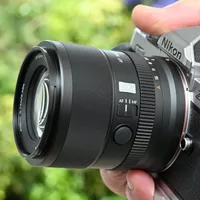
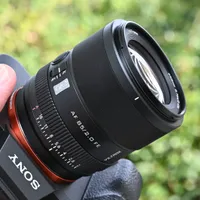
I’m sold on the APS-C format Viltrox AF 75mm f/1.8 Evo for tight, head-and-shoulders portraiture, for which its ‘effective’ focal length is ideal. It takes its lead from three previous full-frame compatible Viltrox Evo prime lenses, delivering the same high-end handling characteristics, while maintaining virtually the same size and weight. It’s a great performer at a bargain price.
Reasons to buy
- +
Impressive performance
- +
High-end handling
- +
Portrait-friendly focal length
- +
Quality construction
Reasons to avoid
- -
No aperture ring lock
- -
Fujifilm X-mount version lacks a few handling extras
Why you can trust Digital Camera World Our expert reviewers spend hours testing and comparing products and services so you can choose the best for you. Find out how we test.
I started my collection of Viltrox prime lenses a few years ago, with a fab four f/1.4 prime lenses for my Nikon Z fc camera. I’ve been entirely happy with them but things have moved on since then, with Viltrox concentrating on new line-ups featuring lightweight and low-budget Air lenses, top-grade Pro and Lab lenses and (most recently) next-generation Evo lenses.
The evolution in question came to fruition with the full-frame compatible Viltrox AF 85mm f/2.0 Evo for Nikon Z and Sony E mount mirrorless cameras. That was followed by the Viltrox AF 35mm f/1.8 Evo and the Viltrox AF 55mm f/1.8 Evo, which launched simultaneously in the same two mount options. With unified features, size and weight, all three lenses work superbly well as interchangeable optics, without throwing any spanners in the creative flow. Fast-forward a little and there are now two APC-C format Evo lenses, in virtually the same size and weight, and with the same handling characteristics and filter thread as the pre-existing full-frame lenses.

The new kids on the block are the Viltrox AF 75mm f/1.8 Evo that I’m reviewing here, and the slightly longer Viltrox AF 90mm f/2.2 Evo. Both are eminently suitable for APS-C format portraiture and are again available in Nikon Z and Sony E mount options. There are also Fujifilm X mount editions, although the Fuji versions lack the AF/MF focus mode switch, customizable function button and click/de-click switch of the other two mount variants.
Other portrait-friendly, dedicated APS-C format Viltrox lenses in the same choice of three mount options include the cut-price Viltrox AF 56mm f/1.7 Air and the super-fast Viltrox AF 56mm f/1.2 Pro. Even so, the combination of focal length and aperture rating aim to make the new APS-C format Evo primes among the best portrait lenses, in terms of bang for your buck.
Viltrox AF 75mm f/1.8 Evo: Specifications
Mount options |
Fujifilm X, Nikon Z, Sony E |
Lens construction |
11 elements in 9 groups |
Angle of view |
21.4 degrees |
Diaphragm blades |
9 |
Minimum aperture |
f/16 |
Minimum focus distance |
0.74m |
Maximum magnification |
0.12x |
Filter size |
58mm |
Dimensions |
69x78mm / 2.7x3.1in |
Weight |
355g / 12.5oz |
Viltrox AF 75mm f/1.8 Evo: Price
The Viltrox AF 75mm f/1.8 Evo looks, feels and performs like a properly high-class prime lens, making it very competitive in terms of price, launching at $329 / £319 (AU$TBA). So how does that stack up against other Viltrox Evo lenses in the line-up, as well as the lightweight Air and top-speed Pro options? Well, the bottom line is that the Viltrox AF 85mm f/2.0 Evo costs $275 / £265 / AU$449, the Viltrox AF 35mm f/1.8 Evo sells for $395 / £385 / AU$529 and the Viltrox AF 55mm f/1.8 Evo costs $370 / £359 / AU$519.
Meanwhile, the Viltrox AF 56mm f/1.7 Air is relatively basic and inexpensive at $179 / £139 / AU$282 and the top-end Viltrox AF 56mm f/1.2 Pro is naturally pricier at $580 / £530 / AU$889. All things (and alternatives) considered, the new APS-C format Evo looks great value for money.
Viltrox AF 75mm f/1.8 Evo: Design & Handling
Unlike the previous three offerings in the Viltrox Evo line-up of prime lenses, the two latest 75mm and 90mm lenses are designed specifically for APS-C format Fujifilm, Nikon and Sony mirrorless cameras, instead of being full-frame compatible. Naturally, if you’re in either of the Nikon or Sony camps, you can use the full-frame Viltrox AF 85mm f/2.0 Evo on your APS-C format body, with no compromises. The new lenses are arguably of greater interest to Fujifilm shooters, as these are the first Evo lenses available in X-mount.
One of the things I like most about all five Evo lenses in the line-up so far is that, irrespective of whether they’re full-frame or APS-C format, they’re all pretty much the same size and weight, and have the same 58mm filter attachment thread up front. The handling characteristics (Fujifilm versions aside) are also identical. The upshot is that if you’re chopping and changing between different lenses in the series to make use of different focal lengths, the shooting experience is virtually identical. That means you can concentrate fully on shooting, without the risk of any differences in handling spoiling your creative flow.

It goes without saying (I’ll say it anyway) that any lens is only as good as its glass. This one features 11 elements in 9 groups, including two ED (Extra-low Dispersion) elements and two HRi (High Refractive index) elements. The aim is for excellent clarity and contrast, along with natural color rendition and the minimum of unwanted aberrations. Other optical highlights include HD Nano multi-layer coatings to minimize ghosting and flare, and the front element also has a moisture/grease-repellant fluorine coating.

Handling extras, at least for the Nikon and Sony mount editions of the lens, include an AF/MF focus mode switch and a customizable function button. The former avoids any time and effort spent in camera menus, when you want to swap between autofocus and manual focus. The latter can be assigned to various functions, but AF-hold is usually the favored option.

One thing that’s shared by all three mount versions of the lens is the dedicated aperture control ring. Unlike some of its kind, the scale is only marked in full f/stop increments rather than having intermediate one-third f/stop markings. As usual, there’s an A (Auto) setting at the narrow end of the aperture range, for controlling the aperture direct from the camera body. This is essential in Program and Shutter-priority shooting modes. My only gripe is that there’s no locking switch for the aperture ring’s Auto position. As such, you need to be careful while shooting that you don’t nudge the ring from its A setting to a narrow aperture, which overrides the camera-driven value.

The click steps in the aperture control ring are subtle in feel and ultra-quiet in operation, but there’s a click/de-click switch featured in the Nikon and Sony mount versions of the lens anyway. The latter mode enables smooth, stepless and virtually silent aperture transitions, most useful when shooting video rather than stills. The autofocus system is also near-silent, based on the now common variety of linear stepping motor. As such, the motor is also employed to shift the relevant groups of elements when focusing manually as well as in autofocus modes.

Build quality feels solid and sturdy, right down to and including the metal mounting plate. The control rings, switches and function button (where fitted) work with smooth precision and feel high-quality items.

I’d expect a lens of this quality to be supplied complete with a hood and in this case, it’s an efficient circular-profile hood befitting the short telephoto nature of the lens. As usual, it has a bayonet-fit coupling and can be reversed on the lens to enable more compact stowage.

Viltrox AF 75mm f/1.8 Evo: Performance
As always with APS-C format lenses, it’s important to take the crop factor into account. Applying the 1.5x conversion factor, the Viltrox AF 75mm f/1.8 Evo has an ‘effective’ focal length of 112.5mm in full-frame terms. The net result is that it delivers a very natural and comfortable working distance for head-and-shoulders portraiture, as well as for tight head shots. The effective focal length can also work very well for still life and product photography.

Coupled with the widest available aperture of f/1.8, the focal length enables a tight depth of field, ideal for isolating subjects within fussy scenes by blurring the background. Performance of the lens is very good in this respect. It combines excellent sharpness when shooting wide-open at f/1.8 with sumptuously smooth bokeh. Bokeh also remains of good quality when stopping down a little, helped by a well-rounded 9-blade aperture diaphragm.

As a part of testing the lens, I shot the following gallery of images, using a phrenology head as the main subject against a backdrop of garden plants and hedging. The series of images was taken at apertures from f/1.8 up to and including f/5.6. They serve as a good test for the qualities of sharpness, bokeh and axial chromatic aberration. The last of these is a phenomenon also known as ‘bokeh fringing’, which can be problematic with fast lenses at their widest aperture, resulting in color fringing around high-contrast transitions just in front of and behind the plane of focus, like the phrenology head’s black lines and writing on their white porcelain background.


Viltrox AF 75mm f/1.8 Evo: Sample Images
The following gallery of sample images was shot at the Bishop’s Palace and Gardens in the English city of Wells, both indoors and outdoors. I majored on wide aperture settings, which is the principle advantage of this lens compared with a zoom. Many of the shots give an idea of the qualities of both sharpness and bokeh, as well as the lens’s excellent control over unwanted aberrations.


Viltrox AF 75mm f/1.8 Evo: Lab Results
We run a range of lab tests under controlled conditions, using the Imatest Master testing suite. Photos of test charts are taken across the range of apertures and zooms (where available), then analyzed for sharpness, distortion and chromatic aberrations.
We use Imatest SFR (spatial frequency response) charts and analysis software to plot lens resolution at the center of the image frame, corners and mid-point distances, across the range of aperture settings and, with zoom lenses, at four different focal lengths. The tests also measure distortion and color fringing (chromatic aberration).
Sharpness:
| Timestamp (f/) | Center (line widths per picture height) | Mid-frame (line widths per picture height) | Corners (line widths per picture height) |
|---|---|---|---|
| 1.8 | 2323 | 2163 | 1565 |
| 2 | 2317 | 2217 | 1537 |
| 2.8 | 2297 | 2259 | 1690 |
| 4 | 2438 | 2151 | 1826 |
| 5.6 | 2271 | 2029 | 1792 |
| 8 | 1975 | 1869 | 1692 |
| 11 | 1614 | 1518 | 1430 |
| 16 | 1298 | 1218 | 1179 |

Levels of sharpness are highly impressive, from the center of the image frame right out to the extreme edges and corners, even when shooting wide-open at f/1.8. Sharpness only really drops off noticeably at the narrowest aperture of f/16, due to the normal issue of diffraction.
Fringing:
Center
| Product | Value |
|---|---|
| f/1.8 | 0.33 |
| f/2 | 0.3 |
| f/2.8 | 0.32 |
| f/4 | 0.35 |
| f/5.6 | 0.37 |
| f/8 | 0.29 |
| f/11 | 0.39 |
| f/16 | 0.41 |
Both axial and lateral chromatic aberrations are very minimal, and will generally go unnoticed even with automatic correction for the latter disabled, either in-camera or when processing raw files.
Distortion: 0.18
There’s the slightest touch of pincushion distortion revealed in our lab tests but it’s almost impossible to detect with the vast majority of subject matter in real-world shooting conditions. Again, this is with automatic in-camera correction disabled.
Viltrox AF 75mm f/1.8 Evo: Verdict
The Viltrox AF 75mm f/1.8 Evo gives an ‘effective’ focal length of 112.5mm in full-frame terms, when used on the APS-C format camera bodies for which it’s designed. That works a treat for head-and-shoulders portraiture, tight head shots, still life photography and any time you simply need a short telephoto lens with a fast aperture rating.
I’m really impressed with the build quality and handling of the lens, the Nikon and Sony mount options adding an AF/MF focus mode switch, a customizable function button, and a click-de-click switch for the dedicated aperture control ring. However, these handling extras are absent in the Fujifilm X-mount edition of the lens. That’s understandable really, as the Viltrox matches the design of Fujifilm’s own-brand XF R series lenses in this respect. Either way, everything’s wrapped up in a sturdy metal casing with multiple weather-seals.
Performance is excellent in all respects, from the speed and consistent accuracy of autofocus to image quality. Image quality itself combines excellent edge-to-edge sharpness even when shooting wide-open at f/1.8, with beautifully smooth bokeh. Even so, Nikon and Sony shooters (myself included) might feel tempted to buy the very similar but full-frame compatible and even better-value Viltrox AF 85mm f/2.0 Evo, even if that lens is one-third of an f/stop slower.
Features ★★★★★ |
Top features include a dedicated aperture control ring and consistently accurate autofocus, although the Fujifilm X version lacks the AF/MF switch, customizable function button and click/de-click switch of the Nikon and Sony mount options. |
Design ★★★★★ |
The design is spot-on, packing great performance and high-end handling into a compact and lightweight but robust, weather-sealed build. |
Performance ★★★★★ |
Performance is everything I’d wish for in this type of lens, with fast and accurate autofocus, scintillating sharpness and clarity, and beautiful bokeh. |
Value ★★★★★ |
It’s more expensive than the full-frame compatible Viltrox AF 85mm f/2 Evo lens but still standout value at the price. |

Alternatives