
If you spend any time with photographers these days they'll tell you about the greatest DSLRs. And if you spend any time with someone who's best friend was a photography enthusiast twenty years ago, they'll tell you about how DSLRs are the top of the tree – the "proper camera" that everyone aspires to.
Have none of these people grown up and looked at the world around them in all that time? Or are they not prepared to accept that things might have changed in two decades?
My first digital camera, on which I could change the lens, was the Canon EOS Rebel XT (the Canon EOS 350D), and it was a brilliant camera, but that incredibly successful line of cameras was first launched in 2003.
I have long since left not only the technology behind – when another was shown to be better – but even the brand. I now shoot with the Sony A7 series of full-frame cameras.
These cameras also boast interchangeable lenses, so I don't miss out on any of the possibilities afforded by my Canon in that regard. But they are "mirrorless," which, I suspect, as a current technology, just doesn't quite have the ring to it as the now past-it mirrored DSLR.
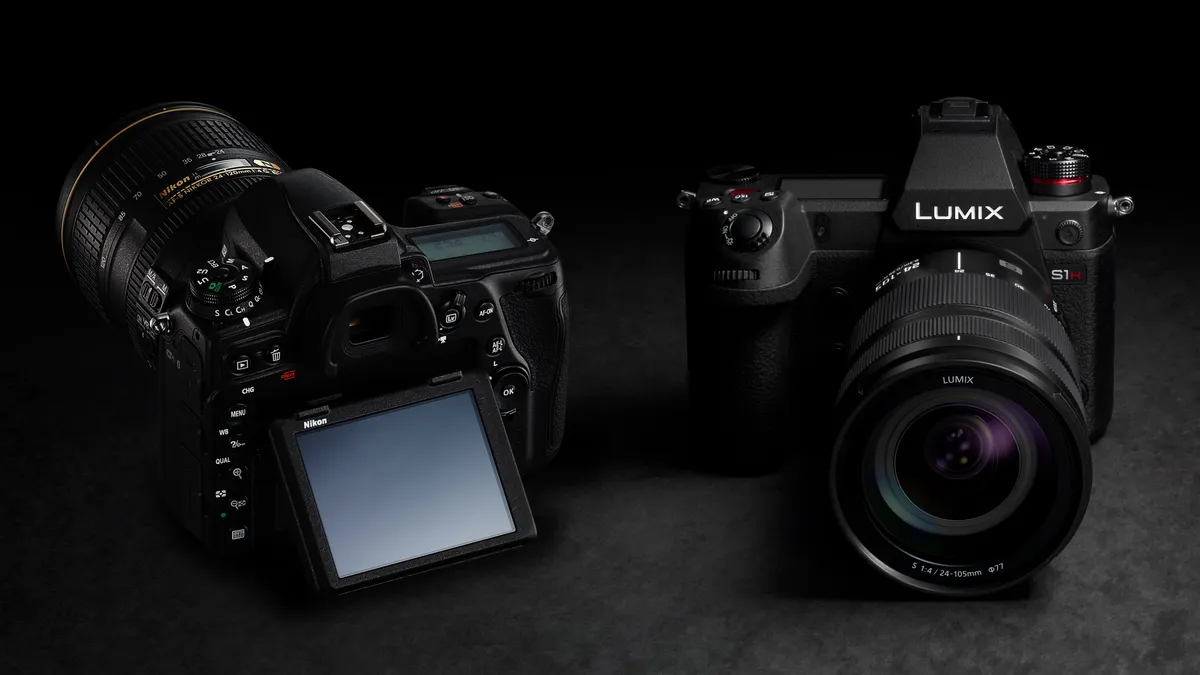
Crucially, one of the flaws that the mirrorless design 'solves' is that it gets rid of the large prism in the center of the camera, simply using the camera's imaging sensor to see the light directly.
As a result there are no moving parts to get out of the way of the part that is sensitive to light. And that movement – much more than the shutter – is what elicited the volume of the famous click noise.
Noastalgia enthusiasts then immediately miss most of the noise that a DSLR (and a film-based SLR before that) made before the wake of the mirrorless.
I think that makes people feel like the newer mirrorless camera is somehow weaker because it's smaller. Sure it's newer, and can certainly offer a silent shutter mode and, likely, better focus tracking in video mode.
It's also physically smaller and perhaps even lighter because it doesn't fill internal space with unnecessary optics. But does being smaller make it look even weaker? Are people just expecting the strongest to 'bulk up'?
Time has progressed and camera companies have all-but abandoned their DSLRs in favor of mirrorless designs, yet there is always immense excitement at the thought of SLRs – or at least digital SLRs – returning.
The other day it was the possibility of a Pentax K-3 Mark IV. The brand name Pentax itself is a reference to penta-prism, so you can see why they'd prefer the tech to be back.
But enlighten me? I don't understand.
Why buy a bigger, heavier camera because it's also an inferior technology with fewer options?
One Reddit user backed me up: "I would not start out with a DSLR unless you have significant budgetary constraints. There is no real upgrade path and all the innovation is going into mirrorless."
Another, though, argued: "I happen to prefer the way an image looks in a pentaprism rather than a digital screen. I have a friend that loves a TLR viewfinder."
I'd say the latter was a spurious argument – the final image will have to be recorded digitally and re-produced, as happens live on the mirrorless preview; the prism view on the DSLR side-steps that only for the viewfinder, and not for the final photo. So what's the point?
Ultimately, I find myself asking: "Is it that important to you to carry something that looks big and professional to the inexperienced?"
And yes, I am aware that there are circumstances this is useful – but not that many!
You might also like
Check our guide to the best camera for beginners, and the best mirrorless camera.

